 Preview
 Send
Send Share
Share
 Details

 Download
 Similars
 X-Ray
X-Ray Diaporama
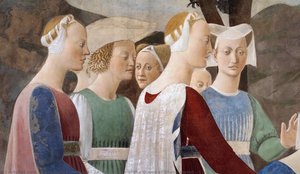
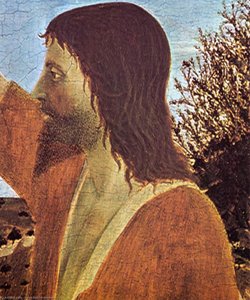
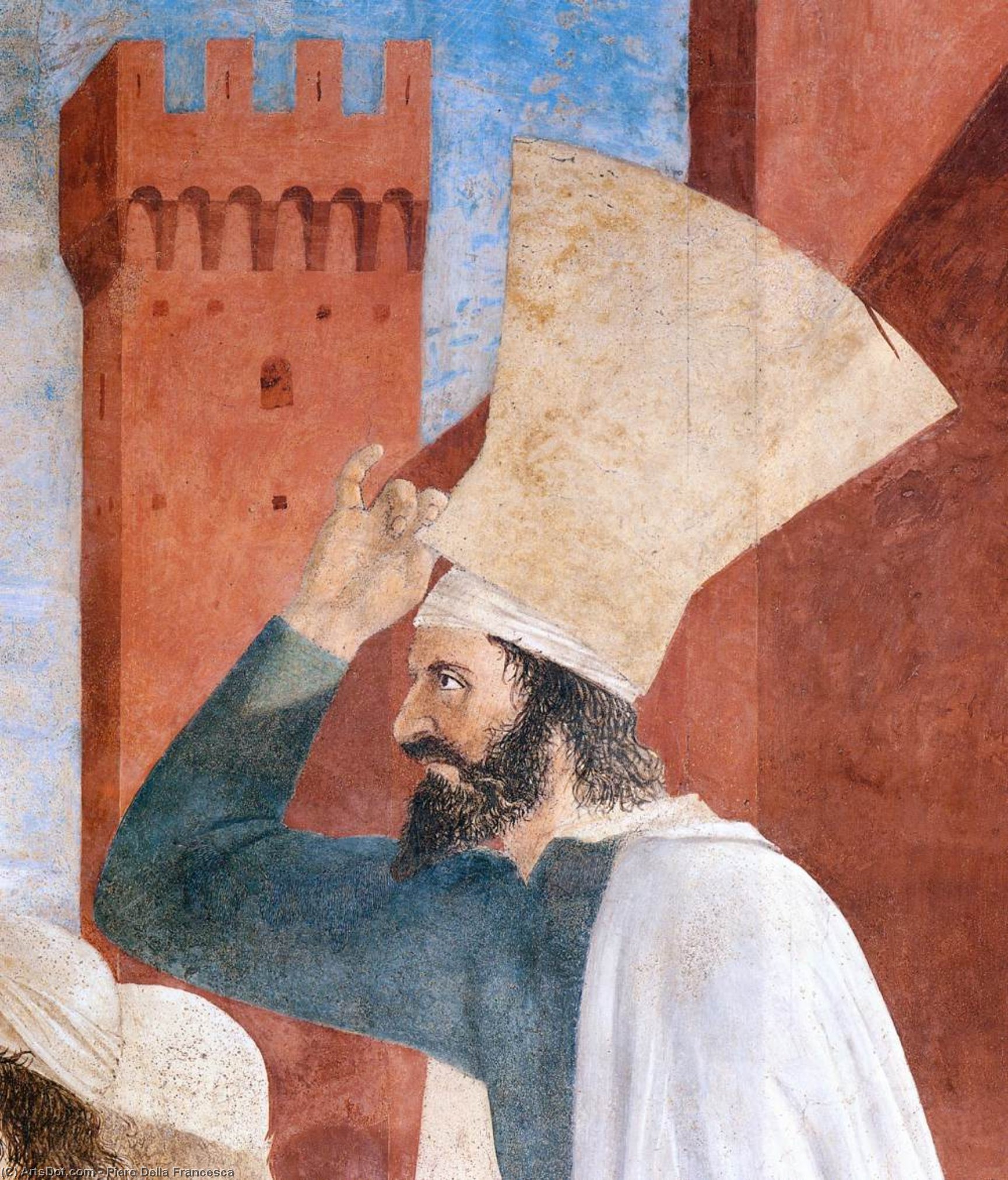
9. Exaltation of the Cross (detail)


 Read More
Giclée / Art Print
Museum-quality giclée or canvas print with fast production and flexible finish options. ( Buy Hand Made Painting Buy Image)




P118B $10

P118H $10

P118W $10

P438Z $10

P508JH $12

P508YH $12

P805H $10

P805Z $10

P919BZ $10

P919G $10

P919XJ $10

P959ZH $10

P968JZ $12

W106C $8

W218G $10

W218JH $8

W218Y $10

W307PJ $10

W316G $10

W316PJ $8

W316Y $10

W398PJ $8

W4111J $10

W500HY $15

W500JH $15

W692G $12

W849H $8

W940BG $15

W953PJ $8




Pick from our preset sizes that match the artwork's original proportions.

You may enter your own dimensions to fit a specific frame or space. If your selected size does not match the original image's proportions, we will either crop the artwork or extend the image with a mirrored or solid-fill edge. A digital mockup will be sent for your approval before production begins.
Please note that the on-screen preview does not reflect the actual cropping or extension. Only the mockup will accurately show the final composition.
While custom sizes are available, we recommend selecting a dimension from the predefined list to preserve the original proportions.
Worldwide Delivery () in 2 weeks instead of standard 4/5 weeks. (27 August)

Free Worldwide Express Shipping

High-Quality Linen Canvas

Full Shipping Insurance

Customs Tax Refund Guarantee

True Color Matching Guarantee

60-Day Return Policy (Defects Only)

100% Money-Back Guarantee

Bulk Discount Offer
 Glass option is only available in size under 110 CM

9. Exaltation of the Cross (detail)
Giclée / Art Print
Reproduction Size
-


Total Price
$ 63
Collectible Description
The Genesis of a Vision: Piero della Francesca and “The Legend of the True Cross”
Within the serene confines of the Basilica of San Francesco in Arezzo, Italy, resides a fresco that transcends mere religious depiction—it is a profound exploration of perspective, light, and human experience. “Exaltation of the Cross (detail),” created by Piero della Francesca around 1466, isn’t simply a scene from biblical lore; it's a meticulously constructed geometric drama, a testament to the artist’s revolutionary approach to painting. This particular detail offers a glimpse into a larger narrative – “The Legend of the True Cross,” based on Jacobus de Voragine’s 13th-century "Golden Legend" – which recounts the arduous journey of the True Cross from its origins in the Garden of Eden to its veneration as the instrument of Christ's sacrifice. Piero, a master of his craft, skillfully blends this sacred tale with an unprecedented understanding of spatial relationships and color theory, establishing himself as a pivotal figure in the transition from Gothic to Renaissance art.
The fresco’s genesis lies within the context of a burgeoning artistic landscape. Florence, at the time, was experiencing a fervent revival of classical learning and a radical shift in artistic philosophy. Artists like Masaccio were pioneering the use of linear perspective—a mathematical system for creating realistic depth on a flat surface—and Piero absorbed these innovations with remarkable precision. He wasn’t merely depicting a scene; he was constructing an illusion, inviting the viewer to step into a meticulously rendered world governed by rational order and geometric harmony. The figures themselves are not idealized in the manner of earlier religious art; they possess a quiet dignity and a sense of timelessness that speaks to Piero's profound understanding of human form.
The Language of Light: Composition, Color, and Symbolism
Piero della Francesca’s genius lies not just in his technical mastery but also in his masterful manipulation of light. He understood that light wasn’t simply a source of illumination; it was an active agent shaping form, revealing texture, and creating atmosphere. In “Exaltation of the Cross,” light doesn't flood the scene indiscriminately; instead, it is carefully directed to sculpt the figures, highlighting their musculature and drapery with subtle gradations of tone. The stark contrast between light and shadow—chiaroscuro—adds a dramatic intensity to the composition, lending a three-dimensional quality that was revolutionary for its time.
The color palette is equally restrained yet profoundly effective. Piero favored earthy tones – ochres, siennas, and umbers – creating a sense of solidity and permanence. The vibrant red of the cloth held by the figures draws the eye immediately, symbolizing sacrifice and divine power. Beyond mere representation, each element carries symbolic weight. The arrangement of the figures, their gestures, and even their clothing are carefully chosen to convey theological meaning and reinforce the narrative’s central themes of faith, devotion, and triumph over adversity. Notice, for example, how the light seems to emanate from the cross itself, illuminating the scene with a divine radiance.
A Window into Early Renaissance Perspective
“Exaltation of the Cross” is more than just a beautiful painting; it’s an architectural marvel. Piero della Francesca employed a sophisticated system of linear perspective—a technique that allows artists to create the illusion of depth and space on a flat surface—with astonishing accuracy. The converging lines of the architecture, particularly the towering brick structures in the background, meet at a single vanishing point, creating a convincing sense of distance. This meticulous attention to detail demonstrates Piero’s deep understanding of mathematics and his commitment to representing reality with scientific precision.
Furthermore, the fresco's composition is remarkably balanced and harmonious. The figures are arranged in a pyramidal structure, drawing the viewer’s eye upwards towards the central point—the cross itself. This compositional strategy reinforces the painting’s message of ascension and spiritual elevation. Piero’s work profoundly influenced subsequent generations of artists, establishing a new standard for realism and spatial illusionism that would shape the course of Renaissance art.
Reverence and Reproduction: Bringing Piero's Vision to Life
The Basilica of San Francesco in Arezzo remains a pilgrimage site for art lovers and devotees alike. The “Exaltation of the Cross” is one of the most revered works within its walls, a testament to Piero della Francesca’s genius and his enduring legacy. ArtsDot offers meticulously crafted hand-painted reproductions that capture the essence of this masterpiece, allowing you to experience its beauty and complexity in your own home or studio.
Our artists painstakingly recreate every detail—from the subtle nuances of light and shadow to the intricate folds of the drapery—using traditional techniques and archival-quality materials. Whether you choose a large-scale mural reproduction or a smaller, more intimate print, you’ll receive a work of art that faithfully reflects Piero della Francesca's vision and captures the spiritual power of this iconic fresco. Explore our collection today and bring a piece of Renaissance history into your space.
Related Artworks
Artist Biography
A Tuscan Visionary: The Life and Art of Piero della Francesca
Born around 1415 in the quiet Umbrian town of Sansepolcro, Piero di Benedetto de’ Franceschi – known to history as Piero della Francesca – emerged from a relatively obscure background to become one of the most intellectually rigorous and profoundly influential painters of the Early Renaissance. Unlike many of his contemporaries whose lives are richly documented, Piero remains somewhat enigmatic; details about his family and early training are scarce. What *is* certain is that he possessed an extraordinary mind, equally captivated by the emerging artistic currents of Florence and the precise languages of mathematics and geometry. His father was a shoemaker and tanner, providing Piero with a stable if unostentatious upbringing, and it’s believed his initial artistic education occurred locally, absorbing the traditions of central Italian painting before the seismic shifts initiated by Masaccio and Brunelleschi. This early grounding would prove crucial in shaping his unique synthesis of Gothic grace and Renaissance innovation.
Florence and the Dawn of a New Aesthetic
Around 1439, Piero journeyed to Florence, a city then pulsating with artistic energy. This period proved transformative. He collaborated with Domenico Veneziano on frescoes for the church of Sant’Egidio, an experience that exposed him directly to the burgeoning Florentine style. More importantly, he immersed himself in the study of Masaccio's groundbreaking frescoes in the Brancacci Chapel – a revelation in naturalism and spatial illusion. The influence of Brunelleschi’s architectural innovations, particularly his mastery of linear perspective, also deeply impacted Piero’s artistic development. He didn’t merely adopt these techniques; he *analyzed* them, dissecting their underlying mathematical principles. This analytical approach would become the hallmark of his work, setting him apart from many of his peers. He absorbed the Florentine emphasis on realism and anatomy but filtered it through a distinctly personal lens, one characterized by stillness, clarity, and an almost austere beauty. Upon returning to Sansepolcro in the 1440s, Piero began establishing himself as a leading artist, though he continued to travel and work throughout Italy for decades.
Masterpieces of Light and Geometry
Piero della Francesca’s artistic legacy rests on a relatively small but exceptionally powerful body of work. Perhaps his most celebrated achievement is the fresco cycle *The History of the True Cross* in the church of San Francesco, Arezzo. This monumental narrative unfolds with remarkable clarity and serenity, depicting scenes from the legend of the wood of the cross with an unprecedented sense of spatial depth and psychological insight. The figures are not merely representations of biblical characters; they are imbued with a quiet dignity and contemplative stillness that elevates them to archetypal forms. The *Montefeltro Altarpiece*, now in Milan’s Brera Gallery, showcases his mastery of oil painting and refined portraiture, featuring striking depictions of Federico da Montefeltro and Battista Sforza – portraits celebrated for their psychological acuity and meticulous detail. The *Baptism of Christ* in the National Gallery, London, is another testament to his skill; its elegant composition, luminous colors, and subtle exploration of light create an atmosphere of profound spiritual resonance. His style consistently demonstrates a commitment to geometric precision, balanced compositions, and a restrained palette, utilizing light and shadow not merely for aesthetic effect but as tools for defining form and creating a sense of palpable volume.
Beyond the Brush: A Mathematician’s Vision
What truly distinguishes Piero della Francesca is his unique intellectual breadth. He was not simply an artist; he was also a mathematician, geometer, and author. His treatise *De Prospectiva Pingendi* (On Perspective Painting) stands as one of the earliest formal treatises on perspective, demonstrating his profound understanding of mathematical principles and their application to art. This work wasn’t merely theoretical; it informed every aspect of his painting. He meticulously calculated spatial relationships, employed geometric constructions to organize compositions, and used light not just to illuminate but to define form with scientific precision. His interest in optics further enhanced his ability to create illusions of depth and realism. This fusion of artistic sensibility and mathematical rigor is what gives Piero’s work its enduring power and intellectual weight. He believed that beauty resided in order and proportion, and he sought to translate these principles into visual form.
A Lasting Legacy
Piero della Francesca died in 1492, leaving behind a legacy that would not be fully appreciated for centuries. Though not as prolific as some of his contemporaries like Leonardo da Vinci or Michelangelo, his surviving works exerted a subtle but profound influence on generations of artists. Leonardo himself studied Piero’s techniques and admired his mastery of light and shadow. Raphael, too, drew inspiration from his compositions and spatial arrangements. In the 20th century, art historians rediscovered Piero's work, recognizing him as a pivotal figure in the development of Renaissance art – a bridge between the International Gothic style and the High Renaissance. His emphasis on mathematical perspective, realistic representation, and serene humanism continues to resonate with artists and viewers alike, solidifying his place as one of the most important and enduring masters of the Italian Renaissance. His paintings are not merely beautiful objects; they are windows into a world where art, science, and spirituality converge in harmonious balance.
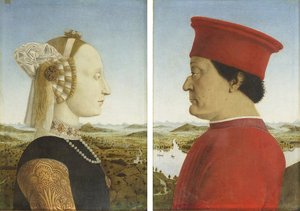
Piero della Francesca
1415 - 1492 , Italy
Quick Facts
- Artistic Movement Or Style: Early Renaissance
- Artists Or Movements Influenced By This Artist:
- Leonardo da Vinci
- Raphael
- Artists Who Influenced This Artist:
- Masaccio
- Domenico Veneziano
- Date Of Birth: c. 1415
- Date Of Death: 1492
- Full Name: Piero della Francesca
- Nationality: Italian
- Notable Artworks:
- The Resurrection
- Montefeltro Altarpiece
- Baptism of Christ
- True Cross frescoes
- Place Of Birth: Sansepolcro, Italy
Related Articles

The Fresco as Family Legacy: Preserving Heritage Through Wall Art
Explore the rich history & enduring legacy of fresco painting. Discover how to preserve family heritage through stunning wall art. Expert insights & restoration guidance.
Piero della Francesca: Renaissance Perspective, Divine Proportion & the Pursuit of Ideal Form
Explore the revolutionary art of Piero della Francesca – master of perspective, divine proportion & Renaissance humanism. Discover his iconic paintings & lasting influence on art history.

The Enduring Legacy of Fresco Painting: Techniques, History & Contemporary Relevance
Explore the rich history & enduring artistry of fresco painting – from Giotto to Michelangelo! Discover techniques, conservation efforts, & modern applications. Learn how ArtsDot brings this timeless art form to your home.
The Enduring Legacy of Fresco: Technique, History & Artistic Expression Across Cultures
Explore the rich history & enduring legacy of fresco painting! Discover ancient techniques, Giotto's masterpieces, and modern applications. Expert insights for art lovers & professionals.
Art That Lives With You: The Emotional Power of a Custom Interior Fresco
Discover the emotional power & timeless beauty of custom interior frescoes. Explore history, design tips & expert guidance from – creating lasting legacies.