 Preview
 Send
Send Share
Share
 Details

 Download
 Similars
 X-Ray
X-Ray Diaporama
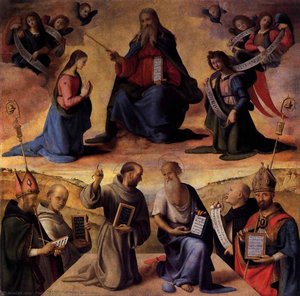
Immaculate Conception with Saints
 Oil On Canvas
- WallArt
- Early Renaissance Painting
 1510
1510- Renaissance
 184.0 x 178.0 cm
 San Francesco
 Read More
Hand Made Oil Reproduction
Hand-painted oil on canvas in your size and frame, made to order by our artists. ( Buy Print Buy Image)




P118B $10

P118H $10

P118W $10

P438Z $10

P508JH $12

P508YH $12

P805H $10

P805Z $10

P919BZ $10

P919G $10

P919XJ $10

P959ZH $10

P968JZ $12

W106C $8

W218G $10

W218JH $8

W218Y $10

W307PJ $10

W316G $10

W316PJ $8

W316Y $10

W398PJ $8

W4111J $10

W500HY $15

W500JH $15

W692G $12

W849H $8

W940BG $15

W953PJ $8




Pick from our preset sizes that match the artwork's original proportions.

You may enter your own dimensions to fit a specific frame or space. If your selected size does not match the original image's proportions, we will either crop the artwork or extend the painting with additional hand-painted elements. A digital mockup will be sent for your approval before production begins.
Please note that the on-screen preview does not reflect the actual cropping or extension. Only the mockup will accurately show the final composition.
While custom sizes are available, we recommend selecting a dimension from the predefined list to preserve the original proportions.
After order, ArtsDot.com team will email client for instructions and provide a mockup preview
Worldwide Delivery () in 3/4 weeks instead of standard 5 weeks. (16 August). No compromise on quality.

Free Worldwide Express Shipping

High-Quality Linen Canvas

Full Shipping Insurance

Customs Tax Refund Guarantee

True Color Matching Guarantee

60-Day Return Policy (Defects Only)

100% Money-Back Guarantee

Bulk Discount Offer
 Glass option is only available in size under 110 CM

Immaculate Conception with Saints
Reproduction Medium
Reproduction Size
-


Total Price
$ 263
Artwork Description
Immaculate Conception with Saints – A Florentine Vision
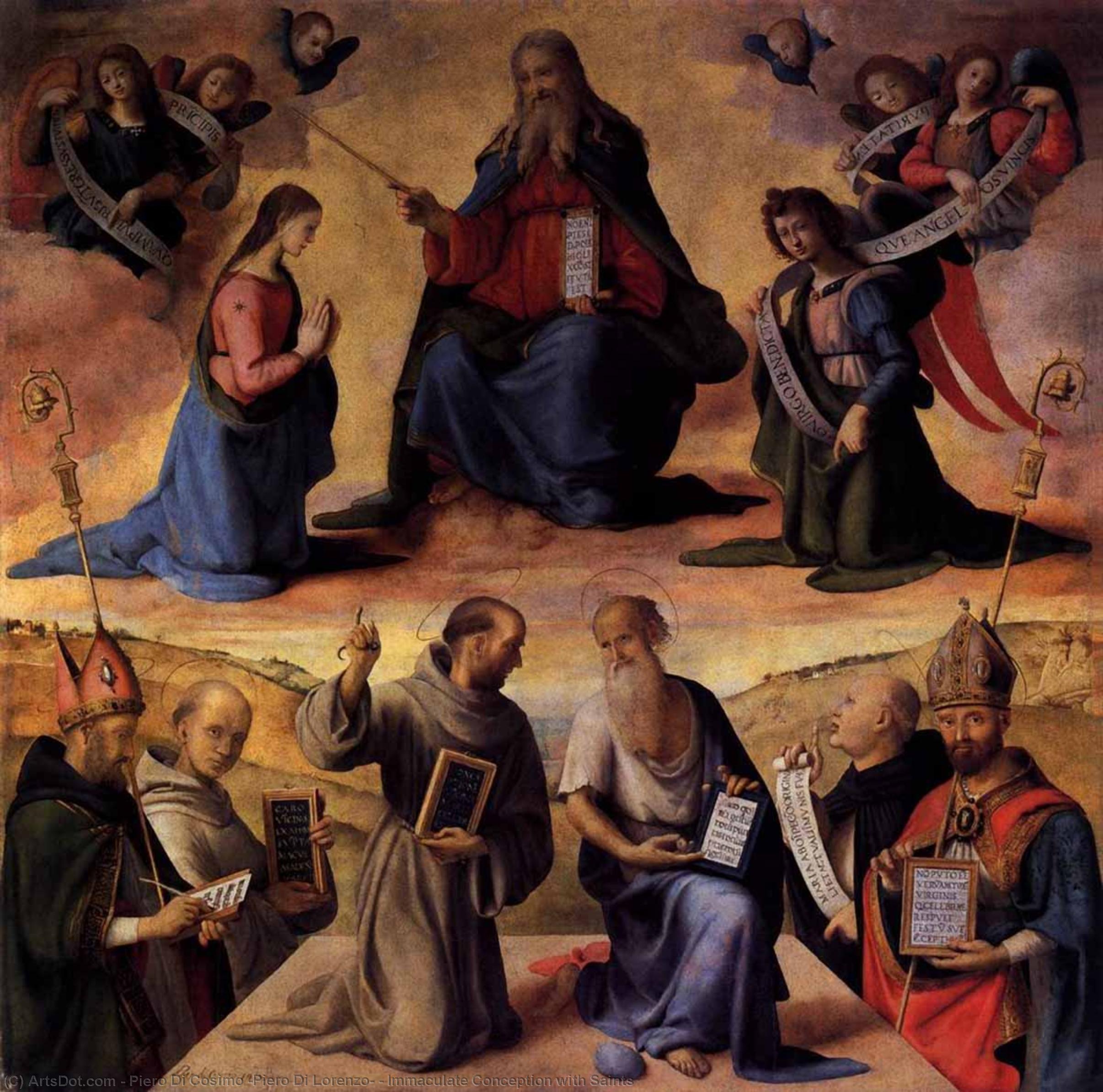
This magnificent rendition of the Immaculate Conception, dating back to 1510 and attributed to the masterful Piero di Cosimo (1462-1522), offers a captivating glimpse into the artistic landscape of Renaissance Florence. Measuring an impressive 184 x 178 cm, the painting immediately draws the viewer in with its rich earth tones – ochres, siennas, and umbers – that evoke a sense of timelessness and warmth. Di Cosimo’s work represents a fascinating intersection of realism and imaginative fantasy, a hallmark of his style that distinguishes him from many of his contemporaries who favored strict adherence to classical ideals.
- The Subject Matter: At the heart of the composition lies Mary, presented as the Immaculate Conception – a theological depiction emphasizing her purity before conception. She cradles the infant Jesus, a central figure in Christian iconography representing divine grace and redemption.
- Surrounding Figures: The scene is populated with a host of saints and angels, each contributing to the painting’s layered narrative. Some are depicted holding books or scrolls, symbolizing knowledge and scripture, while others appear in moments of prayerful contemplation. The inclusion of these figures elevates the work beyond a simple devotional image, transforming it into a complex theological statement.
Piero di Cosimo: Bridging Fantasy and Realism
Born Piero di Lorenzo Battista around 1462 in Florence, Piero di Cosimo was a pivotal figure within the Florentine Renaissance. His artistic approach was characterized by a remarkable ability to seamlessly blend fantastical elements with meticulous observation of nature – a technique that earned him considerable renown. Influenced by the burgeoning humanist movement and the artistic experimentation of his time, he created works imbued with both spiritual depth and imaginative flair. Di Cosimo’s training under Andrea del Verrocchio, a master sculptor and painter, undoubtedly shaped his technical skills and fostered his innovative spirit. His work reflects a desire to capture not just the outward appearance of reality but also its underlying spiritual essence.
Technique and Materials – A Window into Renaissance Craftsmanship
The painting’s execution reveals a sophisticated understanding of Florentine artistic techniques prevalent during the early 16th century. Di Cosimo employed oil paints, allowing for subtle gradations in color and a luminous quality that was characteristic of the period. The application of paint – often built up in thin glazes – creates a remarkable sense of depth and texture. Note the careful detailing of the figures’ drapery, reflecting a commitment to realism while simultaneously imbuing them with an ethereal grace. The use of gold leaf, though not explicitly visible in reproductions, would have been typical for highlighting important elements within the composition, further enhancing its devotional impact.
Symbolism and Emotional Impact
Beyond its religious subject matter, the Immaculate Conception with Saints is rich in symbolic meaning. The clock, positioned on the left side of the painting, serves as a potent reminder of mortality and the passage of time – a common theme within Renaissance art. The bowl at the bottom right corner may represent the womb of Mary, or perhaps a vessel for divine grace. The two birds soaring above symbolize hope and spiritual ascension. Overall, this artwork evokes a profound sense of serenity, reverence, and contemplation, inviting viewers to reflect on themes of faith, redemption, and the mysteries of the divine. This piece is more than just a depiction; it’s an invitation into a world of beauty and spirituality.
Related Artworks
Artist Biography
Piero di Cosimo (1462-1522): Bridging Fantasy and Realism in Florentine Renaissance Painting
Piero di Cosimo, born Piero di Lorenzo Battista around 1462 in Florence, Italy, stands as a singular figure within the vibrant tapestry of the Florentine Renaissance. Unlike many of his contemporaries who adhered rigidly to classical ideals, Cosimo possessed an imaginative spirit that infused his artwork with fantastical elements alongside meticulous observation of nature—a distinctive blend that cemented his reputation as one of the era’s most innovative painters. His artistic journey unfolded against a backdrop of burgeoning humanist thought and artistic experimentation, mirroring the broader cultural transformations reshaping Europe during this period.- Early Life & Training: Precise biographical details surrounding Cosimo's formative years remain elusive, primarily relying on fragmentary references in Vasari’s Lives of Artists. He apprenticed under Andrea del Verrocchio, a renowned sculptor and painter whose workshop served as a crucible for artistic talent. This association exposed Cosimo to the techniques of fresco painting and sculpture, shaping his foundational skillset.
- Influences & Artistic Style: Cosimo’s style was profoundly impacted by Botticelli and Giovanni Battista Van Eyck—artists who championed both beauty and psychological depth. Botticelli's graceful lines and ethereal figures instilled in Cosimo a penchant for elegance and idealized representation, while Van Eyck’s mastery of oil paint encouraged him to explore nuanced tonal gradations and textural richness. These influences combined to produce an artistic idiom characterized by luminous colors, delicate brushwork, and a captivating fusion of mythological narratives with realistic landscapes.
Notable Works & Artistic Achievements
Cosimo’s oeuvre comprises a remarkable collection of paintings that showcase his exceptional talent and imaginative vision. Among his most celebrated creations are “Vulcan and Aeolus,” a monumental circular oil painting depicting the mythological confrontation between Zeus's son and Poseidon—a testament to Cosimo’s ability to convey dramatic emotion within a carefully constructed composition. Similarly, "Madonna and Sleeping Christ Child with the Infant St John the Baptist" exemplifies his meticulous attention to detail and profound understanding of religious iconography. Furthermore, “Adoration of the Child,” another circular masterpiece, embodies the serene beauty and spiritual contemplation characteristic of Early Renaissance art.Legacy & Historical Significance
Piero di Cosimo’s contribution to Florentine painting transcends mere stylistic innovation; he represents a pivotal moment in artistic history. By rejecting the constraints of strict academic convention and embracing imaginative storytelling alongside realistic depiction, Cosimo paved the way for subsequent generations of artists—including Raphael and Michelangelo—to explore new expressive possibilities. His work continues to inspire admiration for its harmonious blend of fantasy and realism, securing his place as an enduring symbol of Renaissance creativity and artistic genius. He is remembered not only for his individual masterpieces but also for shaping the broader trajectory of European art.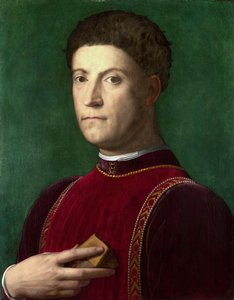
piero di cosimo (piero di lorenzo)
1462 - 1522 , Italy
Quick Facts
- Artistic Movement Or Style: Renaissance art
- Artists Who Influenced This Artist:
- Botticelli
- van der Goes
- Date Of Birth: 1462
- Full Name: Piero di Lorenzo
- Nationality: Italian
- Notable Artworks:
- Vulcan and Aeolus
- Madonna and Sleeping Christ Child with the Infant St John the Baptist
- Adoration of the Child
- Place Of Birth: Florence, Italy
Related Articles

Giotto's Masterpieces: 25 Renaissance Artworks for Your Home | ArtsDot
Explore 25 breathtaking artworks by Giotto di Bondone, a Renaissance master. Discover the stories behind iconic frescoes & paintings like the Scrovegni Chapel cycle. Find museum-quality Giotto reproductions and elevate your home decor with ArtsDot.com.
Proto-Renaissance Masters: 10 Artworks That Changed History | ArtsDot
Journey back to the dawn of Renaissance art! Explore 10 iconic Proto-Renaissance masterpieces by Giotto, Cimabue & Duccio. Discover their stories, techniques & lasting impact. Find museum-quality reproductions for your home at ArtsDot.com
La Biennale's Masterpieces: 25 Artworks to Inspire Your Home | ArtsDot
Explore 25 iconic artworks from La Biennale di Venezia! Discover the stories behind masterpieces of Italian art, modernism & Renaissance paintings. Find museum-quality reproductions and elevate your home decor with ArtsDot.com. Explore the full collection online.
Sacred Narratives Embodied: A Comprehensive Exploration of Religious Iconography in Art History
Explore the rich history of religious iconography in art! Discover symbolism, movements & masterpieces from Byzantine to Renaissance periods. Expert insights for collectors and enthusiasts at ArtsDot.
Piero della Francesca: Renaissance Perspective, Divine Proportion & the Pursuit of Ideal Form
Explore the revolutionary art of Piero della Francesca – master of perspective, divine proportion & Renaissance humanism. Discover his iconic paintings & lasting influence on art history.