 Preview
 Send
Send Share
Share
 Details

 Download
 Similars
 X-Ray
X-Ray Diaporama
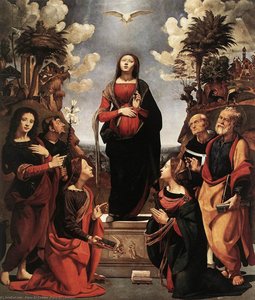
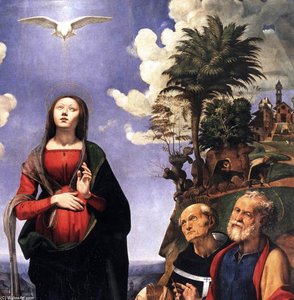
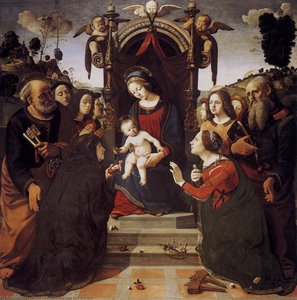
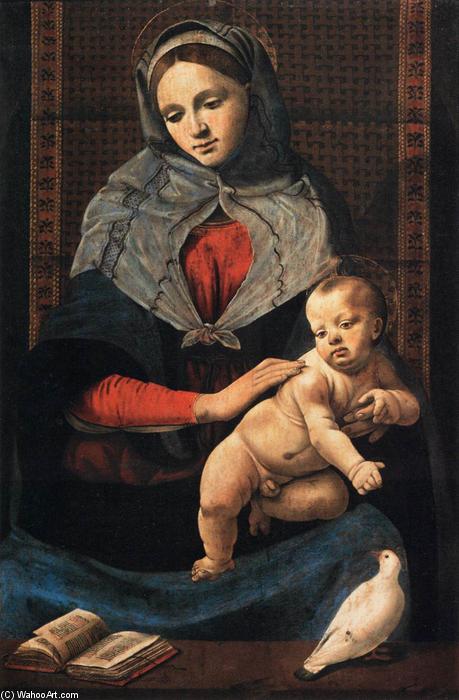
Virgin and Child with a Dove
 Oil
Oil- WallArt
- Renaissance Humanism
 1490
1490- Renaissance
 87.0 x 58.0 cm
 The Louvre
 Read More
Hand Made Oil Reproduction
Hand-painted oil on canvas in your size and frame, made to order by our artists. ( Buy Print Buy Image)




P118B $10

P118H $10

P118W $10

P438Z $10

P508JH $12

P508YH $12

P805H $10

P805Z $10

P919BZ $10

P919G $10

P919XJ $10

P959ZH $10

P968JZ $12

W106C $8

W218G $10

W218JH $8

W218Y $10

W307PJ $10

W316G $10

W316PJ $8

W316Y $10

W398PJ $8

W4111J $10

W500HY $15

W500JH $15

W692G $12

W849H $8

W940BG $15

W953PJ $8




Pick from our preset sizes that match the artwork's original proportions.

You may enter your own dimensions to fit a specific frame or space. If your selected size does not match the original image's proportions, we will either crop the artwork or extend the painting with additional hand-painted elements. A digital mockup will be sent for your approval before production begins.
Please note that the on-screen preview does not reflect the actual cropping or extension. Only the mockup will accurately show the final composition.
While custom sizes are available, we recommend selecting a dimension from the predefined list to preserve the original proportions.
After order, ArtsDot.com team will email client for instructions and provide a mockup preview
Worldwide Delivery () in 3/4 weeks instead of standard 5 weeks. (2 September). No compromise on quality.

Free Worldwide Express Shipping

High-Quality Linen Canvas

Full Shipping Insurance

Customs Tax Refund Guarantee

True Color Matching Guarantee

60-Day Return Policy (Defects Only)

100% Money-Back Guarantee

Bulk Discount Offer
 Glass option is only available in size under 110 CM

Virgin and Child with a Dove
Reproduction Medium
Reproduction Size
-


Total Price
$ 263
A Vision of Serenity: The Divine Grace of Piero di Cosimo
In the heart of the Florentine Renaissance, a period often defined by rigid classical perfection, there existed a singular voice capable of blending the tangible world with the ethereal. Piero di Cosimo, an artist of profound imagination, achieved this delicate balance in his masterpiece, Virgin and Child with a Dove. Created around 1490, this painting is not merely a religious icon but a window into a soul that found beauty in both the meticulous observation of nature and the whispers of the divine. The composition draws the viewer into a sacred intimacy, where the weight of the world seems to lift, replaced by an atmosphere of profound stillness and spiritual grace.
The painting presents a tender, pyramidal arrangement—a hallmark of Renaissance stability—featuring the Virgin Mary cradling the infant Jesus, accompanied by the presence of Saint Anne. This structural harmony provides a sense of eternal permanence, yet it is the softness of the figures that captures the heart. Clad in a deep blue cloak that suggests both royalty and heavenly devotion, Mary’s form is rendered with a gentle realism that makes her maternal warmth palpable. The child, resting securely in her arms, embodies an untouched innocence, his simple tunic and unadorned presence serving as a poignant reminder of the purity central to this sacred narrative.
Symbolism and the Language of Light
Beyond its surface beauty, Virgin and Child with a Dove is a rich tapestry of theological symbolism designed to elevate the viewer's consciousness. One cannot gaze upon this work without being drawn to the two white doves perched delicately upon a manuscript in the foreground. In the iconographic language of the Quattrocento, these birds are far more than mere decorative elements; they represent peace, divine inspiration, and the presence of the Holy Spirit. Their placement near the book suggests that true wisdom is found through spiritual contemplation, bridging the gap between human learning and divine revelation.
The artist’s mastery of technique further enhances this symbolic depth. Through a sophisticated command of oil paint, Cosimo achieved nuanced tonal gradations that allow light to dance across the folds of the Virgin's veil and the soft skin of the Christ child. The palette, dominated by muted golds and celestial blues, creates a somber yet luminous environment. This interplay of light and shadow—a precursor to the dramatic chiaroscuro of later eras—serves to pull the figures forward from the darkened, architectural background, making the holy family appear as if they are emerging into the viewer's very space.
An Enduring Legacy for the Discerning Collector
For the art lover, the collector, or the interior designer, this painting offers much more than historical significance; it offers an emotional sanctuary. The work possesses a timeless quality that transcends its 15th-century origins, making it a profound addition to any curated space. Its ability to evoke feelings of tranquility and reverence makes it an ideal centerpiece for rooms designed for reflection, such as a private library, a study, or a serene sitting area.
Integrating a high-quality reproduction of this work into a modern or classical interior allows one to invite the spirit of the Renaissance into the contemporary home. The painting’s subtle textures and profound subject matter provide a sophisticated focal point that complements both minimalist aesthetics and opulent decor. To possess such an image is to hold a piece of Florentine history—a testament to a time when art sought to capture the very essence of the human soul and its connection to the infinite.
Related Artworks
Artist Biography
Piero di Cosimo (1462-1522): Bridging Fantasy and Realism in Florentine Renaissance Painting
Piero di Cosimo, born Piero di Lorenzo Battista around 1462 in Florence, Italy, stands as a singular figure within the vibrant tapestry of the Florentine Renaissance. Unlike many of his contemporaries who adhered rigidly to classical ideals, Cosimo possessed an imaginative spirit that infused his artwork with fantastical elements alongside meticulous observation of nature—a distinctive blend that cemented his reputation as one of the era’s most innovative painters. His artistic journey unfolded against a backdrop of burgeoning humanist thought and artistic experimentation, mirroring the broader cultural transformations reshaping Europe during this period.- Early Life & Training: Precise biographical details surrounding Cosimo's formative years remain elusive, primarily relying on fragmentary references in Vasari’s Lives of Artists. He apprenticed under Andrea del Verrocchio, a renowned sculptor and painter whose workshop served as a crucible for artistic talent. This association exposed Cosimo to the techniques of fresco painting and sculpture, shaping his foundational skillset.
- Influences & Artistic Style: Cosimo’s style was profoundly impacted by Botticelli and Giovanni Battista Van Eyck—artists who championed both beauty and psychological depth. Botticelli's graceful lines and ethereal figures instilled in Cosimo a penchant for elegance and idealized representation, while Van Eyck’s mastery of oil paint encouraged him to explore nuanced tonal gradations and textural richness. These influences combined to produce an artistic idiom characterized by luminous colors, delicate brushwork, and a captivating fusion of mythological narratives with realistic landscapes.
Notable Works & Artistic Achievements
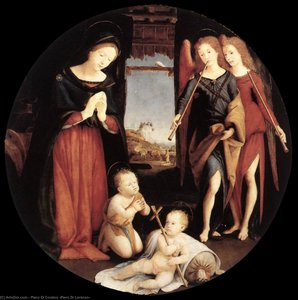
Cosimo’s oeuvre comprises a remarkable collection of paintings that showcase his exceptional talent and imaginative vision. Among his most celebrated creations are “Vulcan and Aeolus,” a monumental circular oil painting depicting the mythological confrontation between Zeus's son and Poseidon—a testament to Cosimo’s ability to convey dramatic emotion within a carefully constructed composition. Similarly, "Madonna and Sleeping Christ Child with the Infant St John the Baptist" exemplifies his meticulous attention to detail and profound understanding of religious iconography. Furthermore, “Adoration of the Child,” another circular masterpiece, embodies the serene beauty and spiritual contemplation characteristic of Early Renaissance art.Legacy & Historical Significance
Piero di Cosimo’s contribution to Florentine painting transcends mere stylistic innovation; he represents a pivotal moment in artistic history. By rejecting the constraints of strict academic convention and embracing imaginative storytelling alongside realistic depiction, Cosimo paved the way for subsequent generations of artists—including Raphael and Michelangelo—to explore new expressive possibilities. His work continues to inspire admiration for its harmonious blend of fantasy and realism, securing his place as an enduring symbol of Renaissance creativity and artistic genius. He is remembered not only for his individual masterpieces but also for shaping the broader trajectory of European art.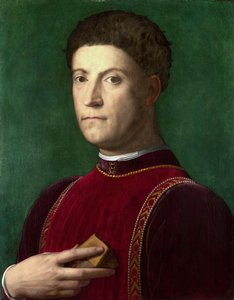
piero di cosimo (piero di lorenzo)
1462 - 1522 , Italy
Quick Facts
- Artistic Movement Or Style: Renaissance art
- Artists Who Influenced This Artist:
- Botticelli
- van der Goes
- Date Of Birth: 1462
- Full Name: Piero di Lorenzo
- Nationality: Italian
- Notable Artworks:
- Vulcan and Aeolus
- Madonna and Sleeping Christ Child with the Infant St John the Baptist
- Adoration of the Child
- Place Of Birth: Florence, Italy
Related Articles
Alte Pinakothek's Masterpieces: 25 Iconic Paintings for Art Lovers | ArtsDot
Journey through Alte Pinakothek's 25 most iconic paintings! Explore masterpieces by Dürer, Rembrandt & Rubens. Discover art history, techniques & find museum-quality reproductions for your home at ArtsDot.com.
Fra Angelico's Masterpieces: 25 Renaissance Paintings for Your Home | ArtsDot
Explore 25 breathtaking masterpieces by Fra Angelico, a Renaissance master. Discover the stories behind his iconic frescoes, Annunciations & religious art. Find museum-quality reproductions and elevate your home decor with ArtsDot.com.
National Gallery of Art's Masterpieces: 25 Iconic Paintings for Your Home Decor
Explore 25 iconic artworks from Washington DC's National Gallery of Art! Discover masterpieces by Cézanne, Matisse & Picasso. Find museum-quality art reproductions and elevate your home decor with timeless paintings. Explore the full collection online at ArtsDot.com.
Uffizi's 25 Masterpieces: Renaissance Art & Timeless Decor Inspiration
Journey through the Uffizi Gallery's 25 most iconic Renaissance artworks! Explore Botticelli, Leonardo da Vinci & Michelangelo’s masterpieces. Find museum-quality art reproductions and curated decor ideas to bring timeless Italian beauty into your home. Discover all masterpieces on ArtsDot.com
Raphael's Masterpieces: 25 Iconic Paintings & Renaissance Art for Your Home
Explore 25 breathtaking Raphael paintings! Journey through the Italian Renaissance with masterpieces like 'School of Athens' & iconic Madonnas. Find museum-quality art reproductions and elevate your home decor on ArtsDot.com.