 Preview
 Send
Send Share
Share
 Details

 Download
 Similars
 X-Ray
X-Ray Diaporama
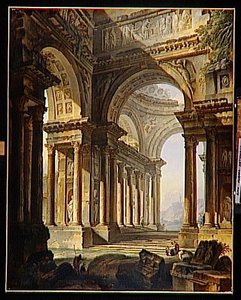
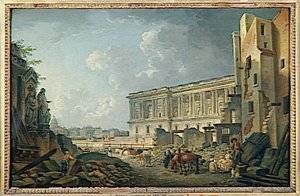
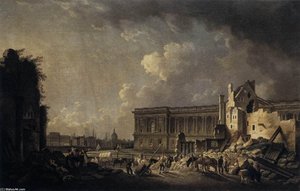
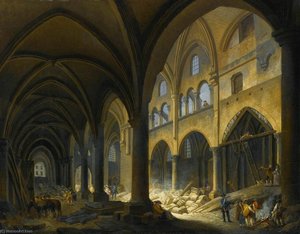
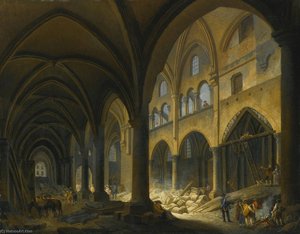
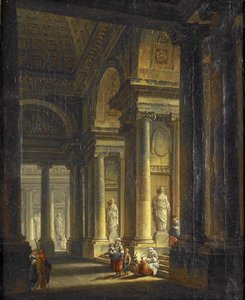
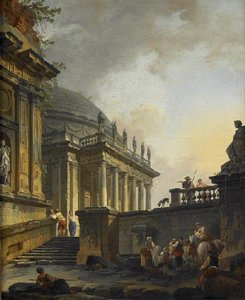
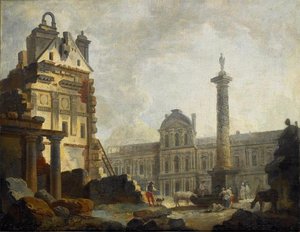
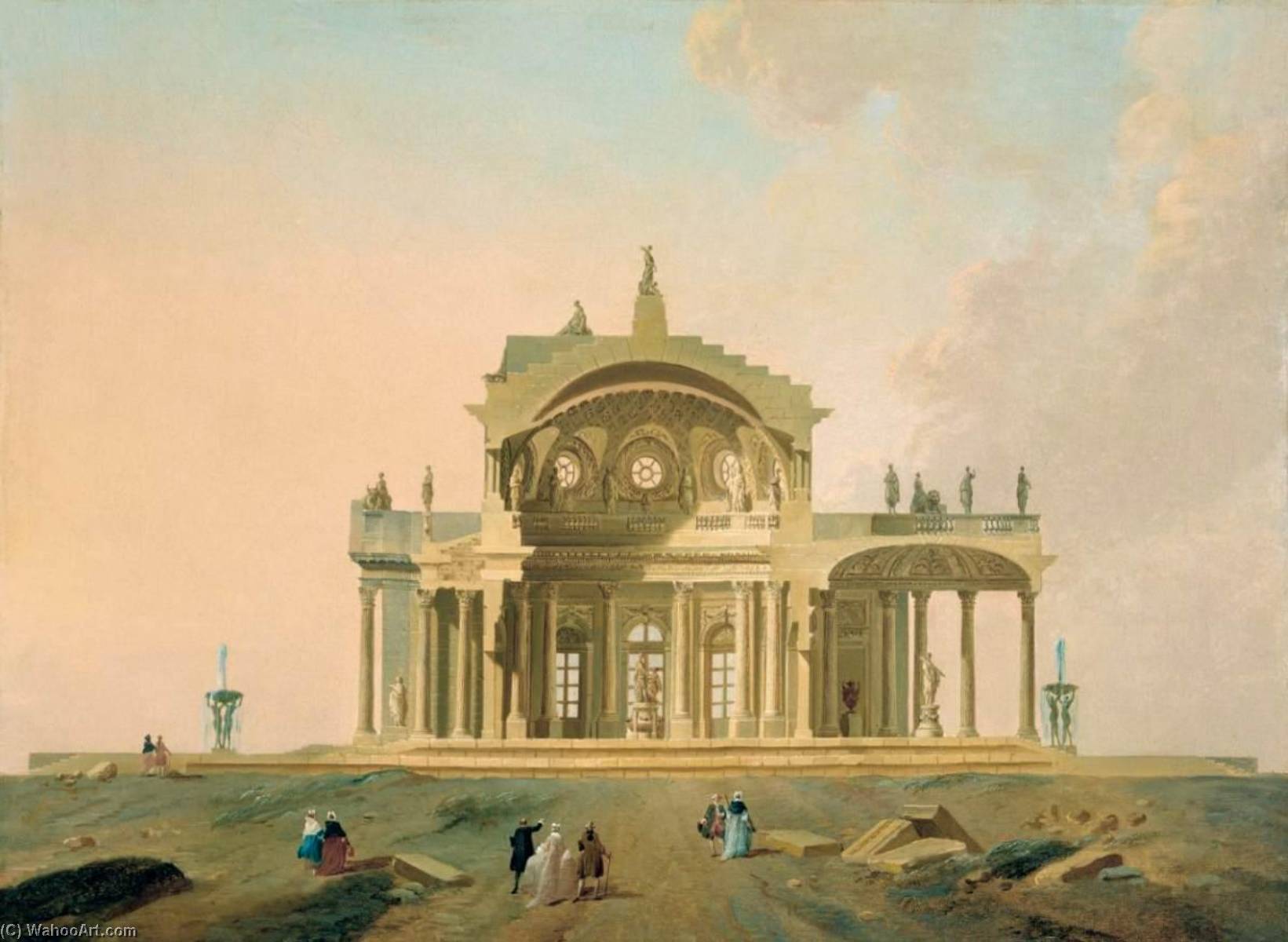
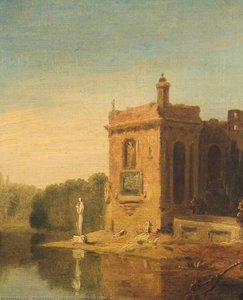
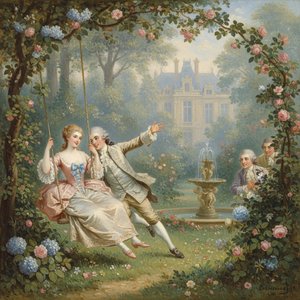
Fantastical Architectural Study with Figures
 Rococo
 55.0 x 73.0 cm
 Read More
Hand Made Oil Reproduction
Hand-painted oil on canvas in your size and frame, made to order by our artists. ( Buy Print Buy Image)




P118B $10

P118H $10

P118W $10

P438Z $10

P508JH $12

P508YH $12

P805H $10

P805Z $10

P919BZ $10

P919G $10

P919XJ $10

P959ZH $10

P968JZ $12

W106C $8

W218G $10

W218JH $8

W218Y $10

W307PJ $10

W316G $10

W316PJ $8

W316Y $10

W398PJ $8

W4111J $10

W500HY $15

W500JH $15

W692G $12

W849H $8

W940BG $15

W953PJ $8




Pick from our preset sizes that match the artwork's original proportions.

You may enter your own dimensions to fit a specific frame or space. If your selected size does not match the original image's proportions, we will either crop the artwork or extend the painting with additional hand-painted elements. A digital mockup will be sent for your approval before production begins.
Please note that the on-screen preview does not reflect the actual cropping or extension. Only the mockup will accurately show the final composition.
While custom sizes are available, we recommend selecting a dimension from the predefined list to preserve the original proportions.
After order, ArtsDot.com team will email client for instructions and provide a mockup preview
Worldwide Delivery () in 3/4 weeks instead of standard 5 weeks. (20 August). No compromise on quality.

Free Worldwide Express Shipping

High-Quality Linen Canvas

Full Shipping Insurance

Customs Tax Refund Guarantee

True Color Matching Guarantee

60-Day Return Policy (Defects Only)

100% Money-Back Guarantee

Bulk Discount Offer
 Glass option is only available in size under 110 CM

Fantastical Architectural Study with Figures
Reproduction Medium
Reproduction Size
-


Total Price
$ 263
Related Artworks
Artist Biography
Gavin Hamilton: The Antiquarian Painter of Rome
Gavin Hamilton (1723, Lanarkshire – 4 January 1798, Rome) stands as a singular figure in the history of art, a man inextricably linked to both the burgeoning neoclassical movement and the passionate pursuit of classical antiquities. More widely remembered for his extensive explorations of Roman ruins and his pivotal role in shaping the aesthetic standards of the era, Hamilton’s artistic legacy is one of monumental paintings depicting scenes from Greek and Roman mythology – works that profoundly influenced generations of artists and continue to captivate viewers today. His life was a fascinating blend of Scottish heritage, Italian scholarship, and an almost obsessive dedication to uncovering and interpreting the vestiges of antiquity. Born in Lanarkshire, Scotland, Hamilton’s early life was marked by intellectual curiosity and a strong connection to his family's lineage within the Scottish Enlightenment. Educated at Glasgow University under the tutelage of prominent scholars, he embarked on a ‘Grand Tour’ to Italy at a young age, immersing himself in the art and culture of the classical world. This formative experience ignited a lifelong fascination with ancient Greece and Rome, shaping not only his artistic vision but also his personal identity. He spent years studying in Rome, absorbing the principles of neoclassical painting championed by artists like Sir Joshua Reynolds and honing his skills under masters such as Agostino Masucci. His early collaborations with fellow travelers, including James Stuart and Nicholas Revett – individuals instrumental in documenting Roman ruins – cemented his connection to the antiquarian movement. Hamilton’s artistic career unfolded primarily in Rome, where he established himself as a leading history painter during the late 18th century. Unlike many of his contemporaries who focused on portraiture or fashionable subjects, Hamilton dedicated himself almost exclusively to depicting scenes from classical mythology and literature. His most celebrated series is undoubtedly the six monumental paintings based on Homer’s *Iliad*, commissioned for the Villa Aldobrandini. These colossal works, meticulously researched and executed, were intended to embody the epic grandeur of Homer's narrative – a vision influenced by scholars like Thomas Blackwell and George Turnbull who sought to interpret the poem through the lens of classical art theory. The scale and dramatic intensity of these paintings, combined with their meticulous attention to detail and idealized figures, established Hamilton as a master of the neoclassical style. His *Death of Lucretia*, a powerful depiction of Roman virtue and sacrifice, further solidified his reputation and served as an inspiration for subsequent artists, including Jacques-Louis David, whose *Oath of Brutus* mirrored its themes of civic duty and patriotic fervor.- Key Characteristics of Hamilton’s Style: Monumental scale, dramatic lighting, idealized figures, meticulous detail, emphasis on classical composition and narrative.
- Major Works: *Iliad* cycle (six paintings), *Death of Lucretia*, *The Founding of the City of Rome*
- Influences: Sir Joshua Reynolds, classical art theory, archaeological discoveries in Italy
The Scottish Connection and Enlightenment Roots
Hamilton's origins in Lanarkshire, Scotland, provided him with a distinct cultural context that profoundly influenced his artistic development. Born into a family steeped in intellectual pursuits – his father was a headmaster and fellow of Balliol College, Oxford – he benefited from an education that emphasized classical learning and philosophical inquiry. This upbringing aligned perfectly with the spirit of the Scottish Enlightenment, a period marked by intellectual ferment and a fervent interest in reason, science, and the rediscovery of classical antiquity. His brother, James Hamilton, was a prominent figure within the Scottish Enlightenment, while his nephew, James Inglis Hamilton, continued the family’s commitment to scholarship. The influence of the Scottish Enlightenment is evident not only in Hamilton's intellectual background but also in his artistic approach. He embraced the neoclassical style championed by Sir Joshua Reynolds, drawing inspiration from classical art theory and seeking to emulate the ideals of ancient Greek and Roman civilization. His decision to travel to Italy for a ‘Grand Tour’ – a traditional journey undertaken by young men of means to broaden their cultural horizons – was a deliberate act of immersion in the world of antiquity. This experience solidified his passion for classical subjects and provided him with firsthand knowledge of Roman ruins, which he meticulously documented and incorporated into his paintings.Hamilton's Rome: A Hub of Antiquarianism
Rome became Hamilton’s artistic home and a crucial center for the burgeoning antiquarian movement in the late 18th century. The city was undergoing a period of intense archaeological excavation, fueled by the patronage of wealthy collectors and scholars eager to acquire Roman artifacts and reconstruct the glories of the past. Hamilton played an active role in this process, collaborating with James Stuart and Nicholas Revett on their ambitious project to map and document the ruins of Rome – a monumental undertaking that provided him with unparalleled access to ancient sites and a deep understanding of classical architecture and sculpture. His residence in Rome fostered connections with other leading intellectuals and artists, creating a vibrant intellectual community dedicated to the study and appreciation of antiquity. Hamilton’s studio became a meeting place for scholars, collectors, and patrons, where ideas were exchanged, artworks were discussed, and new interpretations of Roman history and culture were developed. This environment profoundly shaped his artistic vision, influencing his choice of subjects, his compositional techniques, and his overall approach to painting.Legacy and Historical Significance
Gavin Hamilton’s impact on the art world is undeniable. His monumental paintings of classical mythology exerted a profound influence on subsequent generations of artists, shaping the aesthetic standards of neoclassical art for decades to come. His meticulous attention to detail, his dramatic use of light and shadow, and his idealized figures set a new benchmark for historical painting. The *Iliad* cycle, in particular, became a touchstone for artists seeking to capture the epic grandeur of Homer’s narrative – a vision that resonated with audiences across Europe. Beyond his artistic achievements, Hamilton's role as an antiquarian contributed significantly to the development of archaeological scholarship. His meticulous documentation of Roman ruins and his advocacy for a rigorous approach to interpreting ancient remains helped establish standards for understanding and appreciating classical antiquity. However, it is essential to acknowledge the complex ethical considerations surrounding Hamilton’s life and work, particularly his involvement with the slave trade. Recent scholarship has shed light on this troubling aspect of his biography, prompting critical reflection on the intersection of art, power, and social injustice. Despite these complexities, Gavin Hamilton remains a pivotal figure in the history of art, whose legacy continues to inspire debate and discussion today.
pierre antoine de machy
1723 - 1807 , France
Quick Facts
- Artistic Movement Or Style: Neoclassical history painter
- Artists Or Movements Influenced By This Artist:
- Thomas Blackwell
- George Turnbull
- Artists Who Influenced This Artist:
- Agostino Masucci
- Sir Joshua Reynolds
- Date Of Birth: 1723
- Date Of Death: 1798
- Full Name: Gavin Hamilton
- Nationality: Scottish
- Notable Artworks:
- Death of Lucretia
- Homer's Iliad cycle
- Place Of Birth: Lanarkshire, Scotland
Related Articles

The Rococo Aesthetic: Opulence, Rebellion & the Pursuit of Pleasure in 18th-Century Art
Explore the opulent world of Rococo art! Discover its origins, key artists like Watteau & Boucher, and lasting influence on design. Expert insights for collectors & enthusiasts.

Rococo's Radiant Legacy: 10 Masterpieces for Your Home |
Indulge in the elegance of Rococo! Explore 10 masterpieces by Fragonard, Boucher & Watteau. Discover the stories behind these iconic paintings and bring timeless art to your home with museum-quality reproductions from .
Illuminating the Enlightenment: A Comprehensive Exploration of 18th-Century Painting
Explore the captivating world of 18th-century painting! Discover Rococo's playful elegance & Neoclassicism’s Enlightenment ideals with expert insights into Fragonard, David, and more. A comprehensive guide for art enthusiasts.
The Rococo Style: Aristocratic Leisure & the Pursuit of Delight in 18th-Century Art
Explore the opulent world of Rococo art! Discover Watteau, Boucher & Nattier's masterpieces. Expert insights for collectors seeking museum-quality reproductions and custom portraits at ArtsDot.
The Rococo Reverie of Fragonard: Love, Leisure & Pleasure in 18th-Century France
Explore the captivating world of Jean-Honoré Fragonard! Discover his Rococo masterpieces, intimate portraits & the allure of 18th-century French art. Learn about 'The Progress of Love' and more at ArtsDot.