 Preview
 Send
Send Share
Share
 Details

 Download
 Similars
 X-Ray
X-Ray Diaporama
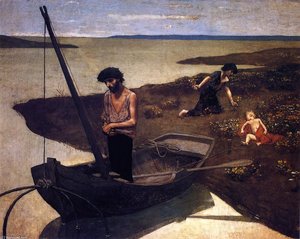
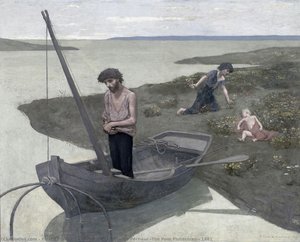
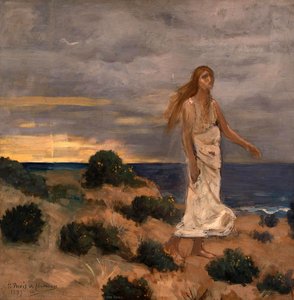
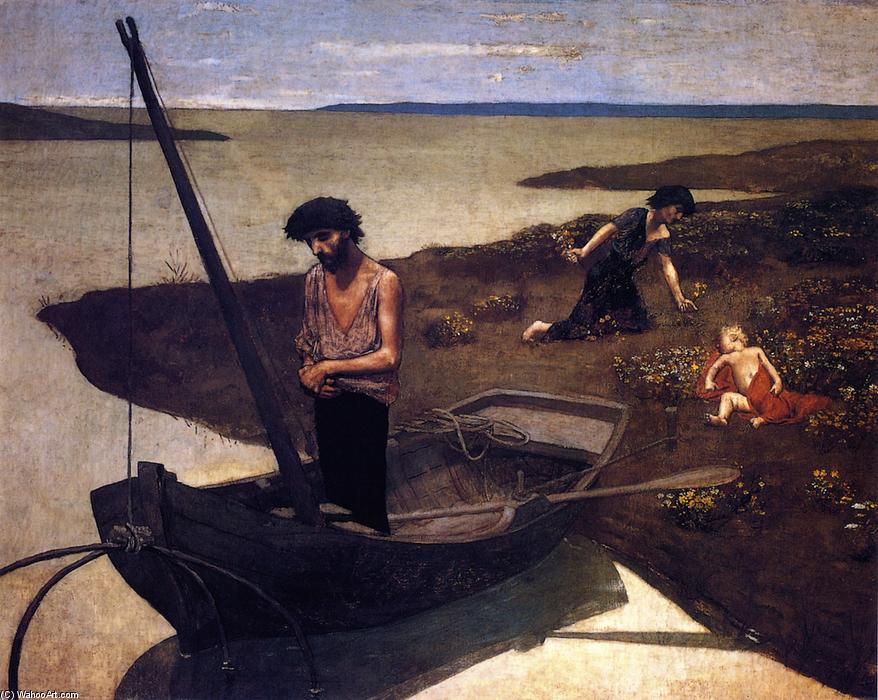
The Poor Fisherman


 Read More
Giclée / Art Print
Museum-quality giclée or canvas print with fast production and flexible finish options. ( Buy Hand Made Painting Buy Image)




P118B $10

P118H $10

P118W $10

P438Z $10

P508JH $12

P508YH $12

P805H $10

P805Z $10

P919BZ $10

P919G $10

P919XJ $10

P959ZH $10

P968JZ $12

W106C $8

W218G $10

W218JH $8

W218Y $10

W307PJ $10

W316G $10

W316PJ $8

W316Y $10

W398PJ $8

W4111J $10

W500HY $15

W500JH $15

W692G $12

W849H $8

W940BG $15

W953PJ $8




Pick from our preset sizes that match the artwork's original proportions.

You may enter your own dimensions to fit a specific frame or space. If your selected size does not match the original image's proportions, we will either crop the artwork or extend the image with a mirrored or solid-fill edge. A digital mockup will be sent for your approval before production begins.
Please note that the on-screen preview does not reflect the actual cropping or extension. Only the mockup will accurately show the final composition.
While custom sizes are available, we recommend selecting a dimension from the predefined list to preserve the original proportions.
Worldwide Delivery () in 2 weeks instead of standard 4/5 weeks. (16 August)

Free Worldwide Express Shipping

High-Quality Linen Canvas

Full Shipping Insurance

Customs Tax Refund Guarantee

True Color Matching Guarantee

60-Day Return Policy (Defects Only)

100% Money-Back Guarantee

Bulk Discount Offer
 Glass option is only available in size under 110 CM

The Poor Fisherman
Giclée / Art Print
Reproduction Size
-


Total Price
$ 63
Collectible Description
A Vision of Rural Faith: Exploring Puvis de Chavannes’ “The Poor Fisherman”
Pierre Cécile Puvis de Chavannes, a singular figure in the landscape of French art history, wasn't merely an artist; he was a deliberate architect of national identity. Born in Lyon in 1824, his life unfolded as a fascinating convergence of scientific ambition – initially pursuing engineering studies – and an unwavering devotion to artistic expression that would ultimately define him as “the painter for France.” This distinction isn’t accidental. Puvis de Chavannes recognized the power of visual art to communicate profound ideas about morality and civic responsibility, particularly during the turbulent period following the Franco-Prussian War and the subsequent establishment of the Third Republic. He eschewed academic conventions, prioritizing instead a deeply personal vision that sought to capture the essence of human experience—a vision powerfully realized in works like “The Poor Fisherman.”Subject Matter and Composition: A Moment Frozen in Time
“The Poor Fisherman,” completed in 1881, depicts a solitary fisherman standing amidst a tranquil seascape. The painting’s central figure is positioned prominently on a small boat, his hands clasped together in an act of prayer or contemplation—a gesture laden with spiritual significance. Surrounding him are two additional individuals, subtly integrated into the broader tableau, suggesting a community bound by shared hardship and faith. Notably, the inclusion of several boats contributes to the painting’s depth and realism, capturing the daily rhythm of life for those who toil in the fishing industry. The artist's careful attention to detail—the weathered faces of the fishermen, the subtle nuances of light on the water—grounds the scene in a palpable sense of place and time.Symbolism: Echoes of Faith and Resilience
Puvis de Chavannes’ artistic choices resonate with Symbolist principles prevalent during his era. The fisherman himself embodies resilience and humility – qualities considered crucial for upholding moral values within French society at the time. His posture conveys introspection, hinting at a deeper engagement with spiritual concerns beyond mere outward piety. Furthermore, the sea—often interpreted as representing both divine providence and existential uncertainty—serves as a backdrop to this contemplative scene. The muted palette of blues and greens reinforces the painting’s melancholic mood, inviting viewers to contemplate themes of poverty, perseverance, and unwavering belief.Technique: Monumental Impressionism – A Bold Departure
Unlike many of his contemporaries who adhered to academic realism, Puvis de Chavannes championed a technique he termed “monumental impressionism.” This approach blended the spontaneity of Impressionist brushstrokes with the grandeur of classical sculpture—a deliberate provocation against artistic conventions. He achieved this effect through layering thin washes of pigment onto canvas, creating luminous surfaces that capture fleeting moments of light and atmosphere. The resulting texture is remarkably tactile, mirroring the ruggedness of the fisherman’s surroundings and conveying a sense of immediacy that transcends mere representation. This innovative technique distinguishes “The Poor Fisherman” from other paintings of its time, establishing Puvis de Chavannes as a pioneer in forging a new path for French art.Legacy and Influence: Shaping Artistic Discourse
“The Poor Fisherman” stands as a cornerstone of Puvis de Chavannes’ oeuvre and exerted considerable influence on subsequent artists—particularly those gravitating towards Symbolism and Art Nouveau. Its rejection of academic formalism paved the way for explorations of subjective experience and emotional resonance, mirroring the core tenets of these movements. The painting's enduring appeal lies in its ability to evoke a profound sense of empathy for the marginalized figures inhabiting rural France during the Belle Époque—a testament to Puvis de Chavannes’ unwavering commitment to portraying humanity with dignity and compassion. Its reproduction offers an exceptional opportunity to appreciate the artistic genius of this visionary painter and to immerse oneself in the evocative beauty of Symbolist art.Related Artworks
Artist Biography
A Life Dedicated to Monumental Visions
Pierre Cécile Puvis de Chavannes, a name often simply rendered as Puvis de Chavannes, occupies a unique and pivotal position in 19th-century French art. Born in Lyon in 1824, he rose to become known as “the painter for France,” a testament to his profound impact on public art during the early years of the Third Republic. His legacy extends far beyond mere decoration; Puvis de Chavannes crafted visual narratives that embodied national ideals and resonated with a generation grappling with political and social transformation. He wasn’t merely illustrating history, but actively shaping its visual memory for the future. His influence on subsequent artists, particularly those aligned with Symbolism and Art Nouveau, is undeniable, and his collaborative spirit extended to working alongside medallists, offering designs and insightful suggestions.From Engineering Aspirations to Artistic Devotion
The early life of Pierre-Cécile Puvis was marked by a trajectory that initially diverged from the world of art. Born into a family of modest means – his father an engineer descended from Burgundy nobility – he received an education at Amiens College and Lycée Henri IV in Paris, preparing him for a career following in his father’s footsteps. However, a serious illness proved to be a turning point, forcing a period of convalescence that allowed space for introspection and the burgeoning of artistic inclinations. A transformative journey to Italy ignited within him a passion for painting, prompting a decisive shift away from engineering and towards a life dedicated to creative expression. He embraced his ancestral heritage by incorporating “de Chavannes” into his name, a subtle assertion of identity and lineage. His formal training included brief mentorships under luminaries like Eugène Delacroix, Henri Scheffer, and Thomas Couture, yet he ultimately favored independent study, establishing a spacious studio near the Gare de Lyon that became a hub for artistic exploration. He diligently honed his understanding of anatomy through classes at the Académie des Beaux Arts, laying a solid foundation for his later monumental works.The Genesis of a Symbolist Style
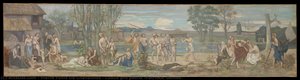
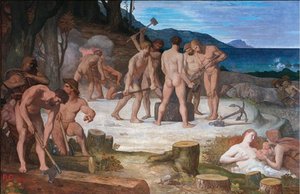
Puvis de Chavannes’s artistic style is generally categorized as Symbolist, though it evolved from roots in Romanticism. His work is instantly recognizable by its simplified forms, rhythmic linear compositions, and a distinctive, muted palette reminiscent of fresco painting. He wasn't interested in photographic realism; instead, he sought to distill essence, to capture the underlying spirit of his subjects. He frequently drew inspiration from classical antiquity and idealized landscapes, weaving allegorical themes into grand narratives. His early commissions, beginning in the 1860s at the Musée de Picardie in Amiens – including *Concordia*, *Bellum*, *Le Travail* (Work), and *Le Repos* (Rest) – established his reputation for large-scale mural paintings. These weren’t simply decorative elements; they were carefully considered statements about civic virtue, labor, and the pursuit of harmony. Later, a significant series of murals commissioned for the Museum of Fine Arts in Lyon further cemented his position as a leading figure in public art. Notable works like *The Woodcutters* (1873), currently housed at the San Antonio Museum of Art, demonstrate his ability to imbue everyday scenes with symbolic weight and poetic grace. Paintings such as *Massilia, Greek Colony*, and *Sacred Grove* exemplify his characteristic style and thematic interests, showcasing nude figures within evocative landscapes that invite contemplation.A Lasting Legacy: Influence and Historical Significance
The impact of Puvis de Chavannes on the artistic landscape of France – and beyond – was profound. He is credited with influencing an entire generation of painters and sculptors, particularly those associated with Modernism. His emphasis on simplified forms, decorative patterns, and allegorical themes resonated deeply with artists seeking to break away from traditional academic constraints. Georges de Feure was among his notable protégés, benefiting directly from his guidance and mentorship. Beyond painting, Puvis actively collaborated with medallists, providing designs and suggestions that enriched their work. Émile Zola eloquently lauded his art as “an art made of reason, passion, and will,” capturing the intellectual and emotional depth inherent in his creations. His most celebrated achievement lies in his contribution to the development of public art during a period of significant political and social change in France. His murals weren’t merely aesthetic enhancements; they were intended to embody national ideals and provide visual narratives for civic spaces, fostering a sense of collective identity and shared values. The monumental murals at the Panthéon in Paris, illustrating the life of St. Geneviève, stand as enduring testaments to his skill and vision. Puvis de Chavannes remains an important figure in 19th-century French art, bridging the gap between Romanticism and Symbolism and paving the way for the artistic innovations of the modern era. His work continues to inspire awe and admiration, reminding us of the power of art to shape our understanding of history, culture, and the human condition.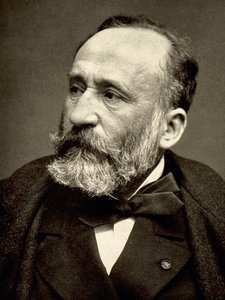
Pierre Cécile Puvis de Chavannes
1824 - 1898 , France
Quick Facts
- Artistic Movement Or Style: Symbolism
- Artists Or Movements Influenced By This Artist:
- Robert Genin
- Art Nouveau
- Modernism
- Artists Who Influenced This Artist:
- Delacroix
- Scheffer
- Couture
- Date Of Birth: December 14, 1824
- Date Of Death: 1898
- Full Name: Pierre Cécile Puvis de Chavannes
- Nationality: French
- Notable Artworks:
- The Woodcutters
- Massilia
- Sacred Grove
- Peace
- Study for Patriotism
- Place Of Birth: Lyon, France
Related Articles

Demandes Commerciales
APS ofrece reproducciones de bellas artes y encargos personalizados desde 2004. Confían en nosotros corporaciones, hoteles y coleccionistas selectos para obras de arte de calidad museística, servicio discreto y soluciones artísticas completas. ¡Póngase en contacto con nosotros para obtener un presupuesto personalizado!

Goya's Masterpieces: Explore 25 Iconic Paintings & Art Prints | ArtsDot
Delve into the world of Francisco Goya with ArtsDot. Explore 25 iconic paintings – from 'The Third of May' to his haunting Black Paintings. Discover the stories, techniques & emotions behind these Spanish masterpieces. Find museum-quality art reproductions for your home at ArtsDot.com!
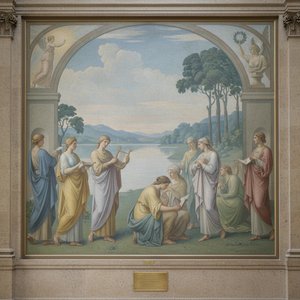
Pierre Puvis de Chavannes: Symbolism, Mural Painting, and the Pursuit of Ideal Beauty
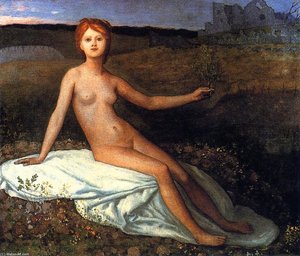
Explore the life & work of Pierre Puvis de Chavannes, a pivotal Symbolist painter renowned for his monumental murals. Discover his aesthetic principles, key artworks like 'Hope,' and lasting influence on modern art. A deep dive into 19th-century French painting.

Giclée Prints: Archival Quality & Aesthetic Nuances for the Discerning Collector
Explore the world of giclée prints with ArtsDot. Learn about archival quality, aesthetic nuances & investment potential. Expert guidance for discerning art collectors seeking museum-quality reproductions and lasting value.
The Allure of the Horizon: A Comprehensive Exploration of Seascape Art Through History & Emotion
Explore the captivating world of seascape art! Discover its history, key artists & movements – from Dutch Masters to Impressionism. Expert insights for collectors and enthusiasts at ArtsDot.