 Preview
 Send
Send Share
Share
 Details

 Download
 Similars
 X-Ray
X-Ray Diaporama
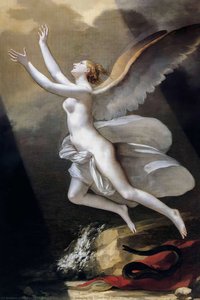
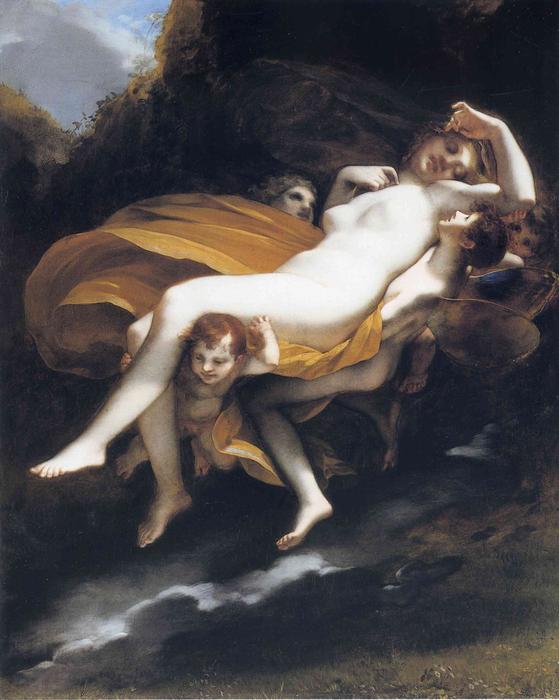
Psyche transported to Heaven
 Romanticism
 197.0 x 195.0 cm
 Read More
Hand Made Oil Reproduction
Hand-painted oil on canvas in your size and frame, made to order by our artists. ( Buy Print Buy Image)




































Pick from our preset sizes that match the artwork's original proportions.

You may enter your own dimensions to fit a specific frame or space. If your selected size does not match the original image's proportions, we will either crop the artwork or extend the painting with additional hand-painted elements. A digital mockup will be sent for your approval before production begins.
Please note that the on-screen preview does not reflect the actual cropping or extension. Only the mockup will accurately show the final composition.
While custom sizes are available, we recommend selecting a dimension from the predefined list to preserve the original proportions.
After order, ArtsDot.com team will email client for instructions and provide a mockup preview
Worldwide Delivery () in 3/4 weeks instead of standard 5 weeks. (20 August). No compromise on quality.

Free Worldwide Express Shipping

High-Quality Linen Canvas

Full Shipping Insurance

Customs Tax Refund Guarantee

True Color Matching Guarantee

60-Day Return Policy (Defects Only)

100% Money-Back Guarantee

Bulk Discount Offer
 Glass option is only available in size under 110 CM

Psyche transported to Heaven
Reproduction Medium
Reproduction Size
-


Total Price
$ 263
Artwork Description
A Celestial Ascent: Exploring Prud'hon’s "Psyche Transported to Heaven"
Pierre-Paul Prud'hon's "Psyche transported to Heaven," painted around the early 19th century, is a captivating work that embodies the transition from Neoclassicism to Romanticism in French art. Measuring an impressive 197 x 195 cm, this oil on canvas masterpiece depicts a pivotal moment from Greek mythology – Psyche’s ascension to Olympus after enduring trials of love and proving her worthiness to be with Eros (Cupid). The painting isn't just a visual narrative; it's a profound exploration of themes like devotion, redemption, and the ultimate triumph of virtue.
Romanticism & Neoclassical Echoes
Prud’hon masterfully blends elements of both artistic movements. While retaining the clarity of line and idealized forms characteristic of Neoclassicism, he infuses the scene with a palpable emotional intensity that defines Romanticism. The soft, diffused lighting, the flowing drapery, and Psyche’s serene yet yearning gaze all contribute to this emotive atmosphere. The composition itself moves away from the rigid symmetry often found in Neoclassical works, embracing a more dynamic and fluid arrangement.
Symbolism & Narrative
The painting is rich with symbolic meaning. Psyche, representing the human soul, is being lifted towards heaven by cherubs – traditional symbols of love, joy, and divine assistance. Their gentle support signifies the grace bestowed upon those who demonstrate unwavering devotion. The upward gaze of Psyche embodies aspiration and spiritual longing. Her garments, rendered in delicate folds, suggest both vulnerability and ethereal beauty. The soft blue sky filled with clouds evokes a sense of peace and transcendence, hinting at the eternal reward awaiting her. It's important to note that this scene draws from Ovid’s *Metamorphoses*, where Psyche’s journey is a testament to overcoming adversity through love and faith.
Prud'hon: A Master of Chiaroscuro & Portraiture
Pierre-Paul Prud'hon (1758-1823) was renowned for his exceptional skill in chiaroscuro – the dramatic use of light and shadow. In "Psyche transported to Heaven," this technique is evident in how Psyche and the cherubs are illuminated against a darker background, drawing the viewer's eye directly to the central narrative. Beyond this allegorical work, Prud’hon gained considerable fame for his portraits, notably those of Napoleon Bonaparte’s wives, Josephine and Marie-Louise. His ability to capture both physical likeness and psychological depth made him a sought-after artist in his time. He was admired by leading figures like Stendhal, Delacroix, Millet, and Baudelaire, further solidifying his place in art history.
Emotional Resonance & Artistic Legacy
"Psyche transported to Heaven" is more than just a depiction of a mythological scene; it's an exploration of universal human emotions – hope, longing, and the pursuit of something greater. The painting’s gentle beauty and uplifting narrative continue to resonate with audiences today, making it a timeless masterpiece that speaks to the enduring power of love and redemption. Its influence can be seen in later Romantic artists who sought to convey emotional depth through their works.
Related Artworks
Artist Biography
Pierre-Paul Prud'hon: A Life in Art
- Born: Cluny, France (1758)
- Died: 1823
- Nationality: French
Pierre-Paul Prud’hon was a pivotal figure in French art, bridging the transition from Neoclassicism to Romanticism. Born in Cluny, Saône-et-Loire, France, his artistic journey reflects the changing aesthetic landscape of late 18th and early 19th century Europe. He is celebrated for both his allegorical paintings and portraits, demonstrating a mastery of chiaroscuro and realism that captivated audiences and influenced subsequent generations.
Early Life and Training
- Provincial Beginnings: Prud’hon received his initial artistic training in the French provinces.
- Dijon Scholarship: In 1774, he secured a municipal scholarship to attend the École de Dessin in Dijon, marking a significant step towards formal artistic education.
- Rome and Neoclassical Influences: He traveled to Rome in 1784, where he immersed himself in the study of classical art, particularly admiring the works of Canova and Correggio. This period profoundly shaped his early style, imbuing it with a sense of elegance and idealized form characteristic of Neoclassicism.
Artistic Career and Royal Patronage
- Revolutionary Allegories: Prud’hon's work gained prominence during the French Revolution, producing vignettes, book illustrations, and allegorical paintings that resonated with republican ideals.
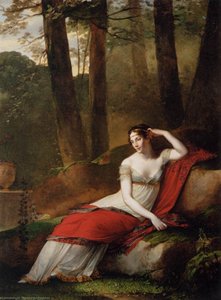
- Napoleon's Court Painter: His talent attracted the attention of Napoleon Bonaparte, who commissioned him to paint portraits of both Joséphine de Beauharnais and Marie-Louise d’Autriche. The portrait of Joséphine, in particular, depicted her not as an empress but as a captivating woman, fueling speculation about a possible romantic relationship between the artist and the former queen.
- Bridging Styles: Prud'hon skillfully navigated the evolving artistic trends of his time, incorporating elements of both Neoclassicism and Romanticism into his work. While maintaining a classical foundation in composition and form, he infused his paintings with emotional depth and dramatic lighting that foreshadowed the Romantic movement.
Major Works and Artistic Legacy
- Madame Georges Anthony and Her Two Sons (1796): An early example of his portraiture skills, showcasing a refined elegance.
- The Soul Breaking the Links Holding it to the Earth: A powerful allegorical work demonstrating his ability to convey complex emotions through symbolic imagery.
- The Dream of Happiness: A poignant exploration of human aspirations and desires.
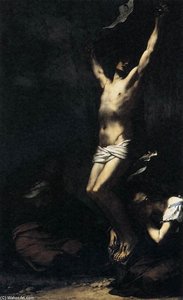
- Crucifixion (1822): Commissioned for St. Etienne's Cathedral in Metz, now housed in the Louvre, this work is considered one of his most significant achievements.
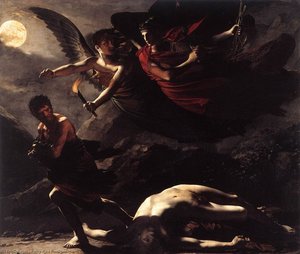
- Justice and Divine Vengeance Pursuing Crime: A monumental masterpiece that anticipates the dramatic intensity of Géricault’s *The Raft of the Medusa*.
Influence and Historical Significance
Prud'hon exerted a considerable influence on subsequent generations of French artists. His mastery of chiaroscuro, his ability to imbue portraits with psychological depth, and his synthesis of Neoclassical and Romantic styles made him a highly respected figure in the art world. Artists such as Théodore Géricault and Eugène Delacroix acknowledged his impact, drawing inspiration from his dramatic compositions and emotional expressiveness. Stendhal, Millet, and Baudelaire also recognized Prud'hon’s artistic merit, further solidifying his place in French cultural history.
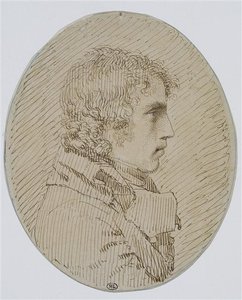
Pierre-Paul Prud'hon
1758 - 1823 , France
Quick Facts
- Artistic Movement Or Style: Neoclassicism & Romanticism
- Artists Or Movements Influenced By This Artist:
- Théodore Géricault
- Delacroix
- Artists Who Influenced This Artist:
- Antonio Canova
- Leonardo da Vinci
- Correggio
- Date Of Birth: April 4, 1758
- Date Of Death: February 16, 1823
- Full Name: Pierre-Paul Prud'hon
- Nationality: French
- Notable Artworks:
- Madame Georges Anthony and her sons
- The Soul Breaking the Links
- The Dream of Happiness
- Crucifixion
- Justice and Divine Vengeance
- Place Of Birth: Cluny, France
Related Articles
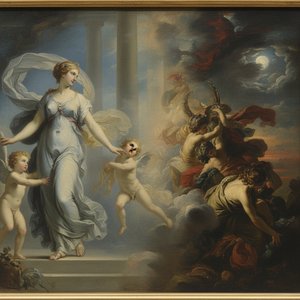
Pierre-Paul Prud'hon: Exploring Neoclassical Sensibility & Romantic Precursors
Explore the captivating world of Pierre-Paul Prud'hon, a pivotal French painter bridging Neoclassicism & Romanticism. Discover his allegorical masterpieces and lasting influence on 19th-century art history.
Echoes of Olympus: Mythological Narratives in Western Art Through the Ages
Explore the captivating history of mythological narratives in Western art! From ancient Greece to modern masterpieces, discover iconic artworks & symbolism. Expert analysis and high-quality reproductions at ArtsDot.
The Evocative Brushstroke: Exploring Emotion, Individuality & the Sublime in Romanticism's Artistic Landscape
Explore the passionate world of Romanticism! Discover masterpieces by Friedrich & Goya, delve into the sublime, and understand the movement's lasting impact on art history. Expert analysis & insights at ArtsDot.
Romanticism's Greatest Artworks: 10 Masterpieces for Your Home |
Journey through Romanticism's soul with 10 iconic artworks by Delacroix, Goya & Turner. Explore emotional landscapes and historical drama. Find museum-quality art reproductions to elevate your home at – Discover all masterpieces online!
The Sublime and the Sensual: Exploring Emotion & Individuality in Romanticism's Artistic Revolution
Explore the passionate world of Romanticism! Discover masterpieces by Friedrich & Goya, delve into the sublime, and understand the movement's lasting impact on art history. Expert analysis & insights.