 Preview
 Send
Send Share
Share
 Details

 Download
 Similars
 X-Ray
X-Ray Diaporama
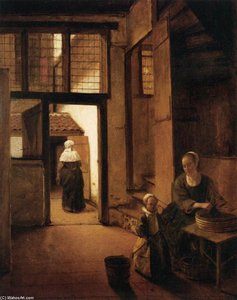
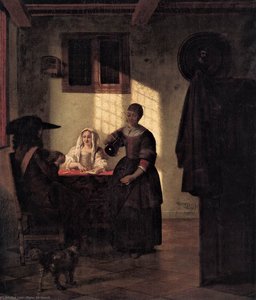
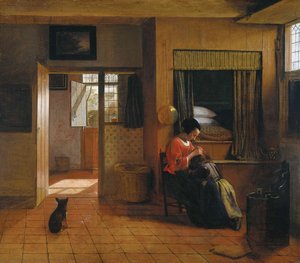
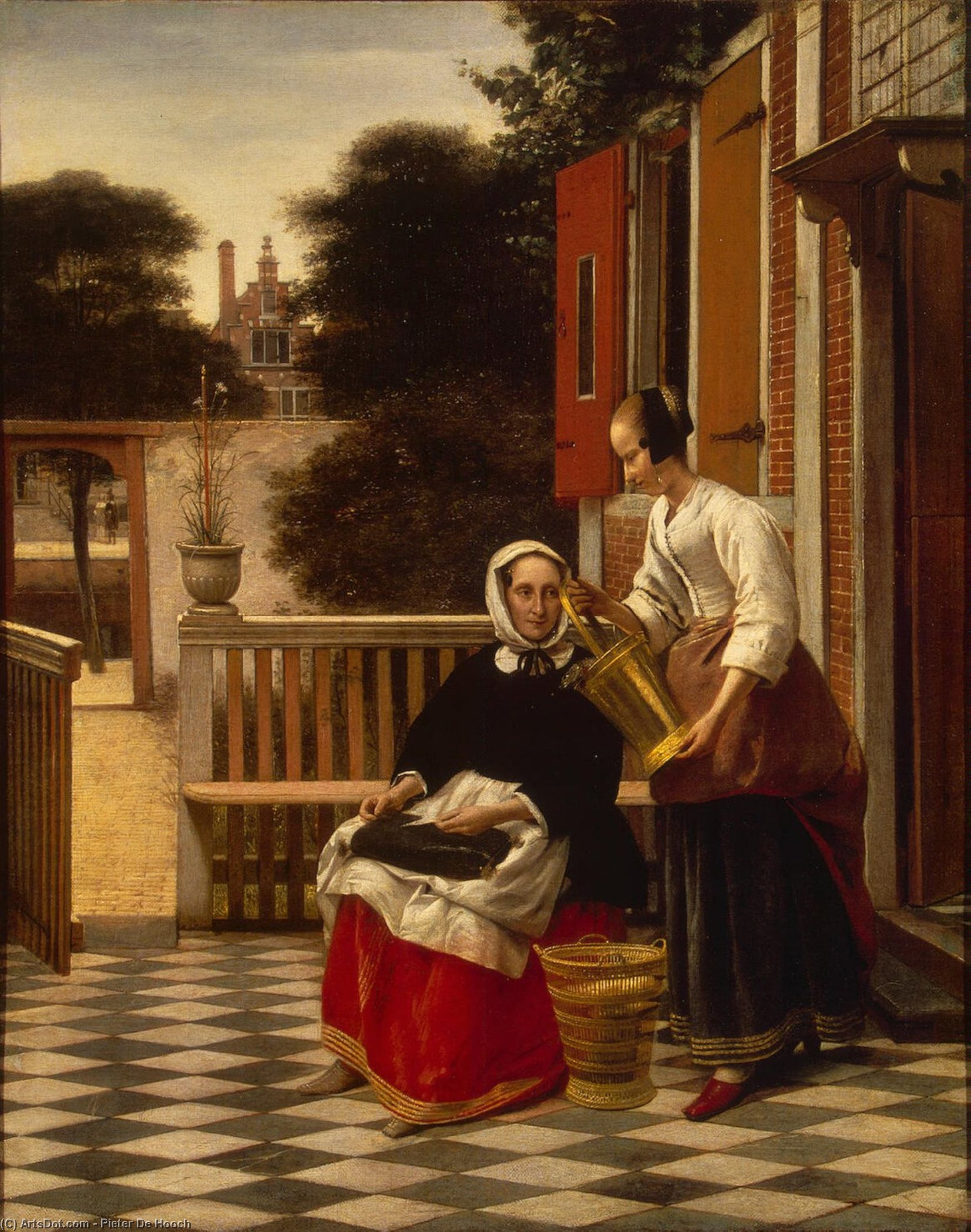
Woman and Maid
 Oil On Canvas
- WallArt
- Dutch Golden Age
 1657
1657- Early Modern
 53.0 x 42.0 cm
 Hermitage Museum
 Read More
Giclée / Art Print
Museum-quality giclée or canvas print with fast production and flexible finish options. ( Buy Hand Made Painting Buy Image)




P118B $10

P118H $10

P118W $10

P438Z $10

P508JH $12

P508YH $12

P805H $10

P805Z $10

P919BZ $10

P919G $10

P919XJ $10

P959ZH $10

P968JZ $12

W106C $8

W218G $10

W218JH $8

W218Y $10

W307PJ $10

W316G $10

W316PJ $8

W316Y $10

W398PJ $8

W4111J $10

W500HY $15

W500JH $15

W692G $12

W849H $8

W940BG $15

W953PJ $8




Pick from our preset sizes that match the artwork's original proportions.

You may enter your own dimensions to fit a specific frame or space. If your selected size does not match the original image's proportions, we will either crop the artwork or extend the image with a mirrored or solid-fill edge. A digital mockup will be sent for your approval before production begins.
Please note that the on-screen preview does not reflect the actual cropping or extension. Only the mockup will accurately show the final composition.
While custom sizes are available, we recommend selecting a dimension from the predefined list to preserve the original proportions.
Worldwide Delivery () in 2 weeks instead of standard 4/5 weeks. (25 August)

Free Worldwide Express Shipping

High-Quality Linen Canvas

Full Shipping Insurance

Customs Tax Refund Guarantee

True Color Matching Guarantee

60-Day Return Policy (Defects Only)

100% Money-Back Guarantee

Bulk Discount Offer
 Glass option is only available in size under 110 CM

Woman and Maid
Giclée / Art Print
Reproduction Size
-


Total Price
$ 63
Collectible Description
A Quiet Radiance in Delft: The Soul of De Hooch’s Domesticity
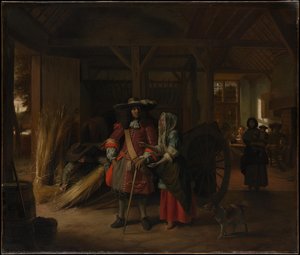
In the soft, diffused light of a seventeenth-century Dutch courtyard, time seems to suspend itself within Pieter de Hooch’s “Woman and Maid.” Painted around 1657, this masterpiece serves as a profound window into the Dutch Golden Age, capturing much more than a mere household chore. It is an intimate study of domestic harmony, where the boundaries between labor and leisure blur under a gentle, atmospheric glow. As one gazes upon the two figures—one likely a mistress and the other her devoted maid—there is an immediate sense of peace that transcends the centuries. The scene, currently preserved in the prestigious Hermitage Museum, invites the viewer to step into a world where the mundane is elevated to the monumental through masterful observation.
The composition is anchored by a remarkable command of space and light, a technique that places de Hooch in the same breath as his contemporary, Johannes Vermeer. The artist utilizes chiaroscuro not for dramatic tension, but to sculpt form and breathe life into the textures of the courtyard. One can almost feel the coolness of the stone, the weight of the wooden buckets, and the delicate touch of the potted plant being tended. De Hooch’s ability to manipulate light—allowing it to spill across the ground and illuminate the subtle folds of fabric—creates an immersive, three-dimensional experience. This interplay of shadow and luminosity does more than just define the physical environment; it imbues the very air of the painting with a sense of quiet sanctity.
The Art of the Everyday: Symbolism and Social Texture
Beyond its technical brilliance, “Woman and Maid” is a rich tapestry of social narrative. During this era, the Dutch middle class found great pride in the cleanliness and order of their homes, viewing domestic stability as a reflection of moral virtue. The presence of the bucket and the act of tending to greenery are not merely incidental; they symbolize the diligence and care that underpinned the prosperity of the Netherlands. There is a subtle, unspoken dialogue occurring between the two women, a shared moment of connection that suggests a deep-rooted social cohesion within the household. This focus on the "humanist spirit"—the celebration of authentic, lived experience—is what makes the piece so enduringly relatable to modern sensibilities.
For the discerning collector or interior designer, this artwork offers a unique opportunity to introduce a sense of tranquility and timelessness into a space. The muted palette of earth tones, softened by the ethereal light, allows the painting to serve as a sophisticated focal point that complements both classical and contemporary decor. It does not demand attention through loud colors or jarring subjects; instead, it commands respect through its subtle elegance and emotional depth. To possess a reproduction of such a work is to bring a piece of history’s most peaceful afternoon into one's own home, fostering an atmosphere of reflection and grace.
Related Artworks

Artist Biography
early life and training
pieter de hooch, a prominent figure in the dutch golden age, was born on december 20, 1629, in rotterdam, netherlands. he was the eldest of five children to hendrick hendricksz de hooch, a bricklayer, and annetge pieters, a midwife. little is known about his early life, but it is believed that he worked in rotterdam, delft, and amsterdam. de hooch's artistic training took place in haarlem under the landscape painter nicolaes berchem, alongside jacob ochtervelt. this period laid the foundation for his future success as a painter of quiet domestic scenes with an open doorway.artistic style and themes
de hooch's work is characterized by its attention to detail, naturalism, and use of light. his paintings often featured everyday life, reflecting the values and aspirations of the emerging middle class. a notable example of this style is "the courtyard of a house in delft" (1658), which showcases his ability to capture the mundane details of everyday life. de hooch's work also shares themes and compositions with emanuel de witte, but his focus on people and their relationships sets him apart. this is evident in "woman nursing" (1658) and "woman with a baby on her lap" (1658), which demonstrate his interest in domestic scenes.notable works and legacy
some of de hooch's most notable works include:- "the merry drinker" (c. 1650)
- "cardplayers in a sunlit room" (1658)
- "a woman preparing bread and butter for a boy" (1661)
museums and collections
de hooch's work can be found in various museums, including the koninklijk museum voor schone kunsten in antwerp, belgium, which features a vast collection of european art from the 15th to the 20th centuries. discover more about pieter de hooch and his works on ArtsDot: [https://ArtsDot.com/@/pieter-de-hooch](https://ArtsDot.com/@/pieter-de-hooch) /en/art/show/art-d3b4kt-en/ (discover the masterpieces of koninklijk museum voor schone kunsten, belgium) note: the provided links are from ArtsDot and are relevant to the topic. no external links were added as per the instructions.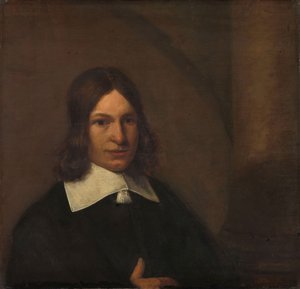
Pieter de Hooch
1629 - 1694 , Netherlands
Quick Facts
- Artistic Movement Or Style: Delft School, Dutch Golden Age
- Artists Or Movements Influenced By This Artist: ['Jan Vermeer']
- Artists Who Influenced This Artist: ['Nicolaes Berchem']
- Date Of Birth: December 20, 1629
- Full Name: Pieter Hendricksz de Hooch
- Nationality: Dutch
- Notable Artworks:
- The Empty Glass
- Woman Reading a Letter
- Cardplayers in a sunlit room
- A woman preparing bread and butter
- Place Of Birth: Rotterdam, Netherlands
Related Articles

Dutch Masters: 10 Golden Age Paintings That Still Inspire |
Journey into the Dutch Golden Age! Explore 10 iconic paintings by Rembrandt, Vermeer & Hals. Discover the stories behind these Baroque masterpieces and find museum-quality art reproductions to elevate your home decor on .

Golden Age Reflections: Dutch Baroque Painting & Cultural Innovation
Explore the Dutch Golden Age of painting! Discover key artists like Vermeer & ter Borch, their innovative techniques, and the rich cultural context behind these Baroque masterpieces. Learn about collecting & appreciating this iconic art period.

Illuminating Innovation: Exploring the Dutch Golden Age of Painting
Explore the Dutch Golden Age of painting with ArtsDot. Discover Rembrandt, Vermeer & other Masters. Learn about key characteristics, iconic artworks, and lasting influence. Expert insights for collectors & enthusiasts.
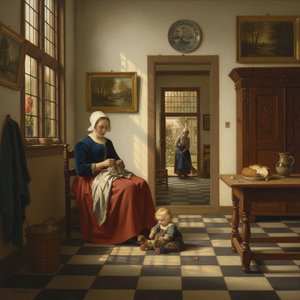
Pieter de Hooch: Illuminating Dutch Domestic Life & Golden Age Charm
Explore the captivating world of Pieter de Hooch, a master of Dutch Golden Age painting. Discover his innovative use of light, intimate domestic scenes, and lasting influence on art history. Learn more at ArtsDot.
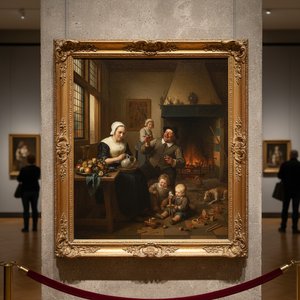
Genre Painting: A Window into Daily Life & Societal Values of the Dutch Golden Age
Explore the captivating world of Dutch Golden Age genre painting! Discover realistic depictions of daily life, masterful artists like Ostade & Metsu, and hidden symbolism. Learn about this influential art movement with ArtsDot.