 Preview
 Send
Send Share
Share
 Details

 Download
 Similars
 X-Ray
X-Ray Diaporama
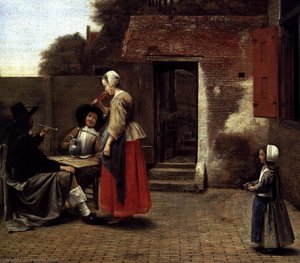
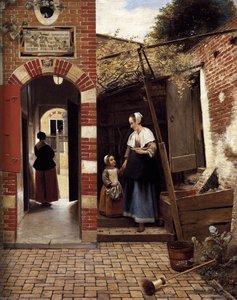
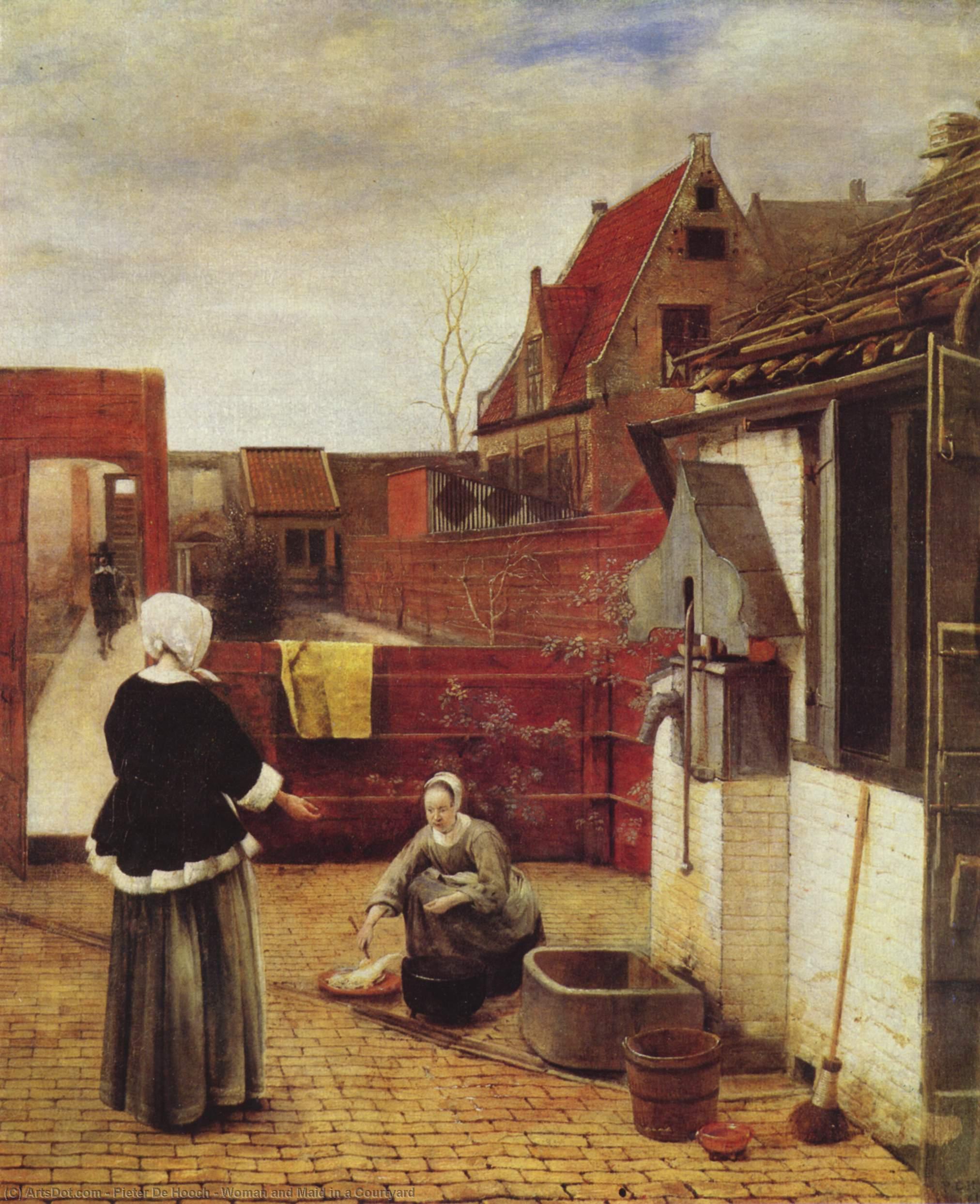
Woman and Maid in a Courtyard
 Watercolor
- WallArt
- Baroque
 1660
1660- Early Modern
 73.0 x 62.0 cm
 National Gallery
 Read More
Hand Made Oil Reproduction
Hand-painted oil on canvas in your size and frame, made to order by our artists. ( Buy Print Buy Image)




P118B $10

P118H $10

P118W $10

P438Z $10

P508JH $12

P508YH $12

P805H $10

P805Z $10

P919BZ $10

P919G $10

P919XJ $10

P959ZH $10

P968JZ $12

W106C $8

W218G $10

W218JH $8

W218Y $10

W307PJ $10

W316G $10

W316PJ $8

W316Y $10

W398PJ $8

W4111J $10

W500HY $15

W500JH $15

W692G $12

W849H $8

W940BG $15

W953PJ $8




Pick from our preset sizes that match the artwork's original proportions.

You may enter your own dimensions to fit a specific frame or space. If your selected size does not match the original image's proportions, we will either crop the artwork or extend the painting with additional hand-painted elements. A digital mockup will be sent for your approval before production begins.
Please note that the on-screen preview does not reflect the actual cropping or extension. Only the mockup will accurately show the final composition.
While custom sizes are available, we recommend selecting a dimension from the predefined list to preserve the original proportions.
After order, ArtsDot.com team will email client for instructions and provide a mockup preview
Worldwide Delivery () in 3/4 weeks instead of standard 5 weeks. (31 August). No compromise on quality.

Free Worldwide Express Shipping

High-Quality Linen Canvas

Full Shipping Insurance

Customs Tax Refund Guarantee

True Color Matching Guarantee

60-Day Return Policy (Defects Only)

100% Money-Back Guarantee

Bulk Discount Offer
 Glass option is only available in size under 110 CM

Woman and Maid in a Courtyard
Reproduction Medium
Reproduction Size
-


Total Price
$ 263
A Window into Domestic Tranquility
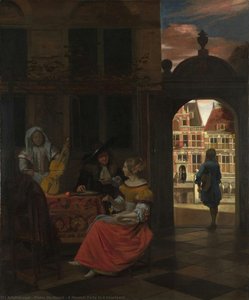
In the quiet corners of the seventeenth century, amidst the bustling commerce of the Dutch Golden Age, Pieter de Hooch captured something far more precious than gold: the profound beauty of the everyday. His masterpiece, "Woman and Maid in a Courtyard," painted circa 1660, serves as an exquisite window into a world of domestic serenity. This is not a scene of grand historical drama or mythological upheaval; rather, it is a tender tableau of human connection and quietude. As we gaze upon the interaction between the standing woman and her kneeling maid, we are invited to step into a sun-drenched courtyard where time seems to slow, offering a momentary escape into a realm of absolute peace.
The composition breathes with a sense of structured intimacy. The figures, draped in long, flowing dresses that anchor them to the earth, exist in a harmonious dialogue with their surroundings. A potted plant sits near the center, acting as a subtle organic bridge between the human subjects and the architectural elements of the background. Through De Hooch’s eyes, even the most mundane domestic chore or quiet conversation is elevated to a level of poetic significance, making this piece an ideal focal point for any space seeking to evoke a sense of calm, stability, and refined grace.
The Alchemy of Light and Texture
What truly distinguishes De Hooch from his contemporaries is his unparalleled ability to manipulate light. While other Baroque masters utilized dramatic, theatrical shadows to command attention, De Hooch employed a more subtle, luminous approach. In this work, he achieves an ethereal glow through the masterful layering of translucent washes. This technique allows light to permeate the scene, softly defining the rough texture of stone walls and the delicate folds of fabric without the need for harsh contrasts. The result is a diffused illumination that feels natural, as if the afternoon sun is filtering gently through a hazy sky.
The artist’s technical precision is further revealed in his treatment of surfaces. Using a sophisticated blend of watercolor and gouache on ivory paper, he creates a tactile experience for the viewer. One can almost feel the coolness of the courtyard walls and the smoothness of the ceramic pots. For the discerning collector or interior designer, this meticulous attention to detail ensures that a high-quality reproduction retains its depth and vitality, bringing a sophisticated, multi-dimensional texture to a room's decor. The interplay of light and shadow creates a rhythmic movement across the canvas, guiding the eye through the composition in a continuous, soothing loop.
A Legacy of Dutch Elegance
To understand "Woman and Maid in a Courtyard" is to understand the soul of the emerging Dutch middle class. During this era, the prosperity of Amsterdam and surrounding cities fostered a new appreciation for the virtues of the home: cleanliness, order, and quiet devotion. De Hooch’s work reflects these societal values, presenting the domestic sphere as a sanctuary of moral and aesthetic excellence. His ability to find the extraordinary within the ordinary resonates deeply with modern sensibilities, where the concept of "hygge" or mindful living finds its historical ancestor in his courtyard scenes.
For those looking to adorn their homes with art that inspires contemplation, this painting offers more than mere decoration; it offers an atmosphere. Whether placed in a sunlit reading nook or as a centerpiece in a formal gallery, the artwork radiates a timeless elegance. It stands as a testament to the enduring power of the Dutch Golden Age—a period where light, life, and legacy converged to create some of the most beloved imagery in the history of Western art.
Related Artworks




Artist Biography
early life and training
pieter de hooch, a prominent figure in the dutch golden age, was born on december 20, 1629, in rotterdam, netherlands. he was the eldest of five children to hendrick hendricksz de hooch, a bricklayer, and annetge pieters, a midwife. little is known about his early life, but it is believed that he worked in rotterdam, delft, and amsterdam. de hooch's artistic training took place in haarlem under the landscape painter nicolaes berchem, alongside jacob ochtervelt. this period laid the foundation for his future success as a painter of quiet domestic scenes with an open doorway.artistic style and themes
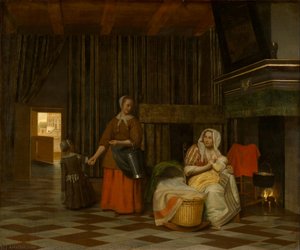
de hooch's work is characterized by its attention to detail, naturalism, and use of light. his paintings often featured everyday life, reflecting the values and aspirations of the emerging middle class. a notable example of this style is "the courtyard of a house in delft" (1658), which showcases his ability to capture the mundane details of everyday life. de hooch's work also shares themes and compositions with emanuel de witte, but his focus on people and their relationships sets him apart. this is evident in "woman nursing" (1658) and "woman with a baby on her lap" (1658), which demonstrate his interest in domestic scenes.notable works and legacy
some of de hooch's most notable works include:- "the merry drinker" (c. 1650)
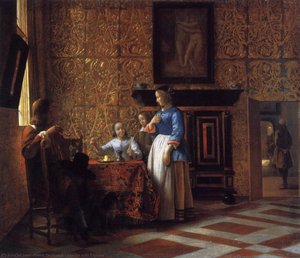
- "cardplayers in a sunlit room" (1658)
- "a woman preparing bread and butter for a boy" (1661)
museums and collections
de hooch's work can be found in various museums, including the koninklijk museum voor schone kunsten in antwerp, belgium, which features a vast collection of european art from the 15th to the 20th centuries. discover more about pieter de hooch and his works on ArtsDot: [https://ArtsDot.com/@/pieter-de-hooch](https://ArtsDot.com/@/pieter-de-hooch) /en/art/show/art-d3b4kt-en/ (discover the masterpieces of koninklijk museum voor schone kunsten, belgium) note: the provided links are from ArtsDot and are relevant to the topic. no external links were added as per the instructions.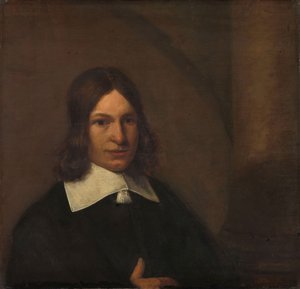
Pieter de Hooch
1629 - 1694 , Netherlands
Quick Facts
- Artistic Movement Or Style: Delft School, Dutch Golden Age
- Artists Or Movements Influenced By This Artist: ['Jan Vermeer']
- Artists Who Influenced This Artist: ['Nicolaes Berchem']
- Date Of Birth: December 20, 1629
- Full Name: Pieter Hendricksz de Hooch
- Nationality: Dutch
- Notable Artworks:
- The Empty Glass
- Woman Reading a Letter
- Cardplayers in a sunlit room
- A woman preparing bread and butter
- Place Of Birth: Rotterdam, Netherlands
Related Articles
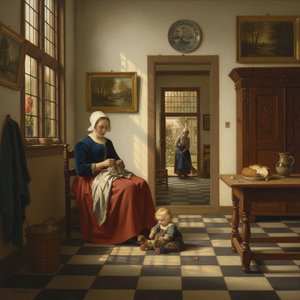
Pieter de Hooch: Illuminating Dutch Domestic Life & Golden Age Charm
Explore the captivating world of Pieter de Hooch, a master of Dutch Golden Age painting. Discover his innovative use of light, intimate domestic scenes, and lasting influence on art history. Learn more at ArtsDot.

Dutch Masters: 10 Golden Age Paintings That Still Inspire |
Journey into the Dutch Golden Age! Explore 10 iconic paintings by Rembrandt, Vermeer & Hals. Discover the stories behind these Baroque masterpieces and find museum-quality art reproductions to elevate your home decor on .

Willem van de Velde the Elder: Master of Maritime Painting & Chronicler of the Dutch Golden Age
Discover the captivating maritime paintings of Willem van de Velde the Elder, a master chronicler of the Dutch Golden Age. Explore his unparalleled realism and lasting influence on naval art history.

Golden Age Reflections: Dutch Baroque Painting & Cultural Innovation
Explore the Dutch Golden Age of painting! Discover key artists like Vermeer & ter Borch, their innovative techniques, and the rich cultural context behind these Baroque masterpieces. Learn about collecting & appreciating this iconic art period.

Illuminating Innovation: Exploring the Dutch Golden Age of Painting
Explore the Dutch Golden Age of painting with ArtsDot. Discover Rembrandt, Vermeer & other Masters. Learn about key characteristics, iconic artworks, and lasting influence. Expert insights for collectors & enthusiasts.