 Preview
 Send
Send Share
Share
 Details

 Download
 Similars
 X-Ray
X-Ray Diaporama
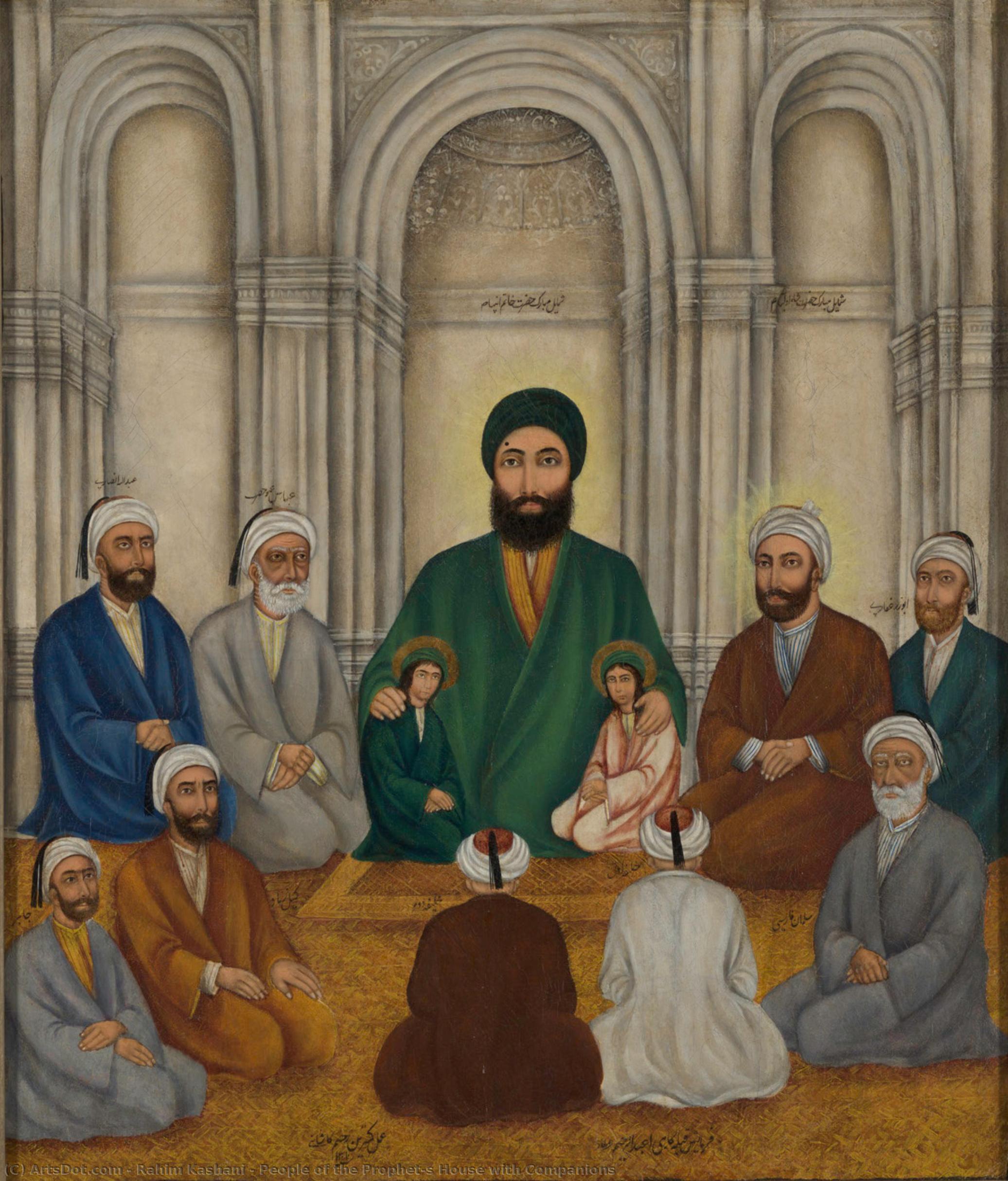
People of the Prophet's House with Companions


 Read More
Giclée / Art Print
Museum-quality giclée or canvas print with fast production and flexible finish options. ( Buy Hand Made Painting Buy Image)




































Pick from our preset sizes that match the artwork's original proportions.

You may enter your own dimensions to fit a specific frame or space. If your selected size does not match the original image's proportions, we will either crop the artwork or extend the image with a mirrored or solid-fill edge. A digital mockup will be sent for your approval before production begins.
Please note that the on-screen preview does not reflect the actual cropping or extension. Only the mockup will accurately show the final composition.
While custom sizes are available, we recommend selecting a dimension from the predefined list to preserve the original proportions.
Worldwide Delivery () in 2 weeks instead of standard 4/5 weeks. (30 August)

Free Worldwide Express Shipping

High-Quality Linen Canvas

Full Shipping Insurance

Customs Tax Refund Guarantee

True Color Matching Guarantee

60-Day Return Policy (Defects Only)

100% Money-Back Guarantee

Bulk Discount Offer
 Glass option is only available in size under 110 CM

People of the Prophet's House with Companions
Giclée / Art Print
Reproduction Size
-


Total Price
$ 63
Related Artworks
Artist Biography
The Luminous Worlds of Rahim Kashani
Rahim Kashani is a contemporary artist whose work transcends the boundaries of traditional Persian miniature painting, evolving into a captivating realm of surreal landscapes and symbolic narratives. Though biographical details remain somewhat elusive – Kashani prefers to let his art speak for itself – his origins lie deeply rooted in the rich artistic heritage of Iran. He currently lives and works as an artist, continuing to refine his unique visual language. While precise dates of birth are not publicly available, his emergence onto the international art scene in the early 21st century marked a significant moment in the reinterpretation of Persian aesthetics for a global audience. Kashani’s journey is one of subtle rebellion and profound innovation; he doesn't abandon the techniques passed down through generations but rather reimagines them to explore themes of identity, memory, and the human condition within a rapidly changing world.A Legacy Reimagined: Influences and Early Development
Kashani’s artistic foundation is undeniably steeped in the centuries-old tradition of Persian miniature painting. This art form, renowned for its meticulous detail, vibrant colors, and poetic storytelling, served as his initial training ground. He mastered the demanding techniques – the preparation of handmade paper, the creation of natural pigments from precious stones and plants, and the delicate application of gold leaf – skills that remain central to his practice today. However, Kashani’s vision extended beyond mere replication. While deeply respectful of the masters who came before him, he sought to break free from the constraints of traditional subject matter and narrative structures. He began to introduce elements of surrealism, dreamlike imagery, and contemporary symbolism into his work, creating a fascinating dialogue between past and present. Early influences included not only classical Persian poetry and literature but also the works of European Surrealists like René Magritte and Salvador Dalí, whose exploration of the subconscious resonated with Kashani’s own artistic inclinations. This fusion of Eastern and Western aesthetics is a defining characteristic of his style.The Poetics of Space: Themes and Techniques
Kashani's paintings are often described as ‘inner landscapes,’ reflecting not external realities but the complex topography of the human psyche. His canvases depict fantastical gardens, architectural ruins, and enigmatic figures suspended in ethereal spaces. Recurring motifs include birds – symbols of freedom and spiritual aspiration – flowing water representing the passage of time and the fluidity of consciousness, and intricate geometric patterns that evoke a sense of order within chaos. He frequently employs a muted color palette dominated by blues, greens, and golds, creating an atmosphere of tranquility and introspection. The artist’s mastery of perspective is particularly noteworthy; he often utilizes multiple viewpoints simultaneously, challenging conventional notions of spatial representation and drawing the viewer into a disorienting yet captivating world. His technique remains remarkably faithful to traditional miniature painting – each brushstroke is deliberate and precise, resulting in surfaces that are both exquisitely detailed and subtly textured. The use of gold leaf isn’t merely decorative; it serves as a metaphor for enlightenment and spiritual illumination.Major Achievements and International Recognition
While Kashani maintains a relatively private profile, his work has garnered significant international acclaim. He has exhibited in numerous galleries and museums worldwide, captivating audiences with his unique vision and technical virtuosity. His paintings are held in prestigious collections, including those of prominent art institutions and private collectors.- His early exhibitions focused on establishing his distinct style, showcasing the fusion of traditional techniques with contemporary themes.
- Later works demonstrate a growing sophistication in his symbolic language, exploring more complex narratives related to identity, displacement, and cultural memory.
- Kashani’s ability to seamlessly blend Eastern and Western aesthetics has been widely praised by art critics and scholars alike.
Historical Significance: A Bridge Between Worlds
Rahim Kashani’s historical significance lies not only in his artistic achievements but also in his ability to bridge cultural divides. His work transcends the limitations of geographical boundaries, speaking to universal themes of human experience. In a world increasingly marked by fragmentation and polarization, Kashani offers a vision of interconnectedness and spiritual harmony. He demonstrates that tradition doesn’t have to be static; it can be reinterpreted and reimagined to address contemporary concerns. His paintings serve as a powerful reminder of the enduring beauty and relevance of Persian art, while simultaneously pushing the boundaries of artistic expression. Kashani's legacy is one of innovation, introspection, and a profound respect for the power of visual storytelling – a legacy that will undoubtedly continue to inspire artists and audiences for generations to come.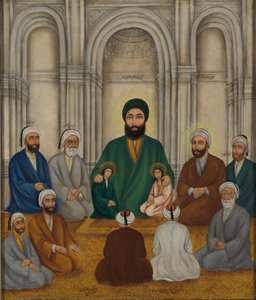
Related Articles

Sacred Narratives on Canvas: Exploring Devotional Imagery Across Art History
Explore the rich history of devotional art! Discover iconic masterpieces, symbolism & techniques from antiquity to the Renaissance. Expert insights for collectors & enthusiasts at ArtsDot.
Sacred Expressions: A Journey Through Devotional Art Across Cultures & Eras
Explore the rich history of devotional art across cultures & eras with expert insights! Discover iconic masterpieces, symbolism, and artistic techniques. A guide for collectors & enthusiasts.
Sacred Expressions: A Journey Through Devotional Art Across Cultures & Eras
Explore the rich history of devotional art across cultures & eras. Discover iconic masterpieces, symbolism, and artistic techniques. Expert insights for collectors & enthusiasts.
Echoes of 1883: A Cultural & Artistic Reflection on a Pivotal Year
Explore the vibrant art & culture of 1883! Discover Post-Impressionist masters like Toulouse-Lautrec and Van Rysselberghe. Expert insights for collectors & enthusiasts at ArtsDot.
Echoes of Faith: Devotion as Central Theme in Western Art History
Explore the rich history of religious art with ArtsDot.com! Discover iconic artworks, symbolism & techniques from antiquity to the Renaissance. Enhance your art appreciation today.