 Preview
 Send
Send Share
Share
 Details

 Download
 Similars
 X-Ray
X-Ray Diaporama
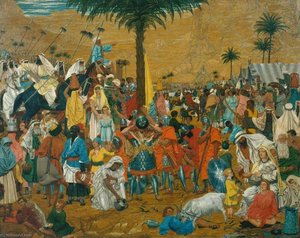
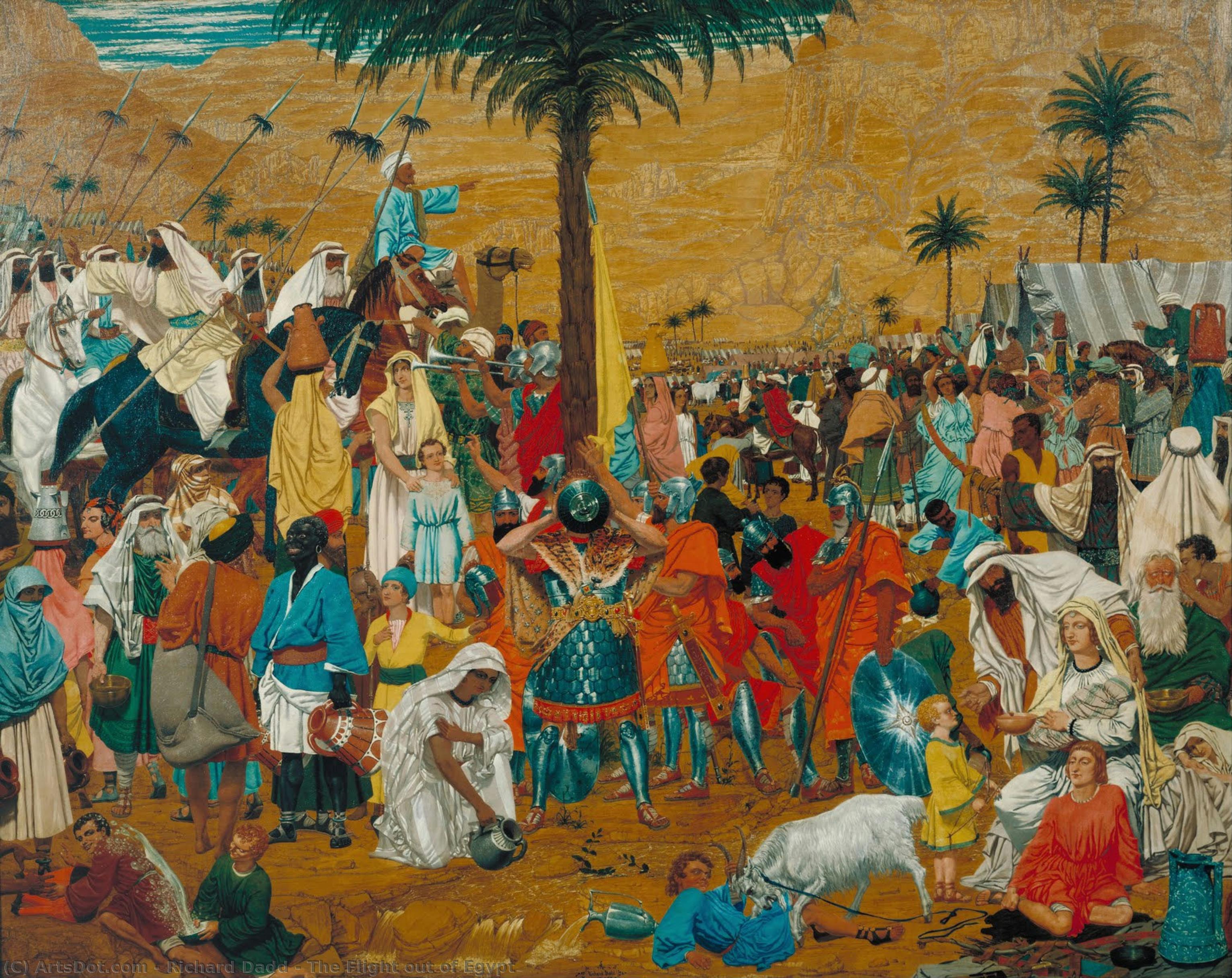
The Flight out of Egypt
 Oil On Canvas
- WallArt
- Victorian Academic
 1849
1849- 19th Century
 26.0 x 10.0 cm
 Tate Britain
 Read More
Hand Made Oil Reproduction
Hand-painted oil on canvas in your size and frame, made to order by our artists. ( Buy Print Buy Image)




P118B $10

P118H $10

P118W $10

P438Z $10

P508JH $12

P508YH $12

P805H $10

P805Z $10

P919BZ $10

P919G $10

P919XJ $10

P959ZH $10

P968JZ $12

W106C $8

W218G $10

W218JH $8

W218Y $10

W307PJ $10

W316G $10

W316PJ $8

W316Y $10

W398PJ $8

W4111J $10

W500HY $15

W500JH $15

W692G $12

W849H $8

W940BG $15

W953PJ $8




Pick from our preset sizes that match the artwork's original proportions.

You may enter your own dimensions to fit a specific frame or space. If your selected size does not match the original image's proportions, we will either crop the artwork or extend the painting with additional hand-painted elements. A digital mockup will be sent for your approval before production begins.
Please note that the on-screen preview does not reflect the actual cropping or extension. Only the mockup will accurately show the final composition.
While custom sizes are available, we recommend selecting a dimension from the predefined list to preserve the original proportions.
After order, ArtsDot.com team will email client for instructions and provide a mockup preview
Worldwide Delivery () in 3/4 weeks instead of standard 5 weeks. (17 August). No compromise on quality.

Free Worldwide Express Shipping

High-Quality Linen Canvas

Full Shipping Insurance

Customs Tax Refund Guarantee

True Color Matching Guarantee

60-Day Return Policy (Defects Only)

100% Money-Back Guarantee

Bulk Discount Offer
 Glass option is only available in size under 110 CM

The Flight out of Egypt
Reproduction Medium
Reproduction Size
-


Total Price
$ 263
Artwork Description
A Journey Etched in Oil: Exploring The Flight out of Egypt
To stand before Richard Dadd's depiction of The Flight out of Egypt is to be swept away by a tide of human drama and profound movement. This large oil on canvas, dating from 1849, is far more than a mere historical tableau; it is a vibrant chronicle of exodus, resilience, and the enduring spirit of community under duress. Dadd masterfully captures not just the physical journey—the weary steps, the rhythmic gait of the animals—but the very emotional weight carried by every soul depicted. The scene pulses with life: men and women, clad in richly varied costumes suggesting diverse origins, move together across the canvas. From those mounted upon horses to the families walking hand-in-hand, the composition is a breathtaking study in organized chaos.
The Artistry of Richard Dadd
Richard Dadd himself remains one of the most fascinating and complex figures in Victorian art. His life, marked by both dazzling artistic promise and deep psychological turmoil, imbues his work with an almost feverish intensity. While he was part of a group known for meticulous realism, here, in this depiction, we see that technical skill channeled through narrative urgency. The technique employed is characteristic of the period's grand genre painting—a rich application of oil paint on canvas that allows every fold of drapery, every strand of hair, and every texture of animal hide to emerge with startling clarity. Observe the interplay between the figures and the natural elements; even the few birds soaring above seem integral to the narrative flow, guiding the viewer's eye across the breadth of the scene.
Symbolism and Emotional Resonance
The subject matter itself—the flight from Egypt—is steeped in potent symbolism. It speaks universally of leaving a place of perceived safety for an uncertain future; it is the archetype of migration, both literal and spiritual. The inclusion of domestic animals—the dog, the sheep, the cow—grounds the epic scope of the human drama in tangible reality. They are not mere props; they represent sustenance, connection to home, and the necessary burdens carried by survival. Emotionally, the painting resonates with a powerful sense of shared humanity. Despite the potential peril implied by their flight, there is an underlying current of mutual support, a quiet determination that speaks volumes about the bonds forged between people facing adversity together.
Bringing History Home: Decorating with Masterful Narrative
For the collector or designer seeking to infuse a space with depth and storied character, this reproduction offers unparalleled narrative power. The scale (26 x 10 cm) allows it to function beautifully as a focal point in an entryway, a study, or a gallery setting, commanding attention without overwhelming the room. Owning a piece like this is not simply acquiring art; it is curating a moment of contemplation—a pause amidst the hustle of modern life to consider themes of journey, endurance, and the enduring power of human connection. It invites conversation, demanding that the viewer slow down and absorb the rich tapestry woven by Dadd’s brush.
Related Artworks


Artist Biography
A Life Shrouded in Fantasy and Turmoil
Richard Dadd, a name that resonates with both artistic brilliance and profound psychological distress, remains one of the most compelling figures within Victorian art. Born in 1817 at Chatham, Kent, his life was a captivating yet tragic narrative—a journey from promising Royal Academy student to resident of Bethlem and Broadmoor Hospitals, all while producing works of astonishing detail and haunting beauty. From an early age, Dadd displayed a remarkable aptitude for drawing, nurtured during his schooling at King’s School, Rochester. This talent propelled him towards the prestigious Royal Academy of Arts, where he was admitted at twenty years old and awarded a medal for life drawing in 1840. He quickly integrated into London's vibrant art scene, becoming a founding member of “The Clique,” alongside artists like William Powell Frith and Augustus Egg—a group known for their narrative skill and meticulous realism. Early successes included illustrations for *Book of British Ballads* and the frontispiece for *Kentish Coronal*, showcasing his developing mastery of illustrative storytelling. These works hinted at the fantastical inclinations that would later define his most celebrated, yet deeply personal, creations.The Shadow Over the Nile
A pivotal moment—and a tragic turning point—occurred in 1842 when Dadd accompanied Sir Thomas Phillips on an expedition to the Middle East. The journey through Europe, Greece, Turkey, Syria, and Egypt initially seemed a grand opportunity for artistic exploration. However, as they travelled up the Nile, a disturbing transformation began to overtake Dadd. He experienced a dramatic shift in personality, succumbing to delusional beliefs centered around the Egyptian god Osiris and an increasing sense of persecution. Upon his return to England in 1843, his condition rapidly deteriorated, culminating in a horrific act: the murder of his father, driven by the conviction that he was battling the embodiment of evil. This event led to Dadd’s arrest, a brief escape attempt, and ultimately, his commitment to Bethlem Psychiatric Hospital—a place then known as Bedlam. Modern understanding suggests Dadd suffered from paranoid schizophrenia, a condition tragically echoed within other members of his family.Art Within the Walls
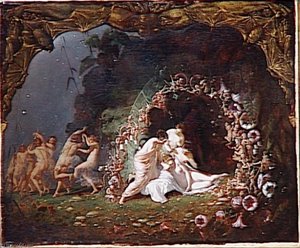
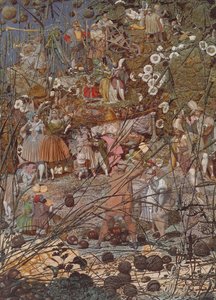
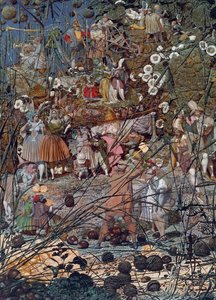
Despite his confinement, Dadd’s artistic spirit was not extinguished. Remarkably, enlightened doctors like William Wood and Sir W. Charles Hood recognized the therapeutic value of art and actively encouraged him to continue painting. It was during his decades within Bethlem and later Broadmoor Hospitals that he created many of his most iconic works. The Fairy Feller's Master-Stroke, a sprawling, intricately detailed depiction of the fairy realm, became his magnum opus—a testament to both his artistic skill and his fractured psyche. This painting, along with numerous others, reveals a world teeming with fantastical creatures, meticulously rendered foliage, and an unsettling sense of unease. Beyond the fairies, Dadd continued to explore other subjects: portraits, like that of Dr. Alexander Morison; series such as *Sketches to Illustrate the Passions*, offering poignant glimpses into human emotion; and detailed shipping scenes and landscapes—like *Port Stragglin*—that showcased his remarkable ability to capture both imagination and memory with a miniaturist’s precision. These works weren't merely diversions, but rather profound expressions of his inner world, born from the confines of institutional life.A Legacy Rediscovered
Richard Dadd’s artistic vision was—and remains—unique. His work stands apart for its obsessive detail, fantastical subject matter, and psychological depth. He wasn't simply illustrating fairies or orientalist scenes; he was constructing entire worlds imbued with a haunting beauty and an underlying sense of melancholy. While largely overlooked for many years after his death in 1886, Dadd’s art has experienced a significant revival in recent decades. His influence can be seen in the work of numerous artists, writers, and musicians—most notably, the rock band Queen, whose song “The Fairy Feller's Master-Stroke” is directly inspired by his painting. Terry Pratchett also acknowledged Dadd’s impact on his own fantastical creations. Today, Richard Dadd is recognized as a crucial figure in Victorian art history—a testament to the enduring power of creativity even in the face of profound personal suffering. His paintings continue to captivate and disturb, offering viewers a glimpse into a mind both brilliantly imaginative and tragically fractured. His story serves as a poignant reminder that artistic genius can often coexist with inner turmoil.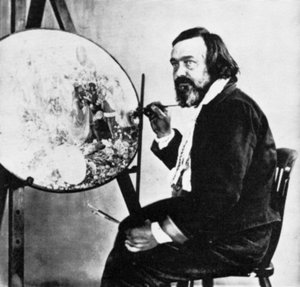
Richard Dadd
1817 - 1886 , United Kingdom
Quick Facts
- Artistic Movement Or Style: Victorian, Fantastical
- Artists Or Movements Influenced By This Artist:
- Queen (band)
- Terry Pratchett
- Date Of Birth: 1817
- Date Of Death: 1886
- Full Name: Richard Dadd
- Nationality: British
- Notable Artworks:
- The Death of Richard II
- The Diadonos
- Fairy Feller's Master-Stroke
- Port Stragglin
- Place Of Birth: Chatham, UK
Related Articles

The Enduring Legacy of Oil on Canvas: Technique, History & Aesthetic Impact
Explore the rich history & techniques of oil painting – from Renaissance masters to Impressionism. Discover pigments, layering methods, and why this timeless medium endures. Expert insights for artists & art enthusiasts.

Oil on Canvas: A Historical & Technical Exploration of a Timeless Artistic Medium
Explore the rich history & enduring techniques of oil painting on canvas. Discover the science behind its longevity, conservation practices, and contemporary relevance. Expert insights for art enthusiasts.

The Enduring Power of Painting: A Historical & Contemporary Exploration of Form and Emotion
Explore the rich history & enduring techniques of oil painting with ArtsDot. Discover masterpieces, learn about art collecting, and find authentic handmade reproductions crafted by skilled artists.

The Enduring Legacy of Oil on Canvas: Technique, History & Contemporary Practice
Explore the rich history & enduring techniques of oil painting on canvas. Discover the science behind its longevity, conservation practices, and contemporary relevance. Expert insights for art enthusiasts.

Turn Your Digital Art Into Hand‑Painted Oil Masterpieces—Earn Big on Every Sale and Build an Enduring Legacy
Transform your NFT collection into hand‑painted oil masterpieces with ArtsDot’s expert artisans. Enjoy museum‑grade quality, free worldwide shipping, and a 100% satisfaction guarantee—turn digital art into a lasting legacy that earns you real value.