 Preview
 Send
Send Share
Share
 Details

 Download
 Similars
 X-Ray
X-Ray Diaporama
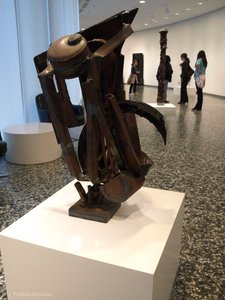
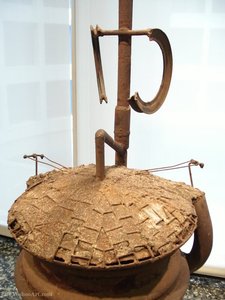
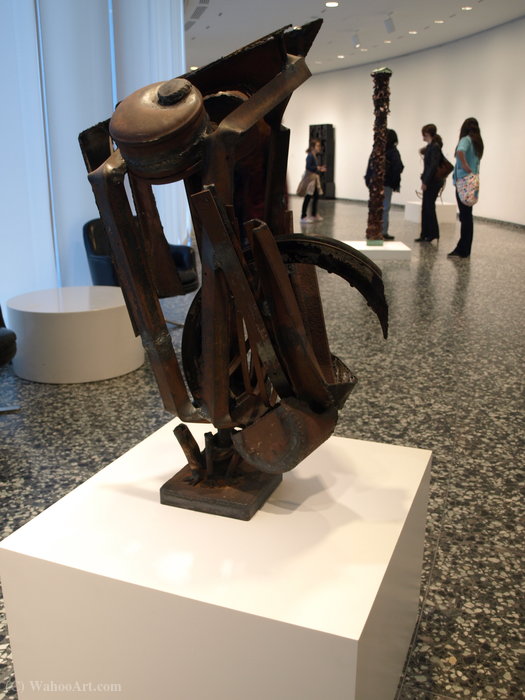
Song of the little frog, (1960)
 Read More
Hand Made Oil Reproduction
Hand-painted oil on canvas in your size and frame, made to order by our artists. ( Buy Print Buy Image)




































Pick from our preset sizes that match the artwork's original proportions.

You may enter your own dimensions to fit a specific frame or space. If your selected size does not match the original image's proportions, we will either crop the artwork or extend the painting with additional hand-painted elements. A digital mockup will be sent for your approval before production begins.
Please note that the on-screen preview does not reflect the actual cropping or extension. Only the mockup will accurately show the final composition.
While custom sizes are available, we recommend selecting a dimension from the predefined list to preserve the original proportions.
After order, ArtsDot.com team will email client for instructions and provide a mockup preview
Worldwide Delivery () in 3/4 weeks instead of standard 5 weeks. (28 August). No compromise on quality.

Free Worldwide Express Shipping

High-Quality Linen Canvas

Full Shipping Insurance

Customs Tax Refund Guarantee

True Color Matching Guarantee

60-Day Return Policy (Defects Only)

100% Money-Back Guarantee

Bulk Discount Offer
 Glass option is only available in size under 110 CM

Song of the little frog, (1960)
Reproduction Medium
Reproduction Size
-


Total Price
$ 263
Related Artworks
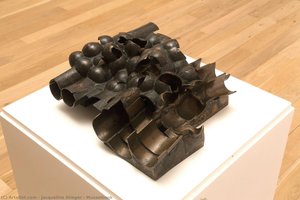
Artist Biography
Richard Stankiewicz: Sculpting the Echoes of Discard
Richard Stankiewicz (1922–1983) remains a compelling figure in mid-century American sculpture, a pioneer who wrestled beauty and meaning from the detritus of industrial society. Born in Philadelphia but raised amidst the gritty factories and foundries of Detroit, his early life was steeped in the visual language of discarded metal—a formative influence that would profoundly shape his artistic vision. Stankiewicz’s career wasn't defined by grand pronouncements or stylistic revolutions; instead, it unfolded through a quietly insistent exploration of form, texture, and the inherent poetry within the commonplace.
His formal training began with drafting and engineering studies in Detroit high school, skills that would later prove invaluable in his manipulation of metal. However, it was a scholarship to Cass Technical High School’s art program that truly ignited his creative spark. Following his father's death and the subsequent move to Detroit, Stankiewicz found solace and inspiration in the city’s industrial landscape, collecting scrap metal from foundries – an activity that would become central to his artistic practice. This early exposure to discarded materials wasn’t simply a source of subject matter; it instilled within him a deep respect for the potential hidden within what was considered worthless.
The Navy Years and Early Influences
Stankiewicz's formal training took an unexpected turn when he enlisted in the United States Navy during World War II. Serving as a radio operator, he found himself stationed in remote locations like the Aleutian Islands, where he began to carve sculptures from animal bones – a surprisingly delicate and intimate practice that contrasted sharply with his later work in industrial metal. This experience fostered a sensitivity to form and texture, honed by working directly with natural materials. Returning to civilian life, Stankiewicz moved to New York City and studied under Hans Hofmann, a pivotal encounter that exposed him to the principles of abstract expressionism and encouraged him to explore non-representational forms.
The period between 1950 and 1951 in Paris proved equally transformative. He immersed himself in the work of Fernand Léger and Ossip Zadkine, artists who shared his interest in exploring the relationship between form and space. These encounters broadened his artistic horizons, introducing him to new approaches to composition and abstraction. It was during this time that he began experimenting with welding scrap metal – a technique that would become synonymous with his distinctive style.
The Rise of Industrial Sculpture
Stankiewicz’s breakthrough came in the early 1950s, as he transitioned from painting to sculpture and developed his signature method of constructing figures and biomorphic forms from welded scrap metal. His early works were characterized by a playful irreverence, often depicting familiar subjects – dancers, soldiers, politicians – rendered with a wry wit through the strategic placement of found objects. These pieces weren’t simply assemblages; they were carefully orchestrated dialogues between the recognizable and the abstract, inviting viewers to reconsider their assumptions about beauty and value.
He quickly gained recognition within the New York art scene, exhibiting at prestigious galleries like the Hansa Gallery and the Stable Gallery. His work resonated with a growing interest in “industrial art” – a movement that sought to elevate the materials and processes of industry into the realm of fine art. Stankiewicz’s sculptures weren't merely decorative; they were meditations on the relationship between humanity, technology, and the environment.
Later Years and Legacy
In 1962, seeking a respite from the intensity of New York City, Stankiewicz relocated to Huntington, Massachusetts. He continued to exhibit internationally throughout the remainder of his career, establishing himself as a significant figure in contemporary sculpture. His later works moved away from the playful wit of his earlier pieces, becoming more monumental and abstract, exploring themes of form, space, and materiality with greater seriousness. Despite a relatively short period of intense activity, Stankiewicz’s influence on subsequent generations of sculptors is undeniable.
Today, Stankiewicz's work can be found in numerous museum collections across the United States and Europe, including the Hirshhorn Museum and Sculpture Garden, the Carnegie Museum of Art, the Smithsonian American Art Museum, the Cleveland Museum of Art, The Hyde Collection, and the Walker Art Center. His sculptures serve as a poignant reminder that beauty can be discovered in the most unexpected places – within the echoes of discarded metal and the forgotten corners of industrial society.
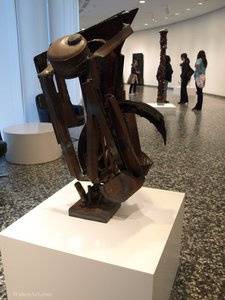
richard stankiewicz
1922 - 1983
Quick Facts
- Artistic Movement Or Style: Scrap metal sculpture
- Artists Or Movements Influenced By This Artist: ['Tinguely']
- Artists Who Influenced This Artist:
- Hans Hofmann
- Fernand Léger
- Ossip Zadkine
- Dubuffet
- David Smith
- Giacometti
- Date Of Birth: 1922
- Date Of Death: 1983
- Full Name: Richard Stankiewicz
- Nationality: American
- Notable Artworks:
- Song of the little frog
- Detail of figure
- Place Of Birth: Philadelphia, USA