 Preview
 Send
Send Share
Share
 Details

 Download
 Similars
 X-Ray
X-Ray Diaporama
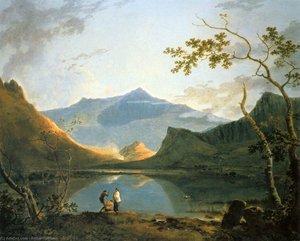
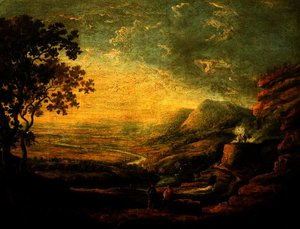
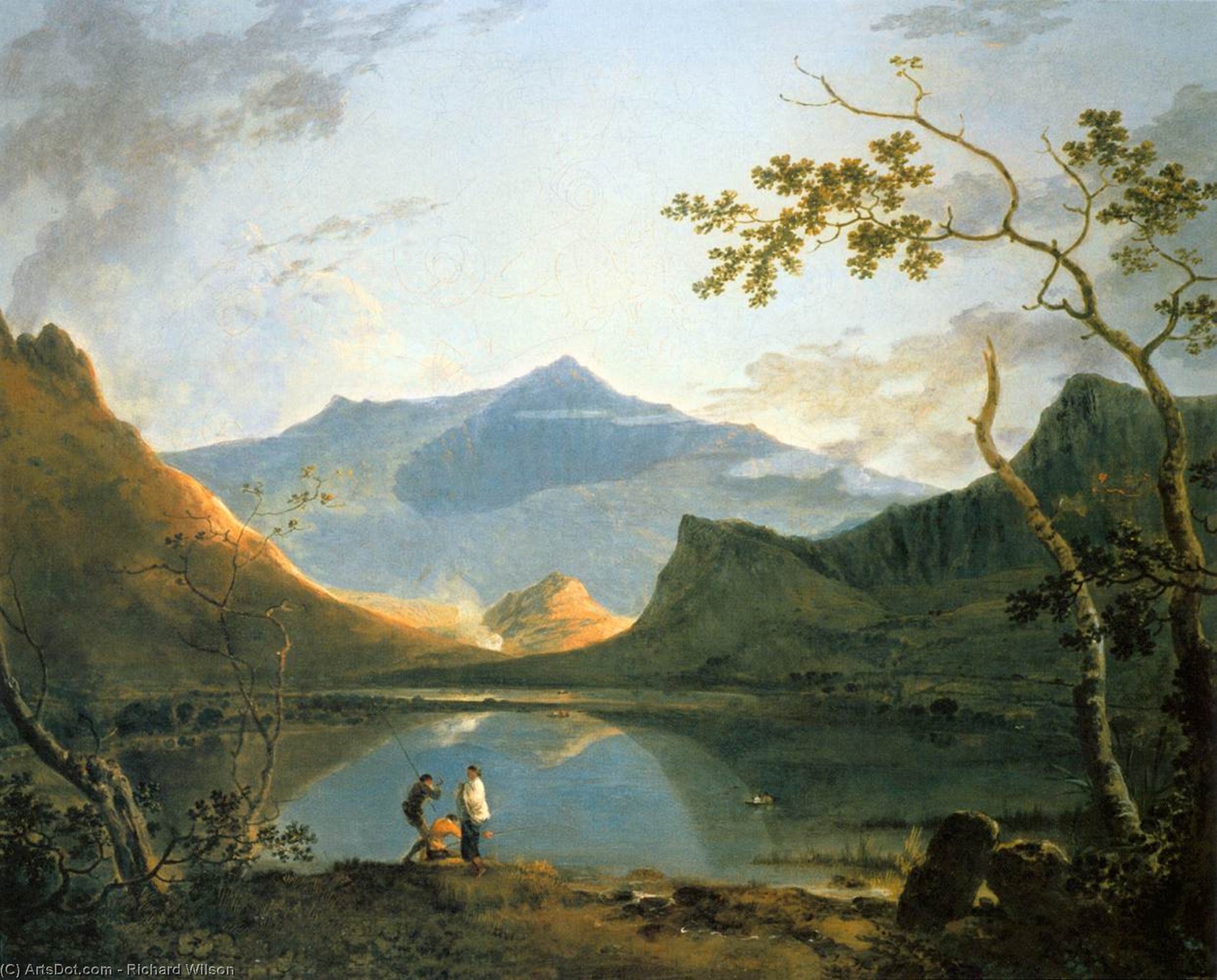
View of Snowdon from Llyn Nantlle
 Oil On Canvas
- WallArt
- English Romantic Landscape
 1766
1766 100.0 x 127.0 cm
 Nottingham Castle Museum And Art Gallery
 Read More
Giclée / Art Print
Museum-quality giclée or canvas print with fast production and flexible finish options. ( Buy Hand Made Painting Buy Image)




P118B $10

P118H $10

P118W $10

P438Z $10

P508JH $12

P508YH $12

P805H $10

P805Z $10

P919BZ $10

P919G $10

P919XJ $10

P959ZH $10

P968JZ $12

W106C $8

W218G $10

W218JH $8

W218Y $10

W307PJ $10

W316G $10

W316PJ $8

W316Y $10

W398PJ $8

W4111J $10

W500HY $15

W500JH $15

W692G $12

W849H $8

W940BG $15

W953PJ $8




Pick from our preset sizes that match the artwork's original proportions.

You may enter your own dimensions to fit a specific frame or space. If your selected size does not match the original image's proportions, we will either crop the artwork or extend the image with a mirrored or solid-fill edge. A digital mockup will be sent for your approval before production begins.
Please note that the on-screen preview does not reflect the actual cropping or extension. Only the mockup will accurately show the final composition.
While custom sizes are available, we recommend selecting a dimension from the predefined list to preserve the original proportions.
Worldwide Delivery () in 2 weeks instead of standard 4/5 weeks. (25 August)

Free Worldwide Express Shipping

High-Quality Linen Canvas

Full Shipping Insurance

Customs Tax Refund Guarantee

True Color Matching Guarantee

60-Day Return Policy (Defects Only)

100% Money-Back Guarantee

Bulk Discount Offer
 Glass option is only available in size under 110 CM

View of Snowdon from Llyn Nantlle
Giclée / Art Print
Reproduction Size
-


Total Price
$ 63
Collectible Description
A Serene Majesty: Richard Wilson’s “View of Snowdon from Llyn Nantlle”
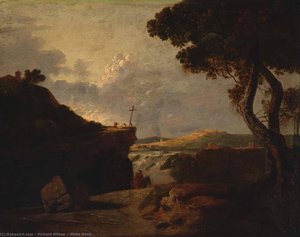
Richard Wilson's "View of Snowdon from Llyn Nantlle," painted in 1766, isn’t merely a depiction of a Welsh mountain and lake; it’s an immersion into the heart of the English Romantic landscape. This captivating work transcends simple representation, offering instead a profound meditation on nature’s grandeur and humanity's place within its vastness. Wilson, a pivotal figure in British art history, masterfully employed atmospheric perspective and subtle color shifts to evoke not just what he saw, but how it felt – a sense of awe, tranquility, and the sublime.
The scene unfolds before us: Llyn Nantlle, a shimmering expanse of water reflecting the dramatic silhouette of Snowdon, Wales’s highest peak. Two figures, small in scale against the monumental backdrop, stand on its shore, suggesting a moment of quiet contemplation amidst this overwhelming beauty. The composition is carefully balanced, drawing the eye through the lake and towards the distant mountains, creating a visual pathway that invites the viewer to lose themselves within the scene. Wilson’s skill lies not just in his technical proficiency but in his ability to capture the very essence of the landscape – its mood, its scale, and its inherent power.
The Language of Light and Atmosphere
Wilson's technique is characterized by a remarkable sensitivity to light and atmosphere. He eschews bold brushstrokes in favor of delicate washes of color, building up layers of translucent paint to create an ethereal quality. The dominant palette consists of cool blues, greens, and greys – the quintessential hues of the Welsh mountains and lakes – punctuated by warmer browns and ochres that ground the foreground elements. This careful orchestration of color isn’t simply decorative; it's integral to the painting’s emotional impact. The hazy atmosphere, achieved through subtle gradations in tone, creates a sense of distance and depth, mimicking how atmospheric conditions affect our perception of the landscape from afar.
Notice particularly the way Wilson renders the distant mountains. They appear paler, less defined, and almost dreamlike – a testament to his masterful use of atmospheric perspective. This technique isn’t just about creating visual realism; it's about conveying the feeling of vastness and the humbling realization of nature’s scale. The subtle reflections on the lake surface further enhance this effect, adding a shimmering layer of beauty and complexity.
A Romantic Vision
"View of Snowdon from Llyn Nantlle" firmly establishes Wilson within the burgeoning English Romantic movement. Unlike earlier landscape painters who focused primarily on accurate representation, the Romantics sought to capture not just the appearance of nature but its emotional power. Wilson’s work embodies this shift, prioritizing feeling and atmosphere over strict adherence to realism. The two figures on the shore aren't simply observers; they represent humanity’s connection to the natural world – a desire for contemplation and a recognition of our own smallness within the grand scheme of things.
The painting can be interpreted as a celebration of the sublime, that feeling of awe and terror inspired by encountering something vast and powerful. Snowdon, with its imposing height and dramatic presence, embodies this concept perfectly. Wilson’s ability to evoke such profound emotion through his skillful use of color, light, and composition is what elevates “View of Snowdon from Llyn Nantlle” beyond a mere landscape painting – it's a deeply moving experience for the viewer.
Historical Context & Artistic Legacy
Painted in 1766, this work reflects the growing interest in landscape art during the mid-18th century. Prior to Wilson, landscape was often relegated to a secondary role in painting, overshadowed by portraiture and historical scenes. However, figures like Wilson championed the beauty of the natural world, paving the way for future generations of Romantic painters such as Turner and Constable. His meticulous study of light and atmosphere, combined with his understanding of composition, established him as one of the most important landscape artists of his time.
Reproductions of “View of Snowdon from Llyn Nantlle” offer a remarkable opportunity to bring this timeless masterpiece into your home or office. The painting’s serene beauty and evocative atmosphere will undoubtedly create a sense of tranquility and connection with nature – a perfect addition for any space seeking inspiration and visual delight.
Related Artworks

Artist Biography
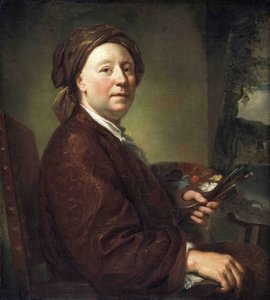
Richard Wilson: A Pioneer of British Landscape Painting
Early Life and Training
Richard Wilson was born on July 24, 1713, in Islington, United Kingdom. Details regarding his early life remain scarce, but it is believed he received foundational artistic training. Wilson’s initial skills were likely developed through self-study and observation, as well as potentially from other artists of the time. His work demonstrates a strong grasp of classical techniques, suggesting a deliberate effort to master fundamental principles.
Artistic Career & Development
Wilson’s artistic journey unfolded in two distinct phases. He began his career as a portrait painter, but gradually transitioned towards landscape painting – the genre for which he is now celebrated. This shift marked a pivotal moment in British art history. His landscapes were not merely depictions of scenery; they were carefully constructed compositions imbued with atmosphere and emotion.
- Early Influences: Initially, Wilson’s portraits showed the influence of established artists like Godfrey Kneller.
- Transition to Landscape: His travels in Italy (around 1752) proved transformative. Exposure to Italianate landscapes and the works of Claude Lorrain profoundly impacted his style.
- Mature Style: Wilson developed a uniquely British approach to landscape, blending classical ideals with the specific qualities of the English countryside.
Influences & Artistic Style
The most significant influence on Richard Wilson was Thomas Gainsborough. He admired Gainsborough’s ability to capture light and atmosphere, and incorporated similar techniques into his own work. However, Wilson distinguished himself through a more deliberate compositional structure and a greater emphasis on idealized beauty.
- Classical Composition: Wilson often employed classical principles of balance and harmony in his landscapes.
- Atmospheric Perspective: He skillfully used atmospheric perspective to create a sense of depth and distance.
- Golden Light: His paintings are characterized by a warm, golden light that evokes a feeling of tranquility.
Notable Works & Achievements
Several works exemplify Wilson’s mastery.
- Meleager and Atalanta (c. 1743): This painting showcases his skill in capturing the essence of the British countryside.
- The Hengö Watch (1756-57): A masterpiece demonstrating Wilson’s ability to balance light, color and composition.
- Numerous other landscapes: He produced a substantial body of work depicting various locations throughout Britain and Italy.
Historical Significance & Legacy
Richard Wilson is considered a pivotal figure in the development of British landscape painting. He paved the way for future generations of artists, including Francis Cotes, by demonstrating the artistic potential of the British countryside. His emphasis on capturing the beauty and tranquility of nature helped to establish a distinctively British tradition of landscape art.
- Breaking from Portraiture: Wilson’s focus on landscape challenged the prevailing dominance of portraiture in British art.
- National Identity: His paintings contributed to a growing sense of national identity and pride in the beauty of the British Isles.
- Lasting Influence: Wilson’s work continues to inspire artists and art lovers today, solidifying his place as a key figure in art history.
Museum Collections
Wilson's works can be found in prominent museums including:
- Tate Britain, London, United Kingdom
- Walker Art Gallery, Liverpool, United Kingdom
- National Museum of Wales, Cardiff, United Kingdom
richard wilson
1713 - 1782 , United Kingdom
Quick Facts
- Birth_Date: July 24, 1713
- Birth_Place: Islington, United Kingdom
- Death_Date: 1782
- Influenced: ['Francis Cotes']
- Influenced_By: Thomas Gainsborough
- Movement: British Landscape Painting
- Name: Richard Wilson
- Nationality: British
- Notable_Works:
- Meleager and Atalanta
- The Hengö Watch
Related Articles

Richard Wilson: Deconstructing Landscape & Memory in Contemporary Installation Art
Explore Richard Wilson's groundbreaking landscape paintings & his enduring influence on contemporary installation art. Discover investment opportunities, provenance insights & the materiality of memory in this expert analysis.

Evocations of Place: A Historical Journey Through Landscape Art
Explore the rich history of landscape art with ArtsDot. Discover renowned artists, movements like Impressionism & Romanticism, and expert guidance for collecting timeless pieces. Find your perfect serene escape today!

Romantic Landscapes: 10 Masterpieces for Your Home | ArtsDot
Journey through 10 Romantic landscape masterpieces by Friedrich, Turner & Cole. Explore emotional art, sublime nature scenes & iconic 19th-century paintings. Find museum-quality reproductions for your home at ArtsDot.com – discover the full collection online!

John Constable's Masterpieces: Explore 25 Iconic Landscapes for Your Home
Journey through John Constable's 25 most celebrated landscapes. Explore Romanticism, Dedham Vale & his masterful use of light in iconic paintings like 'Hay Wain'. Find museum-quality art reproductions and elevate your home decor on ArtsDot.com.
William Trost Richards: Luminism, Spirituality & the American Landscape Tradition
Explore the captivating landscapes of William Trost Richards, a master of Luminism associated with both the Hudson River School & American Pre-Raphaelite movements. Discover his spiritual connection to nature and lasting influence on American art.