 Preview
 Send
Send Share
Share
 Details

 Download
 Similars
 X-Ray
X-Ray Diaporama
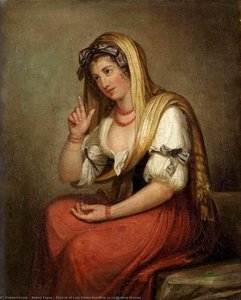
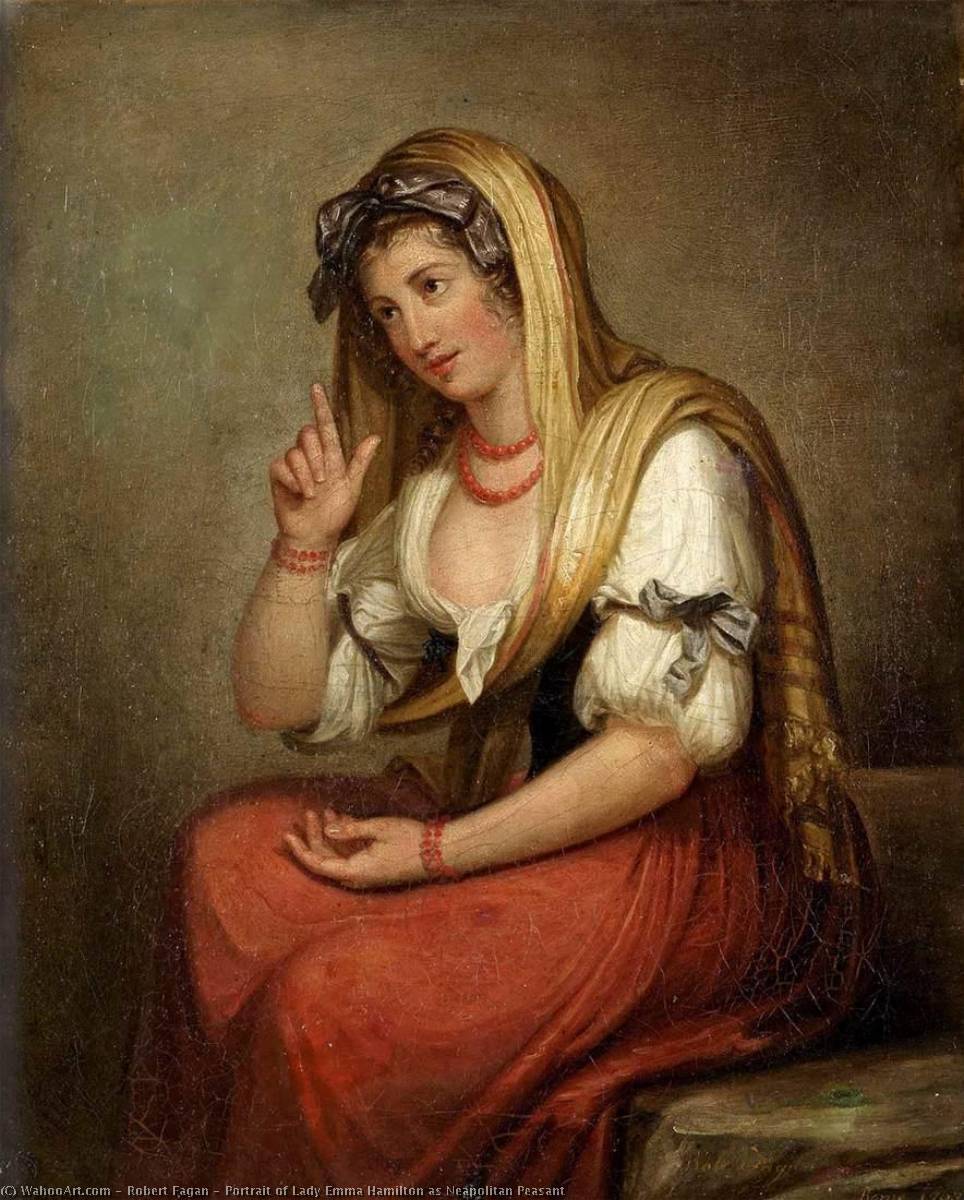
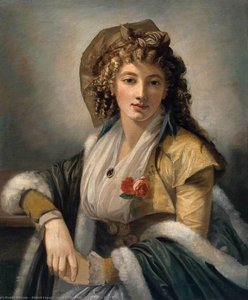
Portrait of Lady Emma Hamilton as Neapolitan Peasant
 Neoclassicism
 1793
1793 45.0 x 36.0 cm
 Read More
Giclée / Art Print
Museum-quality giclée or canvas print with fast production and flexible finish options. ( Buy Hand Made Painting Buy Image)




































Pick from our preset sizes that match the artwork's original proportions.

You may enter your own dimensions to fit a specific frame or space. If your selected size does not match the original image's proportions, we will either crop the artwork or extend the image with a mirrored or solid-fill edge. A digital mockup will be sent for your approval before production begins.
Please note that the on-screen preview does not reflect the actual cropping or extension. Only the mockup will accurately show the final composition.
While custom sizes are available, we recommend selecting a dimension from the predefined list to preserve the original proportions.
Worldwide Delivery () in 2 weeks instead of standard 4/5 weeks. (29 August)

Free Worldwide Express Shipping

High-Quality Linen Canvas

Full Shipping Insurance

Customs Tax Refund Guarantee

True Color Matching Guarantee

60-Day Return Policy (Defects Only)

100% Money-Back Guarantee

Bulk Discount Offer
 Glass option is only available in size under 110 CM

Portrait of Lady Emma Hamilton as Neapolitan Peasant
Giclée / Art Print
Reproduction Size
-


Total Price
$ 63
Related Artworks
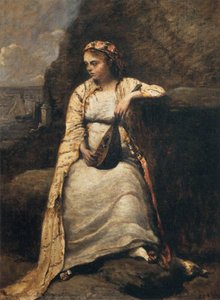
Artist Biography
A Renaissance of the Soul: The Multifaceted Legacy of Robert Fagan
In the vibrant, turbulent landscape of late eighteenth-century Europe, few figures embodied the era's intellectual hunger quite like Robert Fagan. A man whose life refused to be confined by a single discipline, Fagan moved seamlessly between the delicate brushstrokes of Neoclassical portraiture, the high-stakes diplomacy of the Napoleonic era, and the gritty, earth-stained toil of Roman archaeology. Born in London to Irish immigrants from Cork around 1761, Fagan carried within him a profound connection to both the British Isles and the classical Mediterranean, a duality that would define his illustrious career. His journey was not merely one of personal ambition, but a pursuit of the ancient truths buried beneath the soil of Italy, rendered through an artist's sensitive eye.
Fagan’s arrival in Rome in 1781 marked the beginning of a transformative era. Immersed in the city's burgeoning archaeological scene, he became more than just a witness to history; he became an active participant in its unearthing. With the patronage of influential British figures like Corbet Corbuty, Fagan undertook excavations that would resonate through the halls of the world's greatest museums. His most celebrated achievement in this field was the 1792 excavation at Vigna San Sebastiano on the Via Appia. This meticulous endeavor led to the discovery of the Venus of Tivoli, a breathtaking marble masterpiece dating back to approximately 30 BC. Such discoveries did more than just enrich collections; they fueled the Neoclassical movement, providing the very aesthetic foundations upon which much of nineteenth-century art was built.
The Art of the Likeness: Portraiture and Presence
While his hands were often covered in the dust of antiquity, Fagan’s artistic soul found its most intimate expression in the realm of portrait painting. He possessed a rare ability to capture not just the physical likeness of his subjects, but their psychological essence and social standing. His work became a vital record for the British families traveling through the Grand Tour, offering them a way to immortalize their presence in the classical heart of Europe. These portraits were characterized by an elegant restraint and a profound sensitivity to light and texture, adhering to the Neoclassical tradition that prioritized grace and clarity.
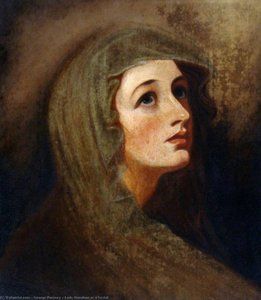
One of his most enduring triumphs remains his 1793 depiction of Lady Emma Hamilton. In this work, Fagan presents her not as the high-society figure she was becoming, but as a Neapolitan peasant, a stylistic choice that demonstrates his mastery of character study and his engagement with the romanticized themes of his time. Through such canvases, Fagan bridged the gap between the aristocratic reality of his patrons and the idealized classical world they so admired. His ability to weave together the elegance of the sitter with the evocative atmosphere of the Mediterranean landscape remains a testament to his technical prowess and emotional depth.
A Life Intertwined with History
The biography of Robert Fagan is inseparable from the political upheavals of his age. As the Napoleonic Wars reshaped the borders of Europe, Fagan’s life was marked by movement and adaptation. His roles as a diplomat and even as a Sicilian Consul reflect a man deeply embedded in the geopolitical currents of the time. This period of instability forced him to navigate the complexities of shifting allegiances, yet it also provided the backdrop for his most significant archaeological and artistic contributions. Even as he fled the occupation of Rome in 1797, his connection to the classical world remained an unbreakable tether.
Fagan’s personal life was also a tapestry of cultural intersections. His marriages—first to the Italian Anna Maria Ferri and later to Maria Ludovica Flajani—further anchored him within the Italian social fabric, blending his British origins with a deep-seated Roman identity. When he passed away on August 26, 1816, he left behind a legacy that was uniquely polymathic. He remains remembered not merely as a painter of beautiful faces or an excavator of ancient stones, but as a pioneer who sought to bridge the gap between the forgotten past and the living present, ensuring that the splendor of antiquity would continue to inspire generations of artists and scholars alike.
Quick Facts
- Artistic Movement Or Style: Neoclassical
- Artists Or Movements Influenced By This Artist: ['Romanticism']
- Artists Who Influenced This Artist:
- Claude Lorrain
- Nicolas Pocock
- Date Of Death: August 26, 1816
- Full Name: Robert Fagan
- Nationality: British
- Notable Artworks: ['Portrait of Lady Emma Hamilton as Neapolitan Peasant']
- Place Of Birth: London, England
Related Articles

David Roberts: A Scottish Pioneer of Topographical Art & Orientalist Vision
Explore the captivating world of David Roberts, a pioneering Scottish painter renowned for his detailed Orientalist scenes & stunning Egyptian landscapes. Discover his legacy and find museum-quality reproductions at ArtsDot.
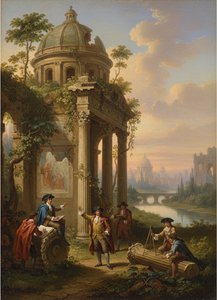
Hubert Robert: Picturing Ruins, Preserving Memory – A Study of Romantic Antiquarianism & Artistic Innovation
Explore the captivating world of Hubert Robert, master of Romantic landscape painting & 'capriccio' ruins. Discover his historical context, artistic innovations, and collecting insights with ArtsDot.
Antonio Zucchi: A Venetian Master of Rococo & Neoclassical Charm
Explore the captivating world of Antonio Zucchi, a Venetian master of Rococo and Neoclassical art. Discover his collaborations with Robert Adam & Angelica Kauffmann, stunning frescoes, and enduring legacy. Learn about collecting Zucchi's works today.
Neoclassical Art: 10 Masterpieces That Shaped History |
Explore 10 defining Neoclassical masterpieces by David, Ingres & Canova. Discover the history, symbolism & artistry behind these iconic paintings and sculptures. Find museum-quality art reproductions at – elevate your home with timeless beauty.
Jacques-Louis David: Neoclassical Ideals & Revolutionary Witness
Explore the life & art of Jacques-Louis David, leading Neoclassical painter of the French Revolution. Discover iconic works like 'The Death of Marat' and his lasting impact on art history. Expert analysis & high-quality reproductions at ArtsDot.