 Preview
 Send
Send Share
Share
 Details

 Download
 Similars
 X-Ray
X-Ray Diaporama
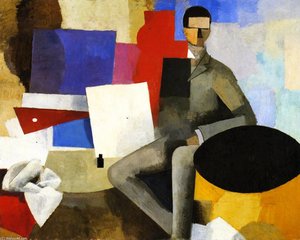
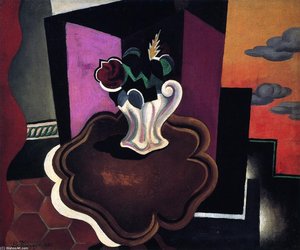
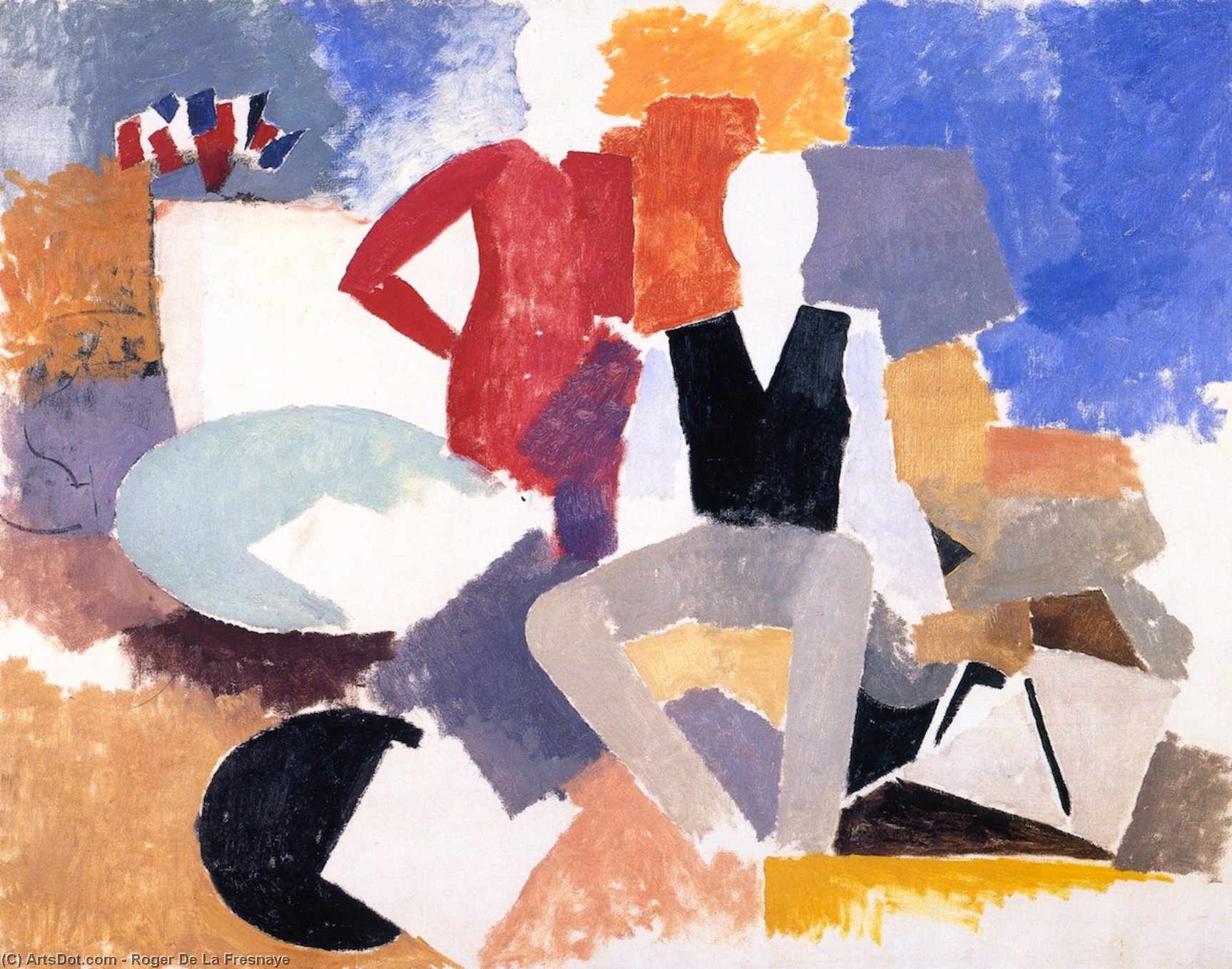
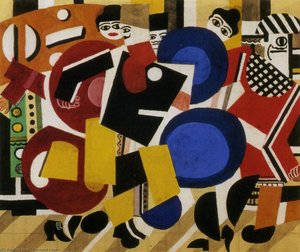
July Fourteenth
 Oil On Canvas
- WallArt
- Cubism
 1914
1914- Modern
 115.0 x 146.0 cm
 Musée National d'Art Moderne Centre Georges Pompidou
 Read More
Hand Made Oil Reproduction
Hand-painted oil on canvas in your size and frame, made to order by our artists. ( Buy Print Buy Image)




P118B $10

P118H $10

P118W $10

P438Z $10

P508JH $12

P508YH $12

P805H $10

P805Z $10

P919BZ $10

P919G $10

P919XJ $10

P959ZH $10

P968JZ $12

W106C $8

W218G $10

W218JH $8

W218Y $10

W307PJ $10

W316G $10

W316PJ $8

W316Y $10

W398PJ $8

W4111J $10

W500HY $15

W500JH $15

W692G $12

W849H $8

W940BG $15

W953PJ $8




Pick from our preset sizes that match the artwork's original proportions.

You may enter your own dimensions to fit a specific frame or space. If your selected size does not match the original image's proportions, we will either crop the artwork or extend the painting with additional hand-painted elements. A digital mockup will be sent for your approval before production begins.
Please note that the on-screen preview does not reflect the actual cropping or extension. Only the mockup will accurately show the final composition.
While custom sizes are available, we recommend selecting a dimension from the predefined list to preserve the original proportions.
After order, ArtsDot.com team will email client for instructions and provide a mockup preview
Worldwide Delivery () in 3/4 weeks instead of standard 5 weeks. (16 August). No compromise on quality.

Free Worldwide Express Shipping

High-Quality Linen Canvas

Full Shipping Insurance

Customs Tax Refund Guarantee

True Color Matching Guarantee

60-Day Return Policy (Defects Only)

100% Money-Back Guarantee

Bulk Discount Offer
 Glass option is only available in size under 110 CM

July Fourteenth
Reproduction Medium
Reproduction Size
-


Total Price
$ 263
Artwork Description
July Fourteenth: A Fragmented Reflection of Modern Anxiety
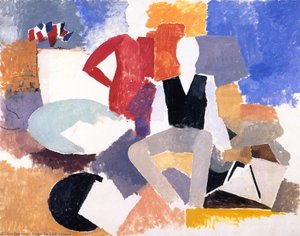
Roger de La Fresnaye’s “July Fourteenth,” completed in 1914, stands as a pivotal work within the burgeoning Cubist movement—a visual embodiment of the anxieties and uncertainties simmering beneath the surface of Europe on the cusp of World War I. More than just a depiction of two figures seated in chairs, it's an exploration of perspective, form, and emotion rendered through a revolutionary stylistic approach that would irrevocably alter the course of artistic expression.- Dimensions: Measuring 115 x 146 cm, this oil on panel canvas resides prominently within the Musée National d’Art Moderne Centre Georges Pompidou in Paris, ensuring its enduring presence as a cornerstone of modern art history.
- Composition & Style: The painting immediately confronts viewers with a fractured reality—two individuals positioned against a backdrop dominated by geometric shapes and multiple viewpoints characteristic of Cubism. De La Fresnaye skillfully dismantles traditional representation, presenting objects and figures simultaneously from various angles to convey a sense of dynamism and disorientation.
Influences & Artistic Training
Roger de La Fresnaye’s artistic trajectory reveals a fascinating interplay between classical foundations and avant-garde experimentation. Trained initially in sculpture at École Supérieure des Beaux-Arts in Paris, he swiftly embraced Cubism alongside fellow artists like Juan Gris, recognizing its potential to transcend conventional artistic conventions. This embrace wasn't simply stylistic; it represented a profound intellectual shift—a rejection of illusionistic representation in favor of exploring the complexities of perception and spatial relationships. His fascination with sculpture continued to inform his painting practice, grounding his abstract explorations in tangible forms and textures.Beyond Fragmentation: Symbolism & Emotional Impact
“July Fourteenth” transcends mere visual fragmentation; it delves into deeper psychological territory. The gaze directed outwards by both figures speaks volumes about the preoccupation with external forces—the impending war—that dominated the artistic consciousness of the time. The painting’s subdued palette and careful attention to detail convey a sense of quiet contemplation amidst palpable unease, prompting viewers to confront questions of identity, presence, and the human condition in the face of overwhelming circumstance. It's a haunting reminder that even seemingly mundane scenes can bear witness to profound emotional truths.Legacy & Continued Relevance
De La Fresnaye’s contribution to Cubism solidified its position as one of the most influential movements of the early 20th century, paving the way for subsequent artistic innovations and challenging established notions of beauty and representation. “July Fourteenth,” like many other masterpieces from this era, continues to inspire artists and designers today—a testament to its enduring power to communicate complex ideas and evoke visceral responses. For a deeper understanding of Roger de La Fresnaye’s oeuvre and the broader context of Cubism, explore https://ArtsDot.com/@/Roger-De-La-Fresnaye . Discover more about the Musée National d'Art Moderne Centre Georges Pompidou at /art/list/?Filter=A@D3CDWM-O-Museeu-Musee-National-d-Art-Moderne-(Paris-Franca).Related Artworks
Artist Biography
A Life Painted in Prismatic Hues: The World of Roger de la Fresnaye
Roger de la Fresnaye, born into the aristocratic lineage of the La Fresnayes in 1885, was a painter whose brief but incandescent career illuminated the burgeoning landscape of early 20th-century art. His story is one of inherited privilege tempered by artistic ambition, classical training disrupted by avant-garde fervor, and ultimately, a life tragically cut short by illness. The Château de la Fresnaye in Falaise, ancestral home to his family with its long history of military service, provided an early backdrop for a life that would eventually blend tradition with radical innovation. Though steeped in the values of his upbringing, young Roger found himself drawn not to the battlefield but to the canvas, embarking on a journey that would see him navigate the complex currents of Symbolism, Cubism, and beyond. His initial education was classically grounded, yet it quickly evolved as he sought artistic instruction at the Académie Julian and later the École des Beaux-Arts in Paris – institutions where the seeds of his future stylistic explorations were sown.From Nabis Dreams to Cubist Geometry
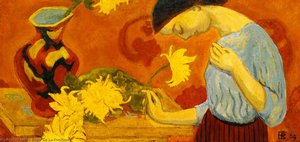
The early years of de la Fresnaye’s artistic development were profoundly shaped by the *Nabis*, a group of Post-Impressionist painters who prioritized subjective experience and symbolic meaning over strict representation. Studying under Maurice Denis and Paul Sérusier at the Académie Ranson, he absorbed their emphasis on flattened forms, decorative patterns, and evocative color palettes – qualities evident in works like Woman with Chrysanthemums. This period reveals a dreamlike quality, a stylistic echo of the Nabis’ pursuit of spiritual resonance through art. However, this initial path was not destined to be his final destination. The allure of more radical experimentation soon beckoned. Around 1912, de la Fresnaye became an integral member of the *Section d'Or*, a collective of artists deeply engaged with the revolutionary ideas of Cubism pioneered by Pablo Picasso and Georges Braque. This marked a pivotal shift in his artistic trajectory. He wasn’t merely imitating; he was responding, interpreting, and ultimately forging his own unique voice within the movement. His response to cubism was not one of strict adherence but rather an individual synthesis, infusing geometric abstraction with a vibrant chromatic sensibility that distinguished him from his peers. The Conquest of the Air, perhaps his most celebrated work, exemplifies this period – a dynamic composition brimming with prismatic colors and fragmented forms, reflecting both the influence of Robert Delaunay’s Orphism and de la Fresnaye's own distinctive vision. It is a testament to his ability to synthesize diverse influences into something wholly new.War, Illness, and a Shifting Aesthetic
The outbreak of World War I cast a long shadow over de la Fresnaye’s life and work. He enlisted in the French army, but his service was tragically curtailed by tuberculosis, forcing his discharge in 1918. The physical toll of the illness proved devastating, leaving him with diminished energy and altering the course of his artistic production. The robust, geometrically charged canvases of his Cubist period gave way to a more linear style, characterized by a delicate precision and an introspective quality. While some might view this as a retreat from innovation, it can also be seen as a natural evolution – a response to personal circumstances that demanded a different mode of expression. His later paintings reflect a quiet contemplation, a sense of fragility that resonates with the artist’s own declining health. He abandoned the spatial analysis of his cubist works for a more linear style, focusing on form and color in a new way. This shift wasn't a surrender but a re-evaluation, a search for beauty within constraint.Legacy and Lasting Influence
Roger de la Fresnaye died in 1925 at the young age of forty, leaving behind a relatively small but remarkably significant body of work. Though his career was tragically abbreviated, his contribution to the development of modern art remains undeniable. He successfully bridged the gap between the decorative sensibilities of the Nabis and the radical experimentation of Cubism, creating a unique visual language that continues to captivate audiences today. His paintings can be found in prestigious museums such as the Musée d'Art Moderne de Troyes and the Centre Pompidou in Paris, testaments to his enduring artistic merit. The record-breaking sale of La Conquête de l’Air at Christie’s in 2017 – fetching over €2.3 million – serves as a powerful affirmation of his place within the canon of modern masters. De la Fresnaye's legacy lies not only in his individual artistic achievements but also in his ability to synthesize diverse influences into a cohesive and compelling vision, leaving an indelible mark on the history of 20th-century painting. He remains a fascinating figure—a nobleman turned modernist, a soldier touched by illness, and above all, a painter who dared to explore the boundaries of form and color with both intellect and passion.Exploring De La Fresnaye’s World
Key Influences:- Maurice Denis
- Paul Sérusier
- Georges Braque
- Pablo Picasso
- Robert Delaunay
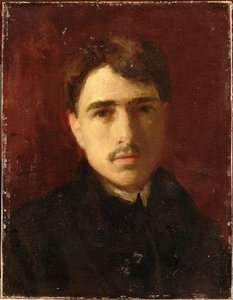
Roger de La Fresnaye
1885 - 1925 , France
Quick Facts
- Artistic Movement Or Style: Cubism, Symbolism
- Artists Or Movements Influenced By This Artist: Early 20th-century art
- Artists Who Influenced This Artist:
- Maurice Denis
- Paul Sérusier
- Robert Delaunay
- Date Of Birth: July 11, 1885
- Date Of Death: November 27, 1925
- Full Name: Roger de La Fresnaye
- Nationality: French
- Notable Artworks:
- The Conquest of the Air
- La Madelon
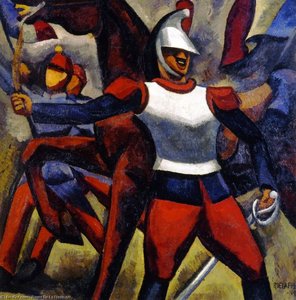
- Le Cuirassier
- Place Of Birth: Le Mans, France
Related Articles
Roger de la Fresnaye: Cubism, Tradition & the Search for Order in Early 20th-Century French Painting
Explore the captivating world of Roger de la Fresnaye, a pivotal French Cubist painter. Discover his unique blend of tradition & modernity, influences, and lasting legacy with ArtsDot.
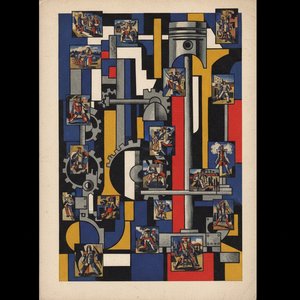
Fernand Léger's Masterpieces: 25 Iconic Paintings & The Machine Age Aesthetic | ArtsDot
Explore 25 iconic Fernand Léger paintings that defined the Machine Age & Cubism. Discover the stories behind his bold colors, geometric forms & avant-garde style. Find museum-quality art reproductions on ArtsDot.com.

Geometric Abstraction's 10 Defining Masterpieces | Art for Your Home - ArtsDot
Explore 10 defining masterpieces of Geometric Abstraction! Discover Kandinsky, Mondrian & Malevich’s iconic works. Find museum-quality art reproductions and curated decor ideas to elevate your home at ArtsDot.com.

Jean Dominique Antony Metzinger: Pioneering Cubism & the Evolution of Abstract Form
Explore the life & work of Jean Metzinger, a pivotal Cubist painter and theorist. Discover his innovations in proto-Cubism, 'Du Cubisme,' and Crystal Cubism – a journey through modern art's evolution.
Deconstructing Reality: Cubism's Revolutionary Impact on 20th-Century Art
Explore the revolutionary impact of Cubism on 20th-century art. Discover Picasso, Braque & beyond with our expert guide to this pivotal movement. Learn about Analytic & Synthetic Cubism's techniques and lasting legacy.