 Preview
 Send
Send Share
Share
 Details

 Download
 Similars
 X-Ray
X-Ray Diaporama
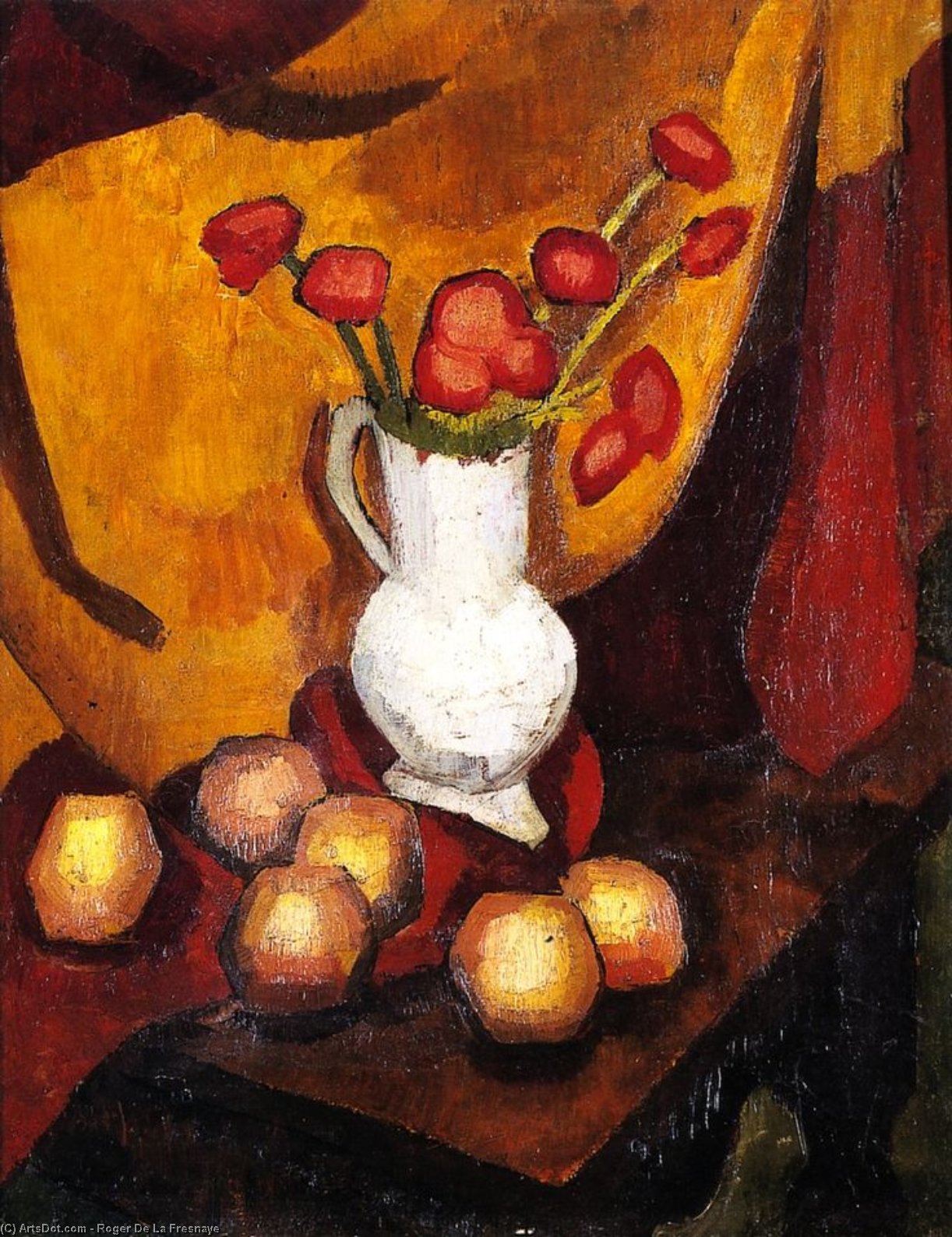
Poppies in a Vase
 Oil On Canvas
- WallArt
- Fauvism
 1910
1910- Modern
 74.0 x 58.0 cm
 Read More
Hand Made Oil Reproduction
Hand-painted oil on canvas in your size and frame, made to order by our artists. ( Buy Print Buy Image)




P118B $10

P118H $10

P118W $10

P438Z $10

P508JH $12

P508YH $12

P805H $10

P805Z $10

P919BZ $10

P919G $10

P919XJ $10

P959ZH $10

P968JZ $12

W106C $8

W218G $10

W218JH $8

W218Y $10

W307PJ $10

W316G $10

W316PJ $8

W316Y $10

W398PJ $8

W4111J $10

W500HY $15

W500JH $15

W692G $12

W849H $8

W940BG $15

W953PJ $8




Pick from our preset sizes that match the artwork's original proportions.

You may enter your own dimensions to fit a specific frame or space. If your selected size does not match the original image's proportions, we will either crop the artwork or extend the painting with additional hand-painted elements. A digital mockup will be sent for your approval before production begins.
Please note that the on-screen preview does not reflect the actual cropping or extension. Only the mockup will accurately show the final composition.
While custom sizes are available, we recommend selecting a dimension from the predefined list to preserve the original proportions.
After order, ArtsDot.com team will email client for instructions and provide a mockup preview
Worldwide Delivery () in 3/4 weeks instead of standard 5 weeks. (16 August). No compromise on quality.

Free Worldwide Express Shipping

High-Quality Linen Canvas

Full Shipping Insurance

Customs Tax Refund Guarantee

True Color Matching Guarantee

60-Day Return Policy (Defects Only)

100% Money-Back Guarantee

Bulk Discount Offer
 Glass option is only available in size under 110 CM

Poppies in a Vase
Reproduction Medium
Reproduction Size
-


Total Price
$ 263
Artwork Description
A Symphony of Crimson and Light
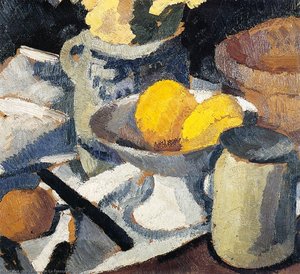
In the vibrant annals of early twentieth-century modernism, few moments capture the raw, unbridled energy of the Fauvist movement quite like Roger de La Fresnaye’s 1910 masterpiece, Poppies in a Vase. This oil on canvas is not merely a depiction of flora; it is an explosion of color and emotion that defies the traditional constraints of still-life painting. At first glance, the viewer is greeted by a breathtaking arrangement of red poppies, their petals rendered with such intensity that they seem to pulse against the cool, stark white of the ceramic vase. The composition is anchored by a deliberate yet spontaneous placement of apples, which scatter across the tabletop like fallen gems, creating a rhythmic dance of shapes that guides the eye through a landscape of pure pigment.
The technique employed by De La Fresnaye serves as a testament to his mastery of the Fauvist spirit. Eschewing the subtle gradations of classical realism, he utilizes bold, energetic brushstrokes that prioritize the expressive power of color over anatomical or botanical accuracy. The interplay between the fiery reds of the poppies and the crisp whites of the vase creates a high-contrast visual tension that is both stimulating and harmonious. This approach allows the artist to capture the essence of light and vitality, transforming a simple domestic scene into a profound exploration of chromatic brilliance. For the discerning collector or interior designer, this piece offers a dynamic focal point, capable of injecting a sense of sophisticated energy into any contemporary space.
Historical Resonance and Artistic Legacy
To understand Poppies in a Vase, one must look toward the revolutionary atmosphere of Paris in 1910. As a prominent figure within the Fauvist circle, De La Fresnaye was part of a radical group of artists—often referred to as "Les Fauves" or "the wild beasts"—who sought to liberate color from its descriptive function. This painting stands as a quintessential example of that era's rebellion against Impressionism. While the subject matter remains rooted in the tradition of the still life, the execution is entirely avant-garde, reflecting a period when art was transitioning from the observation of nature to the expression of internal sensation.
Beyond its aesthetic allure, the painting carries a subtle symbolic weight. The poppy, often associated with both sleep and remembrance, lends a layer of poetic depth to the composition, while the abundance of fruit suggests themes of fertility and the fleeting beauty of life. This duality—the vibrant presence of the flowers contrasted with the ephemeral nature of the arrangement—resonates deeply with those who appreciate art that speaks to the human condition. Owning a high-quality reproduction of this work is more than an acquisition of decor; it is an invitation to engage with a pivotal moment in art history, bringing the revolutionary spirit of the early 1900s into the modern home.
Related Artworks
Artist Biography
A Life Painted in Prismatic Hues: The World of Roger de la Fresnaye
Roger de la Fresnaye, born into the aristocratic lineage of the La Fresnayes in 1885, was a painter whose brief but incandescent career illuminated the burgeoning landscape of early 20th-century art. His story is one of inherited privilege tempered by artistic ambition, classical training disrupted by avant-garde fervor, and ultimately, a life tragically cut short by illness. The Château de la Fresnaye in Falaise, ancestral home to his family with its long history of military service, provided an early backdrop for a life that would eventually blend tradition with radical innovation. Though steeped in the values of his upbringing, young Roger found himself drawn not to the battlefield but to the canvas, embarking on a journey that would see him navigate the complex currents of Symbolism, Cubism, and beyond. His initial education was classically grounded, yet it quickly evolved as he sought artistic instruction at the Académie Julian and later the École des Beaux-Arts in Paris – institutions where the seeds of his future stylistic explorations were sown.From Nabis Dreams to Cubist Geometry
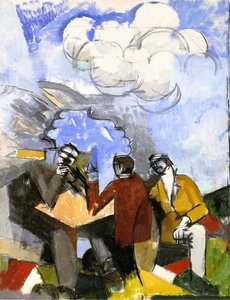
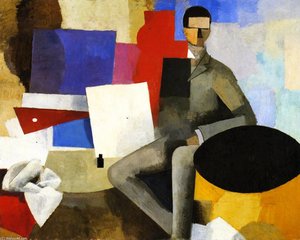
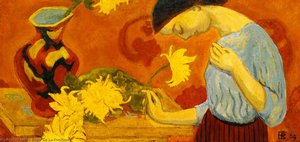
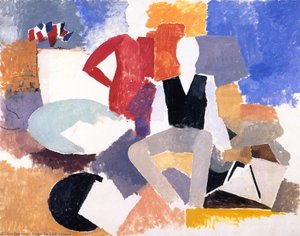
The early years of de la Fresnaye’s artistic development were profoundly shaped by the *Nabis*, a group of Post-Impressionist painters who prioritized subjective experience and symbolic meaning over strict representation. Studying under Maurice Denis and Paul Sérusier at the Académie Ranson, he absorbed their emphasis on flattened forms, decorative patterns, and evocative color palettes – qualities evident in works like Woman with Chrysanthemums. This period reveals a dreamlike quality, a stylistic echo of the Nabis’ pursuit of spiritual resonance through art. However, this initial path was not destined to be his final destination. The allure of more radical experimentation soon beckoned. Around 1912, de la Fresnaye became an integral member of the *Section d'Or*, a collective of artists deeply engaged with the revolutionary ideas of Cubism pioneered by Pablo Picasso and Georges Braque. This marked a pivotal shift in his artistic trajectory. He wasn’t merely imitating; he was responding, interpreting, and ultimately forging his own unique voice within the movement. His response to cubism was not one of strict adherence but rather an individual synthesis, infusing geometric abstraction with a vibrant chromatic sensibility that distinguished him from his peers. The Conquest of the Air, perhaps his most celebrated work, exemplifies this period – a dynamic composition brimming with prismatic colors and fragmented forms, reflecting both the influence of Robert Delaunay’s Orphism and de la Fresnaye's own distinctive vision. It is a testament to his ability to synthesize diverse influences into something wholly new.War, Illness, and a Shifting Aesthetic
The outbreak of World War I cast a long shadow over de la Fresnaye’s life and work. He enlisted in the French army, but his service was tragically curtailed by tuberculosis, forcing his discharge in 1918. The physical toll of the illness proved devastating, leaving him with diminished energy and altering the course of his artistic production. The robust, geometrically charged canvases of his Cubist period gave way to a more linear style, characterized by a delicate precision and an introspective quality. While some might view this as a retreat from innovation, it can also be seen as a natural evolution – a response to personal circumstances that demanded a different mode of expression. His later paintings reflect a quiet contemplation, a sense of fragility that resonates with the artist’s own declining health. He abandoned the spatial analysis of his cubist works for a more linear style, focusing on form and color in a new way. This shift wasn't a surrender but a re-evaluation, a search for beauty within constraint.Legacy and Lasting Influence
Roger de la Fresnaye died in 1925 at the young age of forty, leaving behind a relatively small but remarkably significant body of work. Though his career was tragically abbreviated, his contribution to the development of modern art remains undeniable. He successfully bridged the gap between the decorative sensibilities of the Nabis and the radical experimentation of Cubism, creating a unique visual language that continues to captivate audiences today. His paintings can be found in prestigious museums such as the Musée d'Art Moderne de Troyes and the Centre Pompidou in Paris, testaments to his enduring artistic merit. The record-breaking sale of La Conquête de l’Air at Christie’s in 2017 – fetching over €2.3 million – serves as a powerful affirmation of his place within the canon of modern masters. De la Fresnaye's legacy lies not only in his individual artistic achievements but also in his ability to synthesize diverse influences into a cohesive and compelling vision, leaving an indelible mark on the history of 20th-century painting. He remains a fascinating figure—a nobleman turned modernist, a soldier touched by illness, and above all, a painter who dared to explore the boundaries of form and color with both intellect and passion.Exploring De La Fresnaye’s World
Key Influences:- Maurice Denis
- Paul Sérusier
- Georges Braque
- Pablo Picasso
- Robert Delaunay
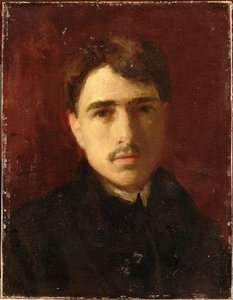
Roger de La Fresnaye
1885 - 1925 , France
Quick Facts
- Artistic Movement Or Style: Cubism, Symbolism
- Artists Or Movements Influenced By This Artist: Early 20th-century art
- Artists Who Influenced This Artist:
- Maurice Denis
- Paul Sérusier
- Robert Delaunay
- Date Of Birth: July 11, 1885
- Date Of Death: November 27, 1925
- Full Name: Roger de La Fresnaye
- Nationality: French
- Notable Artworks:
- The Conquest of the Air
- La Madelon
- Le Cuirassier
- Place Of Birth: Le Mans, France
Related Articles

White on Canvas: 10 Masterpieces & Timeless Elegance for Your Home Decor
Explore 10 iconic white paintings by Monet, Whistler & Rothko! Discover the stories behind these serene masterpieces and their impact on art history. Find museum-quality reproductions for your home decor at .

Crimson Threads of Narrative: Exploring Symbolism & Representation in Artworks Featuring the Red Dress
Explore the rich symbolism of the red dress in art history! From ancient power displays to iconic portraits like Cézanne’s 'Madame Cezanne', discover the cultural and artistic significance behind this captivating color. Expert analysis & insights.
Blossoming Symbolism: A Historical Journey Through Flowers in Western Painting
Explore the rich history of flower symbolism in Western painting! Discover how artists from the Renaissance to Modernism used blossoms to convey meaning, emotion & beauty. Learn about iconic artworks and movements.
Silent Narratives: Exploring the Enduring Appeal of Still Life Painting Across Centuries
Explore the rich history of still life painting with ArtsDot. Discover Dutch Masters, decode vanitas symbolism & learn about collecting timeless art. Expert insights and museum-quality reproductions.
Mark Rothko's Masterpieces: 25 Paintings That Define Abstract Expressionism | ArtsDot
Explore 25 iconic Mark Rothko paintings that define Abstract Expressionism. Discover the stories, colors & emotions behind these masterpieces. Find museum-quality art reproductions and curated decor ideas at ArtsDot.com.