 Preview
 Send
Send Share
Share
 Details

 Download
 Similars
 X-Ray
X-Ray Diaporama
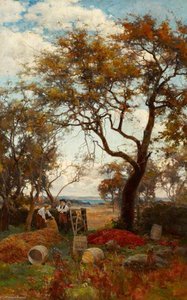
Fallen Acorns
 Oil On Canvas
- WallArt
- Impressionism
 1904
1904- 19th Century
 85.0 x 122.0 cm
 Harris Museum - Art Gallery
 Read More
Hand Made Oil Reproduction
Hand-painted oil on canvas in your size and frame, made to order by our artists. ( Buy Print Buy Image)




P118B $10

P118H $10

P118W $10

P438Z $10

P508JH $12

P508YH $12

P805H $10

P805Z $10

P919BZ $10

P919G $10

P919XJ $10

P959ZH $10

P968JZ $12

W106C $8

W218G $10

W218JH $8

W218Y $10

W307PJ $10

W316G $10

W316PJ $8

W316Y $10

W398PJ $8

W4111J $10

W500HY $15

W500JH $15

W692G $12

W849H $8

W940BG $15

W953PJ $8




Pick from our preset sizes that match the artwork's original proportions.

You may enter your own dimensions to fit a specific frame or space. If your selected size does not match the original image's proportions, we will either crop the artwork or extend the painting with additional hand-painted elements. A digital mockup will be sent for your approval before production begins.
Please note that the on-screen preview does not reflect the actual cropping or extension. Only the mockup will accurately show the final composition.
While custom sizes are available, we recommend selecting a dimension from the predefined list to preserve the original proportions.
After order, ArtsDot.com team will email client for instructions and provide a mockup preview
Worldwide Delivery () in 3/4 weeks instead of standard 5 weeks. (16 August). No compromise on quality.

Free Worldwide Express Shipping

High-Quality Linen Canvas

Full Shipping Insurance

Customs Tax Refund Guarantee

True Color Matching Guarantee

60-Day Return Policy (Defects Only)

100% Money-Back Guarantee

Bulk Discount Offer
 Glass option is only available in size under 110 CM

Fallen Acorns
Reproduction Medium
Reproduction Size
-


Total Price
$ 263
Artwork Description
A Pastoral Symphony in Oil
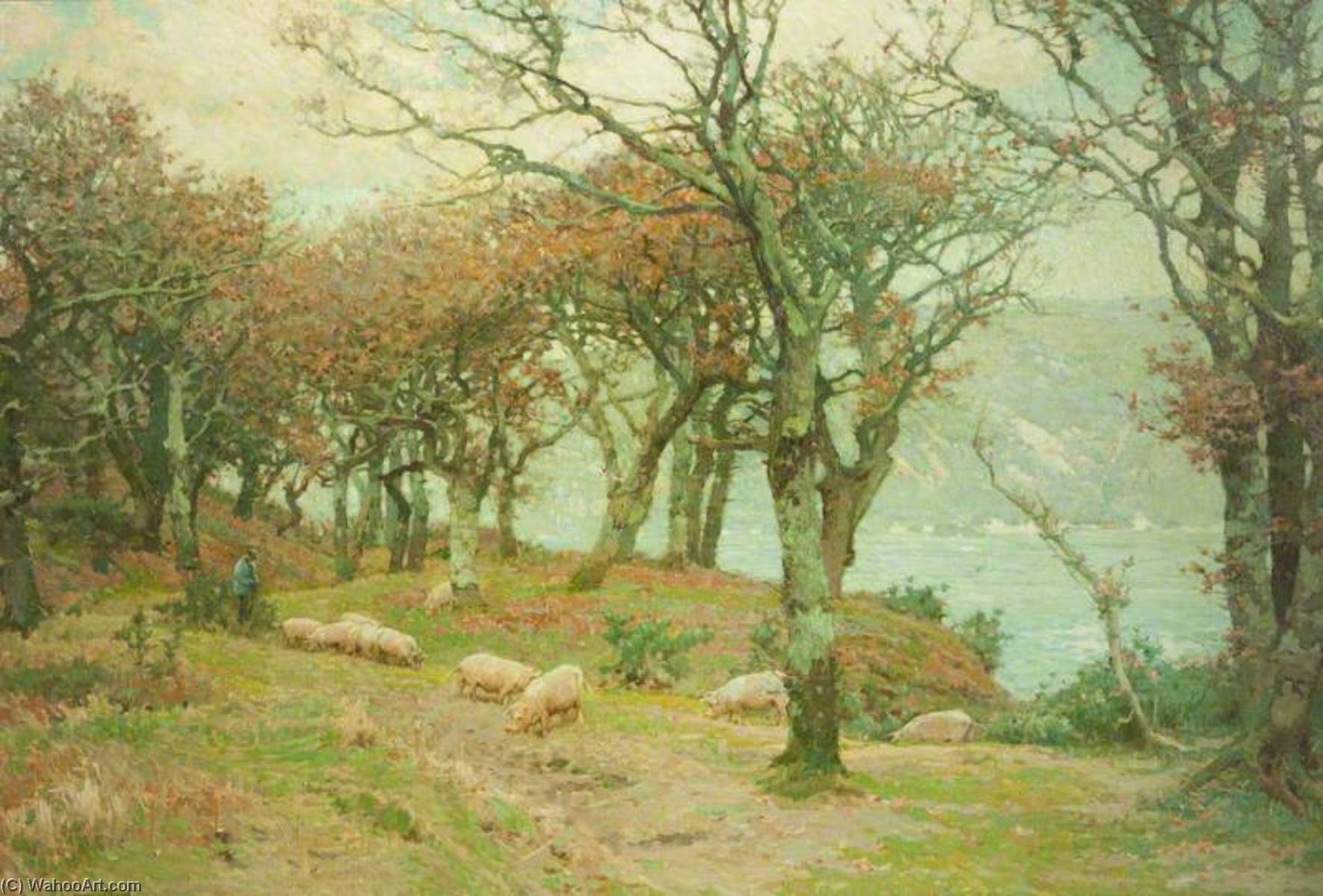
In the quietude of the English countryside, there exists a moment where time seems to suspend its forward march, allowing the soul to rest amidst the verdant rhythms of nature. This is precisely the atmosphere captured in Samuel John Lamorna Birch’s 1904 masterpiece, Fallen Acorns. The painting serves as a breathtaking window into a bygone era of rural tranquility, presenting a scene where the gentle labor of man and the unhurried pace of the flock exist in perfect, symbiotic harmony. As the viewer's eye wanders across the lush green expanse, one is immediately struck by the profound sense of peace that radiates from the canvas, making it an ideal centerpiece for any collection seeking to evoke serenity and timelessness.
The composition is a masterclass in landscape arrangement, guiding the observer through a meticulously detailed world. At the heart of this pastoral narrative is a shepherd, positioned subtly toward the left, quietly guiding his sheep through a meadow that feels almost tangible in its vibrancy. The scattered flock, some grazing in the sun-drenched foreground and others receding into the soft shadows of the distant trees, creates a rhythmic depth that pulls the viewer into the landscape. Birch utilizes a rich palette of warm, earthy tones and vibrant greens to construct a world that feels both inviting and deeply grounded in the reality of the British countryside.
The Mastery of Light and Texture
What elevates Fallen Acorns from a mere depiction of nature to a profound sensory experience is Birch’s sophisticated command of light and shadow. The artist employs a technique that breathes life into the oil on canvas, using the interplay of illumination to define form and create dimension. Sunlight filters through the canopy of surrounding trees, casting dappled patterns across the grass and highlighting the soft, woolly textures of the sheep. This careful manipulation of light does more than just provide realism; it imbues the scene with a sense of warmth and comfort, as if the viewer is standing in the gentle glow of a late afternoon sun.
For the discerning collector or interior designer, the technical brilliance of this piece offers immense decorative potential. The painting’s ability to balance detailed realism with an impressionistic softness allows it to integrate seamlessly into various high-end aesthetics, from classic traditional manor styles to more contemporary, nature-inspired interiors. The depth achieved through Birch's layering of color ensures that the artwork remains captivating from every angle, offering new nuances of shadow and light upon closer inspection.
A Legacy of Cornish Serenity
To understand the emotional weight of Fallen Acorns, one must consider the spirit of the artist himself. Samuel John Lamorna Birch was a painter deeply rooted in the landscape, a man whose artistic identity was forged by the rugged coasts and tranquil valleys of Cornwall. His work often transcends simple documentation, aiming instead to capture the very essence of the natural world—its rhythms, its quietude, and its enduring beauty. In this particular work, we see the culmination of a lifetime spent observing the subtle shifts in light and the peaceful coexistence of life within the landscape.
Owning a high-quality reproduction of such a significant work is an opportunity to bring a piece of art history into the modern home. Fallen Acorns is not merely a painting of sheep and trees; it is an invitation to slow down, to breathe, and to reconnect with the pastoral simplicity that Birch so lovingly preserved. It stands as a testament to the enduring power of the landscape to soothe the human spirit, making it a profound investment for those who value art that speaks to the heart.
Related Artworks

Artist Biography
Samuel John “Lamorna” Birch: A Cornish Visionary
Samuel John “Lamorna” Birch, a name synonymous with the evocative beauty of Cornwall, was more than just an artist; he was a chronicler of a vanishing landscape and a master of capturing the soul of the sea. Born in Egremont, Cheshire, in 1869, his journey to becoming one of Britain’s most celebrated watercolourists began not with formal training but with a deep connection to the natural world – a fascination ignited by fly-fishing on the rivers of West Cornwall. This early immersion shaped his artistic sensibility, imbuing his work with an intimate understanding of light, water, and the rhythms of coastal life.
Birch’s initial exposure to art came during a brief sojourn in Paris at the Académie Colarossi in 1895. However, he quickly returned to England, establishing himself in Lamorna, Cornwall – a small fishing village that would become inextricably linked with his identity and artistic output. It was here, amidst the rugged coastline and vibrant community, that he truly flourished, adopting “Lamorna” as his signature, distinguishing himself from another artist sharing the same surname. This deliberate choice reflected his deep commitment to this particular corner of Cornwall, a place he considered his true home.
The Newlyn Influence and the Birth of a Group
Birch’s artistic development was profoundly influenced by the burgeoning Newlyn School of artists in the late 19th century. Figures like Stanhope Forbes and Frank Bramley were already capturing the spirit of Cornwall with bold colours and loose brushwork, depicting scenes of rural life and coastal landscapes. Birch initially sought their guidance, but he soon forged his own path, establishing a second group centered around Lamorna Cove – a cluster of artists who shared his passion for the region’s beauty and his distinctive style. This “Lamorna Group,” which included Laura Knight, Harold Knight, and Alfred Munnings, became known for its vibrant palette, loose brushwork, and focus on capturing the fleeting effects of light and atmosphere.
Birch's work moved beyond mere topographical representation; he sought to convey a sense of mood and emotion. His paintings are characterized by a subtle use of colour, often employing muted tones to create a feeling of atmospheric depth. He expertly rendered reflections on water, capturing the shimmering dance of light upon the waves – a skill honed through years of observing the rivers and coastline of Cornwall.
A Royal Recognition and a Legacy of Over 20,000 Paintings
Birch’s artistic talent quickly gained recognition. He exhibited at the Royal Academy from 1893 onwards, steadily gaining acclaim for his evocative depictions of Cornish life and landscapes. In 1926, he was elected as an Associate of the Royal Academy (ARA), a significant honor recognizing his contribution to British art. Eight years later, in 1934, he received the ultimate accolade – becoming a full Royal Academician (RA). Throughout his prolific career, Birch produced an astonishing number of paintings—estimates suggest over 20,000—a testament to his unwavering dedication and artistic drive.
Beyond his formal accolades, Birch’s legacy extends through the works themselves. His paintings are held in prestigious collections across Britain, including Penlee House Gallery & Museum in Cornwall and the Derby Art Gallery. His connection to New Zealand is also notable, having spent time there in 1937, documenting its landscapes and earning the admiration of local artists.
Themes and Style: The Essence of Lamorna
Birch’s artistic focus remained consistently rooted in the Cornish landscape, particularly the area around Lamorna Cove. His subjects ranged from bustling fishing scenes to tranquil depictions of coastal paths and dramatic seascapes. He frequently portrayed fishermen at work, capturing their weathered faces and the timeless rhythm of their trade. The interplay between man and nature is a recurring theme, reflecting Birch’s deep respect for the environment and his desire to document its beauty before it was irrevocably altered.
His style evolved over time, moving from a more academic approach in his early works to a looser, more expressive technique later in life. However, throughout his career, he maintained a distinctive use of colour and light—a hallmark of his unique vision. Birch’s paintings are not merely representations of landscapes; they are imbued with a sense of atmosphere, emotion, and the enduring spirit of Cornwall.
A Lasting Impression
Samuel John “Lamorna” Birch died in 1955 at the age of 86, leaving behind a remarkable body of work that continues to captivate viewers today. His paintings offer a poignant glimpse into a bygone era—a time when artists sought inspiration in the natural world and captured its beauty with honesty and passion. His legacy as one of Britain’s most beloved watercolourists remains secure, his evocative depictions of Cornwall forever etched in the hearts of art lovers everywhere.
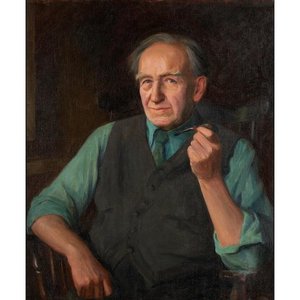
samuel john lamorna birch
1869 - 1955 , United Kingdom
Quick Facts
- Artistic Movement Or Style: Cornish Impressionism
- Artists Or Movements Influenced By This Artist:
- Newlyn School
- Royal Academy
- Artists Who Influenced This Artist: ['Stanhope Forbes']
- Date Of Birth: June 7, 1869
- Date Of Death: January 7, 1955
- Full Name: Samuel John Lamorna Birch
- Nationality: British
- Notable Artworks:
- Winter – Roseworthy Valley
- December
- The Shady Pool
- Place Of Birth: Egremont, UK
Related Articles
Verdant Visions: Exploring the Symbolism & Aesthetic Impact of Green in Art History
Explore the rich history & symbolism of green in art! Discover iconic paintings, techniques, and how to bring verdant harmony into your home with ArtsDot's expert guide.
Dark Olive Green Masterpieces: 10 Iconic Paintings & Decor Ideas
Explore 10 iconic paintings where dark olive green reigns supreme! From Van Gogh to Rembrandt, discover art history's most captivating masterpieces & the stories behind them. Find museum-quality reproductions and curated decor ideas at .

Sir Alfred Munnings' Masterpieces: 25 Paintings That Define Equine Art | ArtsDot
Explore 25 iconic Sir Alfred Munnings paintings! Discover the beauty of British Impressionism, equine art & rural England. Find museum-quality reproductions and elevate your home decor with ArtsDot. Explore the full collection online.
Chrome Green Masterpieces: 10 Famous Paintings & Their Alluring Hues |
Explore 10 famous paintings where 'Chrome Green' reigns supreme! Discover Monet, Manet & Van Gogh’s masterpieces. Learn the stories behind these iconic artworks and find museum-quality art reproductions for your home at .

Emerald Visions: Top 10 Paintings Dominated by Cadmium Green |
Explore 10 iconic paintings where cadmium green reigns supreme! From Monet to Van Gogh, discover the stories behind these masterpieces & the power of color. Find museum-quality art reproductions and elevate your home decor on .