 Preview
 Send
Send Share
Share
 Details

 Download
 Similars
 X-Ray
X-Ray Diaporama
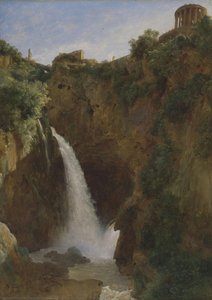
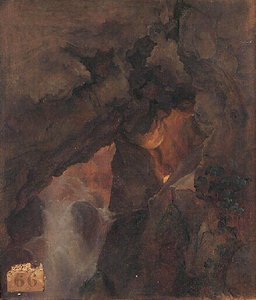
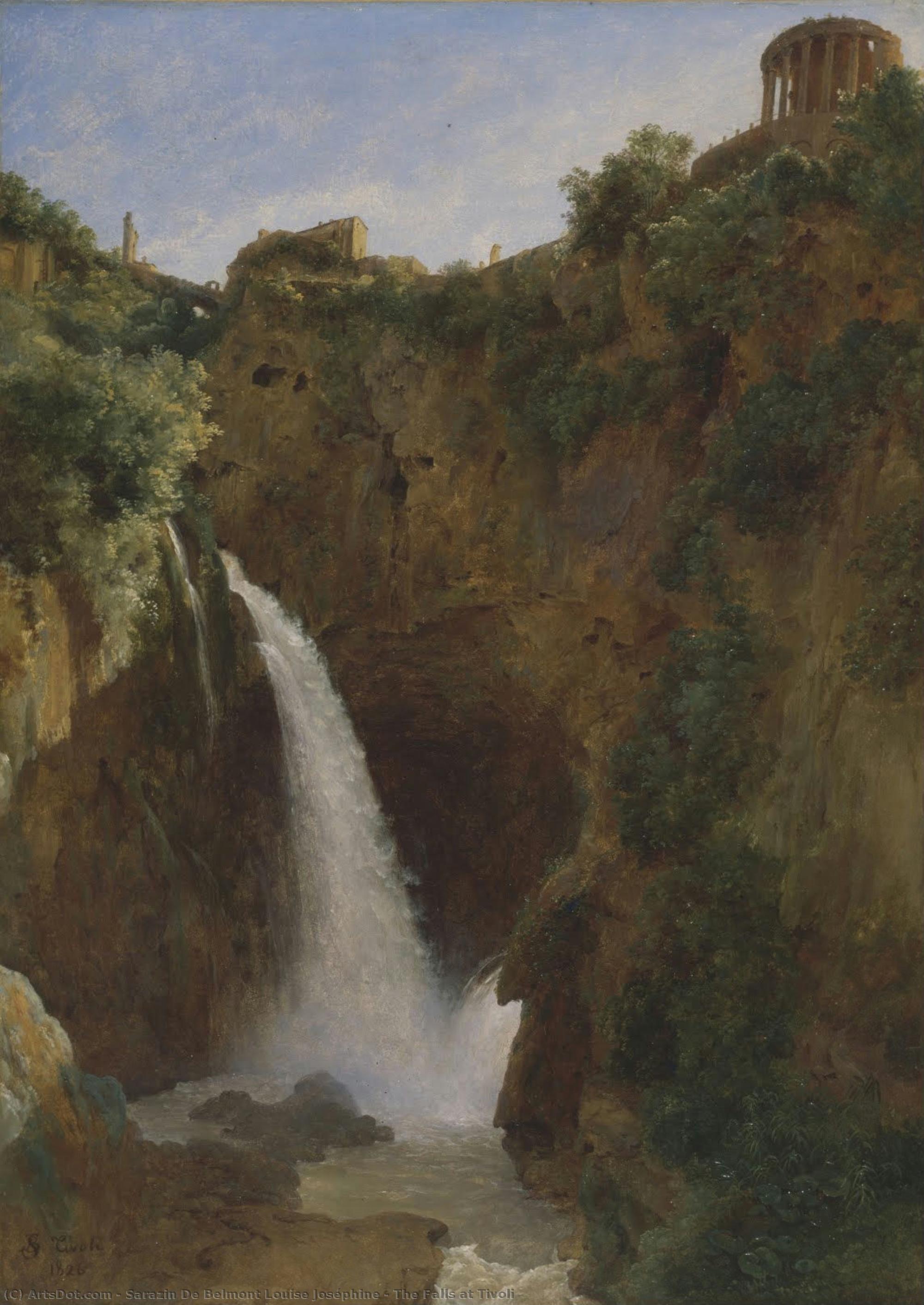
The Falls at Tivoli
 Oil On Canvas
- WallArt
- Romantic Landscape
 1826
1826- 19th Century
 72.0 x 42.0 cm
 Legion of Honor
 Read More
Giclée / Art Print
Museum-quality giclée or canvas print with fast production and flexible finish options. ( Buy Hand Made Painting Buy Image)




P118B $10

P118H $10

P118W $10

P438Z $10

P508JH $12

P508YH $12

P805H $10

P805Z $10

P919BZ $10

P919G $10

P919XJ $10

P959ZH $10

P968JZ $12

W106C $8

W218G $10

W218JH $8

W218Y $10

W307PJ $10

W316G $10

W316PJ $8

W316Y $10

W398PJ $8

W4111J $10

W500HY $15

W500JH $15

W692G $12

W849H $8

W940BG $15

W953PJ $8




Pick from our preset sizes that match the artwork's original proportions.

You may enter your own dimensions to fit a specific frame or space. If your selected size does not match the original image's proportions, we will either crop the artwork or extend the image with a mirrored or solid-fill edge. A digital mockup will be sent for your approval before production begins.
Please note that the on-screen preview does not reflect the actual cropping or extension. Only the mockup will accurately show the final composition.
While custom sizes are available, we recommend selecting a dimension from the predefined list to preserve the original proportions.
Worldwide Delivery () in 2 weeks instead of standard 4/5 weeks. (28 August)

Free Worldwide Express Shipping

High-Quality Linen Canvas

Full Shipping Insurance

Customs Tax Refund Guarantee

True Color Matching Guarantee

60-Day Return Policy (Defects Only)

100% Money-Back Guarantee

Bulk Discount Offer
 Glass option is only available in size under 110 CM

The Falls at Tivoli
Giclée / Art Print
Reproduction Size
-


Total Price
$ 63
A Romantic Vision of Nature's Majesty
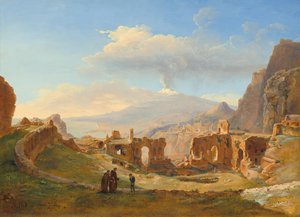
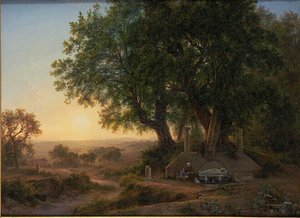
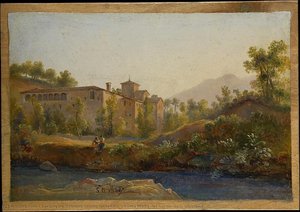
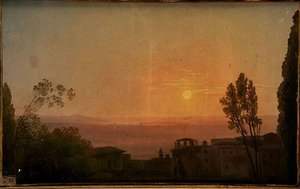
To gaze upon The Falls at Tivoli is to be swept away by the sublime grandeur that captivated the Romantic imagination. This painting transports the viewer directly to the lush, verdant embrace of Italy, centering its drama around a magnificent cascade. The waterfall itself is not merely a depiction of water falling; it is an embodiment of raw, untamed energy meeting serene contemplation. Crystal waters tumble over dark, moss-kissed rocks, creating a dynamic focal point that draws the eye into its rhythmic descent. The careful placement of these natural elements—the powerful flow against the stillness of the surrounding pools—speaks to a deep appreciation for nature's inherent poetry.
The Artistry of Sarazin de Belmont
Created in 1826, this work stands as a beautiful testament to the skill and vision of Louise-Joséphine Sarazin de Belmont. As an artist navigating the currents of the Romantic era, she possessed a unique ability to marry technical mastery with profound emotional resonance. Her background, nurtured by masters like Pierre-Henri de Valenciennes, allowed her to capture not just what was seen, but how it felt to witness such a spectacle. The inclusion of two figures—one observing from the left, another from the right—is crucial; they are not mere props, but silent participants in the scene, inviting the viewer to share their moment of awe and quiet admiration.
Technique and Evocative Atmosphere
Sarazin de Belmont employs a palette rich with deep greens, cool blues, and earthy tones that anchor the composition in natural reality while elevating it toward the sublime. The handling of light is particularly noteworthy; it seems to catch the mist rising from the falls, giving the air itself a palpable luminosity. This meticulous attention to atmospheric perspective ensures that the scene feels vast and breathable. For those considering a reproduction for your home or gallery, understanding this technique allows one to appreciate how the reproduced piece aims to capture not just the image, but the very quality of light that defined the original masterpiece.
Symbolism and Emotional Resonance
Beyond its picturesque beauty, The Falls at Tivoli carries deep symbolic weight. Water, in art history, has always represented the passage of time, purification, and life force itself. The constant motion of the falls suggests the relentless, beautiful march of existence, while the stillness of the observers hints at humanity's desire to pause before such overwhelming beauty. It is a painting that whispers of tranquility amidst power—a perfect visual balm for the modern soul seeking connection with something eternal and enduring.
Related Artworks

![Grande Cascata Da Tijuca [great Tijuca Waterfall] — Manuel José De Araújo Porto-alegre, Baron Of Santo Ângelo](/media/artworks/images-thumb/4d/aa/4daa8d7f0beeb06e9ac81238a49bbe46.jpg)
Artist Biography
A Visionary of the Romantic Landscape
In the heart of Versailles, amidst the fading echoes of the 18th century, Louise-Joséphine Sarazin de Belmont was born in 1790, a time when the winds of revolution and romanticism were beginning to reshape the European consciousness. Her journey into the world of fine art was not merely a pursuit of beauty, but an act of profound determination. At a time when the prestigious École des Beaux-Arts remained closed to women, Sarazin de Belmont found her path through the mentorship of Pierre-Henri de Valenciennes. This respected master recognized her innate talent and provided her with the rigorous formal training necessary to navigate a male-dominated art world, instilling in her a disciplined approach to light, shadow, and composition that would define her later masterpieces.
Her early career was marked by an extraordinary spirit of independence. Supported by the patronage of influential figures such as Joséphine Bonaparte and later the Duchess of Berry, she began submitting her works to the prestigious Paris Salon in 1812. These early entries were more than just artistic debuts; they were declarations of a burgeoning identity. As her talent matured, so did her appetite for exploration. Unlike many of her contemporaries who remained tethered to the studios of Paris, Sarazin de Belmont used her art as a passport, financing her own expeditions through the sale of her canvases. Her life became a nomadic tapestry of landscapes, woven from the rugged terrains of the Pyrenees and the dense, mysterious forests of Fontainebleau to the sun-drenched vistas of the Mediterranean.
The Italian Odyssey and the Romantic Spirit
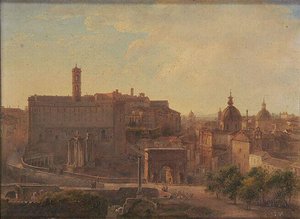
The true soul of Sarazin de Belmont’s oeuvre lies in her profound connection to Italy. Between 1824 and 1826, and again during a long residency from 1841 to 1865, she immersed herself in the classical grandeur of the Italian peninsula. Her travels through Rome, Naples, and Sicily were not mere sightseeing tours but deep, investigative odysseys into the heart of Romanticism. She possessed a rare ability to capture the tension between the enduring strength of antiquity and the ephemeral beauty of nature. In her hands, the crumbling ruins of Roman theaters and the shadowy depths of Italian grottoes became stages for emotional storytelling.
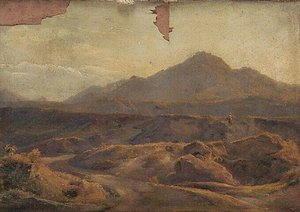
Her technique was characterized by a meticulous observation of natural phenomena. Whether she was depicting the stark, biting solitude of a snowy Italian landscape or the lush, vibrant greenery of a pastoral scene, her brushwork conveyed a sense of atmosphere that felt almost tactile. There is a haunting quality to works such as Vue intérieure de la grotte de Neptune à Tivoli, where light and shadow dance in a claustrophobic, expressionistic manner, evoking feelings of melancholy and awe. Through her lithographs and oil paintings, she documented the majesty of the natural world with a precision that honored the scientific curiosity of her era while embracing the emotional turbulence of the Romantic movement.
Legacy of a Trailblazing Artist
The historical significance of Louise-Joséphine Sarazin de Belmont extends far beyond the aesthetic beauty of her landscapes. She stands as a symbol of resilience and artistic autonomy. By navigating the limitations placed upon women in the 19th century, she carved out a space for female excellence in the landscape genre, proving that a woman could be both a meticulous documentarian of geography and a profound poet of light. Her Salon recognitions, spanning from 1831 to 1868, serve as a testament to her enduring relevance and technical mastery within the French academic tradition.
Today, her work remains a vital window into the Romantic era, offering a glimpse into a world where nature was viewed with both reverence and a sense of the sublime. Her legacy is preserved in the collections of great institutions, where her depictions of Brittany, Naples, and Rome continue to inspire awe. She remains an artist whose life and work were defined by a relentless pursuit of the horizon, leaving behind a visual record of a continent in transition and a testament to the power of the artistic vocation.

sarazin de belmont louise joséphine
1790 - 1870 , France
Quick Facts
- Artistic Movement Or Style: Romanticism
- Artists Who Influenced This Artist: ['Pierre-Henri de Valenciennes']
- Date Of Birth: 1790
- Date Of Death: 1870
- Full Name: Louise-Joséphine Sarazin de Belmont
- Nationality: French
- Notable Artworks:
- Vue de saint-pol-de-léon
- Naples, vue du Pausilippe
- Rome, vue de Monte Mario
- Florence, vue de San Miniato
- Place Of Birth: Versailles, France
Related Articles

Romantic Landscapes: 10 Masterpieces for Your Home | ArtsDot
Journey through 10 Romantic landscape masterpieces by Friedrich, Turner & Cole. Explore emotional art, sublime nature scenes & iconic 19th-century paintings. Find museum-quality reproductions for your home at ArtsDot.com – discover the full collection online!

Evocations of Place: A Historical Journey Through Landscape Art
Explore the rich history of landscape art with ArtsDot. Discover renowned artists, movements like Impressionism & Romanticism, and expert guidance for collecting timeless pieces. Find your perfect serene escape today!

The Sublime and the Picturesque: Exploring Emotion & Nature in Romantic Landscape Painting
Explore the emotional power of Romantic landscape painting! Discover the sublime & picturesque traditions, key artists like Friedrich & Cole, and find your perfect artwork at ArtsDot.

John Constable's Masterpieces: Explore 25 Iconic Landscapes for Your Home
Journey through John Constable's 25 most celebrated landscapes. Explore Romanticism, Dedham Vale & his masterful use of light in iconic paintings like 'Hay Wain'. Find museum-quality art reproductions and elevate your home decor on ArtsDot.com.

Evoking Emotion & Transcendence: Romantic Landscape Painting (18th-19th Century)
Explore the emotional depth of Romantic landscape painting (18th-19th century). Discover key artists like Friedrich & Cole, and the concepts of the sublime. Expert insights for art lovers & collectors.