 Send
Send Share
Share
 Details

 Download
 Similars
 Diaporama
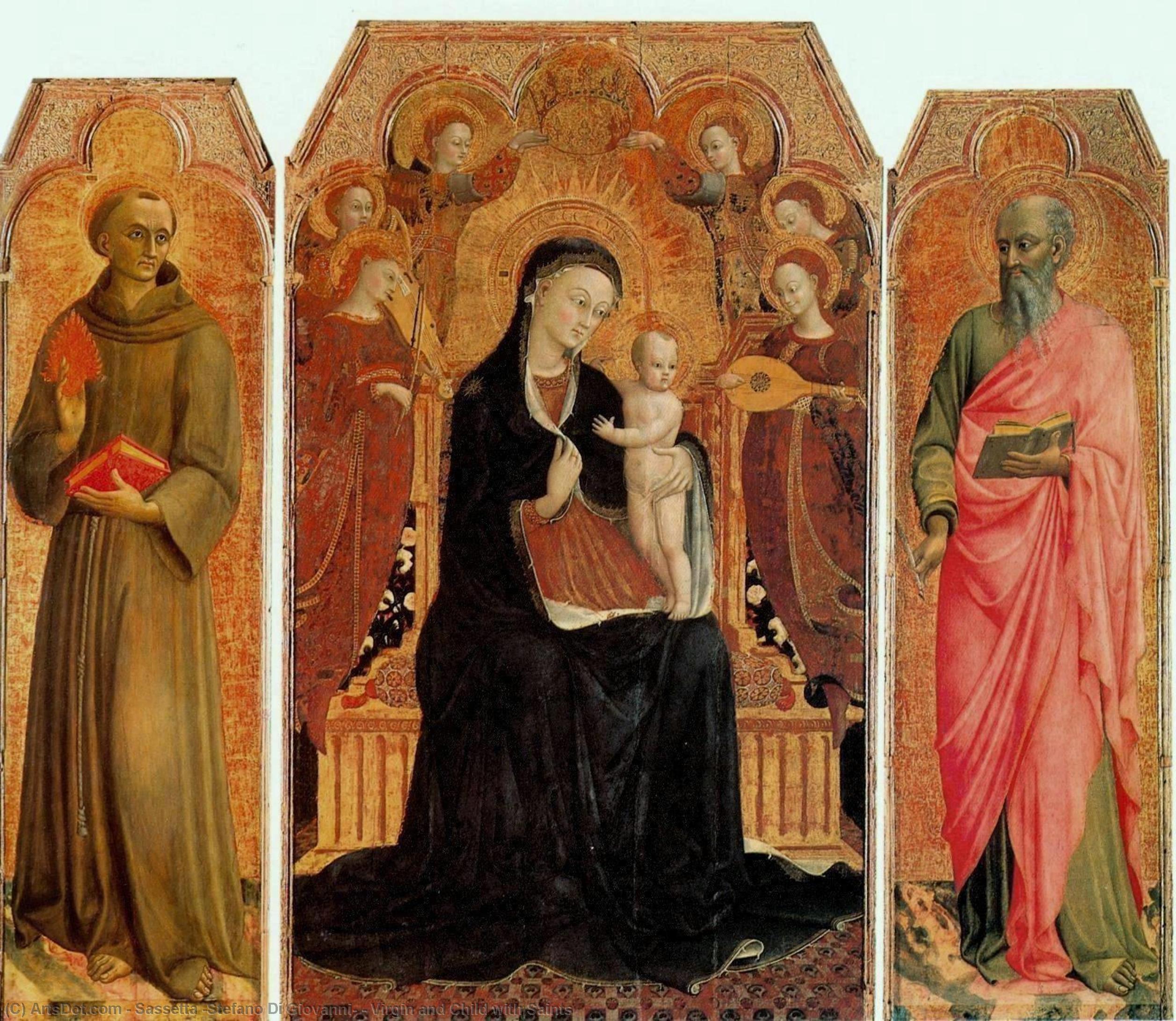
Virgin and Child with Saints
 Fresco
- Decor
- Renaissance Humanism
 1437
1437- Renaissance
 205.0 x 118.0 cm
 The Louvre
 Read More
Hand Made Oil Reproduction
Hand-painted oil on canvas in your size and frame, made to order by our artists. ( Buy Print Buy Image)




































Pick from our preset sizes that match the artwork's original proportions.

You may enter your own dimensions to fit a specific frame or space. If your selected size does not match the original image's proportions, we will either crop the artwork or extend the painting with additional hand-painted elements. A digital mockup will be sent for your approval before production begins.
Please note that the on-screen preview does not reflect the actual cropping or extension. Only the mockup will accurately show the final composition.
While custom sizes are available, we recommend selecting a dimension from the predefined list to preserve the original proportions.
After order, ArtsDot.com team will email client for instructions and provide a mockup preview
Worldwide Delivery () in 3/4 weeks instead of standard 5 weeks. (23 August). No compromise on quality.

Free Worldwide Express Shipping

High-Quality Linen Canvas

Full Shipping Insurance

Customs Tax Refund Guarantee

True Color Matching Guarantee

60-Day Return Policy (Defects Only)

100% Money-Back Guarantee

Bulk Discount Offer
 Glass option is only available in size under 110 CM

Virgin and Child with Saints
Reproduction Medium
Reproduction Size
-


Total Price
$ 263
Artwork Description
A Divine Encounter in Sienese Gold
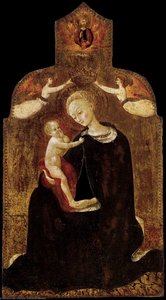
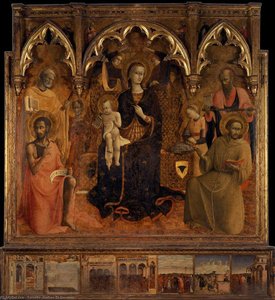
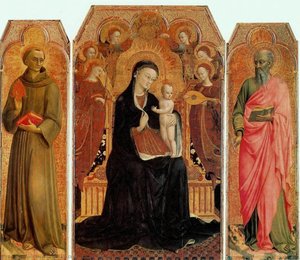
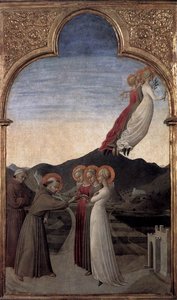
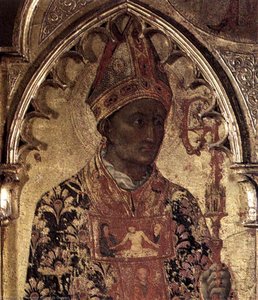
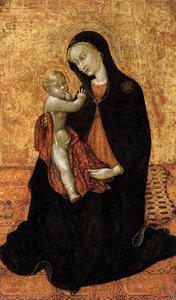
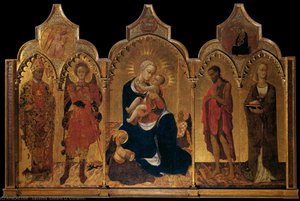
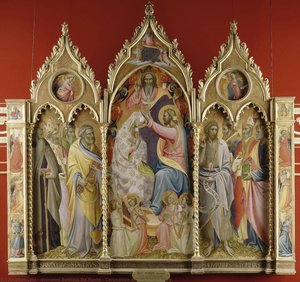
In the quiet, luminous corridors of the early Italian Renaissance, few works capture the intersection of earthly devotion and celestial grace as profoundly as Sassetta’s Virgin and Child with Saints. Executed around 1437, this monumental panel is not merely a painting but a window into the spiritual soul of Siena. At its heart, the composition presents a serene meditation on motherhood; the Virgin Mary cradles the Christ child with a tenderness that feels both intimately human and divinely ordained. Surrounding them, a celestial assembly of saints emerges from a landscape of profound stillness, their presence creating a sacred dialogue between the viewer and the heavens. For the collector or the designer, this piece offers more than visual beauty; it provides an anchor of tranquility, inviting a sense of timelessness into any curated space.
The technical mastery of Stefano di Giovanni, known as Sassetta, is revealed through his innovative use of fresco illusion and delicate tempera. While many of his contemporaries remained tethered to the rigid structures of the late Gothic period, Sassetta breathed new life into the Sienese tradition by integrating the burgeoning realism of Florentine innovators like Masaccio. He employed a sophisticated atmospheric perspective, subtly blurring the distant horizons to create an ethereal depth that draws the eye inward. The luminosity of the drapery—particularly the flowing robes of the Virgin—suggests a light that does not merely strike the surface but seems to emanate from within the pigment itself. This mastery of tone and texture ensures that every time one views a reproduction of this work, the subtle gradations of color continue to reveal new layers of complexity.
Symbolism and the Spirit of the Quattrocento
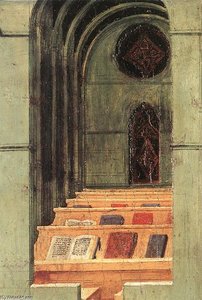
Every element within this sacred tableau is imbued with deep symbolic resonance, designed to elevate the viewer's state of contemplation. The arrangement of the saints serves as a visual litany of faith, where each figure acts as a bridge between the mortal realm and the divine. The presence of delicate details—a book held by a scholar-saint, the soft glow of an angelic presence in the periphery, or the symbolic placement of objects near the central figures—functions as a silent language of devotion. Commissioned by the Benedictine Order of Marcimon della Chiana, the work was intended to inspire piety through visual splendor, using gold and vibrant pigments to mirror the glory of the kingdom of God.
For those looking to integrate such a masterpiece into a sophisticated interior, the emotional impact of Virgin and Child with Saints is unparalleled. It possesses a unique ability to command a room through its quiet authority rather than through loud or jarring colors. The painting’s palette, characterized by soft golds, deep blues, and earthy undertones, harmonizes beautifully with classical, transitional, or even contemporary minimalist decors. To possess a high-quality reproduction of this Sienese treasure is to bring a piece of history's most profound spiritual dialogue into the modern home, offering a permanent sense of peace, dignity, and artistic excellence.
Related Artworks
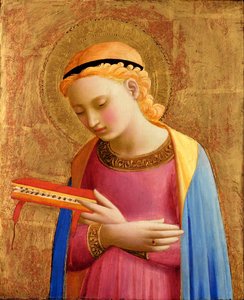
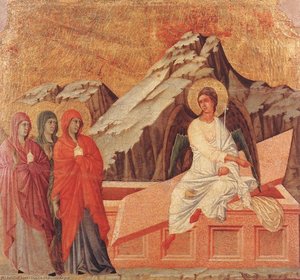
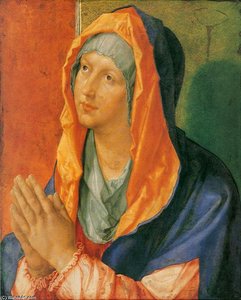
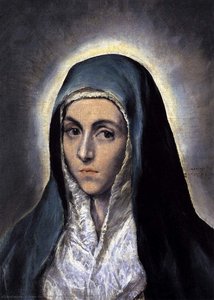
Artist Biography
Lorenzo Ghiberti: The Sculptor of Florentine Light
Born in Pelago, near Florence, in 1378, Lorenzo di Cione Ghiberti’s life was a testament to the burgeoning artistic spirit of Renaissance Italy. His early training as a goldsmith under his father, Bartoluccio, laid the foundation for a career that would ultimately redefine the possibilities of sculpture and profoundly influence generations of artists. More than simply a craftsman, Ghiberti possessed an innate understanding of human form, light, and space—qualities he meticulously honed through relentless experimentation and a deep engagement with classical ideals.
Ghiberti’s early years were marked by both opportunity and challenge. Florence in the late 14th and early 15th centuries was a crucible of artistic innovation, fueled by the patronage of wealthy families like the Medici and the ambition of guilds seeking to enhance their prestige. Ghiberti's apprenticeship within the Silk and Gold Guild provided him with invaluable experience, but it also exposed him to the competitive pressures of the Florentine art market. His relocation to Rimini in 1400, prompted by a devastating plague, offered a crucial period of artistic development, allowing him to study under the renowned sculptor Andrea del Verrocchio—a master whose workshop served as a breeding ground for some of Florence’s most celebrated artists.
The Gates of Paradise: A Revolutionary Vision
Ghiberti's rise to prominence began with his triumph in the 1401 competition to design the north doors of the Baptistery of Florence. Against formidable rivals like Filippo Brunelleschi and Jacopo della Quercia, Ghiberti’s innovative approach—characterized by a masterful manipulation of perspective and an unprecedented naturalism—secured him the coveted commission. These doors, collectively known as the “Gates of Paradise,” represent a watershed moment in Renaissance sculpture. Unlike the predominantly Gothic style prevalent at the time, Ghiberti embraced a more open, airy aesthetic, drawing inspiration from classical models and employing techniques that created a remarkable illusion of depth and volume.
The sheer scale and complexity of the project demanded years of dedicated labor. Ghiberti’s meticulous attention to detail—from the delicate folds of drapery to the subtle expressions on the faces of his figures—is breathtaking. Each panel within the doors depicts scenes from the Old Testament, rendered with a vibrant palette and an almost photographic realism. The use of *chiaroscuro* – the interplay of light and shadow – further enhances the sense of three-dimensionality, imbuing the sculptures with a palpable sense of life.
Beyond the Baptistery: Expanding Horizons
Following his success with the Gates of Paradise, Ghiberti continued to receive prestigious commissions that showcased his versatility and artistic ambition. In 1412, he was entrusted with creating a monumental bronze statue of John the Baptist for the Orsanmichele, a civic monument in Florence. This ambitious undertaking required not only sculptural skill but also architectural expertise, as Ghiberti designed the surrounding niches and oversaw the construction of the entire structure. The statue itself—a powerful depiction of the prophet’s solemnity and spiritual intensity—became an instant icon.
Throughout his career, Ghiberti remained a prolific innovator, constantly pushing the boundaries of sculptural technique. He explored new methods of modeling, casting, and finishing bronze, refining his skills with each project. His work extended beyond monumental sculptures to include stained-glass windows for the Florence Cathedral and intricate relief panels adorning guildhalls and private residences. His influence can be seen in the works of numerous artists who followed him, including Donatello and Masaccio.
Legacy and Influence
Lorenzo Ghiberti’s legacy extends far beyond his individual masterpieces. He fundamentally altered the course of Renaissance sculpture by introducing a new emphasis on naturalism, perspective, and emotional expression. His pioneering use of *chiaroscuro* and his masterful manipulation of space created an unprecedented sense of realism that captivated audiences and inspired generations of artists. Ghiberti’s work stands as a testament to the transformative power of artistic innovation and the enduring beauty of Florentine art.
Ghiberti died in Florence in 1455, leaving behind a body of work that continues to inspire awe and admiration. His sculptures are housed in museums around the world, serving as reminders of his genius and his pivotal role in shaping the artistic landscape of the Renaissance.
sassetta (stefano di giovanni)
1392 - 1450 , Italy
Quick Facts
- Artistic Movement Or Style: Early Renaissance
- Artists Or Movements Influenced By This Artist: ['Leon Battista Alberti']
- Artists Who Influenced This Artist: ['Alhazen']
- Date Of Birth: 1378
- Date Of Death: 1455
- Full Name: Lorenzo di Cione Ghiberti
- Nationality: Italian
- Notable Artworks:
- Gates of Paradise
- Baptistery Doors
- Place Of Birth: Pelago, Italy
Related Articles

The Fresco as Family Legacy: Preserving Heritage Through Wall Art
Explore the rich history & enduring legacy of fresco painting. Discover how to preserve family heritage through stunning wall art. Expert insights & restoration guidance.

The Enduring Legacy of Fresco: Technique, History & Artistic Expression Across Cultures
Explore the rich history & enduring legacy of fresco painting! Discover ancient techniques, Giotto's masterpieces, and modern applications. Expert insights for art lovers & professionals.

The Enduring Legacy of Fresco Painting: Techniques, History & Contemporary Relevance
Explore the rich history & enduring artistry of fresco painting – from Giotto to Michelangelo! Discover techniques, conservation efforts, & modern applications. Learn how ArtsDot brings this timeless art form to your home.

Fra Angelico's Masterpieces: 25 Renaissance Paintings for Your Home | ArtsDot
Explore 25 breathtaking masterpieces by Fra Angelico, a Renaissance master. Discover the stories behind his iconic frescoes, Annunciations & religious art. Find museum-quality reproductions and elevate your home decor with ArtsDot.com.

Art That Lives With You: The Emotional Power of a Custom Interior Fresco
Discover the emotional power & timeless beauty of custom interior frescoes. Explore history, design tips & expert guidance from – creating lasting legacies.