 Preview
 Send
Send Share
Share
 Details

 Download
 Similars
 X-Ray
X-Ray Diaporama
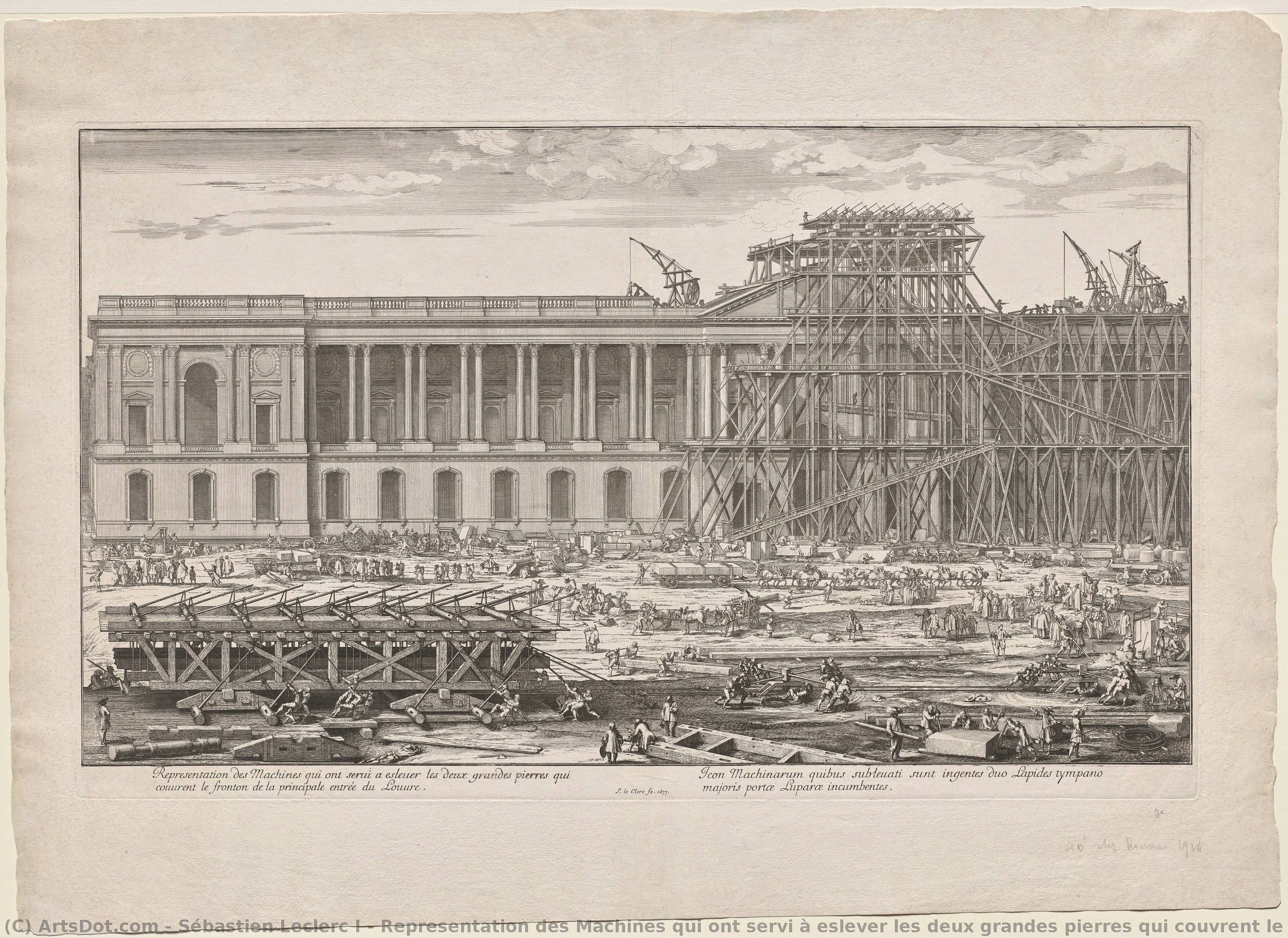
Representation des Machines qui ont servi à eslever les deux grandes pierres qui couvrent le fronton de la principale entrée du Louvre
 Etching
- Baroque Illustration
 1677
1677- Early Modern
 37.0 x 62.0 cm
 Cleveland Museum of Art
 Read More
Hand Made Oil Reproduction
Hand-painted oil on canvas in your size and frame, made to order by our artists. ( Buy Print Buy Image)




P118B $10

P118H $10

P118W $10

P438Z $10

P508JH $12

P508YH $12

P805H $10

P805Z $10

P919BZ $10

P919G $10

P919XJ $10

P959ZH $10

P968JZ $12

W106C $8

W218G $10

W218JH $8

W218Y $10

W307PJ $10

W316G $10

W316PJ $8

W316Y $10

W398PJ $8

W4111J $10

W500HY $15

W500JH $15

W692G $12

W849H $8

W940BG $15

W953PJ $8




Pick from our preset sizes that match the artwork's original proportions.

You may enter your own dimensions to fit a specific frame or space. If your selected size does not match the original image's proportions, we will either crop the artwork or extend the painting with additional hand-painted elements. A digital mockup will be sent for your approval before production begins.
Please note that the on-screen preview does not reflect the actual cropping or extension. Only the mockup will accurately show the final composition.
While custom sizes are available, we recommend selecting a dimension from the predefined list to preserve the original proportions.
After order, ArtsDot.com team will email client for instructions and provide a mockup preview
Worldwide Delivery () in 3/4 weeks instead of standard 5 weeks. (21 August). No compromise on quality.

Free Worldwide Express Shipping

High-Quality Linen Canvas

Full Shipping Insurance

Customs Tax Refund Guarantee

True Color Matching Guarantee

60-Day Return Policy (Defects Only)

100% Money-Back Guarantee

Bulk Discount Offer
 Glass option is only available in size under 110 CM

Representation des Machines qui ont servi à eslever les deux grandes pierres qui couvrent le fronton de la principale entrée du Louvre
Reproduction Medium
Reproduction Size
-


Total Price
$ 263
Artwork Description
The Grandeur of Engineering: A Window into Louis XIV's Paris
In this breathtaking etching from 1677, Sébastien Le Clerc captures a moment of monumental human ambition. The work, titled Representation des Machines qui ont $\text{ont}$ servi à eslever les deux grandes pierres qui couvrent le fronton de la principale entrée du Louvre, serves as more than just a technical record; it is a dramatic tableau of the sheer force required to shape the architectural destiny of France. Le Clerc invites us into the heart of a construction site where the boundaries between art and engineering dissolve. The scene focuses on the Herculean task of raising sixty-foot-long stones to crown the pediment of the Louvre Palace, showcasing the intricate machinery that allowed the architects of the Sun King to realize their most soaring visions.
The composition is a masterclass in depth and narrative movement. In the foreground, the viewer is met with the raw power of heavy machinery designed to drag massive stones across the earth, while the background rises into an elaborate web of scaffolding and towering cranes. These structures, silhouetted against the sky, create a sense of verticality that mirrors the upward aspirations of the French monarchy. Scattered throughout this industrial ballet are numerous figures—laborers and engineers whose small scale emphasizes the gargantuan proportions of the stones they manipulate. This contrast between the individual human spirit and the overwhelming weight of the architecture creates a profound sense of awe, making the piece an evocative study of progress and perseverance.
A Masterpiece of Etching and Historical Documentation
As a premier engraver for the court of Louis XIV, Le Clerc possessed a unique ability to blend scientific precision with artistic elegance. His technique in this etching utilizes fine, rhythmic lines to define the complex textures of wood, rope, and stone, allowing the viewer to almost feel the tension in the pulleys and the grit of the construction site. The monochromatic palette focuses the eye entirely on form, light, and shadow, stripping away the distraction of color to reveal the structural skeleton of the Louvre's transformation. This meticulous attention to detail makes the work an invaluable historical document, capturing the technological triumphs of the 17th century with the soul of a fine art print.
For the discerning collector or interior designer, this reproduction offers a sophisticated way to introduce historical gravity and intellectual depth into a space. The piece functions beautifully as a focal point in a study, a library, or a grand hallway, where its intricate linework can be appreciated up close. It evokes an era of classical grandeur and the dawn of modern engineering, making it an ideal choice for those who appreciate decor that tells a story of legacy, strength, and the enduring beauty of human ingenuity. Bringing this work into a contemporary setting provides a timeless connection to the architectural heritage of Paris and the magnificent era of the Grand Siècle.
Related Artworks
Artist Biography
The Subtle Master of the Burin: The Life of Sébastien Le Clerc
In the golden age of French classicism, where the grandeur of Louis XIV’s court demanded nothing less than absolute precision and breathtaking scale, there emerged an artist whose needle could capture the very soul of a masterpiece. Sébastien Le Clerc, born in 1637 within the industrious atmosphere of Arnouville-lès-Gonesse, was far more than a mere technician; he was a visual chronicler of an era. Coming from a lineage of skilled craftsmen—his father being a respected goldsmith—Le Clerc possessed an innate understanding of fine detail and the delicate interplay of light and shadow. This early immersion in the meticulous world of metallurgy provided the foundational discipline required for his eventual ascent to the heights of the Académie Royale de Peinture et de Sculpture.
His journey was one of profound transformation, moving from the provincial landscapes of Metz to the pulsating artistic heart of Paris. It was in the capital that Le Clerc’s destiny truly aligned with the sun of the Bourbon monarchy. Under the transformative guidance of Charles Le Brun, the most influential painter of the age, Le Clercm transitioned from a talented draughtsman into a premier graveur du roi. This mentorship encouraged him to devote himself entirely to the art of engraving, a medium that allowed him to translate the sweeping canvases of his contemporaries into intimate, reproducible treasures. His work became a bridge between the singular, monumental painting and the wider, literate world, making the splendor of the French court accessible through the exquisite language of etching and line.
A Symphony of Line and Logic
Le Clerc’s artistry was a rare marriage of scientific rigor and poetic sensitivity. As an instructor of geometry and perspective at the Académie, he understood that true beauty in representation relies upon the mathematical truth of space. This technical mastery is most evident in his architectural studies and his celebrated reproductions of monumental feats, such as the intricate machinery used to elevate the great stones of the Louvre. His ability to render complex structural forms with absolute clarity allowed him to serve not only as an artist but as a technical draftsman and military engineer, documenting the physical triumphs of French engineering with the same grace he applied to fine art.
The texture of his work is characterized by a remarkable subtlety. Unlike engravers who relied on heavy, aggressive strokes, Le Clerc utilized a delicate touch that could mimic the softest gradations of tone in a painting. His oeuvre includes:
- Reproductive Engravings: Masterful translations of famous paintings that preserved the tonal nuances and emotional depth of the original works.
- Architectural Illustrations: Precise and evocative depictions of the grand structures defining the French landscape.
- Technical Etchings: Detailed renderings of scientific and military subjects, blending utility with aesthetic elegance.
Legacy of a Royal Chronicler
The historical significance of Sébastien Le Clerc lies in his role as the definitive eye of his century. To look upon a Le Clerc print is to witness the 17th century through a lens of unparalleled clarity. He did not merely copy; he interpreted, elevating the medium of engraving to a respected form of artistic expression that stood alongside painting. The great connoisseur Pierre-Jean Mariette once remarked on his extraordinary capabilities, noting that Le Clerc extended the bounds of his profession without fear of contradiction.
As he moved through the decades of the late 17th century, his influence permeated the very fabric of French visual culture. By documenting the activities of the Académie des Sciences et des Beaux-Arts and the triumphs of the royal household, he ensured that the ephemeral glory of Louis XIV’s reign was etched into the permanent record of history. When he passed away in Paris in 1714, he left behind a legacy of precision, a testament to the idea that the most profound truths are often found in the finest, most subtle lines.
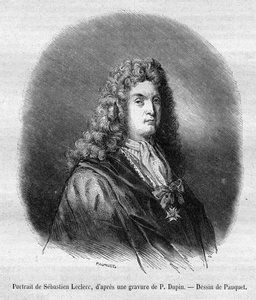
sébastien leclerc i
1637 - 1714 , France
Quick Facts
- Artistic Movement Or Style: Reproductive Drawings & Engraving
- Artists Or Movements Influenced By This Artist:
- Pierre Auguste Renoir
- Camille Pissarro
- Artists Who Influenced This Artist: ['Charles Le Brun']
- Date Of Birth: September 1637
- Date Of Death: October 25, 1714
- Full Name: Sébastien Le Clerc I
- Nationality: French
- Notable Artworks:
- Portrait of an Unknown Poet
- Representation des Machines qui ont servi à eslever les deux grandes pierres qui couvrent le fronton de la principale entrée du Louvre
- Place Of Birth: Metz, France
Related Articles
Engraving's Golden Age: 10 Masterpieces That Redefined Art | ArtsDot
Journey through art history with our Top 10 Legendary Engravings! Explore masterpieces by Dürer, Rembrandt & Goya. Discover the stories behind these iconic prints and find museum-quality reproductions for your home at ArtsDot.com.

Etching: A Historical Survey of Technique, Aesthetic Qualities & Enduring Artistic Significance
Explore the rich history of etching, from its origins to Rembrandt's masterful innovations. Discover the technique, aesthetic qualities & enduring legacy of this captivating art form. Expert insights for collectors and enthusiasts.
Etching Masters: 10 Legendary Prints That Revolutionized Art | ArtsDot
Journey through 10 legendary etching masterpieces by Rembrandt, Dürer & Goya. Explore the history of printmaking and discover timeless art for your home. Find museum-quality reproductions at ArtsDot.com.
The Intricate World of Etching: A Historical Survey of Technique, Aesthetic Evolution, and Enduring Artistic Impact
Explore the rich history of etching, from its origins to modern practice. Discover techniques, key artists like Rembrandt, and insights for collectors. A comprehensive guide by ArtsDot.
Engraving: A Historical Survey of Technique, Artistic Expression & Enduring Legacy
Explore the rich history of engraving with ArtsDot. Discover techniques, iconic artists like Dürer & Callot, collecting tips, and expert guidance for preserving your art investment. Learn about intaglio printing & more!