

 Preview
 Send
Send Share
Share
 Details

 Download
 Similars
 X-Ray
X-Ray Diaporama
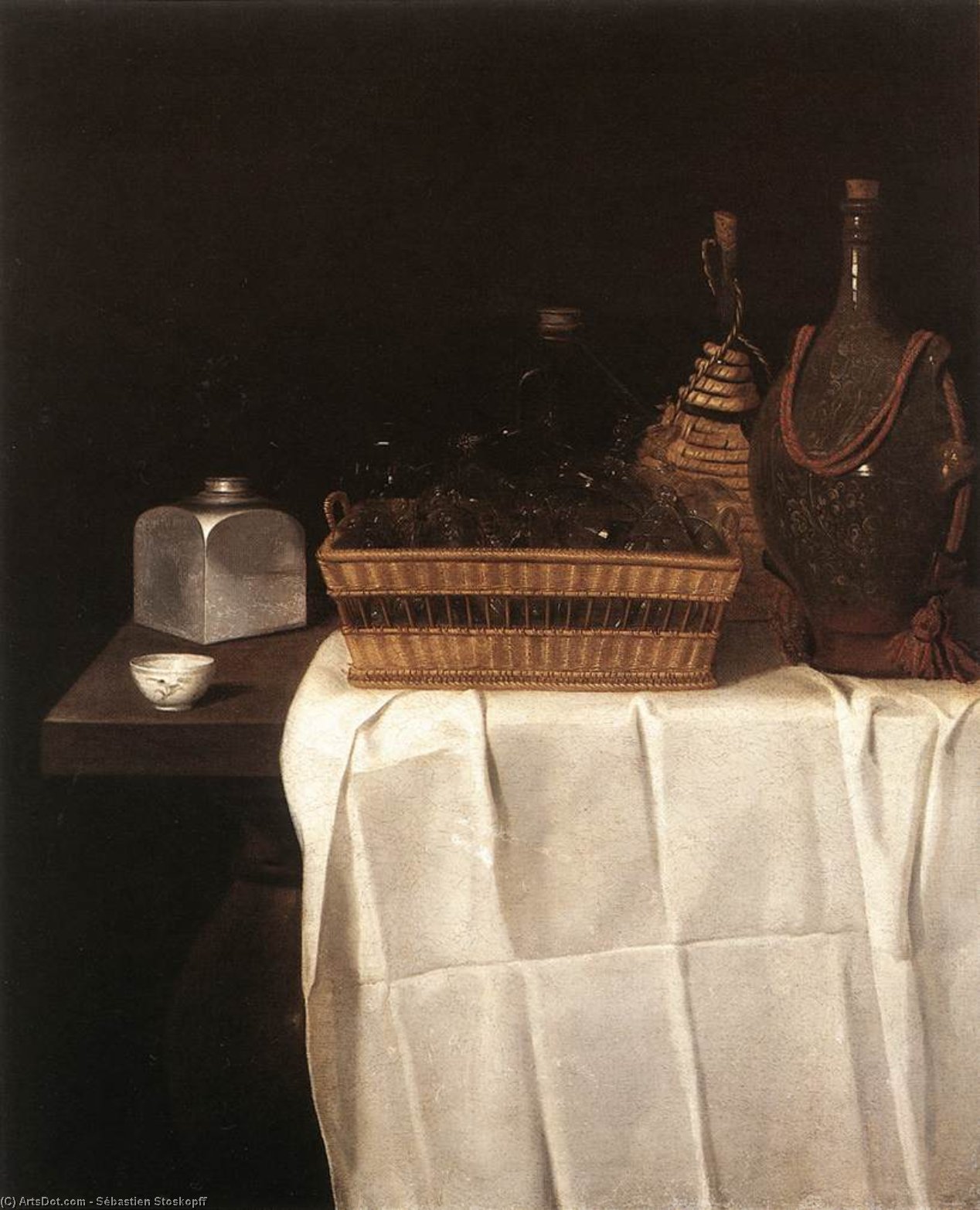
Still-Life with Glasses and Bottles
 Acrylic On Canvas
- WallArt
- Baroque Still Life
 1641
1641 122.0 x 99.0 cm
 Staatliche Museen
 Read More
Purchase a high-resolution, enhanced digital image, far superior to the online preview.
Each file is meticulously prepared by our in-house specialists using advanced tools and expert manual retouching. We ensure every image has exceptional clarity, precise color accuracy, and fine detail.
The final file is delivered via email within 72 hours, optimized for immediate use in professional, editorial, and print environments. This is the same quality trusted by top-tier design studios, publishers, and galleries.
Digital Image
Download a high-resolution file for personal display, printing, and creative projects. ( Buy Print Buy Hand Made Painting)
Included in Every Digital Image Order
Expert Digital Delivery, Guaranteed
When you choose ArtsDot.com, you're not just getting an image - you're receiving a professionally enhanced digital artwork, crafted with precision and backed by a satisfaction guarantee. Here's everything that comes with your order, automatically:

Fast Email Delivery
Your high-resolution digital image file will be emailed to you within 72 hours of ordering - ready for immediate use.

AI-Enhanced Digital File
Your artwork is professionally optimized using advanced AI tools and manual editing, ensuring maximum detail, clarity, and color accuracy.

Free Lifetime Re-Delivery
Accidentally deleted or lost your file? No worries - we'll resend it to you anytime, free of charge.

No Import Fees - Ever
Enjoy your artwork instantly with zero customs, duties, or delivery fees - digital downloads are always tax-free.

Color Accuracy Guarantee
We ensure your digital image reflects the original colors as closely as possible using professional tools and color management.

60-Day Satisfaction Guarantee
If you're not satisfied with your digital image, we'll revise it or refund 100% within 60 days - no questions asked.

100% Money-Back Guarantee
Not satisfied? Get a full refund within 60 days of receiving your digital file - no questions asked.

Bulk Order Discounts
Buy 3 images, save 10% - Buy 5, save 15% - Buy 10+, save 20%. Great for creative projects, galleries, and agencies.
Collectible Description
Still-Life with Glasses and Bottles – A Reflection of Baroque Elegance
Sebastian Stoskopff’s “Still-Life with Glasses and Bottles,” painted in 1641, stands as a testament to the understated grandeur characteristic of German Baroque art. Executed by this largely unrecognized maestro, the canvas captures a meticulously crafted tableau of domestic objects—a basket brimming with luscious fruit alongside delicate glassware and ornate bottles—creating an image that transcends mere representation and delves into profound symbolic meaning.The Artist’s Vision: Stoskopff's Quiet Mastery
Born in Strasbourg in 1597, Sebastian Stoskopff emerged from a Huguenot family deeply rooted in Protestant faith. His formative years instilled within him not only civic responsibility but also an unwavering dedication to intellectual pursuits—a foundation that would undoubtedly inform his artistic endeavors. Unlike the flamboyant styles of Rembrandt or Rubens, Stoskopff’s approach prioritized precision and subtlety, favoring meticulous observation and rendering with remarkable accuracy. This deliberate restraint is evident in every brushstroke, resulting in a visual experience marked by quiet contemplation rather than ostentation.A Symphony of Form and Color: Technique and Style
Stoskopff's technique exemplifies the Baroque ideal—a harmonious blend of illusionistic depth and textural richness achieved through layering glazes and utilizing chiaroscuro (the dramatic interplay of light and shadow). The artist skillfully employs a muted palette dominated by earthy tones – browns, ochres, and reds – enhancing the sense of realism while simultaneously conveying an atmosphere of solemn beauty. Careful attention to detail is paramount; each fruit appears to glow with internal luminescence, and the glassware reflects light with crystalline clarity. This meticulous craftsmanship speaks volumes about Stoskopff’s commitment to capturing the essence of his subject matter.Symbolism Within Still Life: Vanitas Revisited
The composition itself resonates with themes prevalent in Baroque still life—particularly the concept of *vanitas*, Latin for “nothingness.” The inclusion of withered flowers, cracked glass, and a skull subtly reminds viewers of mortality and the fleeting nature of earthly pleasures. However, Stoskopff avoids didactic pronouncements; instead, he invites contemplation on the cyclical rhythms of existence and encourages appreciation for the present moment. The arrangement of objects—the basket of fruit representing abundance, the bottles symbolizing life’s elixir—creates a visual dialogue that underscores these profound philosophical considerations.Emotional Resonance: Capturing Beauty's Transient Grace
“Still-Life with Glasses and Bottles” transcends its formal elements to evoke an emotional response in the viewer. The painting’s serene stillness conveys a sense of contemplative peace, inviting us to pause and savor the beauty of everyday objects. Stoskopff’s masterful rendering captures not just what is seen but also what is felt—a quiet reverence for nature's bounty and a poignant awareness of life’s inevitable passage. It remains an enduring emblem of Baroque artistry: elegant, restrained, yet brimming with intellectual depth and emotional resonance.- Artist: Sébastien Stoskopff
- Year Painted: 1641
- Location: Strasbourg
- Medium: Oil on Canvas
Related Artworks
Artist Biography
The Quiet Genius of Baroque Still Life
Sebastian Stoskopff (July 13, 1597 – February 10, 1657) stands as a pivotal figure in German Baroque art, yet his name remains relatively obscure compared to contemporaries like Rembrandt or Rubens. Rediscovered after decades of neglect following World War II, Stoskopff’s oeuvre—primarily consisting of meticulously rendered still lifes featuring goblets, glasses, and occasionally fruit—offers a unique glimpse into the artistic sensibilities of his era and possesses an understated elegance that continues to captivate scholars and collectors alike. His work is characterized by a profound stillness, a quality that invites the viewer into a meditative state, contemplating the fragile beauty of the objects he so lovingly rendered.
Born in Strasbourg, Alsace, at a time when the region was part of the Holy Roman Empire, Stoskopff descended from a family steeped in Huguenot tradition. His father, a civil servant employed by the city council, instilled in him a strong sense of civic duty alongside an appreciation for intellectual pursuits. Recognizing Sebastian’s innate talent for drawing and painting at a young age—around fifteen—his father proactively sought assistance from the Strasbourg art community. He specifically recommended Daniel Soreau, a respected painter and engraver based in Hanav. While Soreau initially hesitated to accept apprentices from his own family, he ultimately agreed to nurture Stoskopff’s artistic ambitions, sending him to Hanau for formal training. Though Soreau's methods were somewhat traditional, favoring familial connections, he recognized Stoskopff’s potential and ensured he gained foundational skills in drawing, mirroring the techniques championed by masters like Albrecht Dürer.
Mastery of Light and Materiality
Soreau’s workshop served as a crucible for Stoskopff's artistic evolution. Despite Soreau's reluctance to introduce him to painting directly—a common practice at the time—Stoskopff diligently honed his observational skills and mastered the subtleties of chiaroscuro, employing dramatic lighting to breathe life into inanimate objects. This mastery is perhaps most evident in his celebrated works from the 1640s, such as his Still-Life of Glasses in a Basket (1644). In these compositions, the artist demonstrates an almost supernatural ability to capture the translucency of glass, the glint of light on a silver rim, and the heavy, tactile presence of ceramic or metal. His technique allowed him to navigate the delicate boundary between reality and illusion, creating textures so convincing they seem to vibrate with life.
His development was marked by an increasing sophistication in his use of symbolism, often leaning into the vanitas tradition. Through the depiction of luxury glassware and fine bottles, Stoskopff did not merely showcase wealth; he whispered of the ephemeral nature of existence. In works like Still-Life with Glasses and Bottles (1641), the serene arrangement serves as a silent memento mori, reminding the viewer of the fleeting beauty of the material world. This ability to blend technical virtuosity with deep, philosophical undertones is what elevates his work from mere decoration to profound artistic expression.
Legacy and Historical Significance
The historical significance of Sebastian Stoskopff lies in his unique position as a bridge between the Northern Renaissance traditions of his training and the burgeoning Baroque sensibilities of the 17th century. While much of the art of this period moved toward grand, sweeping narratives, Stoskopff found greatness in the minute and the overlooked. His contribution to the genre of still life is characterized by:
- Precision and Realism: An unparalleled ability to render the physical properties of glass, liquid, and metal with scientific accuracy.
- Atmospheric Depth: The use of light and shadow to create a sense of space and quietude that distinguishes him from the more boisterous Dutch masters.
- Symbolic Complexity: The integration of subtle vanitas themes that invite intellectual engagement beyond simple aesthetic appreciation.
Though his fame was eclipsed for centuries, the modern rediscovery of his talent has restored him to his rightful place in the canon of European art. Today, collectors and historians look to Stoskopff not just as a skilled craftsman, but as a master of atmosphere, whose quiet, luminous compositions continue to resonate with the timeless human fascination with light, shadow, and the beauty of the ephemeral.
sébastien stoskopff
1597 - 1657 , France
Quick Facts
- Artistic Movement Or Style: German Still Life Painting
- Artists Or Movements Influenced By This Artist: ['Dutch Golden Age']
- Artists Who Influenced This Artist: ['Daniel Soreau']
- Date Of Birth: July 13, 1597
- Date Of Death: February 10, 1657
- Full Name: sébastien stoskopff
- Nationality: Alsatian
- Notable Artworks:
- Still-Life of Glasses in a Basket
- Still Life with Carp on a Wooden Chip Box
- Place Of Birth: Strasbourg, France

