 Preview
 Send
Send Share
Share
 Details

 Download
 Similars
 X-Ray
X-Ray Diaporama
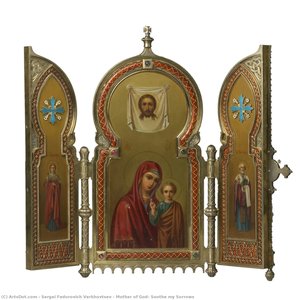
Mother of God, Soothe my Sorrows


 Read More
Giclée / Art Print
Museum-quality giclée or canvas print with fast production and flexible finish options. ( Buy Hand Made Painting Buy Image)




P118B $10

P118H $10

P118W $10

P438Z $10

P508JH $12

P508YH $12

P805H $10

P805Z $10

P919BZ $10

P919G $10

P919XJ $10

P959ZH $10

P968JZ $12

W106C $8

W218G $10

W218JH $8

W218Y $10

W307PJ $10

W316G $10

W316PJ $8

W316Y $10

W398PJ $8

W4111J $10

W500HY $15

W500JH $15

W692G $12

W849H $8

W940BG $15

W953PJ $8




Pick from our preset sizes that match the artwork's original proportions.

You may enter your own dimensions to fit a specific frame or space. If your selected size does not match the original image's proportions, we will either crop the artwork or extend the image with a mirrored or solid-fill edge. A digital mockup will be sent for your approval before production begins.
Please note that the on-screen preview does not reflect the actual cropping or extension. Only the mockup will accurately show the final composition.
While custom sizes are available, we recommend selecting a dimension from the predefined list to preserve the original proportions.
Worldwide Delivery () in 2 weeks instead of standard 4/5 weeks. (7 September)

Free Worldwide Express Shipping

High-Quality Linen Canvas

Full Shipping Insurance

Customs Tax Refund Guarantee

True Color Matching Guarantee

100-Day Return Policy (Defects Only)

100% Money-Back Guarantee

Bulk Discount Offer
 Glass option is only available in size under 110 CM

Mother of God, Soothe my Sorrows
Giclée / Art Print
Reproduction Size
-


Total Price
$ 63
A Portrait of Sorrow and Serenity: Sergei Verkhovtsev’s “Mother of God, Soothe My Sorrows”
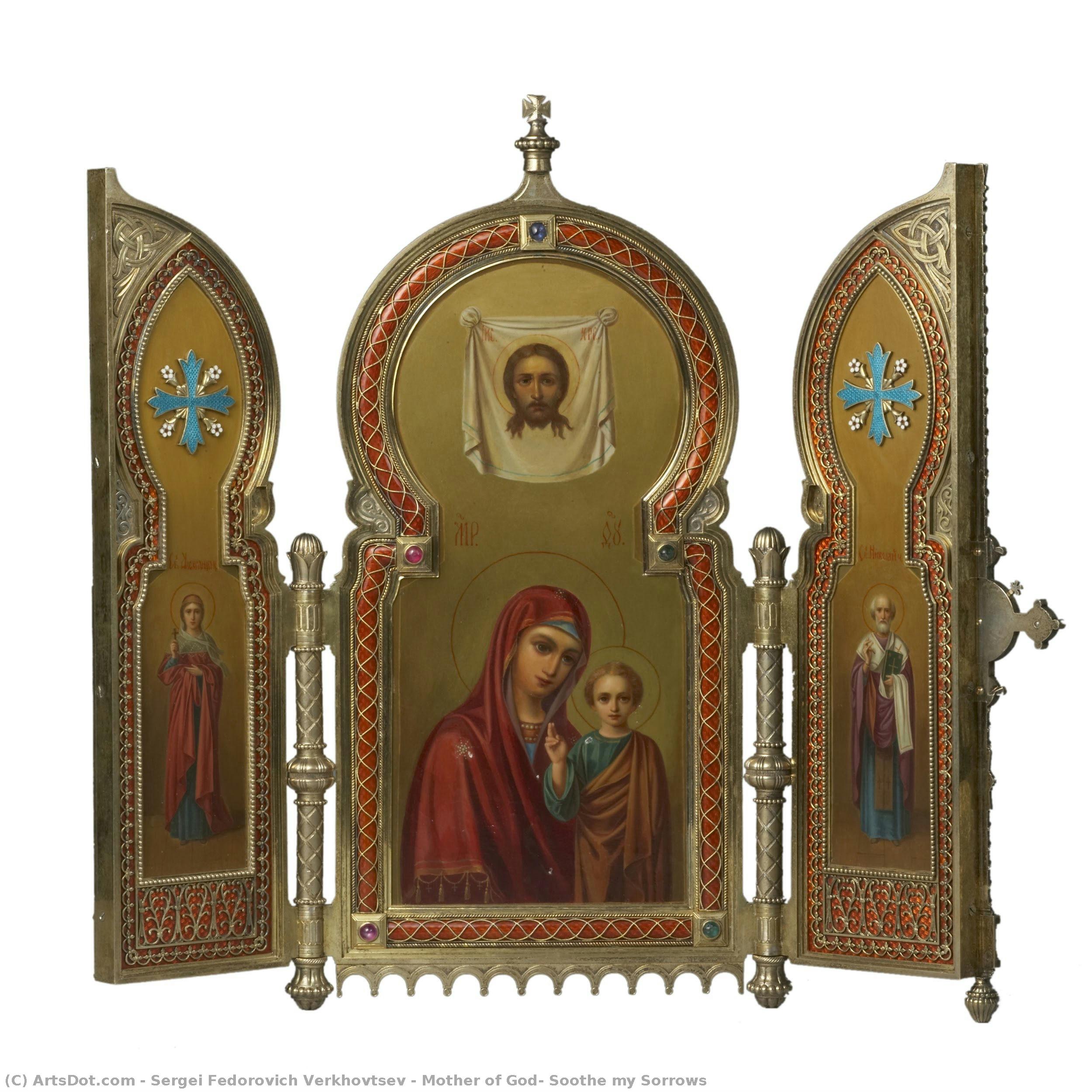
Sergei Fedorovich Verkhovtsev's "Mother of God, Soothe My Sorrows," a poignant depiction of a woman cradling her child, transcends the boundaries of mere religious iconography to become a deeply resonant meditation on maternal love and enduring grief. Painted in 1886, during a period of significant artistic transition in Russia – moving away from rigid academic styles towards a more emotive and psychologically nuanced approach – this work exemplifies Verkhovtsev’s unique ability to fuse the traditions of Russian craftsmanship with burgeoning European influences, particularly those of Symbolism.
The painting immediately draws the viewer into a scene of quiet intimacy. The central figures, rendered in meticulous detail, are bathed in a soft, diffused light that suggests both sorrow and a profound sense of peace. The woman’s face, etched with lines of experience and perhaps heartache, is turned towards her child, her expression a mixture of tenderness and weary acceptance. Her crimson veil or dress – a striking element against the muted palette – adds a touch of regal dignity to the scene, hinting at the sacred nature of her role as Mother of God. The child, nestled securely in her arms, embodies innocence and vulnerability, offering a counterpoint to the woman’s evident burdens.
Technique and Artistic Influences
Verkhovtsev's technical skill is undeniable; he demonstrates a mastery of oil painting techniques, particularly in his rendering of fabric textures and subtle gradations of light. The brushwork is generally smooth and controlled, yet imbued with a delicate sensitivity that captures the emotional weight of the subject matter. Notably, Verkhovtsev’s background as a sculptor and jeweler profoundly influenced his approach to painting. He brought a meticulous attention to detail and an understanding of form inherited from his work in three-dimensional mediums, translating these skills into a powerfully expressive two-dimensional image.
The influence of Symbolism is evident in the painting’s evocative atmosphere and its focus on psychological states rather than literal representation. The muted color palette – dominated by browns, blues, and reds – contributes to the overall sense of melancholy and introspection. Furthermore, the inclusion of the cross in the background subtly reinforces the religious theme while simultaneously suggesting a broader contemplation of suffering and redemption. Verkhovtsev’s work can be seen as a bridge between the realism prevalent in earlier Russian art and the more subjective explorations characteristic of Symbolism.
Symbolism and Historical Context
“Mother of God, Soothe My Sorrows” is deeply rooted in the religious iconography of the Virgin Mary, specifically her role as intercessor and protector. However, Verkhovtsev’s interpretation goes beyond a simple devotional image. The title itself – “Soothe My Sorrows” – speaks to a universal human experience: the enduring pain of loss and the longing for solace. Painted during a time of social upheaval in Russia—the late 19th century saw rapid industrialization, growing social inequality, and increasing political unrest—the painting’s themes of compassion and maternal love resonated deeply with audiences grappling with these complex realities.
The depiction of the woman's sorrow also reflects a broader cultural shift. While traditional religious art often idealized motherhood, Verkhovtsev presents a more realistic portrayal – one that acknowledges the hardships and sacrifices inherent in raising a child. This honesty and vulnerability are what give the painting its enduring power.
A Timeless Reflection of Human Emotion
“Mother of God, Soothe My Sorrows” is not merely a beautiful artwork; it’s a profound meditation on the human condition. Its quiet intensity and emotional depth continue to captivate viewers today, offering a poignant reminder of the enduring power of love, loss, and faith. Reproductions of this work provide an opportunity to bring this evocative image into any space, serving as a subtle yet powerful symbol of compassion and resilience. The painting’s timeless appeal makes it a valuable addition to both private collections and institutional displays, ensuring that Verkhovtsev's legacy as one of Russia’s most sensitive and insightful artists endures.
Related Artworks
Artist Biography
The Alchemist of Form: The Life and Legacy of Sergei Verkhovtsev
In the vibrant, shifting landscape of 19th-century Russian art, few figures embodied the era's tension between ancient tradition and modern innovation as gracefully as Sergei Fedorovich Verkhovtsev. Born in Moscow in 1843, Verkhovtsev was a child of privilege and prestige, the son of F.A. Verkhovtsev, a renowned supplier to the Imperial Court. This proximity to the heart of Russian aristocracy did more than provide social standing; it offered him a front-row seat to the highest expressions of craftsmanship and beauty. His formative years were steeped in an environment where art was not merely observed but lived, fostering an early fascination with the tactile wonders of sculpture and the intricate brilliance of jewelry making.
His journey toward mastery led him to the prestigious Imperial Academy of Arts in Saint Petersburg. It was within these hallowed halls that Verkhovtsev refined his technical prowess under the guidance of masters dedicated to classical ideals. However, he was never a mere imitator of the past. While his education grounded him in the rigorous discipline of form and anatomy, his spirit sought the burgeoning currents flowing from Europe. He began to weave together the meticulous, spiritual depth of Russian iconographic traditions with the emotive, light-drenched innovations of Impressionism and the fluid, organic elegance of Art Nouveau.
A Multidimensional Mastery: From Gemstones to Canvas
Verkhovtsev’s artistic identity was uniquely multifaceted, a rare convergence of the sculptor's precision, the jeweler's delicacy, and the painter's soul. As a sculptor, he possessed an uncanny ability to capture the essence of human character through physical form. His celebrated work, “Man from Baku,” stands as a testament to this observational prowess, rendering the spirit of Azerbaijan's capital with a striking accuracy that moved beyond mere likeness to evoke true emotion. This same sensitivity extended to his career as a jeweler, where he crafted exquisite pieces adorned with precious gemstones for the Russian nobility. His jewelry designs were noted for their flowing lines and organic rhythms, mirroring the natural world he so loved.
When Verkhovtsev turned his attention to the canvas, he brought this three-dimensional understanding of form to his paintings. His oil works are characterized by a masterful command of texture and light. A profound example of this is found in his 1886 masterpiece, “Mother of God, Soothe My Sorrows.” In this poignant depiction, Verkhovtsev transcends religious iconography to explore the universal depths of maternal love and grief. The painting utilizes a soft, diffused light to create an atmosphere of quiet intimacy, while his technical skill is evident in the meticulous rendering of fabric textures and the subtle gradations of color that breathe life into the central figures.
Historical Significance and Artistic Resonance
The significance of Sergei Verkhovtsev lies in his role as a bridge between eras. He lived through a period of profound cultural transformation in Russia, acting as a conduit through which the rigid academicism of the past met the psychological nuance of the modern age. His work reflects the transition toward Symbolism, where the subject matter serves as a vessel for deeper, often more melancholic, emotional truths.
To look upon a Verkhovtsev creation is to witness a harmonious duality:
- The Precision of Tradition: A deep respect for the structural integrity and spiritual weight found in Russian heritage.
- The Fluidity of Modernity: An embrace of the light, movement, and decorative elegance defining the late 19th-century European avant-garde.
sergei fedorovich verkhovtsev
1843 - 1893 , Russia
Quick Facts
- Artistic Movement Or Style: Traditional Russian techniques & Modern European influences
- Date Of Birth: 1843
- Full Name: Sergei Fedorovich Verkhovtsev
- Nationality: Russian
- Notable Artworks:
- Man from Baku, in the Mountains
- Lake in the Caucasus
- Place Of Birth: Moscow, Russia
Related Articles
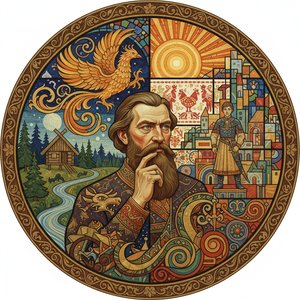
Ivan Bilibin: A Synthesis of Folklore, Modernism & National Identity in Russian Illustration
Explore the enchanting world of Ivan Bilibin, a master Russian illustrator who synthesized folklore, Art Nouveau & national identity. Discover his iconic fairy tale illustrations and legacy with ArtsDot.
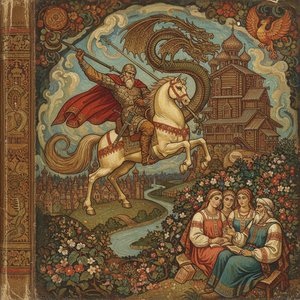
Victor Vasnetsov: Myth, Nationalism & the Revival of Russian Fairy Tale Painting
Explore the captivating world of Victor Vasnetsov, a co-founder of Russian folklorist painting. Discover his iconic works, influence on national identity, and lasting legacy in this expert guide.
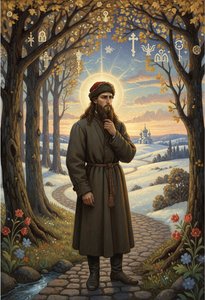
Mikhail Nesterov: Spiritual Quests & Symbolic Landscapes of Russian Symbolism
Explore the captivating world of Mikhail Nesterov, a pioneer of Russian Symbolism. Discover his spiritual themes, iconic paintings like 'The Hermit,' and lasting influence on Russian art history. Learn more at ArtsDot.
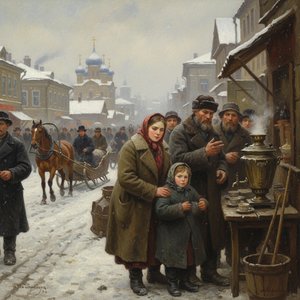
Vladimir Makovsky: Realism, Social Commentary & Russian Life in Late 19th-Century Painting
Explore the captivating world of Vladimir Makovsky, a leading Russian realist painter. Discover his insightful depictions of 19th-century life, social commentary & legacy with ArtsDot.
Discover Russian Realism: Soulful Masterpieces and the Timeless Spirit of the Peredvizhniki for Your Modern Home
Elevate your home with the soulful beauty of Russian Realism. Discover exquisite hand-painted reproductions of Peredvizhniki masterpieces, from lyrical landscapes to profound portraits, curated to bring historical depth and timeless elegance to your modern interior design.