Preview
 Send
Send Share
Share
 Details

 Download
 Similars
 X-Ray
X-Ray Diaporama
 Stats
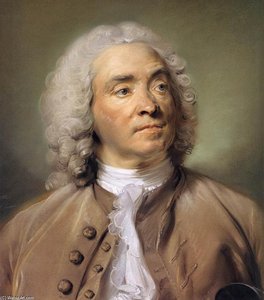
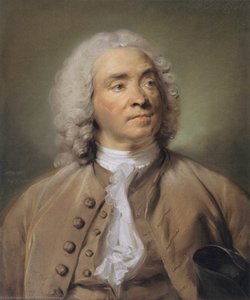
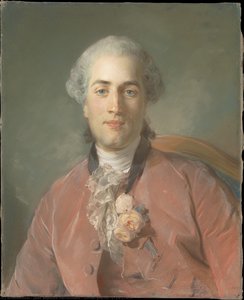
StatsPortrait of Jean-Baptiste Oudry
 Oil On Canvas
- WallArt
- Baroque Rococo
 1753
1753- Early Modern
 105.0 x 131.0 cm
 The Louvre
 Read More
Hand Made Oil Reproduction
Hand-painted oil on canvas in your size and frame, made to order by our artists. ( Switch to Print Switch to Digital Image)




P118B $10

P118H $10

P118W $10

P438Z $10

P508JH $12

P508YH $12

P805H $10

P805Z $10

P919BZ $10

P919G $10

P919XJ $10

P959ZH $10

P968JZ $12

W106C $8

W218G $10

W218JH $8

W218Y $10

W307PJ $10

W316G $10

W316PJ $8

W316Y $10

W398PJ $8

W4111J $10

W500HY $15

W500JH $15

W692G $12

W849H $8

W940BG $15

W953PJ $8




Pick from our preset sizes that match the artwork's original proportions.

You may enter your own dimensions to fit a specific frame or space. If your selected size does not match the original image's proportions, we will either crop the artwork or extend the painting with additional hand-painted elements. A digital mockup will be sent for your approval before production begins.
Please note that the on-screen preview does not reflect the actual cropping or extension. Only the mockup will accurately show the final composition.
While custom sizes are available, we recommend selecting a dimension from the predefined list to preserve the original proportions.
After order, ArtsDot.com team will email client for instructions and provide a mockup preview
Worldwide Delivery () in 3/4 weeks instead of standard 5 weeks. (15 September). No compromise on quality.

Free Worldwide Express Shipping

High-Quality Linen Canvas

Full Shipping Insurance

Customs Tax Refund Guarantee

True Color Matching Guarantee

100-Day Return Policy (Defects Only)

100% Money-Back Guarantee

Bulk Discount Offer
 Glass option is only available in size under 110 CM

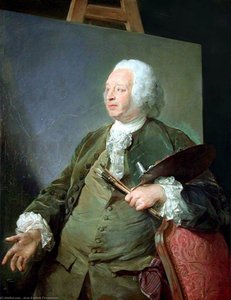
Portrait of Jean-Baptiste Oudry
Reproduction Medium
Reproduction Size
-


Total Price
$ 263
A Moment Frozen in Rococo Elegance
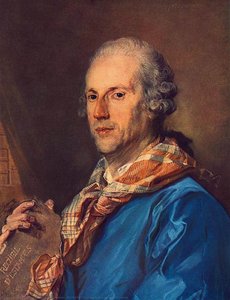
In the delicate dance of light and shadow that defines the mid-18th century, Jean-Baptiste Perronneau’s Portrait of Jean-Baptiste Oudry emerges as a profound testament to artistic identity. Completed in 1753, this masterpiece is far more than a mere photographic precursor; it is a soulful exploration of a man defined by his craft. As we gaze upon the subject, we are not simply looking at an older gentleman, but rather witnessing the quiet dignity of a creator caught in a moment of contemplative repose. The composition, masterfully balanced and classically structured, places Oudry slightly off-center, inviting the viewer to lean into his world—a world where the boundaries between the artist and his medium begin to blur.
The atmosphere of the piece is steeped in the refined sensibilities of the Rococo era. During the reign of Louis XV, the French court sought beauty through ornamentation, softness, and a certain ethereal grace. Perronneau captures this perfectly, utilizing a palette dominated by muted greens, rich browns, and creamy whites that evoke a sense of timeless sophistication. There is an unmistakable emotional weight to the portrait; it radiates a serene intelligence, suggesting a life spent in deep observation of the natural world. For the collector or interior designer, this work offers a profound sense of stability and intellectual depth, making it an ideal centerpiece for spaces that value heritage and quiet luxury.
The Mastery of Light and Texture
Technically, the portrait is a triumph of luminosity and tonal subtlety. While the piece is often celebrated for its oil-on-canvas execution, Perronne_neau’s ability to mimic the soft, velvety textures typically associated with his famous pastel works is nothing short of extraordinary. The skin of the subject possesses an almost translucent quality, catching the diffused indoor light as if it were filtering through a high studio window. This careful interplay of light and shadow—the chiaroscuro effect—enhances the three-dimensional realism of the face, highlighting the wisdom etched in his features while maintaining a polished, smooth finish that avoids any harsh or jarring edges.
Every brushstroke serves a narrative purpose. Notice how the textures shift from the luxurious, heavy folds of the subject's clothing to the rugged, structural elements of the wooden easel and chair. The inclusion of the partially visible canvas in the background acts as a brilliant symbolic device; it is a window into Oudry’s own creative process, suggesting that even in repose, the spirit of invention remains active. This layering of textures—the soft skin, the coarse wood, and the fluid paint on the background canvas—creates a tactile experience for the viewer, pulling them into the physical reality of the 18th-century atelier.
A Legacy of Artistic Devotion
To understand this portrait is to understand the lineage of French art. Jean-Baptiste Oudry was a titan of his time, a painter and tapestry designer whose work celebrated the naturalistic beauty of animals and the grandeur of the hunt. By choosing to depict him alongside his tools—the palette and paintbrush held with practiced ease—Perronneau pays homage to the dedication of the professional artist. The painting serves as a bridge between the individual and the institution, reflecting a period when artistic achievement was a cornerstone of social and cultural prestige.
For those seeking to adorn a home or gallery with a high-quality reproduction, this artwork offers more than just aesthetic appeal; it provides a conversation piece that speaks of intellect, legacy, and the enduring power of creativity. It is a work that commands respect through its subtlety rather than through loud colors or dramatic movement. Bringing such a piece into a contemporary setting allows for a beautiful juxtaposition, where the classical elegance of the Rococo period meets the modern appreciation for fine craftsmanship and historical storytelling.
Related Artworks
Artist Biography
A Delicate Hand: The Life and Art of Jean-Baptiste Perronneau
Jean-Baptiste Perronneau, a name perhaps less immediately recognized than some of his Rococo contemporaries, nevertheless occupies a significant place in the history of French portraiture. Born in Amsterdam around 1715 – though precise dates remain elusive – and passing away there in 1783, Perronneau’s artistic journey unfolded primarily within the vibrant cultural landscape of 18th-century France. He wasn't a painter of grand historical narratives or mythological scenes; his focus lay intimately on the human face, capturing not merely likeness but also the subtle nuances of character and social standing through the delicate medium of pastel.
Perronneau’s initial training began in engraving, a discipline that instilled within him a keen eye for detail and precision. He studied with Laurent Cars and found early employment with the Parisian printseller Gabriel Huquier, establishing crucial connections within the burgeoning art world. This foundation proved invaluable as he transitioned towards portraiture, initially working in oils before wholeheartedly embracing pastels – a medium experiencing a surge in popularity during this period. The allure of pastel lay in its ability to achieve soft textures and luminous effects, qualities that perfectly suited Perronneau’s sensitive approach.
The Shadow and the Substance: Influences and Artistic Development
To understand Perronneau's artistic trajectory is to acknowledge the towering figure of Maurice Quentin de la Tour. De La Tour was widely considered the master of French pastel portraiture, and his influence on Perronneau was profound. A pivotal moment illustrating this relationship occurred at the Salon of 1750. Perronneau daringly exhibited a pastel portrait *of* de la Tour himself, only to find that the master had simultaneously submitted a self-portrait – an act interpreted by many as a deliberate demonstration of his own superior skill. While undeniably influenced by de la Tour’s technical brilliance, Perronneau didn't simply imitate; he forged his own distinct style.
Perronneau possessed a remarkable ability to infuse his portraits with psychological depth and sensitivity. He moved beyond mere physical representation, seeking to capture the inner life of his sitters. This is evident in the subtle expressions, the carefully rendered details of clothing and accessories – all contributing to a nuanced portrayal of personality and social status. His work aligns beautifully with the Rococo aesthetic, emphasizing elegance, refinement, and an appreciation for aristocratic society, yet it also hints at the emerging Enlightenment ideals of individualism and introspection.
A Prolific Career: From Parisian Salons to Provincial Travels
Perronneau first exhibited a pastel portrait at the Salon in 1746, marking his formal entry into the artistic arena. His talent was quickly recognized, culminating in full membership of the prestigious Académie royale de peinture et de sculpture in 1753. For his admission pieces, he presented portraits of Jean-Baptiste Oudry and Lambert-Sigisbert Adam – works that now reside within the hallowed halls of the Louvre Museum, testaments to his established skill.
However, Perronneau’s career took an interesting turn after 1779. He ceased exhibiting at the Paris Salons but continued to work prolifically, expanding his clientele beyond the capital. This led him on extensive travels throughout France, particularly to Orléans, Toulouse, Bordeaux, and Lyon. Evidence suggests that his wanderlust extended even further afield, with potential visits to Turin, Rome, Spain, Hamburg, Poland, Russia, and even England. This itinerant lifestyle allowed him to capture a diverse range of subjects, reflecting the varied social fabric of 18th-century Europe.
A Lasting Legacy: Historical Significance and Enduring Appeal
Despite dying in Amsterdam largely unknown, Jean-Baptiste Perronneau’s contributions to French portraiture are now rightfully celebrated. His portraits offer invaluable glimpses into the lives and appearances of individuals from various social strata during a pivotal period in history. He wasn't merely recording faces; he was documenting a world – its fashions, its values, and its evolving sensibilities.
Perronneau’s mastery of pastel serves as a testament to the medium’s enduring appeal, bridging the gap between drawing and painting. His delicate touch, his sensitivity to light and shadow, and his ability to capture the essence of his sitters continue to captivate viewers today. He stands as a compelling example of an artist who, while operating within the conventions of his time, managed to imbue his work with a unique sense of intimacy and psychological insight – qualities that ensure his place among the great portraitists of the 18th century.
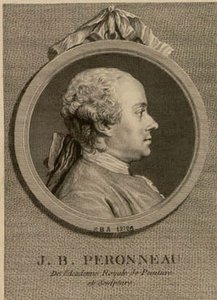
jean baptiste perronneau
1715 - 1783 , Netherlands
Quick Facts
- Artistic Movement Or Style: Rococo
- Artists Who Influenced This Artist: ['Maurice Quentin de la Tour']
- Date Of Birth: c. 1716
- Date Of Death: 1783
- Full Name: Jean-Baptiste Perronneau
- Nationality: French
- Notable Artworks:
- Portrait of Oudry
- Daniel Jousse
- Tassin de La Renardière
- Place Of Birth: Amsterdam, Netherlands
Related Articles

Rococo's Radiant Legacy: 10 Masterpieces for Your Home |
Indulge in the elegance of Rococo! Explore 10 masterpieces by Fragonard, Boucher & Watteau. Discover the stories behind these iconic paintings and bring timeless art to your home with museum-quality reproductions from .
From Grandeur to Grace: Exploring the Evolution of Baroque & Rococo Art
Explore the captivating evolution from Baroque's drama to Rococo's grace! Discover key artists, characteristics & lasting influence of these art movements with expert insights at ArtsDot.
The Allure of Elegance in Art: A Historical & Aesthetic Exploration of Refinement & Grace
Explore the exquisite world of Rococo art! Discover its history, masters (Watteau, Boucher & more), and defining elegance. Expert insights for collectors seeking museum-quality reproductions & custom portraits.

The Rococo Aesthetic: Opulence, Rebellion & the Pursuit of Pleasure in 18th-Century Art
Explore the opulent world of Rococo art! Discover its origins, key artists like Watteau & Boucher, and lasting influence on design. Expert insights for collectors & enthusiasts.
Jean-Baptiste Pater: Rococo Charm & Ephemeral Beauty of 18th-Century France
Explore the captivating world of Jean-Baptiste Pater, a master of Rococo painting. Discover his elegant *fête galante* scenes and shimmering portraits – a glimpse into 18th-century French aristocracy. Learn about his legacy & find high-quality reproductions.