 Preview
 Send
Send Share
Share
 Details

 Download
 Similars
 X-Ray
X-Ray Diaporama
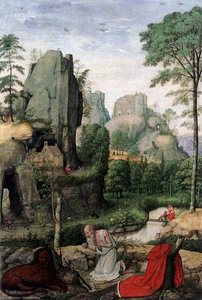
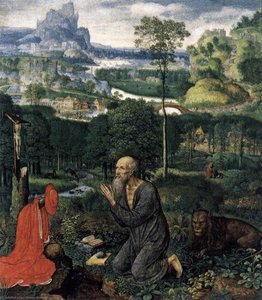
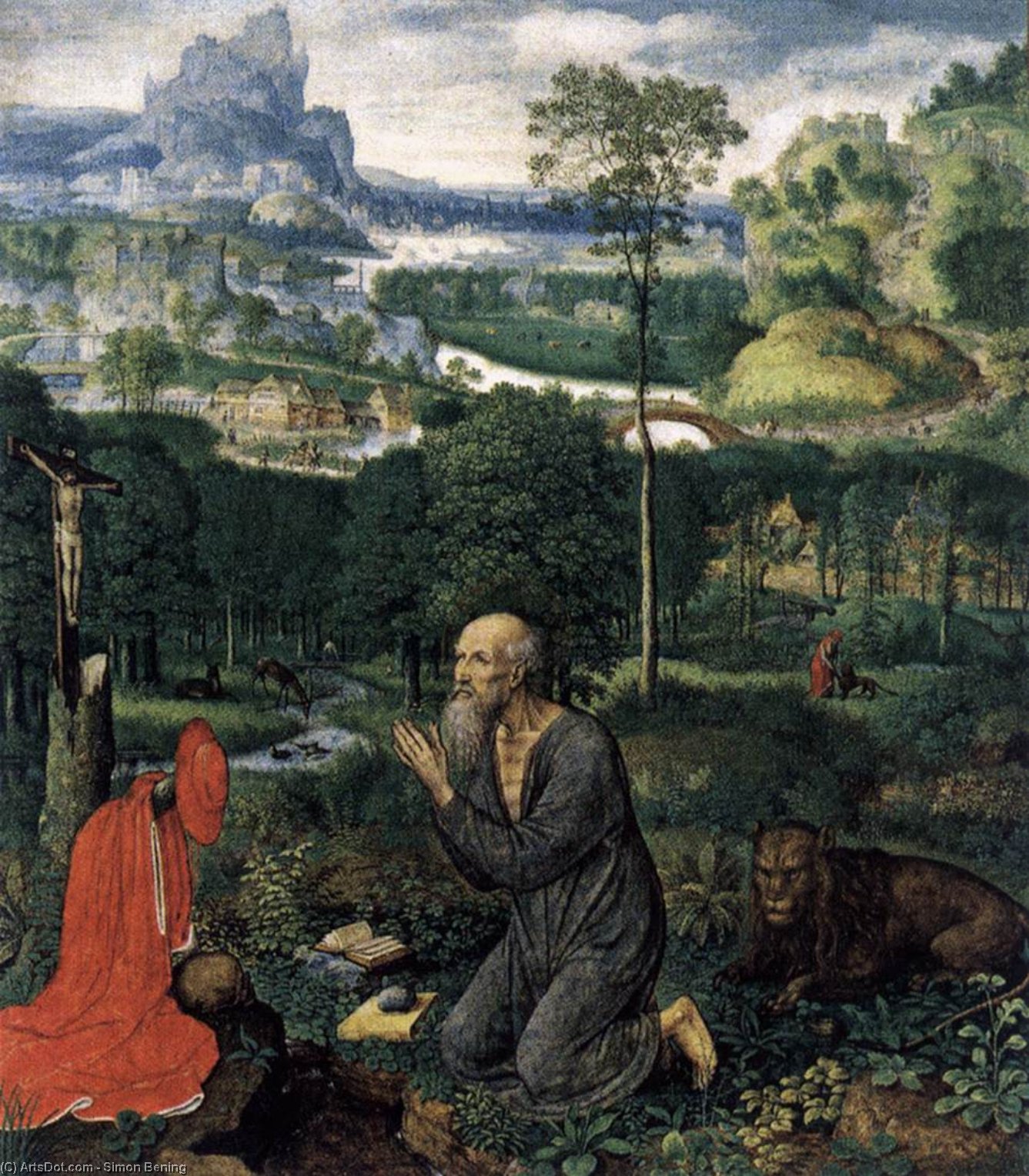
Penitent St Jerome
 High Renaissance Classicism
 1515
1515 39.0 x 32.0 cm
 Monasterio de San Lorenzo
 Read More
Hand Made Oil Reproduction
Hand-painted oil on canvas in your size and frame, made to order by our artists. ( Buy Print Buy Image)




P118B $10

P118H $10

P118W $10

P438Z $10

P508JH $12

P508YH $12

P805H $10

P805Z $10

P919BZ $10

P919G $10

P919XJ $10

P959ZH $10

P968JZ $12

W106C $8

W218G $10

W218JH $8

W218Y $10

W307PJ $10

W316G $10

W316PJ $8

W316Y $10

W398PJ $8

W4111J $10

W500HY $15

W500JH $15

W692G $12

W849H $8

W940BG $15

W953PJ $8




Pick from our preset sizes that match the artwork's original proportions.

You may enter your own dimensions to fit a specific frame or space. If your selected size does not match the original image's proportions, we will either crop the artwork or extend the painting with additional hand-painted elements. A digital mockup will be sent for your approval before production begins.
Please note that the on-screen preview does not reflect the actual cropping or extension. Only the mockup will accurately show the final composition.
While custom sizes are available, we recommend selecting a dimension from the predefined list to preserve the original proportions.
After order, ArtsDot.com team will email client for instructions and provide a mockup preview
Worldwide Delivery () in 3/4 weeks instead of standard 5 weeks. (16 August). No compromise on quality.

Free Worldwide Express Shipping

High-Quality Linen Canvas

Full Shipping Insurance

Customs Tax Refund Guarantee

True Color Matching Guarantee

60-Day Return Policy (Defects Only)

100% Money-Back Guarantee

Bulk Discount Offer
 Glass option is only available in size under 110 CM

Penitent St Jerome
Reproduction Medium
Reproduction Size
-


Total Price
$ 263
Artwork Description
A Moment of Devotion: Simon Bening's "Penitent St. Jerome"
Simon Bening’s “Penitent St. Jerome,” painted around 1515, is more than just a depiction of a biblical figure; it’s a window into the spiritual sensibilities of the early 16th century and a testament to the exquisite skill of one of the last great Flemish miniaturists. This small but profoundly moving work, measuring only 39 x 32 cm, resides in the Monasterio de San Lorenzo, El Escorial, and offers a glimpse into a world where religious devotion was intricately woven with artistic expression.
The Narrative Within: Jerome's Journey
The scene portrays St. Jerome, renowned as a scholar, translator of the Bible (his Latin Vulgate being pivotal in Western Christianity), and a figure deeply committed to asceticism. Here, he is captured not amidst scholarly pursuits but in a moment of profound penitence. Kneeling within a richly detailed forest setting, his hands clasped in fervent prayer, Jerome embodies humility and supplication before God. The surrounding woodland isn't merely a backdrop; it’s an integral part of the narrative, symbolizing both the wilderness of spiritual trial and the potential for divine grace even in solitude. Two figures stand witness to this private devotion – one on the left, perhaps representing a disciple or fellow seeker, and another further back on the right, suggesting a broader community observing Jerome's piety. The presence of an animal—likely a lion, though sometimes interpreted as a dog—adds another layer of symbolism. In Christian iconography, lions often represent Christ’s strength and dominion, but here, its proximity to Jerome suggests taming of primal instincts through faith and spiritual discipline – a recurring motif in depictions of the saint.
Bening's Technique: A Masterclass in Miniature
What truly sets Bening’s work apart is his mastery of the miniature form. Executed in tempera on parchment, “Penitent St. Jerome” showcases an astonishing level of detail and precision. The artist’s meticulous brushwork brings the foliage to life, each leaf rendered with remarkable clarity. Observe how light filters through the trees, illuminating Jerome's figure and creating a sense of ethereal serenity. Bening was known for his innovative use of landscape within miniature painting, moving beyond mere background decoration to create evocative environments that enhance the narrative. This piece exemplifies this skill; the detailed rendering of the forest is not just visually appealing but also contributes significantly to the overall mood of contemplation and spiritual seeking. The influence of contemporary landscape artists like Patenier is evident in Bening’s approach, demonstrating a shift towards greater realism and naturalism within the genre.
Historical Context & Lasting Legacy
Created during the High Renaissance, “Penitent St. Jerome” reflects the era's renewed interest in classical learning and humanistic ideals, while remaining firmly rooted in religious tradition. Bening’s work represents a culmination of the Netherlandish artistic tradition, blending meticulous detail with expressive storytelling. As one of the last major artists within this lineage, he bridged the gap between medieval manuscript illumination and the emerging world of oil painting. His influence can be seen in subsequent generations of artists, particularly in the development of landscape art. Simon Bening (1483-1561), born in Ghent, Belgium, was a pivotal figure, training his daughters Levina Teerlinc and Alexandrine Claeiszuene to continue the family artistic legacy. His ability to capture both spiritual depth and technical brilliance ensures that “Penitent St. Jerome” remains a treasured masterpiece of early 16th-century art.
Related Artworks
Artist Biography
Raphael: The Poet of Beauty
Raphael Sanzio, born Raffaello Santi on April 6, 1483, in Urbino, Italy, was a painter and architect whose name has become synonymous with High Renaissance grace and harmony. Though his life spanned only thirty-seven years – he died tragically young on April 6, 1520 – Raphael’s impact on Western art is immeasurable. He wasn't merely a skilled craftsman; he possessed an innate poetic sensibility, translating the ideals of humanism and Neoplatonic philosophy into breathtakingly beautiful paintings that continue to captivate audiences centuries later. His legacy rests primarily upon his “Madonnas,” those serene and luminous depictions of Mary and child, but also on monumental frescoes within the Vatican Palace and a profound influence on generations of artists who followed.Early Life and Artistic Foundations
Urbino, Raphael’s birthplace, was a vibrant center of culture during the reign of Duke Federico da Montefeltro. The Duke fostered an environment where art flourished, attracting scholars, poets, and artists from across Italy. Raphael's father, Giovanni Santi, was a painter for the court, and it was through him that young Raffaello first encountered the world of art. Giovanni instilled in his son not only technical skills but also a deep appreciation for classical literature and philosophy – crucial elements of the burgeoning humanist movement. Crucially, Giovanni introduced Raphael to the artistic circles surrounding the Duke, exposing him to the ideas of Leonardo da Vinci and other leading figures. Following his father’s death in 1494, Raphael assumed responsibility for managing his workshop, a demanding task that honed his organizational skills and further developed his artistic talent. He quickly gained recognition as a gifted painter, undertaking commissions for churches and private patrons throughout the region. His early works, such as *The Tribute Money* (circa 1503-1504), already demonstrated a remarkable command of perspective and composition, foreshadowing the stylistic innovations that would define his mature style. He spent time in Perugia from 1504 to 1507, working under the tutelage of Pietro Vannucci, better known as Perugino, absorbing the master’s techniques while simultaneously developing his own distinctive approach.The Florentine Influence and the Rise of the Madonna
In 1508, Raphael moved to Florence, a city brimming with artistic innovation at the time. He was profoundly influenced by the works of Leonardo da Vinci, Michelangelo, and Masaccio – artists who were pushing the boundaries of perspective, anatomy, and emotional expression. He spent nearly three years in Florence, producing a series of paintings that marked a significant departure from Perugino’s more restrained style. The *Entombment* (1507-1508), for example, demonstrated Raphael's growing mastery of dramatic composition and his ability to convey profound emotion through gesture and expression. It was during this period that he began to refine his signature “Madonna” cycle – a series of paintings depicting the Virgin Mary with the infant Jesus – which would become his most celebrated achievement. These Madonnas weren’t simply devotional images; they were carefully constructed narratives, imbued with classical beauty and philosophical depth.The Vatican Years: Frescoes of Grandeur
In 1509, Raphael accepted a commission from Pope Julius II to decorate the *Stanza della Segnatura* (Room of the Signatura) in the Vatican Palace. This monumental project presented Raphael with an unprecedented opportunity to showcase his artistic genius on a grand scale. Over the next several years, he created four vast frescoes that explored themes of philosophy, theology, and classical learning – reflecting the Pope’s interest in humanist scholarship. The *School of Athens* (1509-1511), perhaps his most famous work, depicts a gathering of ancient philosophers and scientists, including Plato and Aristotle, engaged in spirited debate. The fresco is not merely a historical illustration; it's a powerful allegory of human reason and intellectual inquiry, embodying the Renaissance ideal of harmonious synthesis between classical learning and Christian faith. He also completed *The Triumph of Gemini* (1509-1510) and *The Disputation of Constantine* (1510-1511), further solidifying his reputation as a master of composition, color, and psychological insight.Legacy and Lasting Influence
Raphael’s untimely death in Rome on April 6, 1520, at the age of thirty-seven, cut short a brilliant career. Despite his brief life, he left behind an extraordinary body of work that profoundly influenced generations of artists. His emphasis on clarity, harmony, and idealized beauty became hallmarks of the High Renaissance style, shaping the artistic standards of Europe for centuries to come. His influence can be seen in the works of countless painters, including those who followed him in the Baroque period. Raphael’s legacy extends beyond his individual paintings; he is remembered as a symbol of artistic perfection – “the poet of beauty” – whose art continues to inspire and uplift viewers around the world. His work remains a testament to the power of human creativity and the enduring appeal of classical ideals.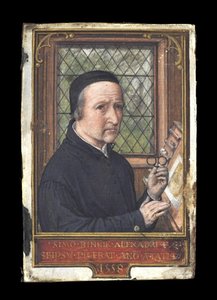
simon bening
1483 - 1561 , Belgium
Quick Facts
- Artistic Movement Or Style: High Renaissance Classicism
- Artists Or Movements Influenced By This Artist:
- European academic tradition
- Neoplatonic ideal
- Artists Who Influenced This Artist:
- Perugino
- Leonardo da Vinci
- Michelangelo
- Date Of Birth: April 6, 1483
- Date Of Death: April 6, 1520
- Full Name: Raffaello Sanzio
- Nationality: Italian
- Notable Artworks:
- Sistine Madonna
- The School of Athens
- Marriage of the Virgin
- Place Of Birth: Urbino, Italy
Related Articles

El Greco's Masterpieces: Explore 25 Iconic Paintings & Spiritual Visions | ArtsDot
Journey through El Greco's 25 most iconic paintings! Explore the spiritual depth & dramatic beauty of this Spanish Renaissance master. Discover art history, techniques & find museum-quality reproductions for your home at ArtsDot.com.
Simone Martini: Innovation, Spirituality & Courtly Refinement in Sienese Painting
Explore the captivating world of Simone Martini, a pivotal figure in Sienese painting & the International Gothic style. Discover his innovative techniques, spiritual depth, and lasting influence on early Renaissance art.
Albrecht Dürer's Masterpieces: 25 Iconic Artworks for Your Home | ArtsDot
Explore 25 iconic artworks by Albrecht Dürer, a master of the German Renaissance. Discover the stories behind Melencolia I, Knight Death and Devil & more. Find museum-quality art reproductions for your home at ArtsDot.com.
Jan van Kessel the Elder: A Baroque Master of Floral Still Life & Miniature Portraiture
Discover the exquisite detail of Jan van Kessel the Elder's Baroque floral still lifes & captivating miniatures. Explore his artistic legacy, scientific precision, and lasting influence on 17th-century Flemish painting.

Simon Vouet: A Baroque Master's Journey from Italian Influence to French Classicism
Explore the life & art of Simon Vouet, a pivotal French Baroque painter who introduced Italian styles to France. Discover his masterpieces and lasting influence on 17th-century art.