 Preview
 Send
Send Share
Share
 Details

 Download
 Similars
 X-Ray
X-Ray Diaporama
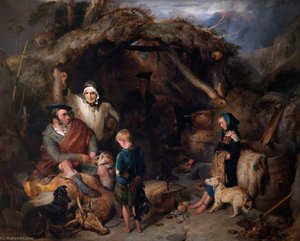
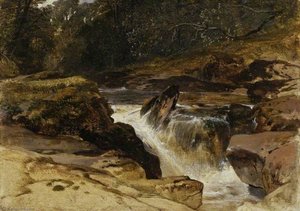
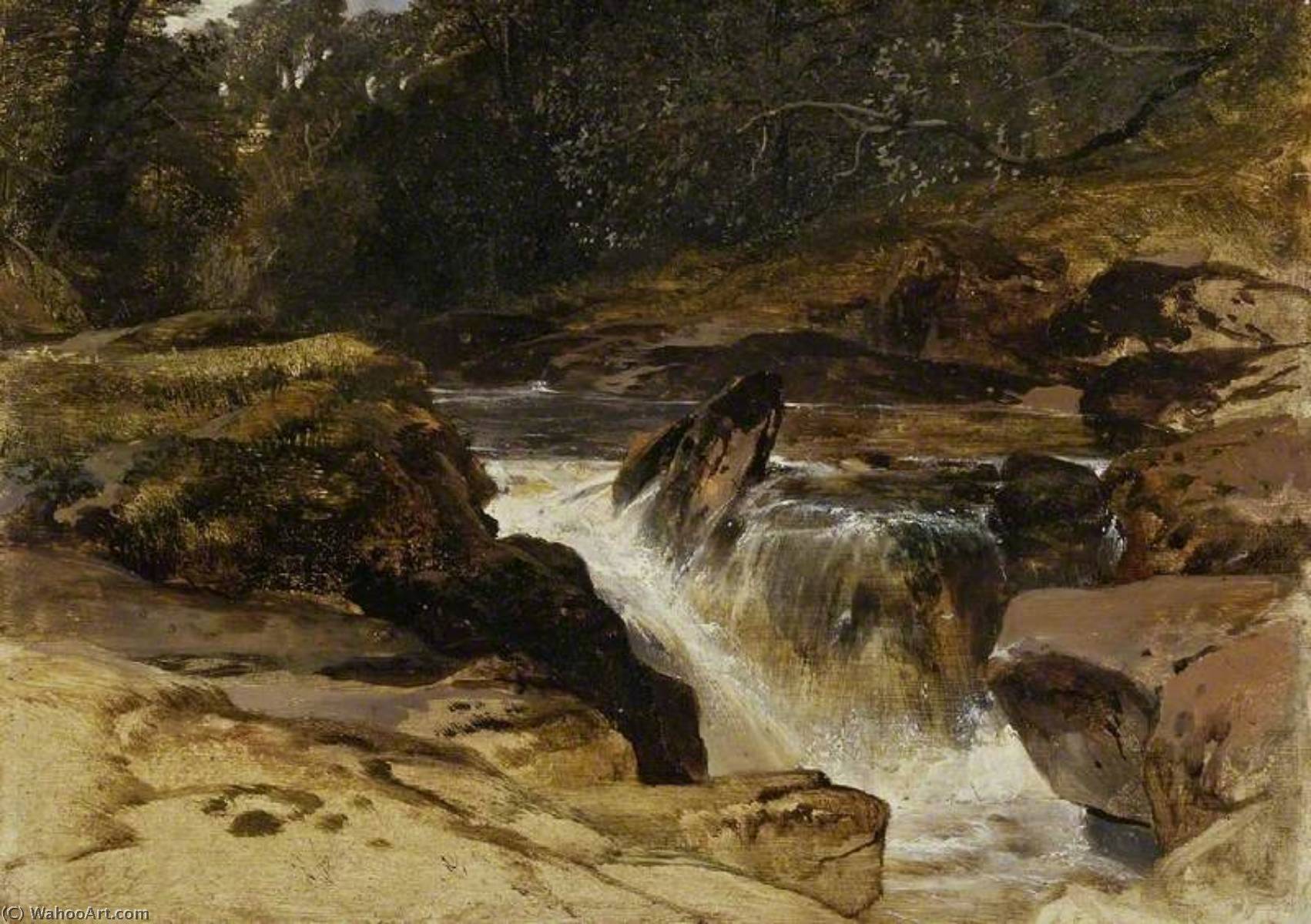
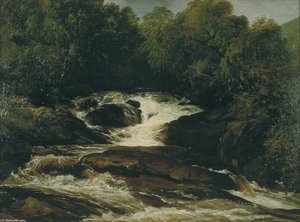
The Pot of Gartness, Drymen, Stirlingshire
 Acrylic On Canvas
- WallArt
- Romanticism
 1830
1830 25.0 x 36.0 cm
 Fitzwilliam College
 Read More
Hand Made Oil Reproduction
Hand-painted oil on canvas in your size and frame, made to order by our artists. ( Buy Print Buy Image)




P118B $10

P118H $10

P118W $10

P438Z $10

P508JH $12

P508YH $12

P805H $10

P805Z $10

P919BZ $10

P919G $10

P919XJ $10

P959ZH $10

P968JZ $12

W106C $8

W218G $10

W218JH $8

W218Y $10

W307PJ $10

W316G $10

W316PJ $8

W316Y $10

W398PJ $8

W4111J $10

W500HY $15

W500JH $15

W692G $12

W849H $8

W940BG $15

W953PJ $8




Pick from our preset sizes that match the artwork's original proportions.

You may enter your own dimensions to fit a specific frame or space. If your selected size does not match the original image's proportions, we will either crop the artwork or extend the painting with additional hand-painted elements. A digital mockup will be sent for your approval before production begins.
Please note that the on-screen preview does not reflect the actual cropping or extension. Only the mockup will accurately show the final composition.
While custom sizes are available, we recommend selecting a dimension from the predefined list to preserve the original proportions.
After order, ArtsDot.com team will email client for instructions and provide a mockup preview
Worldwide Delivery () in 3/4 weeks instead of standard 5 weeks. (3 September). No compromise on quality.

Free Worldwide Express Shipping

High-Quality Linen Canvas

Full Shipping Insurance

Customs Tax Refund Guarantee

True Color Matching Guarantee

60-Day Return Policy (Defects Only)

100% Money-Back Guarantee

Bulk Discount Offer
 Glass option is only available in size under 110 CM

The Pot of Gartness, Drymen, Stirlingshire
Reproduction Medium
Reproduction Size
-


Total Price
$ 263
The Pot of Gartness: A Vision of Scottish Landscape and Romantic Idealism
Sir Edwin Henry Landseer’s “The Pot of Gartness,” completed in 1830, isn't merely a depiction of a riverside scene; it embodies the spirit of Romantic landscape painting—a genre obsessed with capturing sublime beauty and conveying profound emotion. Situated in Drymen, Stirlingshire, this serene vista showcases the River Endrick meandering through lush woodlands, punctuated by weathered rocks that lend an air of timeless grandeur to the composition.
- Subject Matter: The painting focuses on a tranquil stretch of riverbank, populated by trees and rocks. Landseer meticulously rendered the textures of bark, stone, and water, striving for realism while simultaneously elevating the scene into something transcendent.
- Style & Technique: Characteristic of Landseer’s oeuvre, “The Pot of Gartness” employs a tonal palette dominated by muted greens and browns—colors that evoke the quiet majesty of the Scottish Highlands. The artist utilized oil paints on canvas with considerable detail, applying brushstrokes to build up layers of color and texture, creating an impressionistic effect despite its overall realism.
- Historical Context: Painted during Landseer’s formative years, this artwork reflects the burgeoning Romantic movement's fascination with untamed nature as a source of spiritual inspiration. It aligns perfectly with the broader artistic trends of the era—a reaction against Neoclassical formalism and an embrace of subjective experience—and anticipates the Impressionists’ later explorations of fleeting moments in time.
- Symbolism: The river itself symbolizes fluidity, change, and the passage of time – themes central to Romantic thought. The rocks represent permanence and resilience, grounding the ethereal beauty of the landscape with tangible solidity. Landseer's deliberate positioning of a solitary figure near the left side adds an element of human contemplation, suggesting that even amidst nature’s grandeur, there is room for introspection and reflection.
- Emotional Impact: Viewing “The Pot of Gartness” evokes feelings of tranquility, peace, and awe—qualities deeply valued by Victorian audiences. Landseer's masterful execution captures not just the visual appearance of the landscape but also its emotional resonance, transporting the viewer to a place of profound serenity and connection with the natural world.
The painting’s enduring appeal lies in its ability to communicate a powerful sense of Romantic idealism—a belief that nature possesses inherent moral grandeur and can inspire spiritual contemplation. It remains a testament to Landseer's artistic genius and his unwavering commitment to portraying the sublime beauty of Scotland.
Related Artworks

Artist Biography
A Life Etched in Animal Form: The World of Sir Edwin Landseer
Sir Edwin Henry Landseer, born in London on March 7, 1802, was more than merely a painter of animals; he became a visual chronicler of the Victorian soul as reflected through them. His father, John Landseer, an accomplished engraver, instilled in young Edwin an early appreciation for art and technique, but it was the boy’s innate talent – a prodigious gift for capturing the essence of living creatures – that truly set him on his path. From a tender age, he demonstrated remarkable skill, exhibiting at the Royal Academy at just thirteen, a feat unheard of for most aspiring artists. This early success wasn't simply luck; it was the culmination of dedicated study, initially under his father and later with history painter Benjamin Robert Haydon, who uniquely encouraged anatomical dissection to fully understand animal musculature – a practice that would profoundly influence Landseer’s realism. He absorbed knowledge like a sponge, mastering not only form but also the subtle nuances of expression that breathed life into his canvases. This dedication to understanding the very structure of his subjects set him apart, allowing for an unparalleled level of authenticity in his depictions.From Highland Stags to Royal Commissions: A Flourishing Career
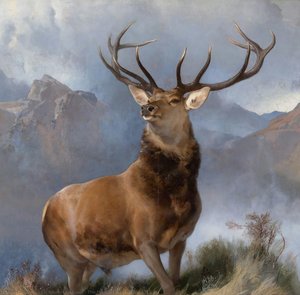
Landseer’s artistic career blossomed with an exceptional focus on animals – horses, dogs, and stags becoming his signature subjects. However, to categorize him solely as an “animal painter” would be a disservice. His work transcended mere representation; it imbued these creatures with human-like qualities, often laden with symbolic meaning that resonated deeply with Victorian sensibilities. A pivotal moment came with his travels to Scotland in 1824, where he encountered the majestic landscapes and wildlife that would forever shape his artistic vision. This experience birthed iconic works like Monarch of the Glen, completed in 1851, a breathtaking depiction of a stag embodying nobility, power, and the untamed beauty of the Highlands. His ability to capture not just physical likeness but also character and emotion quickly garnered him widespread acclaim. This talent led to commissions from Queen Victoria herself, solidifying his position as a leading artist of the era. He painted portraits of the royal family alongside their beloved pets, further cementing his status within aristocratic circles. Perhaps his most enduring legacy are the lions that guard Nelson’s Column in Trafalgar Square – powerful testaments to his sculptural skill and national recognition; they were unveiled in 1867 after years of dedicated work. These monumental sculptures weren't simply decorative; they represented British strength and imperial power, further elevating Landseer to a position of national importance.A Master of Technique and Emotional Resonance
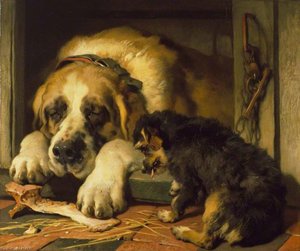
Landseer’s technical mastery was undeniable. He wasn’t simply replicating what he saw, but interpreting it through a lens of profound understanding. His paintings are characterized by meticulous detail, dramatic lighting, and a masterful use of color to evoke mood and atmosphere. He skillfully blended realism with romanticism, creating scenes that were both visually stunning and emotionally engaging. Off to the Rescue, painted in 1827, exemplifies this skill; the Newfoundland dog depicted isn’t just a canine rescuer but a symbol of loyalty, courage, and selfless devotion – qualities highly valued by Victorian society. Even his more satirical works, such as Laying Down the Law (1840), featuring a group of dogs engaged in human-like legal proceedings, reveal a keen observational wit and a subtle commentary on societal norms. He wasn’t afraid to inject humor into his art, demonstrating a versatility that extended beyond grand landscapes and noble animal portraits. This ability to convey complex narratives through animal subjects was a hallmark of his style, appealing to a broad audience while simultaneously offering layers of intellectual engagement.Shadows and Legacy: A Complex Artistic Journey
Despite his immense success, Landseer's life was not without its struggles. In his later years, he battled recurring bouts of depression and ill health, exacerbated by alcohol and drug use. A nervous breakdown in 1840 marked a turning point, casting a shadow over his final decades. Despite these personal demons, he continued to produce remarkable work, but a sense of melancholy often permeated his paintings. His declining mental state eventually led to him being declared insane in 1872, a tragic end for such a brilliant mind. Yet, his legacy remains firmly etched in the annals of British art history. The “Landseer” variety of Newfoundland dog – characterized by its distinctive black and white markings – stands as a living tribute to his influence. His paintings continue to captivate audiences with their beauty, emotional depth, and masterful technique. He wasn’t just an artist who painted animals; he was an interpreter of the natural world, a storyteller who used brushstrokes to reveal the hidden emotions and symbolic meanings within it, leaving behind a body of work that continues to inspire and resonate today.Further Exploration
- Museums: Tate Britain, London; Victoria and Albert Museum, London; Kenwood House, London; The Wallace Collection, London.
- Online Resources: ArtsDot.com; Wikipedia (Sir Edwin Landseer).
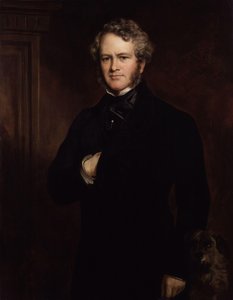
Sir Edwin Henry Landseer
1802 - 1873 , United Kingdom
Quick Facts
- Artistic Movement Or Style: Victorian realism
- Artists Or Movements Influenced By This Artist:
- Newfoundland breed
- Victorian art
- Artists Who Influenced This Artist:
- John Landseer
- B.R. Haydon
- Date Of Birth: March 7, 1802
- Date Of Death: October 1, 1873
- Full Name: Sir Edwin Henry Landseer
- Nationality: British
- Notable Artworks:
- Monarch of the Glen
- Saved
- Laying Down the Law
- Place Of Birth: London, UK
Related Articles

Watercolor Wonders: 10 Masterpieces That Redefined Art History | ArtsDot
Journey through 10 legendary watercolor masterpieces by Sargent, Turner & Homer! Explore iconic landscapes, portraits & floral art that redefined history. Find museum-quality reproductions and curated decor ideas at ArtsDot.com.

Ephemeral Visions: Exploring the Artistic Legacy & Contemporary Practice of Watercolor Painting
Explore the captivating world of watercolor painting! Discover its rich history, essential techniques, influential artists & collecting tips. A comprehensive guide for art enthusiasts from ArtsDot.
Ephemeral Visions: Exploring the History & Emotional Resonance of Watercolor Painting
Explore the captivating history of watercolor painting, from ancient techniques to modern masters like Kandinsky & Blake. Discover essential artists, collecting tips & the emotional power of this luminous medium. Expert insights for art enthusiasts.
Ephemeral Visions: Exploring the Artistic Legacy & Nuances of Watercolor Painting
Explore the captivating world of watercolor painting! Discover its rich history, essential techniques, influential artists & collecting tips from art experts. A comprehensive guide for enthusiasts.
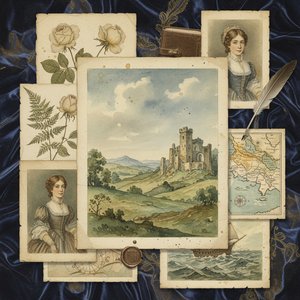
Ephemeral Echoes: Exploring the Aesthetic & Historical Significance of Vintage Watercolor Painting
Explore the captivating world of vintage watercolor painting! Discover its rich history, techniques, influential artists & collecting tips. Expert insights for enthusiasts and collectors at ArtsDot.