 Preview
 Send
Send Share
Share
 Details

 Download
 Similars
 X-Ray
X-Ray Diaporama
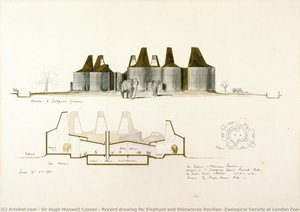
Record drawing for Elephant and Rhinoceros Pavilion, Zoological Society of London Zoo, Regent


 Read More
Hand Made Oil Reproduction
Hand-painted oil on canvas in your size and frame, made to order by our artists. ( Buy Print Buy Image)




P118B $10

P118H $10

P118W $10

P438Z $10

P508JH $12

P508YH $12

P805H $10

P805Z $10

P919BZ $10

P919G $10

P919XJ $10

P959ZH $10

P968JZ $12

W106C $8

W218G $10

W218JH $8

W218Y $10

W307PJ $10

W316G $10

W316PJ $8

W316Y $10

W398PJ $8

W4111J $10

W500HY $15

W500JH $15

W692G $12

W849H $8

W940BG $15

W953PJ $8




Pick from our preset sizes that match the artwork's original proportions.

You may enter your own dimensions to fit a specific frame or space. If your selected size does not match the original image's proportions, we will either crop the artwork or extend the painting with additional hand-painted elements. A digital mockup will be sent for your approval before production begins.
Please note that the on-screen preview does not reflect the actual cropping or extension. Only the mockup will accurately show the final composition.
While custom sizes are available, we recommend selecting a dimension from the predefined list to preserve the original proportions.
After order, ArtsDot.com team will email client for instructions and provide a mockup preview
Worldwide Delivery () in 3/4 weeks instead of standard 5 weeks. (23 August). No compromise on quality.

Free Worldwide Express Shipping

High-Quality Linen Canvas

Full Shipping Insurance

Customs Tax Refund Guarantee

True Color Matching Guarantee

60-Day Return Policy (Defects Only)

100% Money-Back Guarantee

Bulk Discount Offer
 Glass option is only available in size under 110 CM

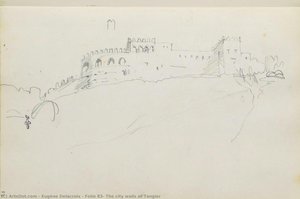
Record drawing for Elephant and Rhinoceros Pavilion, Zoological Society of London Zoo, Regent
Reproduction Medium
Reproduction Size
-


Total Price
$ 263
Artwork Description
A Window into Victorian Zoological Design: Sir Hugh Casson’s Record Drawing
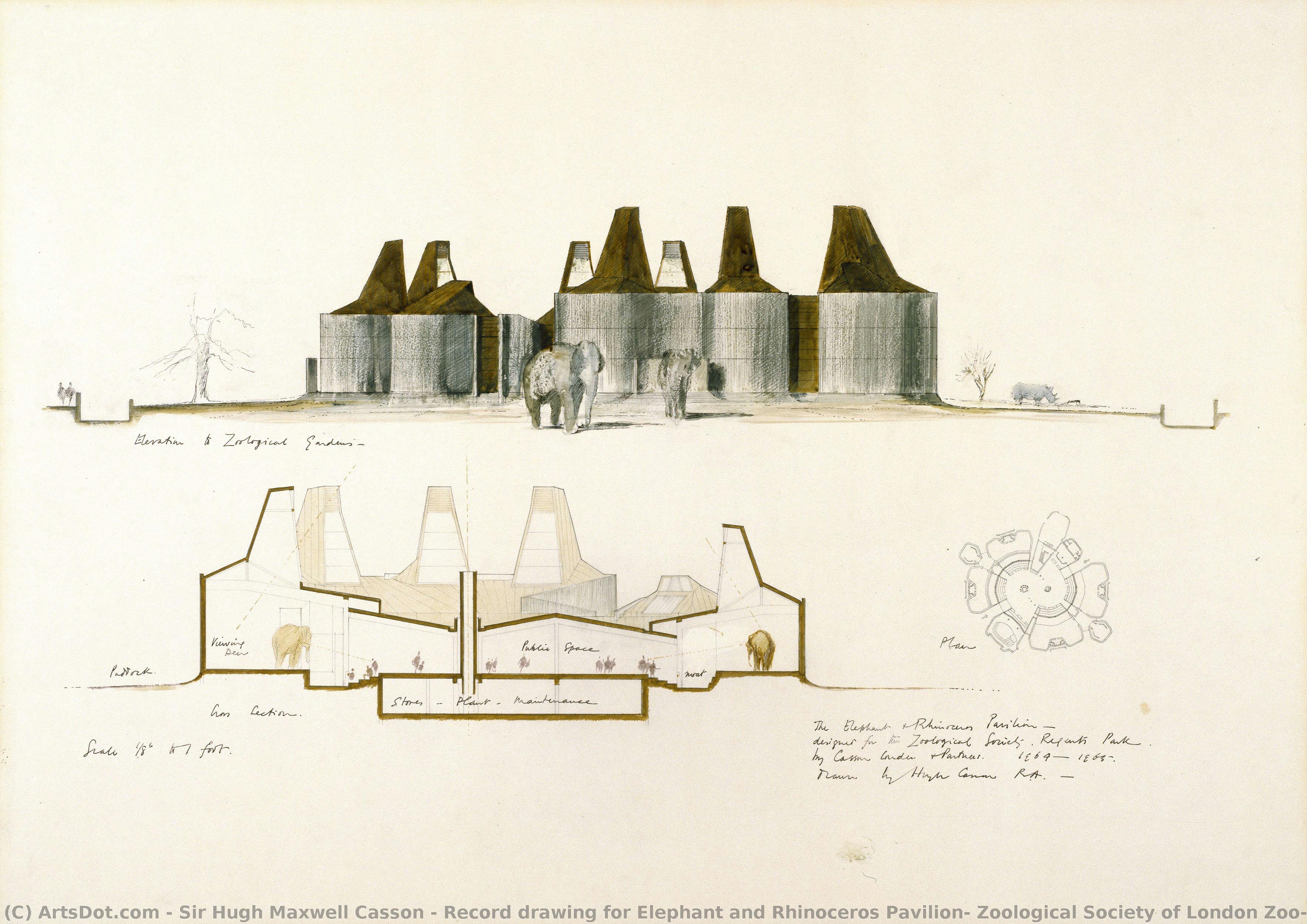
This remarkable record drawing, created in 1971 by the esteemed Sir Hugh Maxwell Casson, offers a captivating glimpse into the meticulous planning and aesthetic sensibilities of Victorian-era zoological design. More than just an architectural sketch, it's a testament to Casson’s keen observational skills and his profound understanding of both function and form – a crucial element in the burgeoning field of modern design at the time. The drawing depicts the Elephant and Rhinoceros Pavilion within the Zoological Society of London Zoo, a structure designed to house four elephants and four rhinoceroses in paired pens, representing a significant advancement in animal welfare standards for its era.
- Historical Context: Created in 1971, this drawing reflects a pivotal moment in British design. Casson’s work aligns with the rise of modernism, emphasizing clarity, functionality, and a restrained aesthetic – qualities increasingly sought after in architectural and interior spaces. The Zoological Society's pavilion itself represents a shift towards more humane animal husbandry practices, moving beyond purely utilitarian enclosures.
- Composition & Technique: The drawing’s composition is ingeniously divided into two distinct sections. A broad perspective captures the pavilion’s facade, showcasing the elephants in their enclosure, while a detailed cross-section reveals the intricate internal layout and animal pens. Casson masterfully employs watercolor or gouache on paper, utilizing washes of muted browns, greys, and creams to evoke the textures of brickwork, roofing materials, and foliage. The use of dry brush techniques adds subtle variations in tone, enhancing the sense of materiality.
Decoding the Lines: Style, Perspective & Materials
Casson’s style is best described as architectural illustration with a distinctly technical bent – a hallmark of his approach to design. The lines are deliberately clear and confident, defining the building's structure and animal forms with precision. The cross-section, while simplified for clarity, demonstrates a thoughtful consideration of spatial relationships. Perspective is subtly manipulated, prioritizing functional understanding over hyperrealism. This technique reflects Casson’s belief that accurate documentation was paramount to effective design.
- Materials & Tools: Evidence suggests the use of watercolor paints, ink, and possibly pencil for preliminary sketches. The layering of washes creates a rich texture, suggesting a deliberate process focused on capturing not just the visual appearance but also the tactile qualities of the building materials.
- Symbolic Representation: The depiction of elephants within their enclosure carries symbolic weight. It speaks to themes of captivity and conservation – issues that were increasingly relevant in the late 19th and early 20th centuries, as scientific understanding of animal behavior and welfare grew.
A Legacy of Observation
Sir Hugh Maxwell Casson’s “Record Drawing for Elephant and Rhinoceros Pavilion” is more than just a technical drawing; it's a window into the mind of a visionary designer. It embodies his dedication to meticulous observation, his commitment to modern design principles, and his profound respect for both functionality and aesthetics. This piece offers a unique opportunity to own a significant work from a pivotal figure in British design history – a reminder that even seemingly simple drawings can hold layers of meaning and reveal the story behind a remarkable architectural achievement.
Related Artworks
Artist Biography
Sir Hugh Maxwell Casson: A Life in Observation and Design
Sir Hugh Maxwell Casson (1910-1999) was a figure of remarkable versatility – an architect, interior designer, artist, writer, and broadcaster. His life spanned nearly a century, witnessing and profoundly shaping the evolution of British design and architecture. Born in London into a family steeped in artistic and intellectual pursuits—his aunt Sybil Thorndike was a celebrated actress, and his uncle Lewis Casson a renowned illustrator—Hugh’s early years were spent in Burma before returning to England for education. This dual heritage undoubtedly informed his later work, fostering an appreciation for diverse cultures and perspectives.
Casson's formal training began at St John’s College, Cambridge, followed by studies at the Bartlett School of Architecture in London. However, he quickly distinguished himself not merely as a builder but as a keen observer of detail and a passionate advocate for modern design. His early career involved working with Christopher Nicholson, absorbing principles of restrained elegance and sensitivity to context – qualities that would become hallmarks of his later work. The 1948 Festival of Britain provided a crucial platform for Casson’s talents, where he directed the architecture division, championing innovative designs while maintaining a respect for tradition.
The Architect and Interior Designer
Following the Festival, Casson established a successful partnership with Neville Conder, creating buildings that were both functional and aesthetically pleasing. Their collaborative projects included significant structures such as the Cambridge University Arts Faculty buildings, the Ismaili Centre near the Victoria & Albert Museum, and the Elephant House at London Zoo – each demonstrating a thoughtful integration of design with its surroundings. Beyond architecture, Casson’s expertise extended to interior design, notably for the Royal Yacht Britannia and prestigious residences within the royal family's estates. His meticulous attention to detail and his ability to capture the essence of a space through watercolour illustrations were particularly celebrated.
His work at the Royal College of Art, where he served as Professor of Environmental Design, shaped generations of interior designers. He instilled in his students a deep appreciation for observation, encouraging them to find beauty in the everyday and to translate that understanding into thoughtful spatial solutions. This commitment to nurturing talent extended beyond the classroom; Casson was a generous mentor and a respected voice within the architectural community.
A Painter of Places
While often recognized for his architectural achievements, Casson’s artistic side deserves equal recognition. His watercolour paintings are not merely depictions of landscapes or buildings; they are intimate studies of place – capturing the subtle nuances of light, texture, and atmosphere. He possessed a remarkable ability to distill complex scenes into their essential elements, drawing the viewer's attention to the details that reveal the character of a location. His series of books—"Hugh Casson’s Cambridge," "Hugh Casson’s Oxford," “Hugh Casson’s London”—are testaments to his deep affection for these cities and his unique way of seeing them.
His work was informed by a lifelong dedication to observation, honed through years of meticulous sketching and painting. He wasn't interested in grand gestures or dramatic effects; instead, he sought to capture the quiet beauty of ordinary moments – a weathered brick wall, a dappled patch of sunlight, a glimpse of a hidden courtyard.
Legacy and Recognition
Sir Hugh Casson’s influence extends far beyond his individual projects. He was elected as President of the Royal Academy from 1976 to 1984, a period marked by significant institutional reform and a renewed focus on international engagement. His establishment of the American Associates of the Royal Academy Trust fostered vital links with the United States, solidifying the Academy’s position within the global art world. He was also a prolific writer and broadcaster, sharing his passion for design and architecture with a wide audience.
His legacy is not simply one of architectural innovation or artistic skill; it's one of thoughtful observation, quiet elegance, and a deep appreciation for the beauty of the everyday. The “Sir Hugh Casson Award” presented annually by Private Eye—a satirical recognition of the worst new building—stands as a testament to his discerning eye and his unwavering commitment to quality in design. His work continues to inspire architects, designers, and artists today, reminding us of the power of observation and the importance of finding beauty in the world around us.
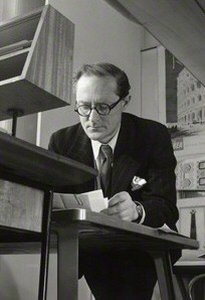
sir hugh maxwell casson
1910 - 1999 , United Kingdom
Quick Facts
- Artistic Movement Or Style: Landscape/Interior Design
- Artists Or Movements Influenced By This Artist:
- Modern British Art
- Royal Academy Style
- Artists Who Influenced This Artist:
- Christopher Nicholson
- Margaret Macdonald
- Date Of Birth: 1910-05-23
- Date Of Death: 1999-08-15
- Full Name: Sir Hugh Maxwell Casson
- Nationality: British
- Notable Artworks:
- Glyndebourne Art
- Elephant Pavilion
- Cambridge Arts Faculty
- Place Of Birth: London, UK
Related Articles

Watercolor Wonders: 10 Masterpieces That Redefined Art History | ArtsDot
Journey through 10 legendary watercolor masterpieces by Sargent, Turner & Homer! Explore iconic landscapes, portraits & floral art that redefined history. Find museum-quality reproductions and curated decor ideas at ArtsDot.com.

Ephemeral Visions: Exploring the Artistic Legacy & Contemporary Practice of Watercolor Painting
Explore the captivating world of watercolor painting! Discover its rich history, essential techniques, influential artists & collecting tips. A comprehensive guide for art enthusiasts from ArtsDot.

Ephemeral Visions: Exploring the Artistic Legacy & Nuances of Watercolor Painting
Explore the captivating world of watercolor painting! Discover its rich history, essential techniques, influential artists & collecting tips from art experts. A comprehensive guide for enthusiasts.
Ephemeral Visions: Exploring the History & Emotional Resonance of Watercolor Painting
Explore the captivating history of watercolor painting, from ancient techniques to modern masters like Kandinsky & Blake. Discover essential artists, collecting tips & the emotional power of this luminous medium. Expert insights for art enthusiasts.
The Eloquent Line: Exploring the Artistic Significance of Sketches Across Movements and Media
Explore the profound artistic significance of sketches throughout history. From Renaissance masters to modern innovators like Van Gogh & Guston, discover how these foundational works reveal technique, emotion, and vision. Learn more at ArtsDot.