 Preview
 Send
Send Share
Share
 Details

 Download
 Similars
 X-Ray
X-Ray Diaporama
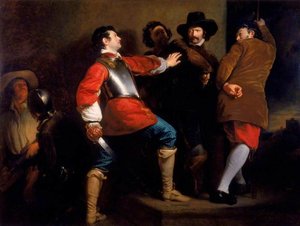
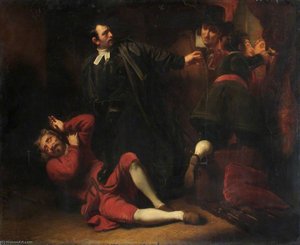
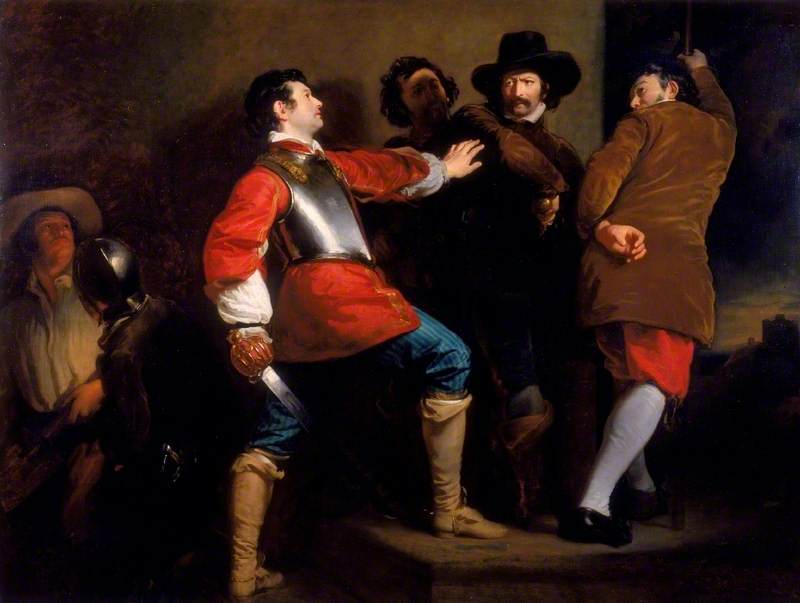
The Discovery of the Gunpowder Plot and the Taking of Guy Fawkes
 Oil
Oil- WallArt
- Victorian Realism
 1823
1823- 19th Century
 149.0 x 199.0 cm
 Laing Art Gallery
 Read More
Giclée / Art Print
Museum-quality giclée or canvas print with fast production and flexible finish options. ( Buy Hand Made Painting Buy Image)




P118B $10

P118H $10

P118W $10

P438Z $10

P508JH $12

P508YH $12

P805H $10

P805Z $10

P919BZ $10

P919G $10

P919XJ $10

P959ZH $10

P968JZ $12

W106C $8

W218G $10

W218JH $8

W218Y $10

W307PJ $10

W316G $10

W316PJ $8

W316Y $10

W398PJ $8

W4111J $10

W500HY $15

W500JH $15

W692G $12

W849H $8

W940BG $15

W953PJ $8




Pick from our preset sizes that match the artwork's original proportions.

You may enter your own dimensions to fit a specific frame or space. If your selected size does not match the original image's proportions, we will either crop the artwork or extend the image with a mirrored or solid-fill edge. A digital mockup will be sent for your approval before production begins.
Please note that the on-screen preview does not reflect the actual cropping or extension. Only the mockup will accurately show the final composition.
While custom sizes are available, we recommend selecting a dimension from the predefined list to preserve the original proportions.
Worldwide Delivery () in 2 weeks instead of standard 4/5 weeks. (24 August)

Free Worldwide Express Shipping

High-Quality Linen Canvas

Full Shipping Insurance

Customs Tax Refund Guarantee

True Color Matching Guarantee

60-Day Return Policy (Defects Only)

100% Money-Back Guarantee

Bulk Discount Offer
 Glass option is only available in size under 110 CM

The Discovery of the Gunpowder Plot and the Taking of Guy Fawkes
Giclée / Art Print
Reproduction Size
-


Total Price
$ 63
Collectible Description
A Moment Frozen in History: The Drama of the Gunpowder Plot
In this breathtaking historical tableau, Sir Thomas Francis Dicksee invites the viewer into the heart of one of England's most infamous moments of political intrigue. The Discovery of the Gunpowder Plot and the Taking of Guy Fawkes is not merely a depiction of an arrest; it is a masterclass in Victorian narrative painting, capturing the precise second when tension breaks into confrontation. The canvas centers on the figure of the man in red, whose very presence radiates the weight of impending doom as he is intercepted by the watchful eyes of soldiers. Every brushstroke serves to heighten the palpable sense of urgency, drawing the observer into a dark, subterranean world where the fate of a nation hung in the balance.
Dicksee’s technique reflects his profound mastery of 19th-century realism, utilizing light and shadow to sculpt the figures and define the claustrophobic atmosphere of the scene. The artist employs a rich, dramatic palette that emphasizes the stark contrast between the vibrant crimson of the central figure's attire and the murky, uncertain shadows surrounding the conspirators. Through meticulous attention to detail—from the glint of a sword near the center-left to the humble placement of a bowl and cup in the periphery—Dicksee creates a sense of lived-in reality. This level of precision ensures that every object within the frame contributes to the storytelling, grounding the high drama of the event in a tangible, physical space.
Symbolism and the Emotional Landscape
Beyond the literal depiction of history, the painting functions as a profound exploration of betrayal and justice. The composition is carefully orchestrated to guide the eye through a web of human emotion: the suspicion of the onlookers, the stoic determination of the soldiers, and the sudden, jarring realization of the conspirator. The presence of weaponry and the scattered objects of daily life serve as symbolic anchors, representing the collision between ordinary existence and extraordinary treason. For the collector or interior designer, this piece offers more than just visual beauty; it provides a window into the Victorian fascination with moral conflict and the dramatic weight of historical consequence.
For those seeking to adorn a space with art that commands attention, this reproduction offers an unparalleled opportunity to introduce a sense of prestige and intellectual depth. The painting’s scale and intense emotional resonance make it a magnificent focal point for a study, a library, or a formal gallery wall. It is a work that does not merely decorate a room but transforms it, inviting conversation and reflection on the enduring power of history. Owning such a piece is an invitation to possess a fragment of the Victorian era's most evocative storytelling, rendered with the timeless elegance of Sir Thomas Francis Dicksee.
Related Artworks
Artist Biography
Sir Thomas Francis Dicksee: A Victorian Master of Shakespearean Drama
Sir Thomas Francis Dicksee (1819-1895) stands as a significant, yet often overlooked, figure in 19th-century British art. More than simply a portrait painter, Dicksee carved out a distinctive niche for himself through his evocative depictions of Shakespearean scenes and meticulously rendered Victorian genre works. His canvases are imbued with a romantic sensibility, capturing not just likenesses but also the emotional depth and dramatic intensity of literary characters and everyday life. Born in London, Dicksee’s artistic journey was shaped by early instruction from his father, a painter himself, laying the foundation for a career dedicated to visual storytelling.
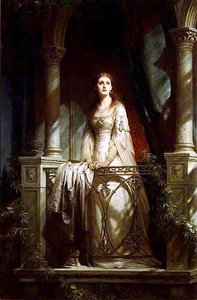
Dicksee's artistic development can be traced through his early exhibitions at the Royal Academy, beginning in 1841. Initially, he focused on portraiture, quickly establishing a reputation for capturing the personalities of his subjects with remarkable accuracy and sensitivity. However, it was his fascination with Shakespeare that truly defined his oeuvre. He didn’t merely paint scenes from plays; he sought to embody the spirit of the characters within them – Ophelia’s tragic beauty, Beatrice’s fiery wit, Miranda’s ethereal grace, and Ariel's mischievous charm. These weren’t illustrations for a play, but independent works of art, imbued with Dicksee’s own artistic vision.
The Influence of Romanticism and Victorian Sensibilities
Dicksee’s work is deeply rooted in the Romantic movement, inheriting its emphasis on emotion, imagination, and the sublime. Yet, he skillfully adapted these principles to the specific context of Victorian England. The Victorian era was characterized by a fascination with morality, social order, and domesticity – themes that frequently appear in Dicksee's genre scenes. He often depicted women engaged in quiet domestic activities—reading, sewing, or receiving visitors—but always with an underlying sense of melancholy or longing. This juxtaposition of Romantic idealism and Victorian restraint is what gives his paintings their unique character.
Furthermore, Dicksee’s artistic training under H.P. Briggs at the Royal Academy Schools provided him with a solid technical foundation. He mastered the techniques of oil painting, particularly in rendering fabrics, textures, and light. His meticulous attention to detail—the folds of a gown, the sparkle of jewelry, the expression on a face—contributes significantly to the realism and emotional impact of his works. He was also influenced by artists like Thomas Lawrence, whose portraiture emphasized elegance and social grace, though Dicksee injected a greater degree of dramatic intensity into his subjects.
Key Works and Notable Commissions
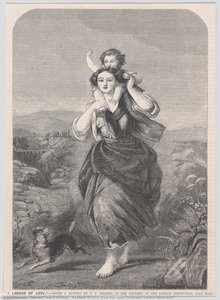
Dicksee’s most celebrated paintings are undoubtedly those depicting Shakespearean characters. “A Labour of Love,” exhibited at the Illustrated London News in 1876, remains one of his most iconic works. The scene captures Ophelia's poignant farewell to Hamlet, rendered with exquisite detail and a palpable sense of sorrow. Other notable examples include "Beatrice," which perfectly embodies the character’s fiery spirit, and “Miranda,” capturing her innocence and beauty within the confines of Prospero’s island.
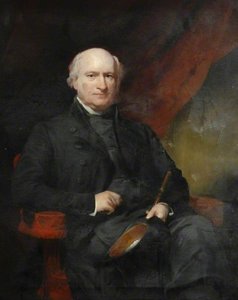
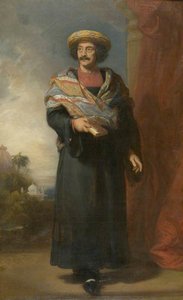
Beyond his Shakespearean subjects, Dicksee also produced a substantial body of portraiture. He painted numerous members of the British aristocracy, including prominent figures such as Richard Jenkyns, Thomas Young (a copy after Thomas Lawrence), and Sir Francis Grant himself. These portraits are not merely likenesses; they reveal the personalities and social standing of their sitters with remarkable insight. His ability to capture both physical appearance and inner character made him a sought-after portraitist among the wealthy and influential.
Legacy and Historical Significance
Despite his considerable talent and success, Dicksee’s work has often been overshadowed by that of other Victorian artists. However, recent scholarship is beginning to recognize his unique contribution to British art history. His Shakespearean scenes, in particular, offer a valuable window into the Victorian fascination with literature and drama. Dicksee's paintings are not simply decorative; they are imbued with a profound sense of human emotion and psychological depth.
Furthermore, Dicksee’s career reflects the broader social and cultural changes taking place in 19th-century Britain. His work provides insights into Victorian attitudes towards gender roles, class distinctions, and the relationship between art and society. His legacy continues to resonate today, reminding us of the enduring power of visual storytelling and the importance of preserving the artistic heritage of a bygone era.
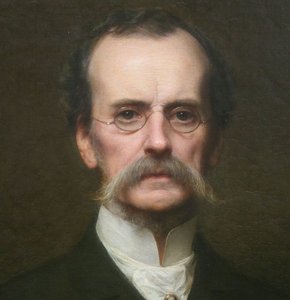
sir thomas francis dicksee
1819 - 1895
Quick Facts
- Artistic Movement Or Style: Victorian painting
- Artists Or Movements Influenced By This Artist:
- Romanticism
- Shakespearean scenes
- Artists Who Influenced This Artist:
- Thomas Lawrence
- Francis Grant
- Date Of Birth: 1819
- Date Of Death: 1895
- Full Name: Sir Thomas Francis Dicksee
- Nationality: British
- Notable Artworks:
- A Labour of Love
- Ophelia
- Beatrice
- Miranda
- Richard Jenkyns
- Place Of Birth: London, England
Related Articles
Romantic Realism's Finest: 10 Masterpieces for Your Home | ArtsDot
Explore 10 defining masterpieces of Romantic Realism! Discover Courbet, Millet & Daumier's powerful paintings—capturing emotion and social realities. Find museum-quality reproductions for your home at ArtsDot.com.
The Gaze of a Changing World: Victorian Realism & Modern Life
Explore the captivating world of Victorian Realism! Discover genre painting's rise, social commentary in art, & masters like Fedotov and Wilkie. Expert analysis & high-quality reproductions at ArtsDot.
Echoes of Society: Exploring Social Realism's Enduring Legacy in Art
Explore the powerful world of Social Realism art! Discover key artists, masterpieces & its profound social commentary. Expert insights into this influential movement's history and enduring legacy.
John Atkinson Grimshaw: Atmospheric Realism & the Victorian Nocturne
Explore the captivating world of John Atkinson Grimshaw, Victorian master of atmospheric nightscapes. Discover his iconic paintings, unique techniques & enduring legacy. Learn about collecting Grimshaw's art today!
Walter Greaves: A Study in Victorian Realism & the Social Landscape of British Art
Explore the life & work of Walter Greaves, a key Victorian realist painter influenced by Whistler. Discover his London streetscapes, portraits, and enduring legacy. Learn about art appraisal & reproduction options at ArtsDot.