 Preview
 Send
Send Share
Share
 Details

 Download
 Similars
 X-Ray
X-Ray Diaporama
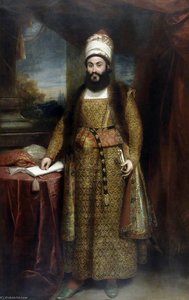
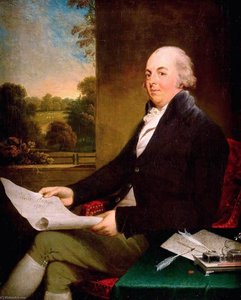
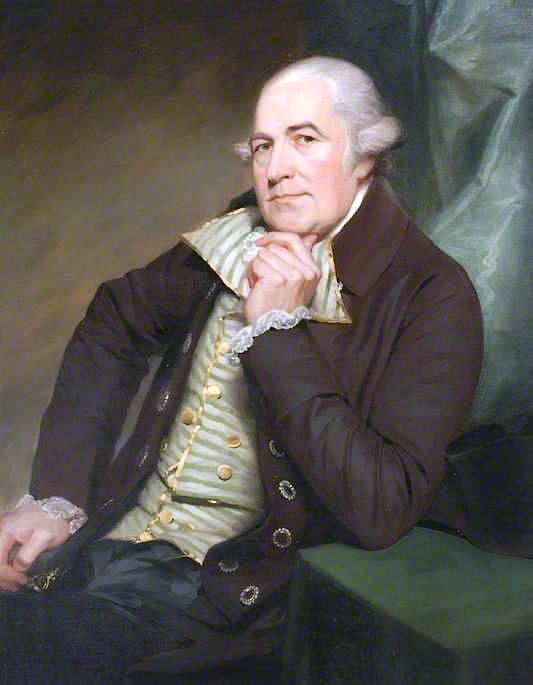
George Maltby, Esq


 Read More
Hand Made Oil Reproduction
Hand-painted oil on canvas in your size and frame, made to order by our artists. ( Buy Print Buy Image)




P118B $10

P118H $10

P118W $10

P438Z $10

P508JH $12

P508YH $12

P805H $10

P805Z $10

P919BZ $10

P919G $10

P919XJ $10

P959ZH $10

P968JZ $12

W106C $8

W218G $10

W218JH $8

W218Y $10

W307PJ $10

W316G $10

W316PJ $8

W316Y $10

W398PJ $8

W4111J $10

W500HY $15

W500JH $15

W692G $12

W849H $8

W940BG $15

W953PJ $8




Pick from our preset sizes that match the artwork's original proportions.

You may enter your own dimensions to fit a specific frame or space. If your selected size does not match the original image's proportions, we will either crop the artwork or extend the painting with additional hand-painted elements. A digital mockup will be sent for your approval before production begins.
Please note that the on-screen preview does not reflect the actual cropping or extension. Only the mockup will accurately show the final composition.
While custom sizes are available, we recommend selecting a dimension from the predefined list to preserve the original proportions.
After order, ArtsDot.com team will email client for instructions and provide a mockup preview
Worldwide Delivery () in 3/4 weeks instead of standard 5 weeks. (17 August). No compromise on quality.

Free Worldwide Express Shipping

High-Quality Linen Canvas

Full Shipping Insurance

Customs Tax Refund Guarantee

True Color Matching Guarantee

60-Day Return Policy (Defects Only)

100% Money-Back Guarantee

Bulk Discount Offer
 Glass option is only available in size under 110 CM

George Maltby, Esq
Reproduction Medium
Reproduction Size
-


Total Price
$ 263
Artwork Description
George Maltby, Esq.: A Portrait of Dignified Authority
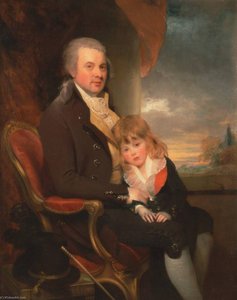
Sir William Beechey’s depiction of George Maltby, Esq., completed circa 1782, stands as a quintessential example of late Georgian portraiture—a genre defined by its meticulous realism and unwavering commitment to conveying social status. More than just a likeness, the painting embodies the ideals of aristocratic refinement prevalent during the reign of George III, capturing not merely appearance but also character and bearing.
The artwork’s composition centers on Maltby himself, positioned slightly off-center to the right within a formal interior setting—likely a drawing room. A chair serves as grounding element behind him, reinforcing the sense of dignified repose characteristic of aristocratic portraits. Beechey skillfully employs geometric shapes – particularly the rectangular frame of the chair – to establish visual stability and guide the viewer’s gaze.
Beechey’s masterful technique utilizes oil paint on canvas, demonstrating a blending brushstroke approach that achieves remarkable smoothness and luminosity. Subtle gradations within the color palette—ranging from earthy browns and greens forming the backdrop to warmer yellows highlighting Maltby's vest—create depth and realism. Glazes were likely employed to subtly enhance tonal variations, adding nuance and richness to the overall visual experience.
Color Palette & Light
The subdued color scheme reflects the aesthetic sensibilities of the time, prioritizing muted tones that convey elegance and restraint. Dominant hues include browns and greens—suggestive of wealth and cultivated taste—contrasting with the vibrant yellow of Maltby’s waistcoat, which draws attention to his status as a gentleman of considerable means. The diffused natural light illuminates Maltby's face and upper torso, casting gentle shadows that contribute to the painting’s dramatic depth.
Symbolism & Emotional Resonance
Beyond its visual beauty, “George Maltby, Esq.” carries symbolic weight. Maltby’s confident posture and direct gaze communicate authority and self-assurance—qualities highly valued in aristocratic society. The attire—a waistcoat adorned with yellow silk—represents wealth and social standing, reinforcing the portrait's message of prestige and accomplishment. Beechey’s careful attention to detail captures not only Maltby’s physical appearance but also his inner character, conveying a sense of dignified composure.
Historical Context & Artistic Style
Painted during the Georgian era (1714-1830), “George Maltby, Esq.” exemplifies the neoclassical style that dominated British art at the time. Influenced by artists like Johann Zoffany and Sir Joshua Reynolds, Beechey adhered to conventions established by Reynolds—emphasizing idealized beauty and conveying moral virtue through carefully crafted compositions. The painting’s flatness contributes to its timeless appeal, resisting the illusionistic techniques of earlier Renaissance masters.
Materials & Technique Details
The artwork is executed in oil paint on canvas, utilizing meticulous blending brushstrokes to achieve exceptional textural realism. Subtle variations in surface sheen—particularly noticeable in Maltby's skin tones—enhance the painting’s tactile quality. The artist’s skillful manipulation of light and shadow creates a captivating interplay of illumination and darkness, drawing attention to key elements within the composition.
Related Artworks
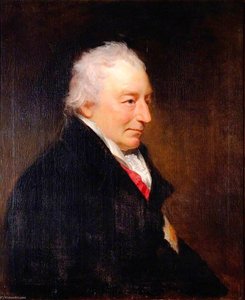
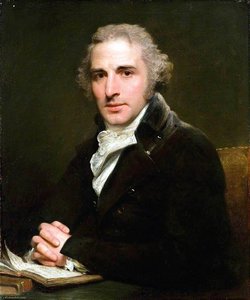
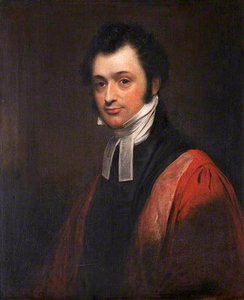
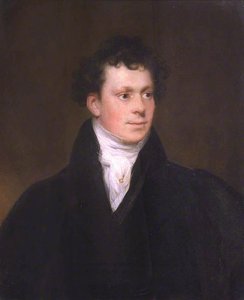
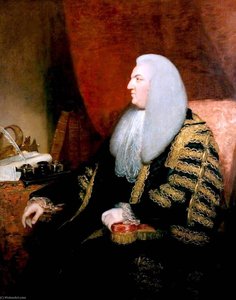
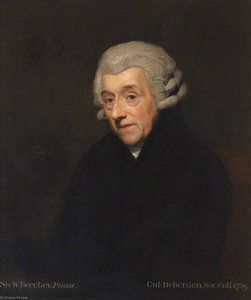
Artist Biography
Early Life and Artistic Beginnings
Sir William Beechey, born December 12, 1753, in the quaint Oxfordshire town of Burford, embarked on a life that would see him become a prominent figure in British portraiture. His early years were marked by tragedy; both his parents passed away while he was still young, leaving his upbringing to the care of his uncle, Samuel Beechey, a solicitor. Initially destined for a legal career, young William’s heart lay elsewhere—in the captivating world of art. Despite his uncle's aspirations, Beechey gravitated towards painting, an inclination that ultimately led him to London and admission into the Royal Academy Schools in 1772. This marked a pivotal moment, placing him within the orbit of established artists and setting the stage for his artistic development. His early training likely benefited from the guidance of Johan Zoffany, though concrete evidence remains elusive, shaping his initial style towards small-scale full-length portraits and intimate conversation pieces reminiscent of Zoffany’s own work.A Rising Star: Norwich and London
Beechey's artistic journey took him to Norwich in 1782, where he established a foothold as a portraitist among the region’s gentry. He secured commissions for portraits of prominent figures like John Wodehouse, and notably contributed four works to the collection of civic portraits at St Andrew’s Hall—a testament to his growing reputation. However, London beckoned, and in 1787 he returned to the capital, determined to make his mark on a larger stage. The late 1780s saw Beechey steadily gaining recognition, exhibiting works that showcased his developing skill and refined technique. A turning point arrived with his portrait of John Douglas, Bishop of Carlisle, exhibited in 1789—a work that garnered considerable attention and solidified his position within the London art scene. He skillfully navigated the conventions of the time, drawing inspiration from masters like Joshua Reynolds while forging a style uniquely his own.Royal Patronage and National Recognition
The year 1793 proved transformative for Beechey. Through a fortunate turn of events—a disgruntled sitter bringing his portrait to the attention of King George III and Queen Charlotte—Beechey found himself appointed as Queen Charlotte’s official portrait painter. This royal endorsement catapulted him into the upper echelons of artistic society, opening doors to a stream of prestigious commissions. He was elected an associate member of the Royal Academy that same year, further cementing his status. The following year brought even greater acclaim; in 1798, he painted *George III and the Prince of Wales Reviewing Troops*, a large-scale composition that earned him a knighthood and full membership to the Royal Academy. Though tragically lost in the 1992 Windsor Castle fire, this work exemplified Beechey’s ability to handle grand historical scenes alongside his more intimate portraiture. His success during this period was not merely artistic; it was deeply intertwined with the social and political landscape of Britain, reflecting a growing national pride and a flourishing aristocratic culture.Style, Legacy, and Lasting Influence
Beechey’s style is characterized by its refined elegance, subtle coloring, and meticulous attention to detail. He favored neoclassical compositions, often depicting his sitters in graceful poses reminiscent of classical sculpture. While not a radical innovator like some of his contemporaries—such as Thomas Lawrence—his consistent quality and ability to capture the likeness and character of his subjects earned him widespread acclaim. His portraits possess a dignified restraint, avoiding excessive drama or flamboyant flourishes. This approach appealed particularly to the royal family and the upper classes, who valued decorum and understated elegance. Despite some criticism leveled by Samuel Redgrave in 1890—who found Beechey’s work lacking in grace and his drapery somewhat clumsy—Beechey maintained a respectable position among British portraitists. His works continue to be celebrated for their technical skill and insightful portrayals of prominent figures from the late 18th and early 19th centuries, including Lord Nelson, John Kemble, and Sarah Siddons. His legacy endures not only through his paintings but also as a testament to the enduring power of portraiture in capturing the spirit of an era.Family and Further Contributions
Beechey’s personal life was marked by both joy and sorrow. He married Mary Ann Jones in 1778, and following her death, he wed Anne Phyllis Jessop, a successful miniature painter, in 1793. Through these unions, he fathered several children who also pursued artistic careers. His sons, Henry William Beechey—a painter and explorer—and Frederick William Beechey—a naval officer, geographer, and writer—carried on the family tradition of creative endeavor. Beechey’s influence extended beyond his own paintings; he was known for his generosity towards aspiring artists, particularly John Constable, whom he mentored. He retired to Hampstead in 1836, where he passed away in 1839, leaving behind a rich artistic legacy that continues to captivate and inspire. His contributions to British art remain significant, offering valuable insights into the lives and times of those who shaped the nation’s history.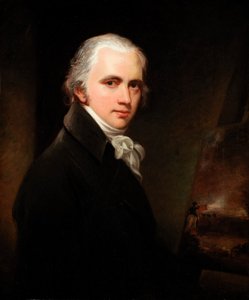
Sir William Beechey
1753 - 1839 , United Kingdom
Quick Facts
- Artistic Movement Or Style: Portraiture, Neoclassical
- Artists Who Influenced This Artist:
- Johan Zoffany
- Joshua Reynolds
- Date Of Birth: December 12, 1753
- Date Of Death: January 28, 1839
- Full Name: Sir William Beechey
- Nationality: British
- Notable Artworks:
- Duchess of York Portrait
- George III Reviewing Troops
- Place Of Birth: Burford, UK
Related Articles

The Enduring Legacy of Oil on Canvas: Technique, History & Aesthetic Impact
Explore the rich history & techniques of oil painting – from Renaissance masters to Impressionism. Discover pigments, layering methods, and why this timeless medium endures. Expert insights for artists & art enthusiasts.

Oil on Canvas: A Historical & Technical Exploration of a Timeless Artistic Medium
Explore the rich history & enduring techniques of oil painting on canvas. Discover the science behind its longevity, conservation practices, and contemporary relevance. Expert insights for art enthusiasts.

The Enduring Legacy of Oil on Canvas: Technique, History & Contemporary Practice
Explore the rich history & enduring techniques of oil painting on canvas. Discover the science behind its longevity, conservation practices, and contemporary relevance. Expert insights for art enthusiasts.
Oil on Canvas Masters: 10 Paintings That Redefined Art History |
Journey through art history with our guide to 10 legendary oil on canvas masterpieces! Explore iconic works by Van Gogh, Monet & Rembrandt. Find museum-quality reproductions and elevate your home decor at . Discover all masterpieces online.

The Enduring Power of Painting: A Historical & Contemporary Exploration of Form and Emotion
Explore the rich history & enduring techniques of oil painting with ArtsDot. Discover masterpieces, learn about art collecting, and find authentic handmade reproductions crafted by skilled artists.