 Preview
 Send
Send Share
Share
 Details

 Download
 Similars
 X-Ray
X-Ray Diaporama
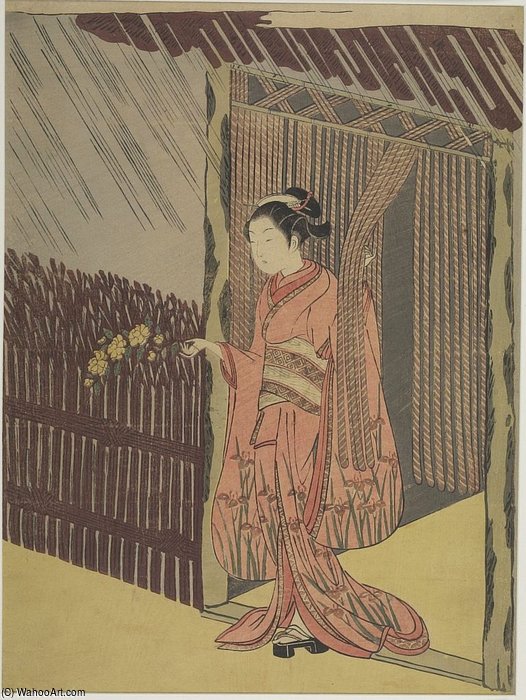
Woman With Branch Of Yamabuki

 Read More
Hand Made Oil Reproduction
Hand-painted oil on canvas in your size and frame, made to order by our artists. ( Buy Print Buy Image)




P118B $10

P118H $10

P118W $10

P438Z $10

P508JH $12

P508YH $12

P805H $10

P805Z $10

P919BZ $10

P919G $10

P919XJ $10

P959ZH $10

P968JZ $12

W106C $8

W218G $10

W218JH $8

W218Y $10

W307PJ $10

W316G $10

W316PJ $8

W316Y $10

W398PJ $8

W4111J $10

W500HY $15

W500JH $15

W692G $12

W849H $8

W940BG $15

W953PJ $8




Pick from our preset sizes that match the artwork's original proportions.

You may enter your own dimensions to fit a specific frame or space. If your selected size does not match the original image's proportions, we will either crop the artwork or extend the painting with additional hand-painted elements. A digital mockup will be sent for your approval before production begins.
Please note that the on-screen preview does not reflect the actual cropping or extension. Only the mockup will accurately show the final composition.
While custom sizes are available, we recommend selecting a dimension from the predefined list to preserve the original proportions.
After order, ArtsDot.com team will email client for instructions and provide a mockup preview
Worldwide Delivery () in 3/4 weeks instead of standard 5 weeks. (30 August). No compromise on quality.

Free Worldwide Express Shipping

High-Quality Linen Canvas

Full Shipping Insurance

Customs Tax Refund Guarantee

True Color Matching Guarantee

60-Day Return Policy (Defects Only)

100% Money-Back Guarantee

Bulk Discount Offer
 Glass option is only available in size under 110 CM

Woman With Branch Of Yamabuki
Reproduction Medium
Reproduction Size
-


Total Price
$ 263
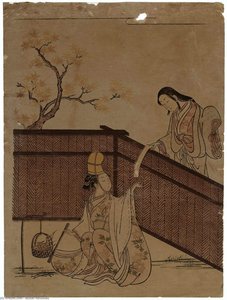
A Moment of Quiet Beauty: Suzuki Harunobu’s ‘Woman With Branch Of Yamabuki’
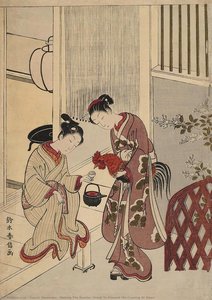
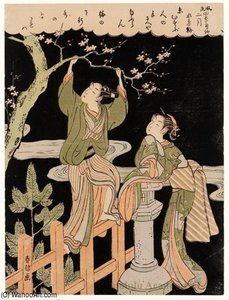
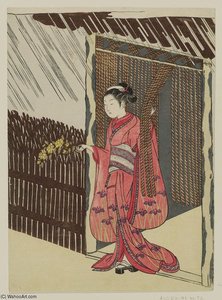
This exquisite *ukiyo-e* woodblock print by Suzuki Harunobu captures a serene moment, showcasing the artist's mastery of line, color, and composition. The artwork depicts a woman, elegantly dressed in a kimono, standing before a traditional Japanese gate – a scene imbued with grace and contemplative stillness. Harunobu, a pivotal figure in the development of *nishiki-e* ("pictures of the floating world"), elevates this simple subject into a poetic statement about beauty and transience. The muted palette of browns, ochres, and creams evokes a sense of age and tranquility, drawing the viewer into a peaceful atmosphere.The Dawn of *Nishiki-e*: Technique & Innovation
Suzuki Harunobu is celebrated as one of the first artists to fully embrace *nishiki-e*, a technique allowing for multiple color blocks to be used in printing – resulting in richer, more nuanced images than previously possible. This print exemplifies that innovation. The meticulous carving of each woodblock and the precise layering of colors create subtle gradations and textures, mimicking the delicate folds of the kimono and the natural grain of the wooden gate. This wasn’t merely reproduction; it was a sophisticated artistic process, demanding both technical skill and aesthetic sensibility. The flattened perspective is characteristic of *ukiyo-e*, prioritizing decorative patterns and elegant design over strict realism, creating a uniquely Japanese visual language.Symbolism & The Floating World
Beyond its aesthetic appeal, ‘Woman With Branch Of Yamabuki’ invites interpretation through symbolism. The *yamabuki* (golden bell flower) held by the woman is often associated with fleeting beauty and melancholy – a poignant reminder of life's impermanence. The gate itself can be seen as a threshold, representing transition, opportunity, or perhaps even a journey inward. Harunobu’s work frequently depicted beautiful women engaged in everyday activities or surrounded by nature, reflecting the *ukiyo-e* focus on the “floating world” – a celebration of ephemeral pleasures and the beauty found in ordinary life. This print embodies that ethos, offering a glimpse into a refined and elegant world.Emotional Resonance & Interior Design
The artwork’s quiet dignity and harmonious composition lend themselves beautifully to various interior design schemes. Its muted tones complement both modern minimalist spaces and more traditional settings. Imagine this print adorning a hallway, creating a calming focal point, or gracing a bedroom wall, fostering a sense of serenity. Its understated elegance makes it a versatile piece, capable of adding depth and sophistication to any room. ‘Woman With Branch Of Yamabuki’ is more than just an artwork; it's an invitation to pause, reflect, and appreciate the beauty of a fleeting moment – a timeless quality that continues to resonate with viewers today.Related Artworks
Artist Biography
early life and influences
suzuki harunobu, a japanese designer of woodblock print art in the ukiyo-e style, was born in 1725. little is known about his early life, but it is believed he grew up in kyoto. his work shows evidence of influences from many artists, including torii kiyomitsu, ishikawa toyonobu, the kawamata school, and the kanō school. however, the strongest influence upon harunobu was the painter and printmaker nishikawa sukenobu, who may have been harunobu's direct teacher.artistic career
harunobu began his career in the style of the torii school, creating many works that were skillful but not innovative. however, with his involvement with a group of literati samurai, he tackled new formats and styles. in 1764, harunobu was chosen to aid these samurai in their amateur efforts to create e-goyomi (calendars). these calendar prints would be the first nishiki-e (brocade prints), with harunobu experimenting with better woods for the woodblocks and using more expensive colors.notable works and innovations
- suzuki harunobu's "brocade prints" led to full-color production becoming standard, with ten or more blocks used to create each print.
- his use of multiple separate woodblocks in the creation of a single image was an innovation that depended on using notches and wedges to hold the paper in place.
- harunobu's prints were popular with the chōnin class, who had become wealthy enough to afford to decorate their homes with them.
legacy
suzuki harunobu's work was central to forming the west's perception of japanese art in the late 19th century. his influence can be seen in the landscapes of hokusai and hiroshige, which were popularized during the japonisme trend.- view suzuki harunobu's artworks on ArtsDot
- read more about suzuki harunobu on wikipedia
- explore ukiyo-e art on ArtsDot
notable paintings and artists
- utagawa hiroshige's kyoka tokaido series, seki (view on ArtsDot)
- miyagawa isshō's shimabara courtesans exorcizing demons (view on ArtsDot)
- utagawa kuniyoshi's a votive tablet with masks of kabuki actors at face value (view on ArtsDot)
museums and collections
- indianapolis museum of art (indianapolis, united states)
- fukuoka city museum (fukuoka, japan)
Suzuki Harunobu
1725 - 1770 , Japan
Quick Facts
- Artistic Movement Or Style: Ukiyo-e, Nishiki-e
- Artists Or Movements Influenced By This Artist:
- Hokusai
- Hiroshige
- Artists Who Influenced This Artist: ['Nishikawa Sukenobu']
- Date Of Birth: 1725?
- Date Of Death: 1770
- Full Name: Suzuki Harunobu
- Nationality: Japanese
- Notable Artworks:
- Herons Et Roseaux
- Young Woman Jumping...
- Place Of Birth: Edo (Tokyo), Japan
Related Articles
Suzuki Harunobu: Pioneering Ukiyo-e & the Refinement of Edo Period Printmaking
Discover the revolutionary world of Suzuki Harunobu, a pioneer of ukiyo-e printmaking. Explore his exquisite nishiki-e techniques, diverse subjects & lasting impact on Japanese art history. Learn more at ArtsDot.

Hokusai's Masterpieces: 25 Iconic Prints & Paintings for Art Lovers | ArtsDot
Journey through Katsushika Hokusai’s 25 most iconic artworks, including *The Great Wave*. Explore the ukiyo-e master's history, style & timeless Japanese woodblock prints. Find museum-quality reproductions for your home at ArtsDot.com.
Ukiyo-e: Exploring Japan's Floating World & Enduring Artistic Legacy
Explore the captivating world of Ukiyo-e – Japan's iconic woodblock prints! Discover masters like Hokusai & Hiroshige, learn about Edo period culture, and find expert art collecting guidance at ArtsDot.
Japonisme: How Japanese Woodblock Prints Revolutionized Western Art
Explore the profound impact of Japonisme on Western art. Discover how Japanese ukiyo-e woodblock prints revolutionized perspective, color, and composition for masters like Monet and Van Gogh, forever changing the course of modern art history.
Floating World: The Captivating Art and Legacy of Japanese Ukiyo-e
Explore the profound beauty of Japanese Ukiyo-e. Discover the history, masters like Hokusai, and the enduring legacy of the 'Floating World' through an expert art-historical lens.