 Preview
 Send
Send Share
Share
 Details

 Download
 Similars
 X-Ray
X-Ray Diaporama
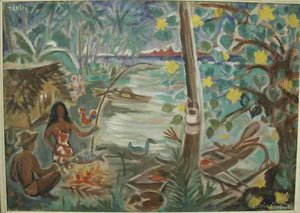
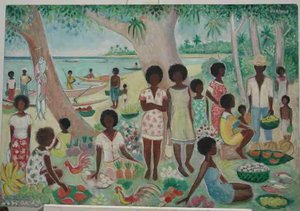
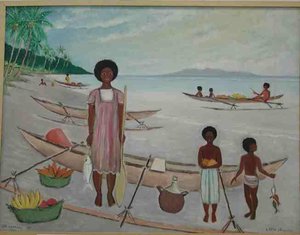
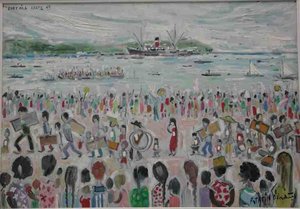
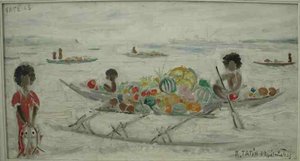
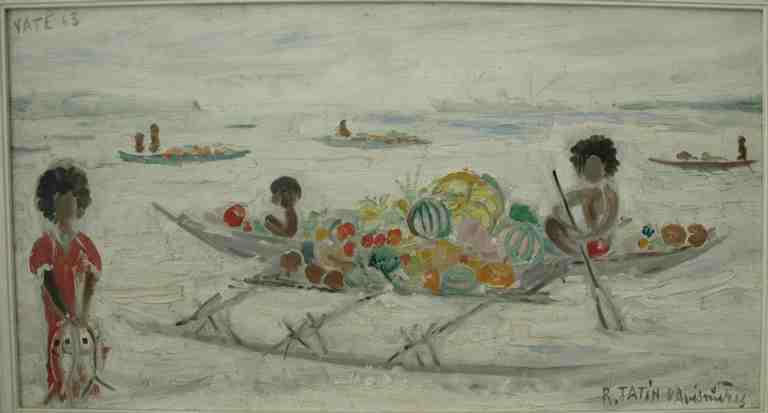
Pirogue allant au marché (Vate)

 Read More
Giclée / Art Print
Museum-quality giclée or canvas print with fast production and flexible finish options. ( Buy Hand Made Painting Buy Image)




































Pick from our preset sizes that match the artwork's original proportions.

You may enter your own dimensions to fit a specific frame or space. If your selected size does not match the original image's proportions, we will either crop the artwork or extend the image with a mirrored or solid-fill edge. A digital mockup will be sent for your approval before production begins.
Please note that the on-screen preview does not reflect the actual cropping or extension. Only the mockup will accurately show the final composition.
While custom sizes are available, we recommend selecting a dimension from the predefined list to preserve the original proportions.
Worldwide Delivery () in 2 weeks instead of standard 4/5 weeks. (25 August)

Free Worldwide Express Shipping

High-Quality Linen Canvas

Full Shipping Insurance

Customs Tax Refund Guarantee

True Color Matching Guarantee

60-Day Return Policy (Defects Only)

100% Money-Back Guarantee

Bulk Discount Offer
 Glass option is only available in size under 110 CM

Pirogue allant au marché (Vate)
Giclée / Art Print
Reproduction Size
-


Total Price
$ 63
Related Artworks
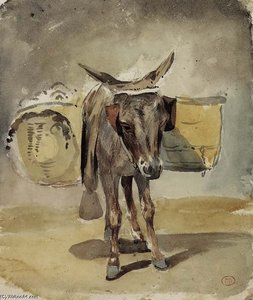
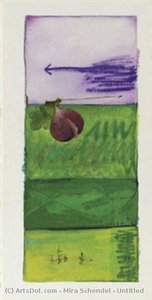
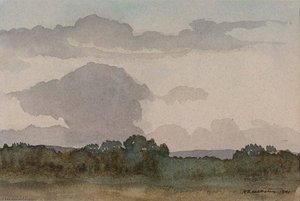
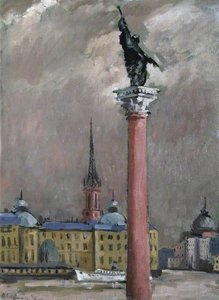
Artist Biography
A Visionary Echo of Tahiti: The Life and Legacy of Robert Tatin d'Avesnières
Tatin d’Avesnières Robert (1925-1982) emerged from the quiet, verdant landscapes of Vermont as a singular voice in Expressionist painting, ultimately capturing the vibrant spirit of Tahiti and Vanuatu with an unparalleled blend of naive art and bold Impressionistic technique. Though his artistic output remained relatively modest—comprising approximately 60 paintings—each piece resonates with a profound connection to Polynesian culture and a masterful command of color and texture that distinguishes him from many of his contemporaries. His journey was one of deep immersion, moving from the academic rigor of the United States to the sun-drenched shores of Oceania, where he translated the rhythms of indigenous life onto canvas.
Born in Burlington, Vermont, as Robert Hull Fleming, his fascination with art began early, nurtured by a family steeped in artistic appreciation. He pursued formal training at the prestigious Pratt Institute in New York City before returning to his roots in Vermont, where he established himself as a professor of Fine Arts at Middlebury College. However, the academic halls could not contain his true passion: the pursuit of the natural world's raw beauty. His travels to Tahiti and Vanuatu in 1958 proved transformative, sparking an enduring fascination with indigenous traditions. This period of exploration inspired him to adopt a style that mirrored the psychological depth and emotional intensity of masters like Edvard Munch and Oskar Kokoschka, yet remained uniquely his own through its luminous color palettes and simplified, expressive forms.
The Intersection of Naive Charm and Impressionistic Light
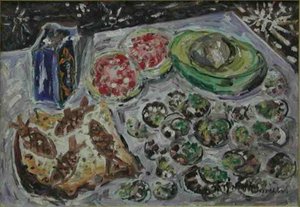
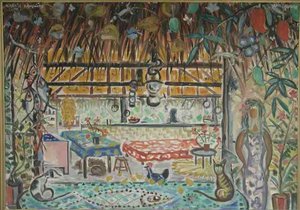
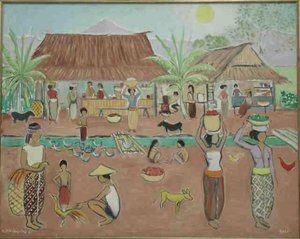
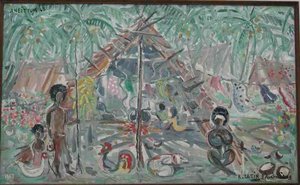
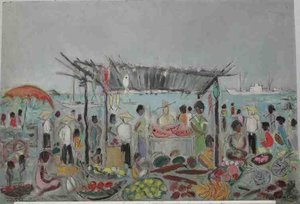
Fleming's artistic approach defied easy categorization, masterfully blending the innocent charm of naive art with the atmospheric principles of Impressionism. He eschewing meticulous realism, prioritizing instead the conveyance of feeling, movement, and atmosphere. His canvases often serve as windows into the daily rhythms of Tahitian life—depicting fishermen hauling heavy nets, bustling marketplaces overflowing with tropical produce, and the serene grace of traditional pirogues navigating coastal waters. These scenes are rendered with a remarkable degree of spontaneity and immediacy, as if the artist were capturing a fleeting moment of light before it vanished.
The technical brilliance of his work lies in its ability to balance structure with fluidity. While his forms may appear simplified or even primitive, they are underpinned by a sophisticated understanding of color theory and light. His use of bold, saturated hues evokes the heat and humidity of the South Pacific, while his brushwork provides a sense of kinetic energy. Whether working in watercolor on paper or more robust oil mediums, he achieved a texture that feels alive, inviting the viewer to experience the tactile reality of the islands—the salt spray of the ocean, the rough bark of tropical trees, and the vibrant skin of ripe fruit.
A Lasting Impression of the South Pacific
The historical significance of Tatin d’Avesnières Robert lies in his role as a visual chronicler of a specific cultural era. His work does more than merely depict landscapes; it preserves the soul of a way of life that was deeply connected to the rhythms of nature and tradition. By merging the European traditions of Expressionism and Impressionism with the subject matter of the Pacific, he created a unique aesthetic bridge between two vastly different worlds. His paintings act as a personal mythology, where the boundaries between reality and dream often dissolve into a singular, evocative vision.
Though his life ended in Papeete at the age of 56, his artistic legacy continues to resonate through the vibrant colors and emotive power of his surviving works. He remains a celebrated figure for those seeking the intersection of fine art technique and the raw, unadorned beauty of the natural world. His contributions to the landscape of 20th-century art serve as a testament to the power of travel and cultural immersion as catalysts for profound creative evolution.
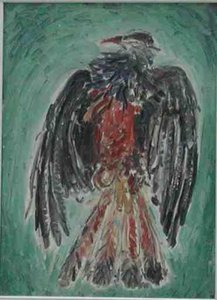
tatin d'avesnieres robert
1925 - 1982
Quick Facts
- Artistic Movement Or Style: Expressionism
- Artists Or Movements Influenced By This Artist: ['Naive Art']
- Artists Who Influenced This Artist: ['']
- Date Of Birth: 1925
- Date Of Death: 1982
- Full Name: tatin d’Avesnières Robert
- Nationality: French
- Notable Artworks:
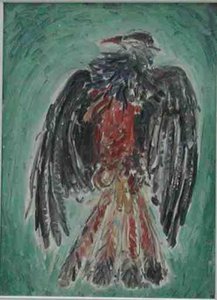
- Oiseau mort (Nautou)
- Pirogue allant au marché (Vate)
- Place Of Birth: Tahiti
Related Articles

Watercolor Wonders: 10 Masterpieces That Redefined Art History | ArtsDot
Journey through 10 legendary watercolor masterpieces by Sargent, Turner & Homer! Explore iconic landscapes, portraits & floral art that redefined history. Find museum-quality reproductions and curated decor ideas at ArtsDot.com.

Ephemeral Visions: Exploring the Artistic Legacy & Contemporary Practice of Watercolor Painting
Explore the captivating world of watercolor painting! Discover its rich history, essential techniques, influential artists & collecting tips. A comprehensive guide for art enthusiasts from ArtsDot.

Ephemeral Visions: Exploring the History & Emotional Resonance of Watercolor Painting
Explore the captivating history of watercolor painting, from ancient techniques to modern masters like Kandinsky & Blake. Discover essential artists, collecting tips & the emotional power of this luminous medium. Expert insights for art enthusiasts.

Ephemeral Visions: Exploring the Artistic Legacy & Nuances of Watercolor Painting
Explore the captivating world of watercolor painting! Discover its rich history, essential techniques, influential artists & collecting tips from art experts. A comprehensive guide for enthusiasts.
The Enduring Appeal of Watercolor: History, Techniques & Contemporary Practice
Explore the captivating world of watercolor painting! Discover its rich history, essential techniques, influential artists, and collecting tips. A comprehensive guide for art enthusiasts.