 Preview
 Send
Send Share
Share
 Details

 Download
 Similars
 X-Ray
X-Ray Diaporama
 Stats
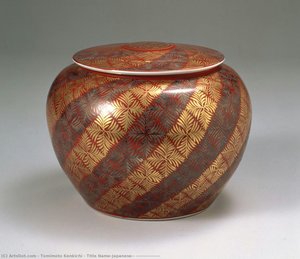
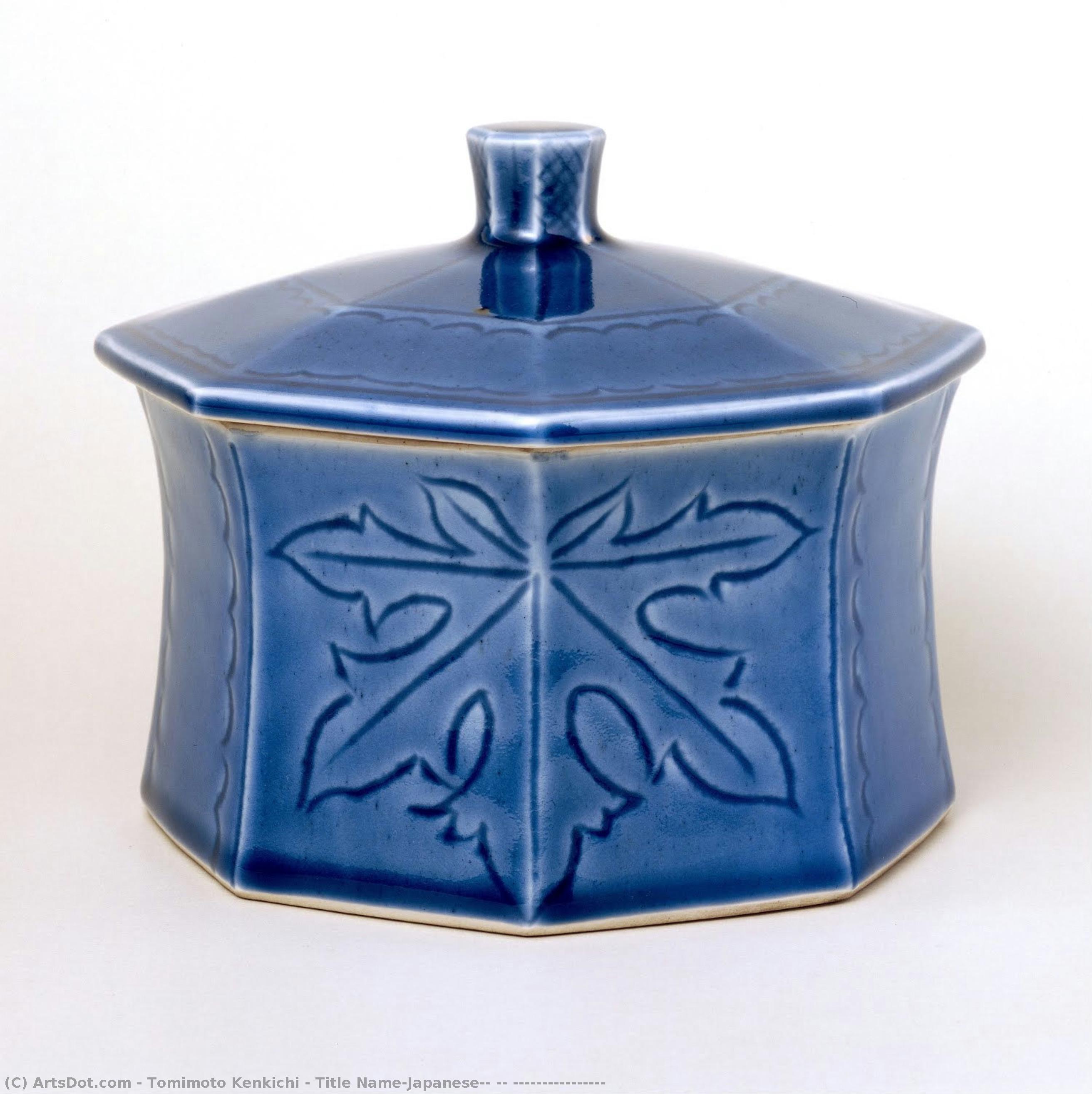
StatsTitle Name(Japanese): 磁器 瑠璃釉トリカブト葉模様八角蓋付壺


 Read More
Giclée / Art Print
Museum-quality giclée or canvas print with fast production and flexible finish options. ( Buy Hand Made Painting Switch to Digital Image)




P118B $10

P118H $10

P118W $10

P438Z $10

P508JH $12

P508YH $12

P805H $10

P805Z $10

P919BZ $10

P919G $10

P919XJ $10

P959ZH $10

P968JZ $12

W106C $8

W218G $10

W218JH $8

W218Y $10

W307PJ $10

W316G $10

W316PJ $8

W316Y $10

W398PJ $8

W4111J $10

W500HY $15

W500JH $15

W692G $12

W849H $8

W940BG $15

W953PJ $8




Pick from our preset sizes that match the artwork's original proportions.

You may enter your own dimensions to fit a specific frame or space. If your selected size does not match the original image's proportions, we will either crop the artwork or extend the image with a mirrored or solid-fill edge. A digital mockup will be sent for your approval before production begins.
Please note that the on-screen preview does not reflect the actual cropping or extension. Only the mockup will accurately show the final composition.
While custom sizes are available, we recommend selecting a dimension from the predefined list to preserve the original proportions.
Worldwide Delivery () in 2 weeks instead of standard 4/5 weeks. (8 September)

Free Worldwide Express Shipping

High-Quality Linen Canvas

Full Shipping Insurance

Customs Tax Refund Guarantee

True Color Matching Guarantee

100-Day Return Policy (Defects Only)

100% Money-Back Guarantee

Bulk Discount Offer
 Glass option is only available in size under 110 CM

Title Name(Japanese): 磁器 瑠璃釉トリカブト葉模様八角蓋付壺
Giclée / Art Print
Reproduction Size
-


Total Price
$ 63
A Symphony in Cobalt Blue: Exploring Tomimoto Kenkichi’s Ceramic Vessel
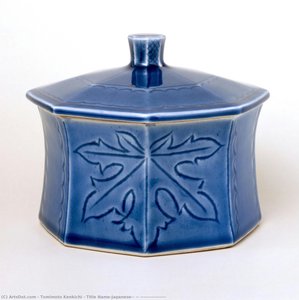
Japanese ceramic art has long been revered for its understated elegance and profound connection to nature, qualities beautifully exemplified in this octagonal jar crafted by the esteemed Tomimoto Kenkichi. Dating back to an unknown period – a characteristic of many treasured pieces from Japan's artistic past – it represents more than just a decorative object; it embodies centuries of tradition distilled into a single breathtaking form.The Artistry of Lacquered Beauty: Kenkichi’s Legacy
Tomimoto Kenkichi (1886-1963) wasn’t merely a potter; he was a pioneer who elevated lacquerware to new heights of artistic expression. Recognized as Japan's Living National Treasure in 1962, Kenkichi’s dedication to preserving and innovating upon traditional techniques cemented his place among the nation’s most celebrated artisans. His influence extends far beyond his own creations, shaping the aesthetic sensibilities of subsequent generations of Japanese artists. The inspiration for his work often drew from the natural world—specifically, the delicate beauty of zelkova wood—resulting in pieces that possess a remarkable sense of harmony and balance.Decoding the Decorative Motif: Stylized Leaf Patterns
The jar’s surface is adorned with meticulously carved leaf patterns – a motif deeply rooted in Japanese symbolism. Leaves represent renewal, growth, and resilience, reflecting core values within Japanese culture. The stylized depiction avoids literal representation, opting instead for an abstracted form that captures the essence of the natural element. This technique—characteristic of Kenkichi’s oeuvre—demonstrates a masterful understanding of how to convey emotion and meaning through subtle visual cues. The repetition of leaf shapes contributes to a sense of rhythm and visual interest, enhancing the overall aesthetic experience.Technique and Material: Ceramic Vessel with Cobalt Glaze
The vessel itself is constructed from ceramic – a material chosen for its durability and ability to withstand the transformative effects of firing—and glazed in a vibrant cobalt blue hue. This glaze technique, perfected over centuries, achieves an unparalleled luminosity and depth of color. The smooth surface resulting from this process underscores Kenkichi’s meticulous attention to detail, highlighting his commitment to achieving flawless execution. Cobalt glaze is prized for its rich pigment and ability to produce shades ranging from deep indigo to shimmering turquoise—a testament to the skill of Japanese ceramicists.A Reflection of Tranquility: Emotional Impact and Interior Design Considerations
This jar transcends mere ornamentation; it speaks to a deeper aesthetic sensibility – one that seeks solace in simplicity and appreciates the beauty of understated elegance. Its serene form and calming color palette make it ideally suited for incorporation into interior design schemes, particularly those aiming for a Japanese-inspired ambiance. Imagine it displayed on a shelf alongside other handcrafted ceramics or nestled amongst lush greenery—a subtle reminder of Japan’s enduring artistic heritage and its profound connection to the natural world.Related Artworks
Artist Biography
Tomimoto Kenkichi: A Living Legacy of Lacquered Beauty
Tomimoto Kenkichi, born in Nara, Japan, on June 5th, 1886, and passing away in 1963, stands as a towering figure in the world of Japanese art. More than simply a potter or craftsman, he was a visionary who seamlessly blended traditional techniques with modern sensibilities, creating works that continue to captivate audiences today. Designated as a Living National Treasure by Japan in 1962 – a remarkable honor bestowed upon individuals whose contributions significantly enrich the nation’s cultural heritage – Kenkichi's legacy is one of exquisite detail, profound symbolism, and an unwavering dedication to the art of lacquerware and ceramics. His life’s work, particularly his celebrated zelkova shelves, embodies a harmonious marriage of ancient artistry and innovative design.Early Life and Artistic Foundations
Kenkichi’s artistic journey began within the family workshop, where he received his initial training in pottery from his father, a skilled artisan himself. This early immersion provided him with a solid foundation in fundamental techniques – the shaping of clay, the firing process, and an understanding of the inherent qualities of the material. However, Kenkichi’s artistic vision quickly surpassed mere imitation; he sought to elevate these traditions, experimenting with new forms and incorporating elements of Western design while remaining deeply rooted in Japanese aesthetics. He moved to Tokyo in the early 20th century, a period of rapid modernization and cultural exchange, further broadening his influences and fueling his creative exploration. This relocation coincided with a significant personal event – his marriage to Otake Kazue in 1914, a union that would profoundly shape his artistic trajectory and provide him with a supportive partner in his endeavors.The “Kingin-Sai Kazari Tsubo” and Imperial Recognition
Kenkichi’s most iconic achievement is undoubtedly the "kingin-sai kazari tsubo," or ‘decoration shelf for the Ume-no-Ma’ audience room, commissioned by the Imperial Palace in Tokyo. This monumental piece, completed in 1923, represents a pinnacle of his artistic skill and a testament to his ability to translate complex design concepts into tangible form. The shelf, crafted from meticulously lacquered zelkova wood, is an intricate tapestry of stylized floral motifs, geometric patterns, and symbolic imagery – all rendered with breathtaking precision and depth. Its placement within the Ume-no-Ma, or plum blossom room, a space traditionally associated with elegance and refinement, underscored its significance as a masterpiece of Japanese decorative art. The commission itself was a remarkable validation of Kenkichi’s talent, placing him firmly within the realm of esteemed artisans serving the Imperial Court.Artistic Style and Techniques
Kenkichi's artistic style is characterized by an almost obsessive attention to detail, a hallmark of traditional Japanese lacquerware. He mastered the complex techniques involved in applying multiple layers of lacquer, each meticulously polished to achieve a mirror-like sheen. His work frequently incorporates elements of *urushi* (Japanese lacquer), known for its durability and ability to create incredibly smooth surfaces. Beyond lacquer, Kenkichi was equally adept at working with ceramics, creating exquisite boxes, vases, and other objects that showcased his mastery of form and color. His designs often drew inspiration from nature – cherry blossoms, bamboo shoots, and stylized landscapes – reflecting a deep appreciation for the beauty of the natural world. The integration of these elements within a framework of traditional Japanese motifs created works of profound visual richness and symbolic depth.Legacy and Recognition
Tomimoto Kenkichi’s influence extends far beyond his own lifetime. His work is held in prestigious museums around the globe, including the Gifu Prefectural Ceramics Museum, the Ohara Museum of Art, the Museum of Fine Arts, Boston, and the Cleveland Museum of Art. The Tomimoto Kenkichi Memorial Museum, established in Nara in 1974, serves as a vital repository for his creations and provides visitors with an intimate glimpse into his life and artistic process. His dedication to preserving and advancing traditional Japanese crafts earned him numerous accolades, solidifying his place as one of the most important figures in 20th-century Japanese art. Today, Kenkichi’s legacy continues to inspire artists and craftspeople worldwide, a testament to the enduring power of beauty, skill, and artistic vision. His work stands not just as objects of exquisite craftsmanship but as windows into the soul of Japan.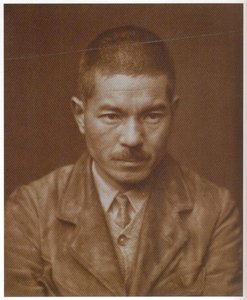
Tomimoto Kenkichi
1886 - 1963 , Japan
Quick Facts
- Artistic Movement Or Style: Traditional Japanese techniques; lacquerware & ceramics
- Artists Or Movements Influenced By This Artist: ['Modern Japanese Ceramics']
- Artists Who Influenced This Artist: ['Otake Chikuha']
- Date Of Birth: June 5, 1886
- Date Of Death: June 8, 1963
- Full Name: Tomimoto Kenkichi
- Nationality: Japanese
- Notable Artworks: ['Kingin-sai kazari tsubo']
- Place Of Birth: Nara, Japan
Related Articles
The Alchemy of Clay: A Collector's Guide to the Mastery, Texture, and Timeless Form of Ceramic Art
Discover the profound beauty of ceramic art. Our expert guide explores the alchemy of clay, texture, and glaze, offering collectors deep insights into mastering earth and fire to create timeless, sculptural masterpieces for any curated collection.

Azure Visions: Exploring Representations of the Blue Dress in Western Art History
Explore the rich history of the blue dress in Western art! Discover its symbolism, from Renaissance masterpieces to modern interpretations by artists like Martin & Schiele. Uncover cultural meanings and artistic techniques.
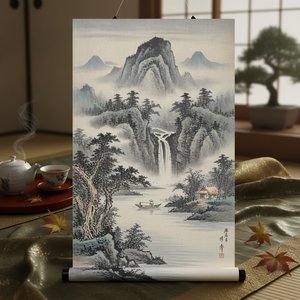
Serenity on Canvas: A Guide to the Timeless Beauty of Japanese Landscape Painting
Discover the serene beauty of Japanese landscape painting. From Hokusai's iconic woodblock prints to meditative sumi-e ink washes, explore a visual journey through the 'floating world' and learn how to bring this timeless Zen aesthetic into your modern home decor.

Slate Blue Masterpieces: 10 Iconic Paintings & Timeless Home Decor Ideas
Immerse yourself in the captivating world of slate blue! Explore 10 iconic paintings by Monet, Van Gogh & Renoir. Discover their stories, techniques & find museum-quality art reproductions for your home at .
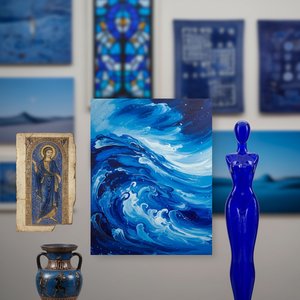
The Allure of Azure: Exploring the Symbolic & Aesthetic Depths of Blue in Art History
Explore the rich history of blue in art! Discover its symbolism, from ancient pigments to modern masterpieces by Kandinsky & Seurat. Uncover the psychological impact and cultural meanings behind this captivating hue.