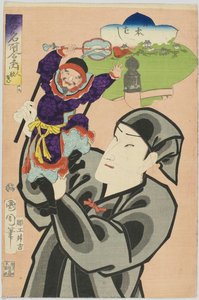
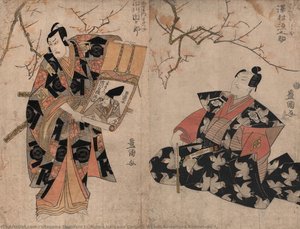
![[mitate] Actors In The Evening, Returning To The Dressing Room — Toyohara Kunichika](/media/artworks/images-full/e7/26/e72627dc56e897cc13e71115de213fdb.jpg)
 Preview
 Send
Send Share
Share
 Details

 Download
 Similars
 X-Ray
X-Ray Diaporama
[Mitate] Actors in the evening, returning to the dressing room
 Woodblock Print
- Ukiyo-e
 1865
1865- 19th Century
 34.0 x 23.0 cm
 The Art Museum RIGA BOURSE
 Read More
Giclée / Art Print
Museum-quality giclée or canvas print with fast production and flexible finish options. ( Buy Hand Made Painting Buy Image)




P118B $10

P118H $10

P118W $10

P438Z $10

P508JH $12

P508YH $12

P805H $10

P805Z $10

P919BZ $10

P919G $10

P919XJ $10

P959ZH $10

P968JZ $12

W106C $8

W218G $10

W218JH $8

W218Y $10

W307PJ $10

W316G $10

W316PJ $8

W316Y $10

W398PJ $8

W4111J $10

W500HY $15

W500JH $15

W692G $12

W849H $8

W940BG $15

W953PJ $8




Pick from our preset sizes that match the artwork's original proportions.

You may enter your own dimensions to fit a specific frame or space. If your selected size does not match the original image's proportions, we will either crop the artwork or extend the image with a mirrored or solid-fill edge. A digital mockup will be sent for your approval before production begins.
Please note that the on-screen preview does not reflect the actual cropping or extension. Only the mockup will accurately show the final composition.
While custom sizes are available, we recommend selecting a dimension from the predefined list to preserve the original proportions.
Worldwide Delivery () in 2 weeks instead of standard 4/5 weeks. (22 August)

Free Worldwide Express Shipping

High-Quality Linen Canvas

Full Shipping Insurance

Customs Tax Refund Guarantee

True Color Matching Guarantee

60-Day Return Policy (Defects Only)

100% Money-Back Guarantee

Bulk Discount Offer
 Glass option is only available in size under 110 CM

[Mitate] Actors in the evening, returning to the dressing room
Giclée / Art Print
Reproduction Size
-


Total Price
$ 63
Collectible Description
A Glimpse Behind the Kabuki Curtain
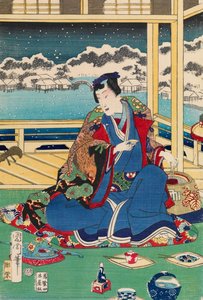
In the vibrant, flickering world of nineteenth-century Japan, few things captured the public imagination quite like the electric energy of the Kabuki theater. Toyohara Kunichika, a master of the ukiyo-e genre, possessed a rare, intimate connection to this theatrical universe. His 1865 masterpiece, [Mitate] Actors in the evening, returning to the dressing room, serves as more than just a mere depiction; it is a voyeuristic window into the private moments of stardom. Through his skilled brush and woodblock technique, Kunichika invites us to step away from the brightly lit stage and follow the performers into the quiet, reflective atmosphere of the dressing rooms as the evening concludes.
The composition centers on a profound inter-human connection, capturing a moment of repose between the legendary young actor Kawarazaki Gonjūrō I—who would later ascend to the greatness of Ichikawa Danjūrō IX—and Nakamura Ganpachi. As they transition from their larger-than-life stage personas back to their private selves, there is a palpable sense of camaraderie and shared history. The presence of an okuri, or accompanist, adds a layer of social realism, grounding the scene in the authentic daily rhythms of the theater profession. Kunichika’s ability to balance these figures within the frame demonstrates his exceptional eye for human relationships, turning a simple moment of transition into a profound study of companionship.
Mastery of Color and Ukiyo-e Tradition
Technically, this work is a triumph of the late Edo period's woodblock printing tradition. Kunichika utilizes a rich, evocative palette, dominated by deep, elegant blues that evoke the cooling twilight of an evening performance. This atmospheric backdrop provides a striking contrast to the intricate patterns and textures of the actors' traditional robes. The artist’s mastery is evident in the way he renders the heavy fabrics and the subtle interplay of light and shadow, which lends a three-dimensional quality to the figures despite the inherently flat nature of the medium.
For the discerning collector or interior designer, this piece offers an unparalleled sense of historical depth and cultural sophistication. The artwork does not merely decorate a space; it narrates a story of a bygone era, bridging the transition between the Edo and Meiji periods. Its balanced composition and serene yet emotionally resonant atmosphere make it a versatile centerpiece for any curated collection. Whether placed in a contemporary setting to provide a touch of classical elegance or integrated into a traditional gallery arrangement, this reproduction brings the timeless allure of Japanese theatrical history into the modern home.
Related Artworks
Artist Biography
early life and training
toyohara kunichika, a renowned japanese woodblock print artist, was born on june 30, 1835. recognized for his exceptional talent at a young age, he became a student of utagawa kunisada, tokyo's leading print maker, at the age of thirteen.artistic style and themes
kunichika's deep understanding of kabuki drama led to his primary production of yakusha-e, woodblock prints of kabuki actors and scenes from popular plays. additionally, he portrayed women deemed beautiful (bijinga), contemporary social life, and a few landscapes and historical scenes.- notable works:
- the actor's portrait (1880) - a fine example of kunichika's yakusha-e style.
- beautiful woman in a brocade robe (1890) - showcase of his bijinga art.
career and legacy
kunichika successfully worked during the edo period, carrying those traditions into the meiji period. his contemporaries and modern art historians view this as a significant achievement during a transitional period of great social and political change in japan's history.- key contributions:
- preservation of traditional japanese print-making techniques.
- influence on the development of modern japanese art.
resources
for more information on toyohara kunichika and his works, visit:- toyohara kunichika's profile on ArtsDot.com
- the kanō school style art movement - understand the context of japanese art during kunichika's time.
- shūsei's profile - explore another influential japanese artist from a different period.
conclusion
toyohara kunichika remains an important figure in the history of japanese art, particularly in the realm of woodblock prints. his dedication to preserving traditional techniques while adapting to changing social and political landscapes has left a lasting impact on modern japanese art.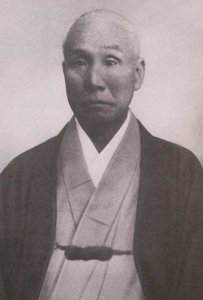
Toyohara Kunichika
1835 - 1900 , Japan
Quick Facts
- Artistic Movement Or Style: Ukiyo-e (Yakusha-e, Bijinga)
- Artists Or Movements Influenced By This Artist: ['Meiji Ukiyo-e']
- Artists Who Influenced This Artist:
- Utagawa Kunisada
- Toyohara Chikanobu
- Date Of Birth: June 30, 1835
- Date Of Death: 1900
- Full Name: Toyohara Kunichika
- Nationality: Japanese
- Notable Artworks:
- The Actor's Portrait
- Beautiful Woman in a Brocade Robe
- Place Of Birth: Tokyo, Japan
Related Articles

Hokusai's Masterpieces: 25 Iconic Prints & Paintings for Art Lovers | ArtsDot
Journey through Katsushika Hokusai’s 25 most iconic artworks, including *The Great Wave*. Explore the ukiyo-e master's history, style & timeless Japanese woodblock prints. Find museum-quality reproductions for your home at ArtsDot.com.
Tōshūsai Sharaku: A Fleeting Glimpse into Edo Period Kabuki – Life, Art, and the Enigma of a Ukiyo-e Master
Explore the captivating world of Tōshūsai Sharaku, the enigmatic Edo period ukiyo-e master. Discover his iconic Kabuki actor portraits and unravel the mystery behind this fleeting artistic genius. Learn about his unique style & lasting legacy.
Ukiyo-e: Exploring Japan's Floating World & Enduring Artistic Legacy
Explore the captivating world of Ukiyo-e – Japan's iconic woodblock prints! Discover masters like Hokusai & Hiroshige, learn about Edo period culture, and find expert art collecting guidance at ArtsDot.
Floating World: The Captivating Art and Legacy of Japanese Ukiyo-e
Explore the profound beauty of Japanese Ukiyo-e. Discover the history, masters like Hokusai, and the enduring legacy of the 'Floating World' through an expert art-historical lens.
The Enduring Legacy of Woodblock Printmaking: Technique, History & Artistic Expression
Explore the rich history of woodblock printmaking – from ancient techniques to Ukiyo-e masterpieces. Discover expert insights on collecting, preserving & appreciating this enduring art form.
![[Mitate] Actors in the evening, returning to the dressing room](/media/artworks/images-thumb/e3/f8/e3f80dd3372e57f69ae58e37c73e0518.jpg)
![Scene from Kabuki plays : [Shinobugaoka Koiwa Kusemono]](/media/artworks/images-thumb/e0/e5/e0e59c94a704e46936dcd30033b71dcd.jpg)