 Preview
 Send
Send Share
Share
 Details

 Download
 Similars
 X-Ray
X-Ray Diaporama
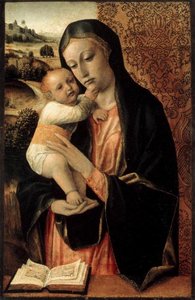
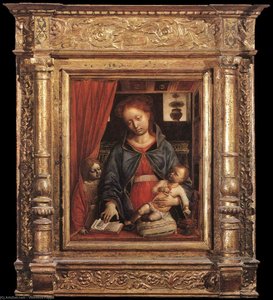
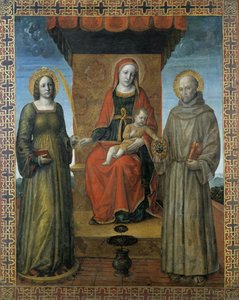
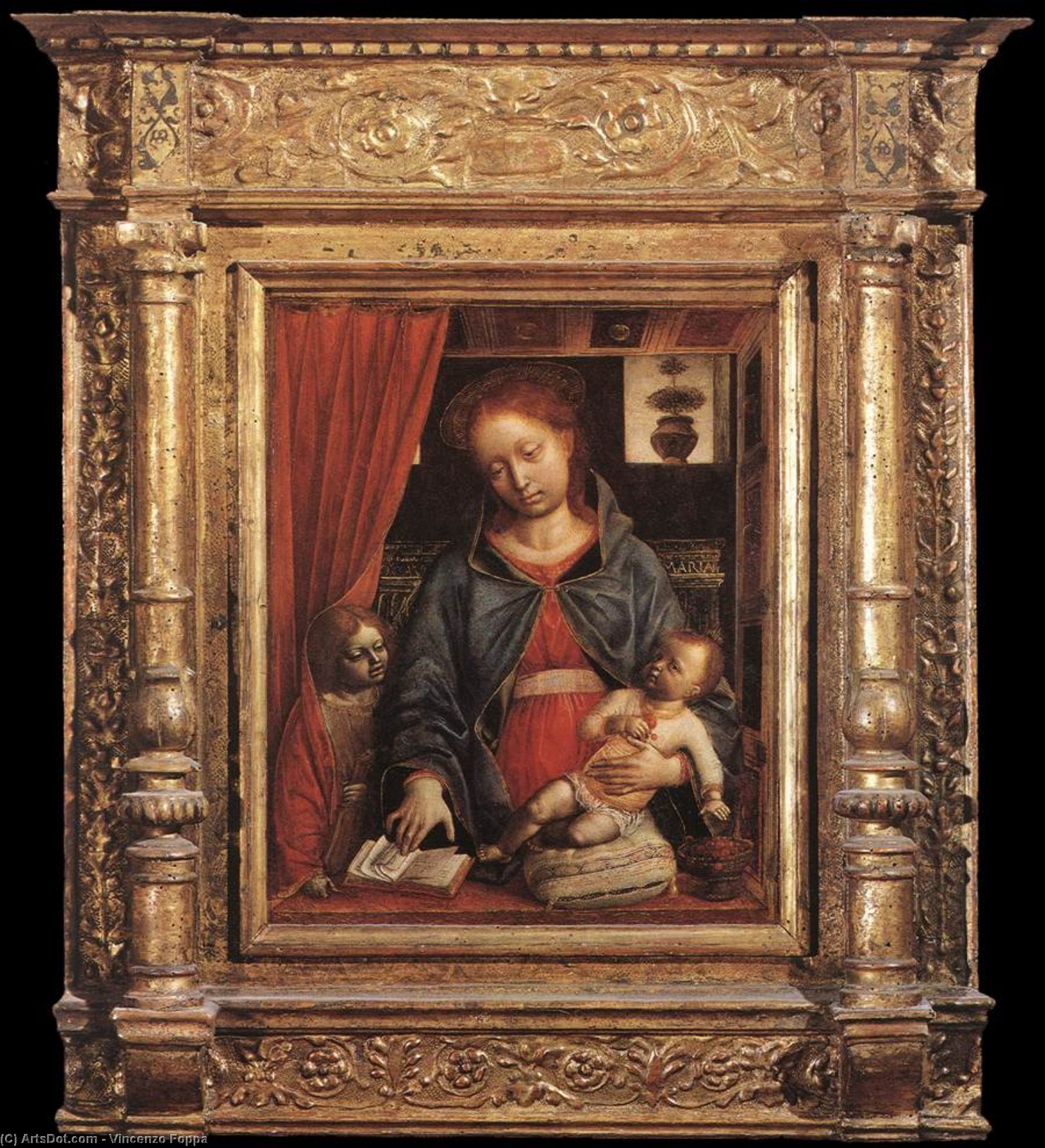
Madonna and Child with an Angel
 Oil On Canvas
- WallArt
- Early Lombard School
 1479
1479- Renaissance
 41.0 x 32.0 cm
 Galleria degli Uffizi
 Read More
Hand Made Oil Reproduction
Hand-painted oil on canvas in your size and frame, made to order by our artists. ( Buy Print Buy Image)




P118B $10

P118H $10

P118W $10

P438Z $10

P508JH $12

P508YH $12

P805H $10

P805Z $10

P919BZ $10

P919G $10

P919XJ $10

P959ZH $10

P968JZ $12

W106C $8

W218G $10

W218JH $8

W218Y $10

W307PJ $10

W316G $10

W316PJ $8

W316Y $10

W398PJ $8

W4111J $10

W500HY $15

W500JH $15

W692G $12

W849H $8

W940BG $15

W953PJ $8




Pick from our preset sizes that match the artwork's original proportions.

You may enter your own dimensions to fit a specific frame or space. If your selected size does not match the original image's proportions, we will either crop the artwork or extend the painting with additional hand-painted elements. A digital mockup will be sent for your approval before production begins.
Please note that the on-screen preview does not reflect the actual cropping or extension. Only the mockup will accurately show the final composition.
While custom sizes are available, we recommend selecting a dimension from the predefined list to preserve the original proportions.
After order, ArtsDot.com team will email client for instructions and provide a mockup preview
Worldwide Delivery () in 3/4 weeks instead of standard 5 weeks. (26 August). No compromise on quality.

Free Worldwide Express Shipping

High-Quality Linen Canvas

Full Shipping Insurance

Customs Tax Refund Guarantee

True Color Matching Guarantee

60-Day Return Policy (Defects Only)

100% Money-Back Guarantee

Bulk Discount Offer
 Glass option is only available in size under 110 CM

Madonna and Child with an Angel
Reproduction Medium
Reproduction Size
-


Total Price
$ 263
Artwork Description
Vincenzo Foppa: A Pioneer of Lombard Renaissance
Vincenzo Foppa stands as an enigmatic figure within the vibrant tapestry of Italian Renaissance art—a master whose legacy resides primarily in scattered frescoes and a handful of surviving panels. Despite the paucity of material evidence, scholars recognize him as the undisputed leader of the Early Lombard School, marking a pivotal moment in artistic innovation during the mid-fifteenth century. Born around 1427 in Bagnolo Mella, near Brescia, Foppa’s formative years were steeped in the Gothic traditions prevalent throughout Lombardy—influences that would subtly reshape his distinctive style and propel him to prominence within the burgeoning humanist movement. His artistic journey commenced under the patronage of the influential Sforza family, Dukes of Milan, establishing a prolific partnership that cemented his reputation as one of the era’s foremost painters.- Early Influences: Foppa's artistic sensibilities were profoundly shaped by masters like Gentile da Fabriano and Piero della Francesca—artists who championed realism and meticulous observation of nature. These influences are particularly evident in his early works, where he skillfully blended Gothic ornamentation with humanist ideals.
- The Lombard School’s Distinctive Style: Foppa spearheaded the development of a unique artistic style characterized by muted colors, flattened perspectives, and an emphasis on decorative elegance—traits that would define the Lombard School for decades to come. This stylistic approach departed from prevailing trends in Florence and Rome, establishing Lombardy as a center of artistic experimentation.
- Notable Commissions: Foppa’s prolific output included monumental frescoes adorning churches throughout Lombardy and Liguria—among them the Cappella Maggiore of Pavia Cathedral and the Palazzo Ducale di Milan. These ambitious projects showcased his mastery of technique and cemented his position as a leading artist of his time.
The Madonna and Child with Angels: A Synthesis of Tradition
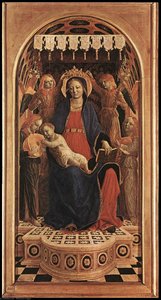
Foppa’s masterpiece, “Madonna and Child with Angels,” exemplifies the stylistic convergence that characterizes the Early Lombard School. Executed around 1479, this panel—now housed in Spedale degli Innocenti, Florence—represents a harmonious blend of Gothic formalism and humanist sensibilities. The composition is strikingly innovative for its time, featuring an open window framing a landscape vista—a deliberate allusion to Flemish painting techniques that prioritized atmospheric perspective and luminous color palettes.- Technique: Foppa employed tempera on panel—a medium known for its durability and ability to achieve subtle tonal gradations—resulting in a remarkably refined surface texture.
- Symbolism: The painting’s iconography is rich with symbolic references—including the depiction of Mary gazing down upon her son, symbolizing divine grace and maternal compassion; the angel on the right, embodying angelic guardianship; and the violin held by the angel, representing musical harmony and spiritual contemplation.
- Emotional Impact: “Madonna and Child with Angels” transcends mere visual representation, conveying a profound sense of serenity and spiritual devotion—a testament to Foppa’s artistic vision and his ability to evoke emotion through carefully crafted imagery.
A Legacy Beyond the Canvas
Despite the scarcity of surviving artworks, Vincenzo Foppa’s influence reverberates throughout Lombard Renaissance art history. He established a new aesthetic paradigm—one that prioritized decorative elegance and atmospheric perspective—inspiring subsequent generations of painters to embrace innovative techniques and explore uncharted artistic territories. His unwavering commitment to humanist ideals—coupled with his masterful command of tempera on panel—solidified his place as one of the era’s most distinguished artists—a figure whose enduring legacy continues to captivate art historians and collectors alike. Additional Resources:- Vincenzo Foppa - Madonna and Child: https://www.metmuseum.org/art/collection/search/436311
- Madonna and Child with an Angel by FOPPA, Vincenzo: https://www.wga.hu/html_m/f/foppa/madchian.html
- Madonna and child with an angel inv. 1890 - Vincenzo Foppa: https://artsandculture.google.com/asset/madonna-and-child-with-an-angel-inv-1890-vincenzo-foppa/9wHTpbUypsnm8Q?hl=en
- Vincenzo Foppa: https://en.wikipedia.org/wiki/Vincenzo_Foppa
Related Artworks
Artist Biography
A Lombard Visionary: The Life and Art of Vincenzo Foppa
Vincenzo Foppa, a name perhaps less instantly recognizable than those of his Renaissance contemporaries, nevertheless stands as a pivotal figure in Italian art history. Born around 1427 in Bagnolo Mella, near Brescia, Foppa emerged as the leading light of the early Lombard school of painting, forging a distinctive style that blended Gothic traditions with burgeoning humanist ideals. His career unfolded primarily under the patronage of the powerful Sforza family, Dukes of Milan, and his influence resonated throughout Lombardy and Liguria before he returned to his native Brescia for his final years, passing away in 1515. While the surviving body of work is relatively small—a lamentable consequence of time and circumstance—the impact of Foppa’s artistic vision remains profoundly evident in the subsequent development of painting across Northern Italy.Formative Years and Artistic Pilgrimage
The art scene in Brescia during Foppa's youth was not particularly vibrant, necessitating a search for training elsewhere. The precise details of his apprenticeship remain shrouded in some mystery, but it’s clear he embarked on an artistic pilgrimage to absorb the prevailing styles and techniques of the era. Early influences are readily apparent in his work: the delicate lyricism of Gentile da Fabriano's frescoes in Brescia’s Broletto Chapel, and the refined elegance of Jacopo Bellini’s woven *Annunciation*. The latter artist appears to have exerted a particularly strong pull, with some scholars suggesting Foppa may even have been directly apprenticed to him. Other potential mentors include Bonifacio Bembo, while speculation also points towards early training in Padua under Francesco Squarcione. However, his earliest works reveal stylistic affinities with Pisanello and Gentile da Fabriano, leading many to believe that formal instruction likely took place in Verona—a city then flourishing as a center of artistic innovation. This period of absorption and experimentation laid the foundation for Foppa’s unique synthesis of diverse influences.The Sforza Patronage and Lombard Innovations
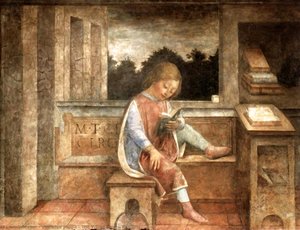
Foppa's fortunes dramatically shifted when he came to the attention of Duke Francesco Sforza in Pavia around 1458. His skills quickly secured commissions, including a prestigious project in Genoa—frescoes for the Chapel of St. John the Baptist in the cathedral, sadly lost during 16th-century renovations. A glowing letter of recommendation from Sforza opened doors to further opportunities, and in 1463, Foppa was summoned to Milan itself. Here, he undertook significant projects such as frescoes for the portico of the new Ospedale Maggiore and a series of elaborate decorations within the Medici Bank of Milan. These latter works are particularly noteworthy, depicting eight Roman emperors—including a detailed sketch of Trajan—alongside a striking portrait of Francesco Sforza and his family. It is during this period that Foppa truly established the hallmarks of the Lombard school. His paintings began to exhibit a distinctive grayish tonality in skin tones, a characteristic that would become widely imitated by subsequent generations of artists. He masterfully blended Gothic elegance with emerging Renaissance principles of perspective and naturalism, creating compositions that were both visually captivating and intellectually engaging. The Young Cicero Reading, the sole surviving secular fragment from the Medici Bank frescoes—now housed in the Wallace Collection in London—exemplifies this synthesis, showcasing Foppa’s ability to convey psychological depth and narrative complexity.Legacy and Historical Significance
Despite the loss of many of his works, Vincenzo Foppa's influence on Lombard painting was profound. He established a regional style that served as a bridge between the late Gothic period and the High Renaissance. His emphasis on realistic depiction, coupled with a refined sense of color and composition, paved the way for artists such as Vincenzo Civerchio and Girolamo Romanino. Giorgio Vasari, the celebrated art historian, recognized Foppa as one of the greatest painters of his era—a testament to his skill and reputation during his lifetime. Foppa’s artistic legacy extends beyond mere stylistic imitation. He demonstrated a remarkable ability to adapt and synthesize diverse influences, creating a uniquely Lombard aesthetic that reflected the cultural and political landscape of his time. His work embodies a spirit of innovation and experimentation, making him not only a master craftsman but also a visionary artist who helped shape the course of Italian Renaissance painting. Vincenzo Foppa, though perhaps less celebrated than some of his more famous contemporaries, remains an essential figure for understanding the rich tapestry of 15th-century art in Northern Italy.
Vincenzo Foppa
1427 - 1515 , Italy
Quick Facts
- Artistic Movement Or Style: Early Renaissance
- Artists Or Movements Influenced By This Artist:
- Vincenzo Civerchio
- Girolamo Romanino
- Artists Who Influenced This Artist:
- Jacopo Bellini
- Gentile da Fabriano
- Date Of Birth: 1427
- Date Of Death: 1515
- Full Name: Vincenzo Foppa
- Nationality: Italian
- Notable Artworks:
- Madonna and Child
- Crucifixion (1456)
- The Young Cicero Reading
- Place Of Birth: Bagnolo Mella, Italy
Related Articles
Raphael's Masterpieces: 25 Iconic Paintings & Renaissance Art for Your Home
Explore 25 breathtaking Raphael paintings! Journey through the Italian Renaissance with masterpieces like 'School of Athens' & iconic Madonnas. Find museum-quality art reproductions and elevate your home decor on ArtsDot.com.
Uffizi's 25 Masterpieces: Renaissance Art & Timeless Decor Inspiration
Journey through the Uffizi Gallery's 25 most iconic Renaissance artworks! Explore Botticelli, Leonardo da Vinci & Michelangelo’s masterpieces. Find museum-quality art reproductions and curated decor ideas to bring timeless Italian beauty into your home. Discover all masterpieces on ArtsDot.com
Mario Sironi: A Poetic of Modern Italian Identity Through Symbolism & Social Commentary
Explore the profound works of Mario Sironi, a key figure in Italian Modernism. Discover his evolution from Futurism to Metaphysical painting and his powerful social commentary. Learn about his legacy at ArtsDot.
Early Renaissance Masters: 10 Paintings That Changed Art History |
Journey through the Early Renaissance! Explore 10 iconic paintings by Botticelli, Leonardo da Vinci & Michelangelo. Discover their stories, techniques & lasting impact. Find museum-quality art reproductions and elevate your home decor with .
Botticelli's Masterpieces: Explore 25 Iconic Renaissance Paintings | ArtsDot
Journey through Botticelli's world with 25 iconic Renaissance paintings. Explore 'Birth of Venus,' 'Primavera,' and more—stories, techniques & timeless beauty. Find museum-quality art reproductions for your home at ArtsDot.com.