 Preview
 Send
Send Share
Share
 Details

 Download
 Similars
 X-Ray
X-Ray Diaporama
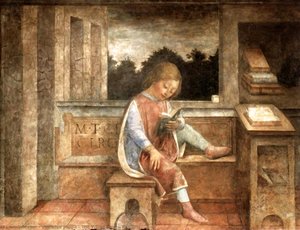
The Young Cicero Reading
 Acrylic On Canvas
- WallArt
- Early Lombard School
 1464
1464 101.0 x 143.0 cm
 Wallace Collection
 Read More
Hand Made Oil Reproduction
Hand-painted oil on canvas in your size and frame, made to order by our artists. ( Buy Print Buy Image)




P118B $10

P118H $10

P118W $10

P438Z $10

P508JH $12

P508YH $12

P805H $10

P805Z $10

P919BZ $10

P919G $10

P919XJ $10

P959ZH $10

P968JZ $12

W106C $8

W218G $10

W218JH $8

W218Y $10

W307PJ $10

W316G $10

W316PJ $8

W316Y $10

W398PJ $8

W4111J $10

W500HY $15

W500JH $15

W692G $12

W849H $8

W940BG $15

W953PJ $8




Pick from our preset sizes that match the artwork's original proportions.

You may enter your own dimensions to fit a specific frame or space. If your selected size does not match the original image's proportions, we will either crop the artwork or extend the painting with additional hand-painted elements. A digital mockup will be sent for your approval before production begins.
Please note that the on-screen preview does not reflect the actual cropping or extension. Only the mockup will accurately show the final composition.
While custom sizes are available, we recommend selecting a dimension from the predefined list to preserve the original proportions.
After order, ArtsDot.com team will email client for instructions and provide a mockup preview
Worldwide Delivery () in 3/4 weeks instead of standard 5 weeks. (16 August). No compromise on quality.

Free Worldwide Express Shipping

High-Quality Linen Canvas

Full Shipping Insurance

Customs Tax Refund Guarantee

True Color Matching Guarantee

60-Day Return Policy (Defects Only)

100% Money-Back Guarantee

Bulk Discount Offer
 Glass option is only available in size under 110 CM

The Young Cicero Reading
Reproduction Medium
Reproduction Size
-


Total Price
$ 263
Artwork Description
A Glimpse into the Heart of the Early Italian Renaissance
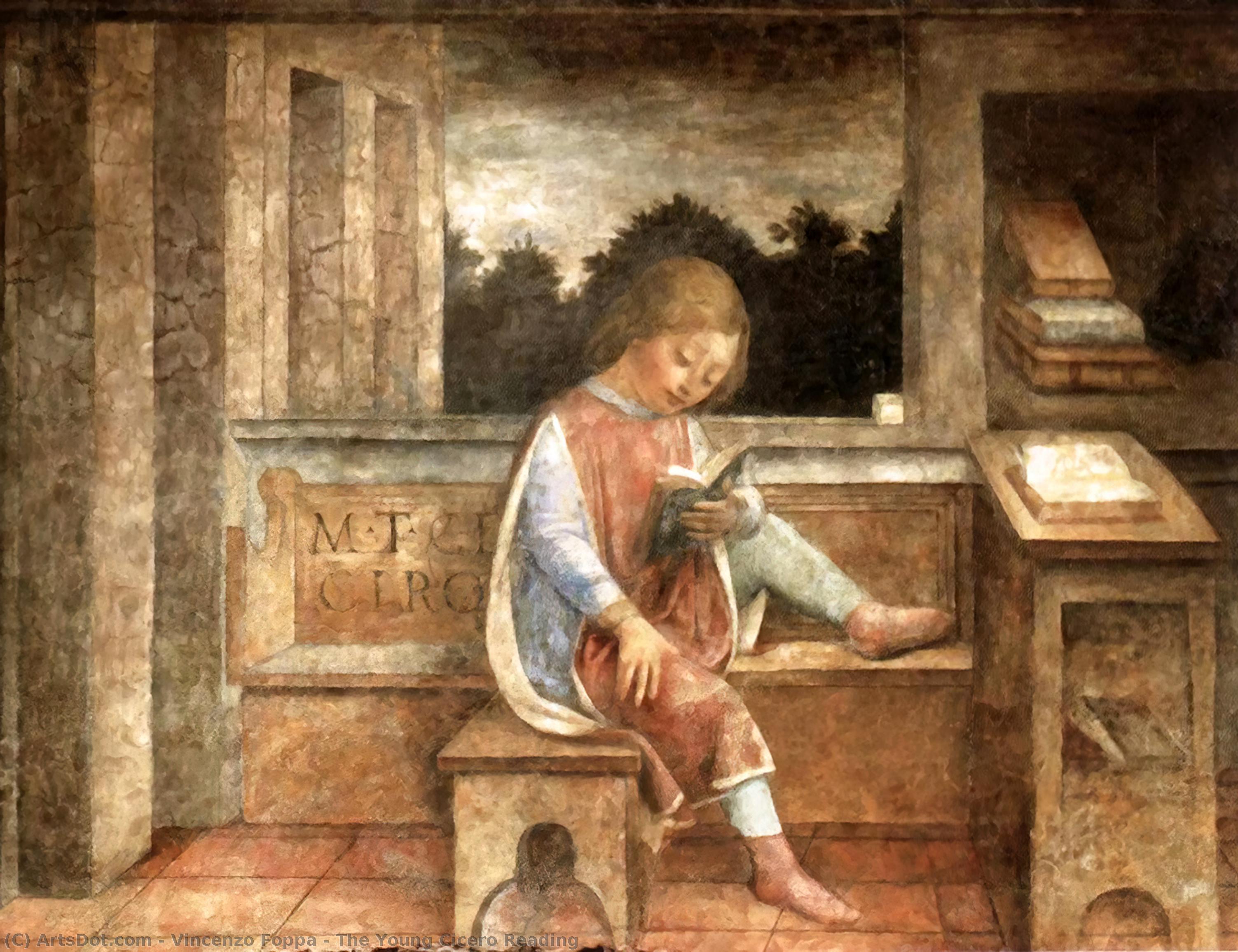
Vincenzo Foppa’s “The Young Cicero Reading” isn't merely a depiction of a boy absorbed in a book; it’s a carefully constructed tableau brimming with symbolism and reflecting the burgeoning humanist ideals that defined the early 15th century. Painted around 1464, this fresco fragment—once adorning the courtyard of the Palazzo Mediceo in Milan—offers a captivating window into a world where classical learning was being meticulously resurrected and woven back into the fabric of contemporary life. The painting’s enduring appeal lies not just in its aesthetic beauty but also in the profound questions it raises about education, ambition, and the very nature of intellectual pursuit.
The Subject: A Young Scholar's Moment
At first glance, the scene is deceptively simple. A young boy, no older than twelve, sits on a wooden bench beneath a window, his gaze fixed intently upon an open book. The figure, identified as Cicero – though the identification remains debated by scholars – embodies youthful curiosity and a deep engagement with knowledge. The choice of Cicero himself—the renowned Roman orator, statesman, and philosopher—is deliberate. He represents the pinnacle of classical learning, a model for aspiring intellectuals throughout the Renaissance. Foppa masterfully captures the boy’s posture: relaxed yet focused, suggesting an immersion in thought that transcends mere academic study. The inclusion of two other figures – a standing man and another seated – adds layers of narrative complexity, hinting at a broader social context where learning was valued and nurtured.
Technique and Style: Lombard School Nuances
Foppa’s style is firmly rooted in the Early Lombard School of painting, a regional movement that flourished in Northern Italy during this period. This artistic tradition, influenced by the Venetian masters Bellini and Mantegna, is characterized by its rich color palettes, delicate modeling, and a distinctive use of light and shadow. Notice how Foppa employs a muted, earthy palette—ochres, browns, and greens—to create a sense of quiet contemplation. The fresco’s surface is remarkably smooth, achieved through meticulous layering of plaster, a technique typical of the Lombard School. The figures are rendered with a subtle realism, yet retain an idealized quality that reflects the humanist emphasis on beauty and proportion. The background landscape, though simplified, provides a vital connection to the natural world – a key element in Renaissance thought.
Symbolism and Historical Context: Echoes of Rome
Beyond its immediate subject matter, “The Young Cicero Reading” is laden with symbolic meaning. The book itself represents knowledge, wisdom, and the transformative power of learning. The window behind the boy symbolizes enlightenment and access to a wider world of ideas. The inscription on the bench – "M. T. CE CIRO" – further reinforces the connection to the classical past. It’s important to remember that during the 15th century, there was a fervent revival of interest in Roman culture—a movement known as Humanism. The rediscovery and study of ancient texts were seen as essential for shaping virtuous citizens and fostering intellectual progress. The fresco's placement within the courtyard of the Palazzo Mediceo, a powerful Medici family seat, underscores this connection to power and patronage – the Medicis were ardent supporters of the arts and sciences.
Emotional Resonance: A Portrait of Intellectual Ambition
Ultimately, “The Young Cicero Reading” is more than just a historical artifact; it’s a poignant portrait of intellectual ambition. It captures a moment of intense concentration, suggesting the boundless potential within a young mind eager to absorb knowledge and shape its own destiny. The painting evokes a sense of quiet contemplation, inviting viewers to reflect on their own pursuit of wisdom and understanding. It serves as a timeless reminder that the seeds of progress are often sown in the minds of those who dare to read, question, and strive for excellence.
Related Artworks
Artist Biography
A Lombard Visionary: The Life and Art of Vincenzo Foppa
Vincenzo Foppa, a name perhaps less instantly recognizable than those of his Renaissance contemporaries, nevertheless stands as a pivotal figure in Italian art history. Born around 1427 in Bagnolo Mella, near Brescia, Foppa emerged as the leading light of the early Lombard school of painting, forging a distinctive style that blended Gothic traditions with burgeoning humanist ideals. His career unfolded primarily under the patronage of the powerful Sforza family, Dukes of Milan, and his influence resonated throughout Lombardy and Liguria before he returned to his native Brescia for his final years, passing away in 1515. While the surviving body of work is relatively small—a lamentable consequence of time and circumstance—the impact of Foppa’s artistic vision remains profoundly evident in the subsequent development of painting across Northern Italy.Formative Years and Artistic Pilgrimage
The art scene in Brescia during Foppa's youth was not particularly vibrant, necessitating a search for training elsewhere. The precise details of his apprenticeship remain shrouded in some mystery, but it’s clear he embarked on an artistic pilgrimage to absorb the prevailing styles and techniques of the era. Early influences are readily apparent in his work: the delicate lyricism of Gentile da Fabriano's frescoes in Brescia’s Broletto Chapel, and the refined elegance of Jacopo Bellini’s woven *Annunciation*. The latter artist appears to have exerted a particularly strong pull, with some scholars suggesting Foppa may even have been directly apprenticed to him. Other potential mentors include Bonifacio Bembo, while speculation also points towards early training in Padua under Francesco Squarcione. However, his earliest works reveal stylistic affinities with Pisanello and Gentile da Fabriano, leading many to believe that formal instruction likely took place in Verona—a city then flourishing as a center of artistic innovation. This period of absorption and experimentation laid the foundation for Foppa’s unique synthesis of diverse influences.The Sforza Patronage and Lombard Innovations
Foppa's fortunes dramatically shifted when he came to the attention of Duke Francesco Sforza in Pavia around 1458. His skills quickly secured commissions, including a prestigious project in Genoa—frescoes for the Chapel of St. John the Baptist in the cathedral, sadly lost during 16th-century renovations. A glowing letter of recommendation from Sforza opened doors to further opportunities, and in 1463, Foppa was summoned to Milan itself. Here, he undertook significant projects such as frescoes for the portico of the new Ospedale Maggiore and a series of elaborate decorations within the Medici Bank of Milan. These latter works are particularly noteworthy, depicting eight Roman emperors—including a detailed sketch of Trajan—alongside a striking portrait of Francesco Sforza and his family. It is during this period that Foppa truly established the hallmarks of the Lombard school. His paintings began to exhibit a distinctive grayish tonality in skin tones, a characteristic that would become widely imitated by subsequent generations of artists. He masterfully blended Gothic elegance with emerging Renaissance principles of perspective and naturalism, creating compositions that were both visually captivating and intellectually engaging. The Young Cicero Reading, the sole surviving secular fragment from the Medici Bank frescoes—now housed in the Wallace Collection in London—exemplifies this synthesis, showcasing Foppa’s ability to convey psychological depth and narrative complexity.Legacy and Historical Significance
Despite the loss of many of his works, Vincenzo Foppa's influence on Lombard painting was profound. He established a regional style that served as a bridge between the late Gothic period and the High Renaissance. His emphasis on realistic depiction, coupled with a refined sense of color and composition, paved the way for artists such as Vincenzo Civerchio and Girolamo Romanino. Giorgio Vasari, the celebrated art historian, recognized Foppa as one of the greatest painters of his era—a testament to his skill and reputation during his lifetime. Foppa’s artistic legacy extends beyond mere stylistic imitation. He demonstrated a remarkable ability to adapt and synthesize diverse influences, creating a uniquely Lombard aesthetic that reflected the cultural and political landscape of his time. His work embodies a spirit of innovation and experimentation, making him not only a master craftsman but also a visionary artist who helped shape the course of Italian Renaissance painting. Vincenzo Foppa, though perhaps less celebrated than some of his more famous contemporaries, remains an essential figure for understanding the rich tapestry of 15th-century art in Northern Italy.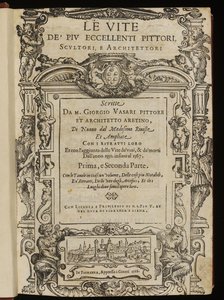
Vincenzo Foppa
1427 - 1515 , Italy
Quick Facts
- Artistic Movement Or Style: Early Renaissance
- Artists Or Movements Influenced By This Artist:
- Vincenzo Civerchio
- Girolamo Romanino
- Artists Who Influenced This Artist:
- Jacopo Bellini
- Gentile da Fabriano
- Date Of Birth: 1427
- Date Of Death: 1515
- Full Name: Vincenzo Foppa
- Nationality: Italian
- Notable Artworks:
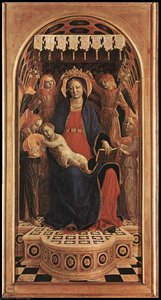
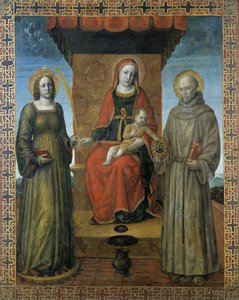
- Madonna and Child
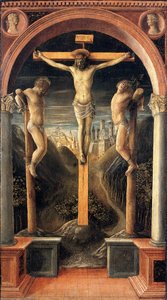
- Crucifixion (1456)
- The Young Cicero Reading
- Place Of Birth: Bagnolo Mella, Italy
Related Articles

The Fresco as Family Legacy: Preserving Heritage Through Wall Art
Explore the rich history & enduring legacy of fresco painting. Discover how to preserve family heritage through stunning wall art. Expert insights & restoration guidance.

The Enduring Legacy of Fresco Painting: Techniques, History & Contemporary Relevance
Explore the rich history & enduring artistry of fresco painting – from Giotto to Michelangelo! Discover techniques, conservation efforts, & modern applications. Learn how ArtsDot brings this timeless art form to your home.

The Enduring Legacy of Fresco: Technique, History & Artistic Expression Across Cultures
Explore the rich history & enduring legacy of fresco painting! Discover ancient techniques, Giotto's masterpieces, and modern applications. Expert insights for art lovers & professionals.
Art That Lives With You: The Emotional Power of a Custom Interior Fresco
Discover the emotional power & timeless beauty of custom interior frescoes. Explore history, design tips & expert guidance from – creating lasting legacies.
The Enduring Legacy of Fresco: Technique, History & Artistic Expression
Explore the rich history & enduring artistry of fresco painting. Discover techniques from Giotto to Michelangelo, conservation efforts, & modern applications. Learn how ArtsDot brings this timeless art form to your home.