 Preview
 Send
Send Share
Share
 Details

 Download
 Similars
 X-Ray
X-Ray Diaporama
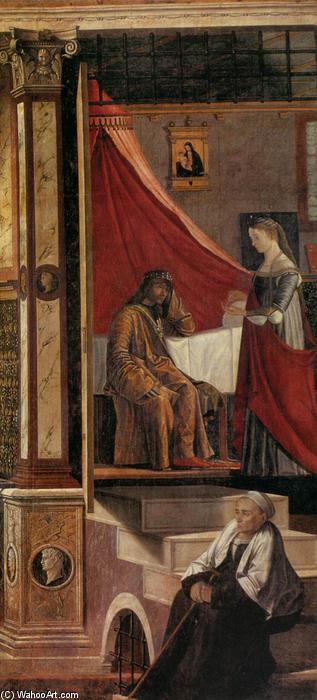
Arrival of the English Ambassadors (detail) (9)


 Read More
Giclée / Art Print
Museum-quality giclée or canvas print with fast production and flexible finish options. ( Buy Hand Made Painting Buy Image)




P118B $10

P118H $10

P118W $10

P438Z $10

P508JH $12

P508YH $12

P805H $10

P805Z $10

P919BZ $10

P919G $10

P919XJ $10

P959ZH $10

P968JZ $12

W106C $8

W218G $10

W218JH $8

W218Y $10

W307PJ $10

W316G $10

W316PJ $8

W316Y $10

W398PJ $8

W4111J $10

W500HY $15

W500JH $15

W692G $12

W849H $8

W940BG $15

W953PJ $8




Pick from our preset sizes that match the artwork's original proportions.

You may enter your own dimensions to fit a specific frame or space. If your selected size does not match the original image's proportions, we will either crop the artwork or extend the image with a mirrored or solid-fill edge. A digital mockup will be sent for your approval before production begins.
Please note that the on-screen preview does not reflect the actual cropping or extension. Only the mockup will accurately show the final composition.
While custom sizes are available, we recommend selecting a dimension from the predefined list to preserve the original proportions.
Worldwide Delivery () in 2 weeks instead of standard 4/5 weeks. (4 September)

Free Worldwide Express Shipping

High-Quality Linen Canvas

Full Shipping Insurance

Customs Tax Refund Guarantee

True Color Matching Guarantee

60-Day Return Policy (Defects Only)

100% Money-Back Guarantee

Bulk Discount Offer
 Glass option is only available in size under 110 CM

Arrival of the English Ambassadors (detail) (9)
Giclée / Art Print
Reproduction Size
-


Total Price
$ 63
A Moment Frozen in Venetian Splendor: Vittore Carpaccio’s Arrival of the English Ambassadors
The painting “Arrival of the English Ambassadors” by Vittore Carpaccio, completed in 1495, stands as a testament to the enduring legacy of Venetian Gothic art. More than just a depiction of an historical event – the arrival of diplomatic envoys from England – it’s a meticulously crafted tableau brimming with symbolic resonance and executed with remarkable artistic precision that continues to captivate viewers centuries later. Located within the Gallerie dell'Accademia in Venice, Italy, this masterpiece invites us into a serene interior space dominated by architectural grandeur and illuminated by diffused light, capturing a pivotal moment of political significance.The Scene Unfolds: Narrative Detail and Composition
Carpaccio’s genius lies not merely in accurate representation but in his ability to convey emotion and narrative complexity within a relatively restrained visual vocabulary. The painting portrays three figures engaged in conversation – a woman dressed in white robes adorned with a scarlet cloak, seated at a table alongside a man wearing a brown robe; and a kneeling woman assisting him. This tripartite arrangement establishes a dynamic tension between formality and intimacy, reflecting the anxieties surrounding diplomatic negotiations during the Renaissance. Each character’s posture speaks volumes about their role and status within the scene, subtly guiding the viewer's gaze across the composition. The careful positioning of columns and architectural elements reinforces the sense of solemnity and importance associated with the occasion.A Gothic Echo: Artistic Style and Technique
Carpaccio’s style firmly anchors itself in the traditions of Venetian Gothic art, a reaction against the burgeoning humanist ideals prevalent elsewhere in Europe. Unlike the vibrant colors and expressive gestures characteristic of Florentine Renaissance painting, Carpaccio favors muted tones—primarily ochre, brown, and grey—creating an atmosphere of contemplative stillness. His technique is characterized by meticulous detail and painstaking layering of paint – a hallmark of Venetian workshop practices at the time. Observe particularly the subtle gradations of color within the drapery folds and the delicate rendering of facial expressions; these details demonstrate Carpaccio’s dedication to capturing realism without resorting to flamboyant ornamentation. The artist skillfully employs chiaroscuro—the dramatic interplay between light and shadow—to sculpt form and heighten emotional impact, drawing inspiration from Giovanni Bellini's pioneering approach to illumination.Symbolism Within Silence: Interpreting Venetian Ambiguity
Beyond its formal qualities, “Arrival of the English Ambassadors” is laden with symbolic significance. The woman in white represents purity and virtue – a common motif in Venetian art reflecting Christian piety. Her scarlet cloak symbolizes authority and nobility, highlighting the importance of diplomatic representation. The seated man embodies wisdom and deliberation, embodying the burden of decision-making during times of political upheaval. The kneeling woman’s subservient posture underscores the hierarchical structure of Renaissance society. These figures are not merely participants in a conversation; they embody broader concepts of faith, power, and social order—themes that resonate powerfully with viewers even today.Emotional Resonance: Capturing Venetian Atmosphere
Ultimately, Carpaccio succeeds in transporting us back to fifteenth-century Venice, capturing the mood of a city grappling with political uncertainty amidst burgeoning artistic innovation. The painting’s quiet grandeur evokes a sense of solemn contemplation and invites reflection on the complexities of human interaction within a framework of established tradition. It's a piece that speaks not just to the eye but also to the soul—a reminder that art can transcend time, preserving moments of history while simultaneously conveying enduring emotional truths. The subtle luminescence emanating from the scene contributes to its ethereal beauty, mirroring the spiritual fervor characteristic of Venetian Gothic art and cementing Carpaccio’s place as one of Venice's most influential painters.Related Artworks


Artist Biography
early life and training
vittore carpaccio, a prominent italian painter, was born in venice around 1465. he studied under the tutelage of gentile bellini, a renowned artist of the venetian school. this apprenticeship laid the foundation for carpaccio's future success.artistic style and influences
carpaccio's style was characterized by its conservative nature, showing minimal influence from the humanist trends that transformed italian renaissance painting during his lifetime. his work was influenced by antonello da messina's style and early netherlandish art. this unique blend of styles resulted in a distinctive approach to venetian painting.notable works
- the legend of saint ursula, a cycle of nine paintings, is carpaccio's most famous work. this series, now housed in the gallerie dell'accademia, showcases his mastery of narrative painting.
- glory of st. ursula altarpiece (1491) demonstrates carpaccio's skill in capturing light and color, reminiscent of giovanni bellini's style.
- miracle of the relic of the cross at the ponte di rialto (1494) highlights carpaccio's ability to balance composition and narrative.
career highlights and legacy
- carpaccio's principal works were executed between 1490 and 1519, ranking him among the early masters of the venetian renaissance.
- his orientalist style, as seen in st. george baptizing the selenites, reflects a new fascination with the levant.
- carpaccio's work has been somewhat overlooked in comparison to his contemporaries, such as giovanni bellini or giorgione.
references and further reading
discover more about vittore carpaccio and the venetian school on ArtsDot.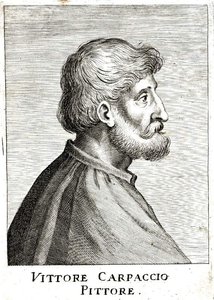
Vittore Carpaccio
1465 - 1526 , Italy
Quick Facts
- Artistic Movement Or Style: Early Venetian Renaissance
- Artists Or Movements Influenced By This Artist: ['Early Netherlandish Painting']
- Artists Who Influenced This Artist:
- Antonello da Messina
- Gentile Bellini
- Date Of Birth: Venice, Italy (c. 1465)
- Date Of Death: 1526
- Full Name: Vittore Carpaccio
- Nationality: Italian
- Notable Artworks:
- The Legend of Saint Ursula
- Glory of St. Ursula Altarpiece
- Miracle of the Relic of the Cross at the Ponte di Rialto
- Place Of Birth: Venice
Related Articles
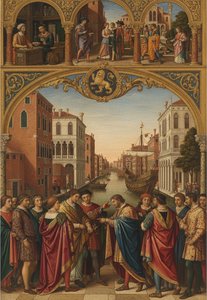
Vittore Carpaccio: Venetian Renaissance Narrative & the Poetics of Detail
Explore the captivating world of Vittore Carpaccio, a master storyteller of the Venetian Renaissance. Discover his intricate details, narrative cycles like 'The Legend of St. Ursula,' and unique artistic style.

Jacopo Tintoretto's Masterpieces: 25 Paintings That Define Venetian Drama | ArtsDot
Explore 25 breathtaking masterpieces by Jacopo Tintoretto, the Venetian master of drama and light. Discover the stories behind iconic Renaissance paintings & find museum-quality art reproductions to elevate your home decor on ArtsDot.com.
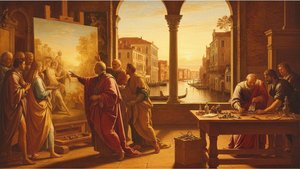
The Golden Light of Innovation: Exploring the Venetian Renaissance Art Movement (1430–1580)
Explore the Golden Age of Venetian art (1430–1580). Discover Giorgione, Titian & Tintoretto's techniques, the 'colorito' revolution, and lasting influence. Expert insights for collectors & enthusiasts.
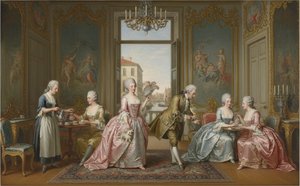
Pietro Longhi's Venetian Scenes: A Study of Rococo Society & Domestic Life
Explore the captivating world of Pietro Longhi's Venetian scenes! Discover insightful analysis of his Rococo masterpieces & social commentary on 18th-century life. Learn about this 'Venetian Hogarth' and his lasting artistic legacy.
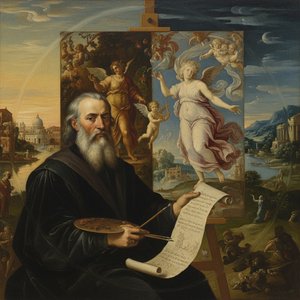
Jacopo Palma il Giovane: A Venetian Master's Poetic Evolution
Explore the captivating world of Jacopo Palma il Giovane, a pivotal Venetian Renaissance master. Discover his unique style, influenced by Titian & Tintoretto, and learn about key works perfect for discerning collectors.