 Preview
 Send
Send Share
Share
 Details

 Download
 Similars
 X-Ray
X-Ray Diaporama
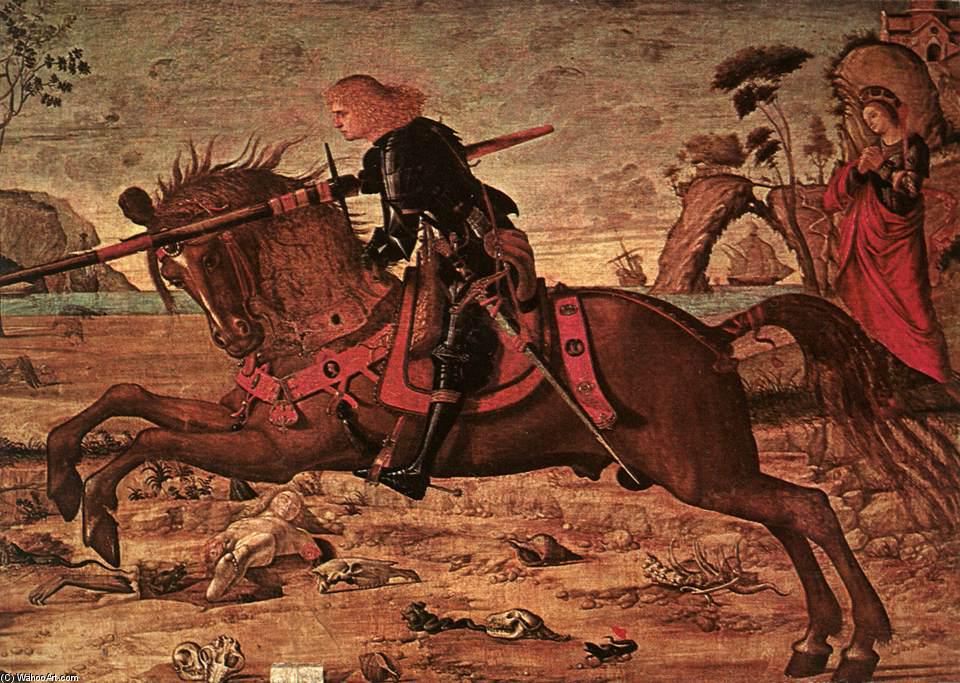
St George and the Dragon (detail)


 Read More
Hand Made Oil Reproduction
Hand-painted oil on canvas in your size and frame, made to order by our artists. ( Buy Print Buy Image)




P118B $10

P118H $10

P118W $10

P438Z $10

P508JH $12

P508YH $12

P805H $10

P805Z $10

P919BZ $10

P919G $10

P919XJ $10

P959ZH $10

P968JZ $12

W106C $8

W218G $10

W218JH $8

W218Y $10

W307PJ $10

W316G $10

W316PJ $8

W316Y $10

W398PJ $8

W4111J $10

W500HY $15

W500JH $15

W692G $12

W849H $8

W940BG $15

W953PJ $8




Pick from our preset sizes that match the artwork's original proportions.

You may enter your own dimensions to fit a specific frame or space. If your selected size does not match the original image's proportions, we will either crop the artwork or extend the painting with additional hand-painted elements. A digital mockup will be sent for your approval before production begins.
Please note that the on-screen preview does not reflect the actual cropping or extension. Only the mockup will accurately show the final composition.
While custom sizes are available, we recommend selecting a dimension from the predefined list to preserve the original proportions.
After order, ArtsDot.com team will email client for instructions and provide a mockup preview
Worldwide Delivery () in 3/4 weeks instead of standard 5 weeks. (16 August). No compromise on quality.

Free Worldwide Express Shipping

High-Quality Linen Canvas

Full Shipping Insurance

Customs Tax Refund Guarantee

True Color Matching Guarantee

60-Day Return Policy (Defects Only)

100% Money-Back Guarantee

Bulk Discount Offer
 Glass option is only available in size under 110 CM

St George and the Dragon (detail)
Reproduction Medium
Reproduction Size
-


Total Price
$ 263
Artwork Description
A Venetian Legend Captured in Color
In the heart of Venice, within the hallowed halls of the Scuola di San Giorgio degli Schiavoni, lies a fragment of a much larger epic. The detail from Vittore Carpaccio’s St George and the Dragon serves as a breathtaking window into the height of the Italian Renaissance. Painted in 1502, this tempera on wood panel is not merely a depiction of a myth, but a visceral experience of movement and triumph. As we gaze upon this specific detail, we are thrust into the heat of battle, where the air seems to vibrate with the energy of a rearing brown horse and the sharp descent of a knight's lance. Carpaccio, a master of the Venetian school, utilizes the unique texture of tempera to create a scene that feels both grounded in reality and elevated by divine purpose.
The composition is a masterclass in dynamic tension. The horse, caught in a moment of powerful agitation on its hind legs, directs our eyes downward toward the defeated beast. The dragon, a creature of emerald scales and a striking red mane, lies coiled and broken, embodying the triumph of good over primordial chaos. This interplay between the vertical strength of St. George and the horizontal exhaustion of the dragon creates a rhythmic flow that guides the viewer through the drama. For the discerning collector or interior designer, this piece offers a profound focal point, bringing a sense of narrative depth and classical grandeur to any sophisticated space.
The Artistry of the Venetian Renaissance
Carpaccio’s technique is deeply rooted in the traditions of his mentor, Gentile Bellini, yet he infused his work with a singular, descriptive clarity. His style, while conservative in its adherence to tradition, possesses an extraordinary attention to detail that borders on the cinematic. The way light catches the metallic sheen of St. George's medieval armor and the subtle shadows within the dragon's scales demonstrates a sophisticated understanding of form and volume. This meticulous approach allows the viewer to appreciate the tactile quality of the scene—one can almost feel the grit of the earth and the heavy breath of the combatants.
Beyond the immediate action, the painting is rich with symbolic layers that would have been deeply resonant to a 16th-century audience. The figures observing from the background—a woman in regal red and a man in scholarly blue—act as witnesses to this moral victory, representing the community's role in upholding justice and faith. For those seeking to adorn their homes with art that inspires contemplation, this reproduction offers more than just aesthetic beauty; it provides a connection to the historical soul of Venice. The vivid palette and the dramatic use of light and shadow make it an ideal centerpiece for a gallery wall or a standalone statement piece in a study, promising to evoke emotions of courage, resilience, and timeless elegance.
Related Artworks



Artist Biography
early life and training
vittore carpaccio, a prominent italian painter, was born in venice around 1465. he studied under the tutelage of gentile bellini, a renowned artist of the venetian school. this apprenticeship laid the foundation for carpaccio's future success.artistic style and influences
carpaccio's style was characterized by its conservative nature, showing minimal influence from the humanist trends that transformed italian renaissance painting during his lifetime. his work was influenced by antonello da messina's style and early netherlandish art. this unique blend of styles resulted in a distinctive approach to venetian painting.notable works
- the legend of saint ursula, a cycle of nine paintings, is carpaccio's most famous work. this series, now housed in the gallerie dell'accademia, showcases his mastery of narrative painting.
- glory of st. ursula altarpiece (1491) demonstrates carpaccio's skill in capturing light and color, reminiscent of giovanni bellini's style.
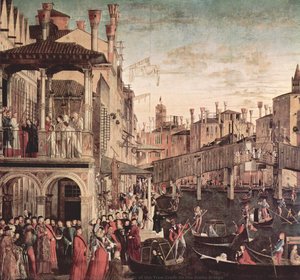
- miracle of the relic of the cross at the ponte di rialto (1494) highlights carpaccio's ability to balance composition and narrative.
career highlights and legacy
- carpaccio's principal works were executed between 1490 and 1519, ranking him among the early masters of the venetian renaissance.
- his orientalist style, as seen in st. george baptizing the selenites, reflects a new fascination with the levant.
- carpaccio's work has been somewhat overlooked in comparison to his contemporaries, such as giovanni bellini or giorgione.
references and further reading
discover more about vittore carpaccio and the venetian school on ArtsDot.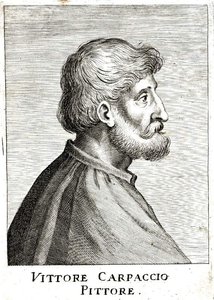
Vittore Carpaccio
1465 - 1526 , Italy
Quick Facts
- Artistic Movement Or Style: Early Venetian Renaissance
- Artists Or Movements Influenced By This Artist: ['Early Netherlandish Painting']
- Artists Who Influenced This Artist:
- Antonello da Messina
- Gentile Bellini
- Date Of Birth: Venice, Italy (c. 1465)
- Date Of Death: 1526
- Full Name: Vittore Carpaccio
- Nationality: Italian
- Notable Artworks:
- The Legend of Saint Ursula
- Glory of St. Ursula Altarpiece
- Miracle of the Relic of the Cross at the Ponte di Rialto
- Place Of Birth: Venice
Related Articles
Verdant Visions: Exploring the Symbolism & Aesthetic Impact of Green in Art History
Explore the rich history & symbolism of green in art! Discover iconic paintings, techniques, and how to bring verdant harmony into your home with ArtsDot's expert guide.
Dark Olive Green Masterpieces: 10 Iconic Paintings & Decor Ideas
Explore 10 iconic paintings where dark olive green reigns supreme! From Van Gogh to Rembrandt, discover art history's most captivating masterpieces & the stories behind them. Find museum-quality reproductions and curated decor ideas at .

Crimson Threads of Narrative: Exploring Symbolism & Representation in Artworks Featuring the Red Dress
Explore the rich symbolism of the red dress in art history! From ancient power displays to iconic portraits like Cézanne’s 'Madame Cezanne', discover the cultural and artistic significance behind this captivating color. Expert analysis & insights.
Chrome Green Masterpieces: 10 Famous Paintings & Their Alluring Hues |
Explore 10 famous paintings where 'Chrome Green' reigns supreme! Discover Monet, Manet & Van Gogh’s masterpieces. Learn the stories behind these iconic artworks and find museum-quality art reproductions for your home at .

Emerald Visions: Top 10 Paintings Dominated by Cadmium Green |
Explore 10 iconic paintings where cadmium green reigns supreme! From Monet to Van Gogh, discover the stories behind these masterpieces & the power of color. Find museum-quality art reproductions and elevate your home decor on .