 Preview
 Send
Send Share
Share
 Details

 Download
 Similars
 X-Ray
X-Ray Diaporama
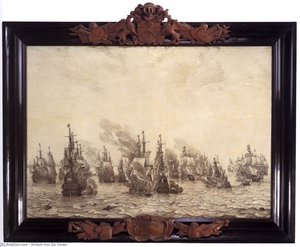
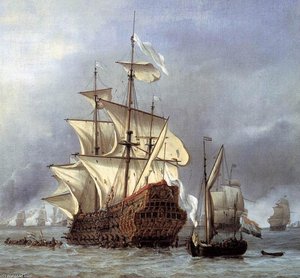
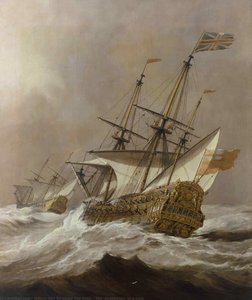
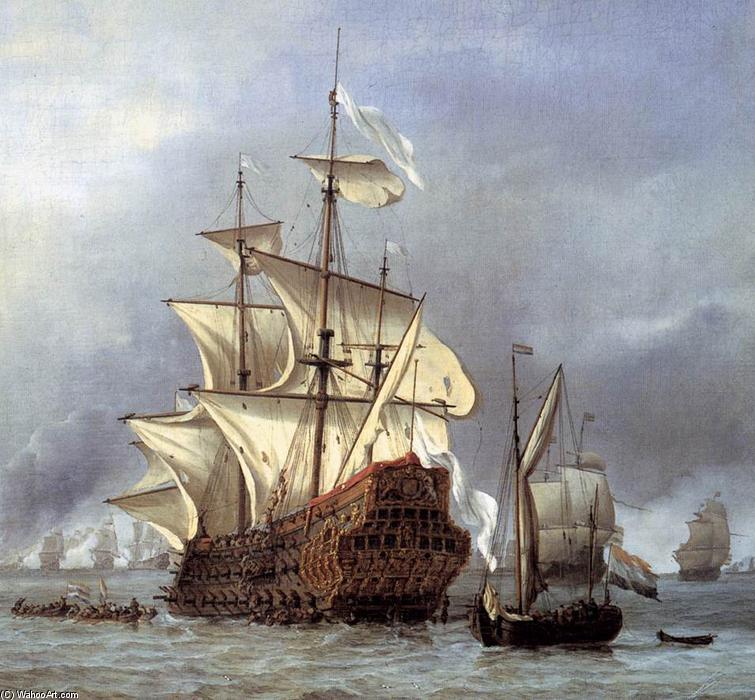
The Taking of the English Flagship the Royal Prince (detail)


 Read More
Hand Made Oil Reproduction
Hand-painted oil on canvas in your size and frame, made to order by our artists. ( Buy Print Buy Image)




P118B $10

P118H $10

P118W $10

P438Z $10

P508JH $12

P508YH $12

P805H $10

P805Z $10

P919BZ $10

P919G $10

P919XJ $10

P959ZH $10

P968JZ $12

W106C $8

W218G $10

W218JH $8

W218Y $10

W307PJ $10

W316G $10

W316PJ $8

W316Y $10

W398PJ $8

W4111J $10

W500HY $15

W500JH $15

W692G $12

W849H $8

W940BG $15

W953PJ $8




Pick from our preset sizes that match the artwork's original proportions.

You may enter your own dimensions to fit a specific frame or space. If your selected size does not match the original image's proportions, we will either crop the artwork or extend the painting with additional hand-painted elements. A digital mockup will be sent for your approval before production begins.
Please note that the on-screen preview does not reflect the actual cropping or extension. Only the mockup will accurately show the final composition.
While custom sizes are available, we recommend selecting a dimension from the predefined list to preserve the original proportions.
After order, ArtsDot.com team will email client for instructions and provide a mockup preview
Worldwide Delivery () in 3/4 weeks instead of standard 5 weeks. (17 August). No compromise on quality.

Free Worldwide Express Shipping

High-Quality Linen Canvas

Full Shipping Insurance

Customs Tax Refund Guarantee

True Color Matching Guarantee

60-Day Return Policy (Defects Only)

100% Money-Back Guarantee

Bulk Discount Offer
 Glass option is only available in size under 110 CM

The Taking of the English Flagship the Royal Prince (detail)
Reproduction Medium
Reproduction Size
-


Total Price
$ 263
Artwork Description
A Moment Frozen in Fury: Willem van de Velde’s ‘The Taking of the English Flagship’
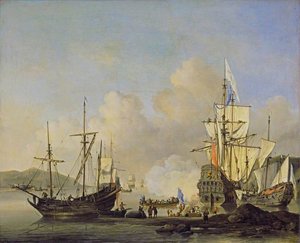
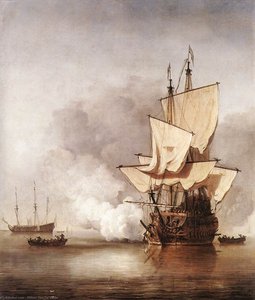
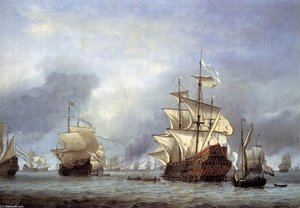
Willem van de Velde the Elder's “The Taking of the English Flagship, the Royal Prince” is not merely a depiction of naval combat; it’s a visceral plunge into the heart of 17th-century warfare. Painted in 1666, this remarkable work captures a pivotal moment during the Anglo-Dutch Wars – specifically, the desperate struggle for control of the English Channel. The scene unfolds with brutal immediacy: a towering Dutch vessel, its sails billowing with defiance, is locked in deadly embrace with an English ship, already crippled and listing precariously. The composition isn’t one of heroic grandeur; instead, it's a study in chaos, a carefully orchestrated tableau of destruction and desperate resistance. Van de Velde masterfully utilizes light and shadow to heighten the drama, focusing on the churning water, the splintering wood, and the faces of the sailors – etched with fear, determination, and the grim acceptance of fate.
Van de Velde’s genius lies in his pioneering technique of “penschilderij,” or pen painting. Rejecting the traditional reliance on color, he employed meticulously detailed lines drawn with ink to create an astonishingly realistic effect. This method, developed by Van de Velde himself, allowed him to achieve a level of precision and durability rarely seen in oil paintings of the period. The result is a work that possesses both the immediacy of a drawing and the lasting quality of a painting – a testament to his innovative approach. The incredible detail extends to every element: the rigging, the weaponry, the expressions on the faces of the men engaged in combat—all rendered with painstaking accuracy.
The Context of Conflict: Anglo-Dutch Wars and Naval Power
To fully appreciate “The Taking of the English Flagship,” it’s crucial to understand the historical context. The 17th century witnessed a fierce rivalry between England and the Netherlands, fueled by economic competition and naval dominance. Both nations invested heavily in building powerful fleets, resulting in a series of protracted and bloody conflicts – the Anglo-Dutch Wars. These weren't simply land battles; they were fought relentlessly at sea, shaping the course of European history. The Dutch Republic, despite its smaller size, posed a formidable challenge to England’s maritime supremacy. Battles like this one, representing key moments in these wars, became symbols of national pride and strategic importance.
Van de Velde's commission reflects this intense rivalry. He was employed by Charles II of England to document the Royal Navy’s successes, providing invaluable records for posterity. The painting itself serves as a propaganda piece, glorifying English naval prowess while simultaneously acknowledging the brutal realities of war. The scene is not romanticized; it’s presented with unflinching honesty – a stark reminder of the human cost of conflict.
Symbolism and Emotional Resonance
Beyond its historical significance, “The Taking of the English Flagship” resonates deeply on an emotional level. The painting isn't simply about ships colliding; it’s about courage in the face of overwhelming odds, the sacrifice of individuals for a cause, and the devastating consequences of war. Notice the figures clustered near the foreground – these are not idealized heroes but ordinary sailors, caught in the maelstrom of battle. Their expressions convey a mixture of fear, resolve, and perhaps even resignation. The swirling water, rendered with remarkable dynamism, symbolizes the chaos and unpredictability of naval warfare.
The captured flag itself represents a strategic victory – a symbol of control and dominance. However, Van de Velde doesn’t celebrate this triumph; instead, he focuses on the immediate aftermath—the destruction, the suffering, and the enduring human cost. The overall mood is one of intense drama and palpable tension, inviting the viewer to contemplate the complexities of war and its impact on those who fight it.
A Masterpiece Reproduced: Bringing History Home
ArtsDot offers meticulously crafted hand-painted reproductions of “The Taking of the English Flagship,” allowing you to bring this iconic artwork into your home or office. Our skilled artists replicate Van de Velde’s innovative penschilderij technique with exceptional precision, capturing every detail and nuance of the original painting. Each reproduction is created on high-quality canvas using archival pigments, ensuring that it will retain its beauty and vibrancy for generations to come. Whether you're an art enthusiast, a history buff, or simply seeking a stunning piece of décor, our “The Taking of the English Flagship” reproduction offers a unique opportunity to own a tangible connection to this remarkable moment in naval history.
Related Artworks




Artist Biography
early life and career
willem van de velde the elder, a renowned dutch golden age seascape painter, was born in leiden, netherlands, around 1611. his father, willem willemsz van de velde, was a flemish skipper, which likely influenced his son's interest in maritime art.artistic style and technique
van de velde's work is characterized by its precision and attention to detail. he pioneered the technique of pen painting (penschilderij), which involved creating detailed, durable artworks using ink on panel or canvas. this innovative approach allowed his pieces to resemble elaborate drawings while maintaining the durability of a painting.notable works and collaborations
* the battle of texel, 1687 (oil on canvas) * the burning of the royal james at the battle of solebay (drawing) * collaboration with charles ii of england, producing paintings of british ships and naval battlesmuseums and collections featuring van de velde's work
* the mauritshuis, netherlands (features dutch golden age paintings, including works by van de velde) * the kremer collection, the hague, netherlands (a private art museum with a focus on 17th-century dutch and flemish paintings)- view willem van de velde the elder's artwork on ArtsDot.com
- explore more dutch golden age artists, including rembrandt van rijn, on ArtsDot.com's artist page
- discover the mauritshuis's collection, featuring works by willem van de velde the elder, on ArtsDot.com's museum page
legacy and impact
willem van de velde the elder's contributions to dutch golden age seascape painting are undeniable. his innovative techniques, attention to detail, and collaborations with prominent figures have solidified his place in art history. the museum universiteitsbibliotheek (leiden, netherlands) - a comprehensive guide on ArtsDot.com provides further insight into the cultural context of van de velde's work.
Willem van de Velde the Elder
1611 - 1693 , Netherlands
Quick Facts
- Artistic Movement Or Style: Pen painting, Seascape
- Artists Or Movements Influenced By This Artist: ['Willem van de Velde the Younger']
- Artists Who Influenced This Artist: ['His father (Willem Willemsz)']
- Date Of Birth: 1611, Leiden, Netherlands
- Date Of Death: 1693, London, England
- Full Name: Willem van de Velde the Elder
- Nationality: Dutch Golden Age
- Notable Artworks:
- The Battle of Texel
- Burning of James
- Place Of Birth: Leiden, Netherlands
Related Articles
Van Gogh's Masterpieces: Explore 25 Iconic Paintings & Art for Your Home
Journey through Vincent van Gogh's 25 most iconic paintings! Explore 'Starry Night', 'Sunflowers,' and more—discover the stories, techniques & emotions behind these Post-Impressionist masterpieces. Find museum-quality art reproductions for your home at ArtsDot.com.

Demandes Commerciales
APS ofrece reproducciones de bellas artes y encargos personalizados desde 2004. Confían en nosotros corporaciones, hoteles y coleccionistas selectos para obras de arte de calidad museística, servicio discreto y soluciones artísticas completas. ¡Póngase en contacto con nosotros para obtener un presupuesto personalizado!
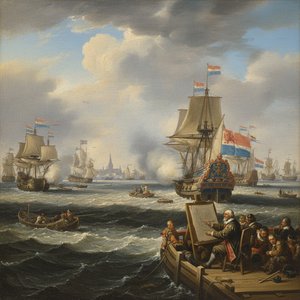
Willem van de Velde the Elder: Master of Maritime Painting & Chronicler of the Dutch Golden Age
Discover the captivating maritime paintings of Willem van de Velde the Elder, a master chronicler of the Dutch Golden Age. Explore his unparalleled realism and lasting influence on naval art history.

Shipping & Returns
APS delivers expert worldwide art shipping with museum-grade care, full tracking, and a 30-day money-back guarantee. From customs support to Priority Production, trust transparent service, secure packaging, and reliable delivery for collectors, designers, and galleries.

Goya's Masterpieces: Explore 25 Iconic Paintings & Art Prints | ArtsDot
Delve into the world of Francisco Goya with ArtsDot. Explore 25 iconic paintings – from 'The Third of May' to his haunting Black Paintings. Discover the stories, techniques & emotions behind these Spanish masterpieces. Find museum-quality art reproductions for your home at ArtsDot.com!