 Preview
 Send
Send Share
Share
 Details

 Download
 Similars
 X-Ray
X-Ray Diaporama
Restaurant de la Renaissance


 Read More
Hand Made Oil Reproduction
Hand-painted oil on canvas in your size and frame, made to order by our artists. ( Buy Print Buy Image)




P118B $10

P118H $10

P118W $10

P438Z $10

P508JH $12

P508YH $12

P805H $10

P805Z $10

P919BZ $10

P919G $10

P919XJ $10

P959ZH $10

P968JZ $12

W106C $8

W218G $10

W218JH $8

W218Y $10

W307PJ $10

W316G $10

W316PJ $8

W316Y $10

W398PJ $8

W4111J $10

W500HY $15

W500JH $15

W692G $12

W849H $8

W940BG $15

W953PJ $8




Pick from our preset sizes that match the artwork's original proportions.

You may enter your own dimensions to fit a specific frame or space. If your selected size does not match the original image's proportions, we will either crop the artwork or extend the painting with additional hand-painted elements. A digital mockup will be sent for your approval before production begins.
Please note that the on-screen preview does not reflect the actual cropping or extension. Only the mockup will accurately show the final composition.
While custom sizes are available, we recommend selecting a dimension from the predefined list to preserve the original proportions.
After order, ArtsDot.com team will email client for instructions and provide a mockup preview
Worldwide Delivery () in 3/4 weeks instead of standard 5 weeks. (16 August). No compromise on quality.

Free Worldwide Express Shipping

High-Quality Linen Canvas

Full Shipping Insurance

Customs Tax Refund Guarantee

True Color Matching Guarantee

60-Day Return Policy (Defects Only)

100% Money-Back Guarantee

Bulk Discount Offer
 Glass option is only available in size under 110 CM

Restaurant de la Renaissance
Reproduction Medium
Reproduction Size
-


Total Price
$ 263
Artwork Description
A Glimpse Through Time: The Rainy Streets of New Orleans
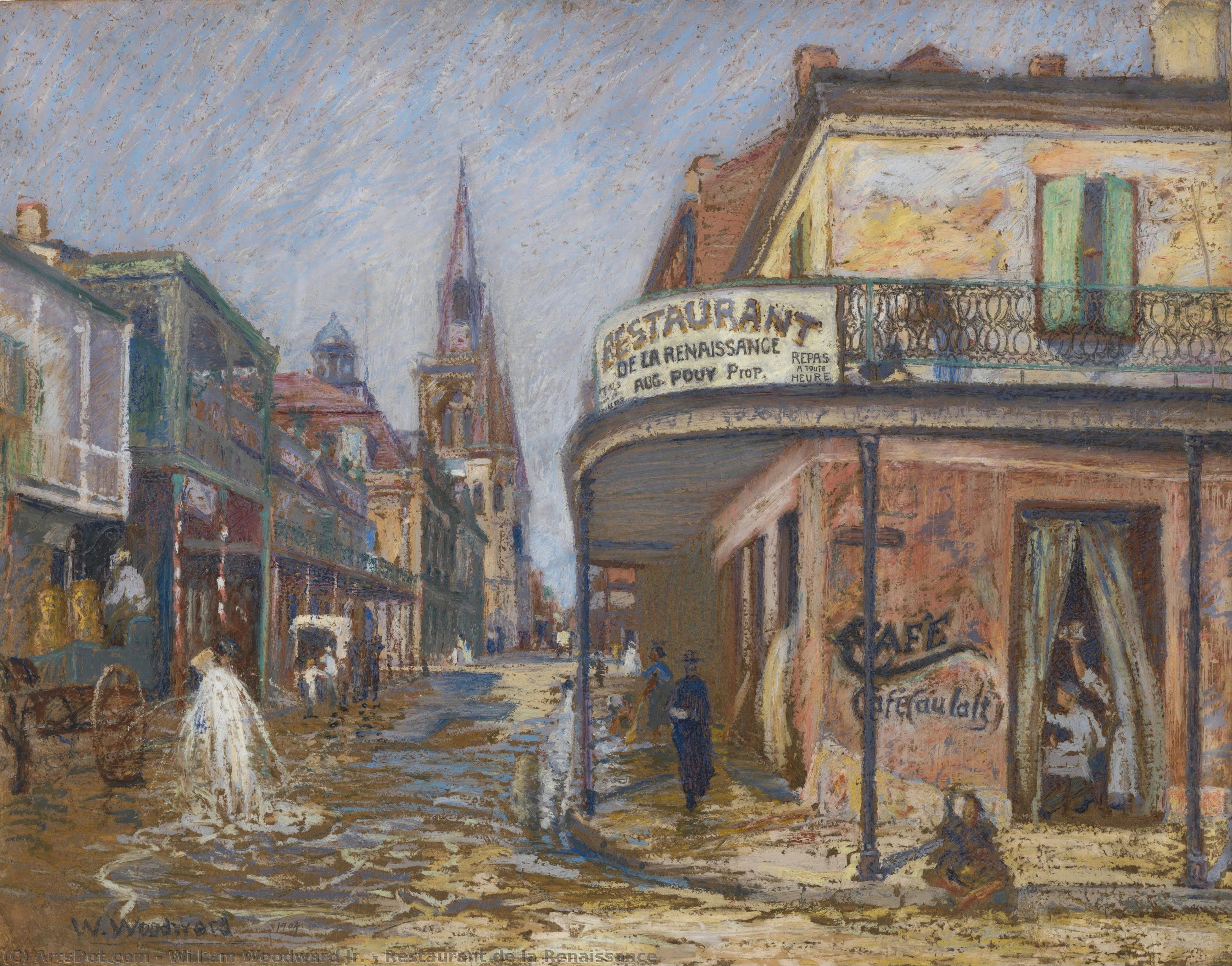
In the delicate, atmospheric strokes of William Woodward Jr., we are transported not merely to a different location, but to a vanished era. His pastel work, Restaurant de la Renaissance, serves as a poignant window into the soul of New Orleans in 1904. The piece captures a moment of quiet transition, where the heavy, humid air of the Louisiana coast meets the rhythmic pulse of urban life. As the viewer gazes upon the wet cobblestones and the shimmering reflections of a recent downpour, there is an immediate sense of immersion. The street, slick with rain, acts as a mirror to the sky, blurring the lines between the earth and the heavens, and inviting us to wander through a landscape that feels both intimately familiar and hauntingly distant.
The composition is masterfully orchestrated to evoke the bustling yet melancholic energy of the turn-of-the-century South. Scattered figures navigate the damp thoroughfare, some huddled beneath umbrellas, their silhouettes adding a layer of human narrative to the architectural backdrop. The presence of a horse on the periphery serves as a gentle reminder of the era's slower, more organic pace of life. At the heart of this urban tableau sits the Restaurant de la Renaissance, a beacon of warmth and social gathering that stands in soft contrast to the cool, muted tones of the rainy street. Through Woodward’s lens, the restaurant becomes more than just a building; it is a symbol of endurance and the enduring human desire for community and respite amidst the elements.
Mastery of Pastel and Light
Technically, the work showcases Woodward’s profound ability to manipulate the soft, powdery medium of pastel to achieve remarkable depth and texture. Rather than relying on harsh outlines, the artist utilizes soft edges and layered pigments to replicate the hazy, diffused light characteristic of an overcast day in New Orleans. This technique creates a breathtakingly atmospheric effect, where the moisture in the air feels almost tangible. The interplay of light and shadow is particularly striking; the way the dim light catches the puddles on the street provides a rhythmic visual interest that guides the eye from the foreground figures toward the distant, glowing windows of the restaurant.
For the discerning collector or interior designer, this piece offers an unparalleled opportunity to introduce a sense of historical elegance and emotional depth into a space. The muted palette—composed of soft greys, deep blues, and warm, earthy undertones—allows the artwork to integrate seamlessly into sophisticated, classical, or even contemporary minimalist interiors. It does not merely decorate a wall; it anchors a room with its contemplative mood. Owning a high-quality reproduction of this masterpiece means possessing a fragment of history, a silent storyteller that brings the vibrant, rain-kissed spirit of 1904 New Orleans into the modern home.
Related Artworks
Artist Biography
William Woodward Jr.: A Life Painted in Shadows and Light
Born in Washington, D.C., in 1920 into a family steeped in wealth and legacy—the heirs to the Hanover National Bank fortune, the opulent Belair estate, and a prominent lineage in racing circles—William Woodward Jr.’s life was one of extraordinary privilege juxtaposed with profound tragedy. More than just an heir, he became a decorated war veteran, a figure of intense public fascination, and ultimately, a victim of his own tumultuous existence. His story, tragically cut short in 1955 by the shocking act of violence perpetrated by his wife, Ann Woodward, remains a haunting chapter in American art history, inextricably linked to his evocative paintings that captured the essence of daily life and historical scenes with remarkable sensitivity.
Woodward’s early years were defined by an elite education—Buckley School and Groton School—culminating in a degree from Harvard University. His service during World War II, including receiving a Purple Heart, speaks to a disciplined spirit and a willingness to confront danger. However, it was his artistic pursuits that truly shaped his identity. While the details of his formal training remain somewhat obscured, he honed his skills through correspondence with renowned artists in Europe, particularly at the Académie Julian in Paris, absorbing the techniques and philosophies of Impressionism—a movement that profoundly influenced his approach to capturing light, atmosphere, and human emotion.
The Art of Observation: Style and Technique
Woodward’s artistic style is characterized by a remarkable ability to blend realism with an almost dreamlike quality. He wasn't interested in grand, theatrical displays; instead, he meticulously observed the world around him—the bustling streets of New Orleans, the quiet moments within domestic interiors, the dignified figures of historical events. His brushwork was deliberate and controlled, favoring short, broken strokes to build up layers of color and texture. He possessed a keen eye for detail, rendering fabrics with astonishing accuracy and capturing subtle shifts in expression on his subjects’ faces.
His paintings often featured scenes from everyday life—a woman tending her garden, children playing in the streets, or families gathered around a table—but he imbued these seemingly mundane moments with an underlying sense of melancholy and introspection. He was particularly drawn to historical subjects, meticulously researching and recreating scenes from the past, imbuing them with a palpable sense of time and place. His ability to evoke atmosphere and emotion through color and composition is what truly sets his work apart.
A Life Interrupted: Tragedy and Legacy
The circumstances surrounding William Woodward Jr.’s life took a dramatic turn in October 1955, when he was fatally shot by his wife, Ann Woodward. The event, dubbed “The Shooting of the Century” by *Life* magazine, captivated the nation’s attention, fueled by speculation and sensationalized reporting. While the official investigation concluded that it was an accident—a tragic misjudgment during a heated argument—the incident cast a long shadow over his life and legacy.
Despite this devastating loss, Woodward's artistic output continued until his untimely death in 1955. His paintings, largely completed before the tragedy, offer a poignant glimpse into a man grappling with personal demons while simultaneously striving to capture the beauty and complexity of the world around him. His work is now recognized for its emotional depth, technical skill, and quiet dignity—a testament to his enduring artistic vision.
Connections and Influences
Woodward’s artistic journey was shaped by a confluence of influences. His family's wealth afforded him access to elite educational institutions and opportunities to study with leading artists in Europe. The Impressionist movement, with its emphasis on capturing fleeting moments of light and color, served as a foundational influence. Furthermore, his military service instilled in him a sense of discipline and resilience—qualities that undoubtedly informed his approach to painting.
Notably, Woodward’s career was intertwined with other prominent figures in American art and society. He collaborated with Joseph Fortune Meyer and George E. Ohr Jr. at the New Orleans Art Pottery, contributing to the vibrant artistic scene of the city. His work has been exhibited alongside that of other notable artists, including Purvis Young and Nette Pettway Young, reflecting a shared commitment to exploring themes of American life through diverse artistic mediums. Resources such as ArtsDot.com and Wikipedia provide valuable insights into his broader context within the art world.
Notable Resources for Further Exploration
- Museum Reproductions: Explore high-quality reproductions of Woodward’s paintings on platforms like ArtsDot.com.
- Custom Artwork: Commission a bespoke painting inspired by Woodward's style and techniques.
- Wikipedia Article: https://en.wikipedia.org/wiki/William_Woodward_(artist) – Provides a detailed biographical overview of his life and career.
- ArtsDot.com: https://www.ArtsDot.com/ - Offers resources, including artist profiles and museum reproductions.
William Woodward Jr.’s story is a complex and compelling one—a tale of privilege, tragedy, artistic talent, and enduring legacy. His paintings serve as a poignant reminder of the fragility of life and the power of art to capture both beauty and sorrow.
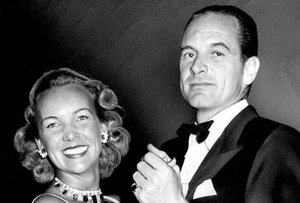
william woodward jr.
1920 - 1955 , United States of America
Quick Facts
- Artistic Movement Or Style: Figurative painting
- Artists Or Movements Influenced By This Artist: ['Impressionism']
- Artists Who Influenced This Artist:
- Purvis Young
- Nettie Pettway Young
- Date Of Birth: June 12, 1920
- Date Of Death: October 31, 1955
- Full Name: William Woodward Jr.
- Nationality: American
- Notable Artworks: ['Restaurant de la Renaissance']
- Place Of Birth: Washington, D.C., USA
Related Articles

The Subtleties of Pastel: A Comprehensive Exploration of Technique, History & Emotional Resonance
Explore the captivating world of pastel art! Discover its rich history, Impressionistic masters like Degas, emotional power & unique techniques. Find museum-quality reproductions at ArtsDot.
The Subdued Radiance of Pastel: Exploring Nuance & Emotion in Art
Explore the nuanced world of pastel art! Discover its history, techniques & emotional power with expert insights from ArtsDot.com. Find museum-quality reproductions and learn about collecting this delicate medium.
Beyond Graffiti: Exploring the Evolution & Cultural Impact of Street Art for Collectors
Explore the evolution of street art from rebellious origins to a respected fine art form. Discover key artists like Banksy & learn how to collect urban art with confidence. Expert insights for discerning investors.
The Subdued Radiance of Pastel Palettes: Exploring Emotional Resonance in Art History
Explore the emotional power of pastel palettes in art history! Discover Impressionism, Post-Impressionism & color psychology insights. Find museum-quality reproductions at ArtsDot.
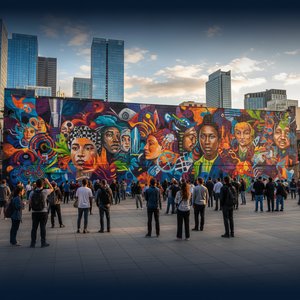
Beyond the Gallery Walls: The Rise of Contemporary Street Art
Explore the captivating world of contemporary street art! Discover its history, influential artists like Banksy, and evolving role in urban culture. Expert insights & analysis.