
The Invisible Architecture: Understanding Composition as Visual Grammar
 Master the Frame: Composition Secrets to Level Up Your Visual Impact
The Architecture of Vision: Understanding Composition as Visual Grammar Composition (visual arts) In visual arts, composition (meaning "putting together") is the organization of an artwork. It is often used interchangeably with various terms such as ...
To gaze upon a masterpiece is to enter into a silent, profound dialogue with the artist—a conversation structured not by spoken words, but by the deliberate and masterful arrangement of form, light, and space. For the dedicated art enthusiast, understanding composition is akin to learning the grammar of a visual language. It is the invisible scaffolding that supports the emotional weight of every canvas, guiding the eye from the initial moment of encounter through a carefully choreographed journey of discovery. Composition, often referred to as design or formal structure, is far more than the mere subject matter; it is the way those elements are orchestrated within the frame.
Whether we are analyzing the structured chaos of modern abstraction or the sweeping grandeur of a Baroque landscape, we are essentially reading the artist's intent through their use of visual ordering. This structural intent ensures that even the most ephemeral moment feels anchored in a lasting, structural truth. It is about the tension between presence and absence, the balance of weight, and the rhythmic pulse of lines that direct our gaze. Without this fundamental organization, even the most beautiful subject would lack the cohesion necessary to resonate across centuries.
The Rule of Thirds: Creating Balance and Dynamic Energy
Design principles are fundamental guidelines or concepts in the visual arts used to help viewers understand a given scene. == Principles == Generally, design principles guide the viewer's attention by manipulating various aspects of a visual idea. Th...
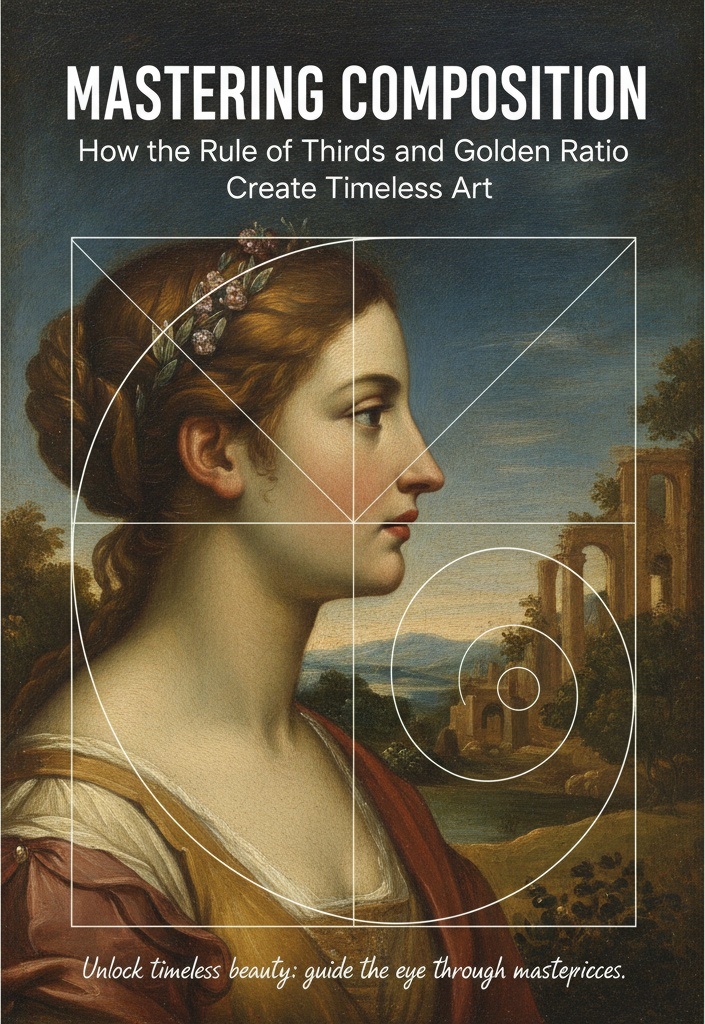
One of the most accessible yet powerful tools in an artist's repertoire is the rule of thirds. This guideline serves as a rule of thumb for composing visual art, providing a way to avoid the static nature of perfect symmetry. By mentally dividing a canvas into a grid of nine equal parts—three rows and three columns—the artist can place key elements along these lines or at their intersections. This technique introduces a sense of movement and life, preventing the eye from becoming trapped in a singular, unmoving center.
Consider the portraits of Jean-François de Troy, a master of Baroque elegance. In his remarkable works, he often positioned his subjects slightly off-center. This deliberate choice creates a dynamic energy within the frame, allowing the surrounding space to breathe and interact with the figure. When a subject is placed at an intersection point, it creates a subtle tension that draws the viewer in, making the portrait feel as though it is part of a larger, unfolding narrative rather than a frozen moment in time.
The Golden Ratio: Nature's Secret to Eternal Harmony
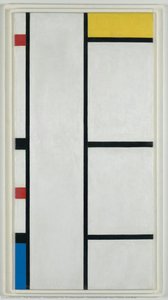 Composition (no. III) blanc-jaune / Composition with Red, Yellow, and Blue
A Geometric Harmony: Exploring Piet Mondrian’s Composition (no. III) blanc-jaune The painting *Composition with Red, Yellow, and Blue*, created in 1942 during the tumultuous years of World War II, stands as a testament to Piet Mondrian's unwavering p...
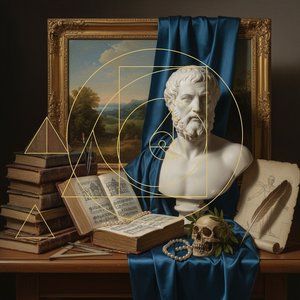
While the rule of thirds offers a practical guide for balance, the Golden Ratio—often represented by the mathematical ratio Phi—represents a deeper, more primordial level of harmony. This ratio is found throughout the natural world, from the spiral of a seashell to the arrangement of petals on a flower. In fine art, the application of this ratio creates a sense of organic perfection that feels inherently "right" to the human eye. It provides a mathematical foundation for beauty that transcends individual eras or styles.
The use of the Golden Ratio allows an artist to achieve a sophisticated level of proportion that feels both complex and effortless. It is less about rigid geometry and more about finding the natural rhythm of growth and decay. When an artist utilizes these proportions, they tap into a universal aesthetic language that evokes feelings of serenity and eternal truth. This is why certain classical works feel so much more stable and enduring than others; they are built upon the very mathematical blueprints of life itself.
Mastering the Eye: How Placement Directs Narrative and Emotion
 Sts Peter and Paul
Guido Reni’s *Sts Peter and Paul*: A Baroque Masterpiece of Dramatic Emotion Guido Reni's *Sts Peter and Paul*, painted around the early 17th century, is a profoundly moving work that exemplifies the height of Baroque art. Measuring 197 x 140 cm, thi...
A masterfully composed painting does not simply present a scene; it directs the viewer's emotional response through strategic placement. The artist uses scale, light, and shadow to manipulate attention. By making an element larger or more brightly lit than its surroundings, the artist emphasizes its importance, creating a hierarchy of visual information. This is particularly evident in the Baroque era, where the use of chiaroscuro—the dramatic contrast between light and dark—was used to sculpt form and heighten emotional impact.
In Guido Reni’s Sts Peter and Paul, for instance, the composition is a symphony of light and shadow. The figures are presented in a dynamic arrangement where their postures convey distinct narratives: Peter embodies contemplation through his heavy, leaning stance, while Paul suggests an impassioned sermon through his upright, gesturing form. The dark background is not merely an absence of light but a deliberate tool to intensify the impact of the figures, drawing the viewer’s eye directly to their expressions and the profound human emotion they embody.
Composition in Practice: Analyzing Baroque and Renaissance Masterpieces
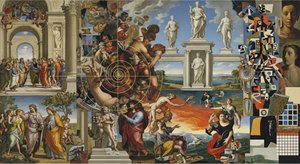 The Eloquence of Arrangement: Compositional Strategies in Western Art from the Renaissance to Modernism
Introduction: The Foundations of Visual Harmony Wikipedia: Renaissance art Renaissance art (1350 – 1620) is the painting, sculpture, and decorative arts of the period of European history known as the Renaissance, which emerged as a distinct style in ...
To truly appreciate composition, one must look at how it has been utilized across different movements. The Renaissance era emphasized balance, clarity, and a sense of intellectual order. Artists sought to capture the immutable laws of geometry and the dignity of the human form. In contrast, the Baroque period erupted with a desire for movement, drama, and theatricality. This was an era of "theatricality in art," where composition was used to inspire awe and religious fervor.
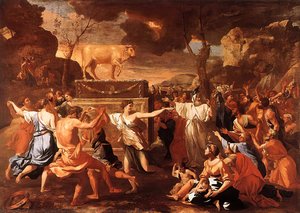
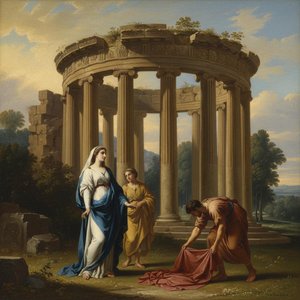
We see this transition clearly when comparing the restrained, classical compositions of artists like Andrea Sacchi to the more exuberant, swirling energy of the late Baroque. While Sacchi championed a measured approach rooted in Roman classicism, later artists utilized more complex, overlapping shapes and diagonal lines to create a sense of unfolding action. Even in the more modern, geometric precision of Piet Mondrian, we see the legacy of these principles; though he moved toward pure abstraction, his work remains a profound exploration of balance, weight, and the fundamental elements of visual language.
Bringing Composition Home: Selecting Art that Anchors Your Space
 Illusionistic ceiling painting
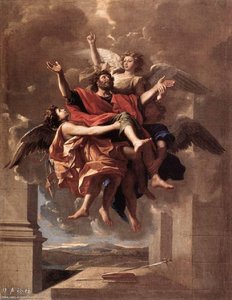
Illusionistic ceiling painting, which includes the techniques of perspective di sotto in sù and quadratura, is the tradition in Renaissance, Baroque and Rococo art in which trompe-l'œil, perspective tools such as foreshortening, and other spatial eff...
For the modern decorator or collector, understanding these principles transforms the act of furnishing a home into an act of meaningful curation. When selecting art for your space, consider how the composition interacts with your room's architecture. A large-scale, multi-panel "group set" painting can serve as a stunning focal point for a wide wall or staircase, with colors and brushstrokes flowing seamlessly across every panel to create a cohesive, modern look.
Whether you are drawn to the textured, tactile depth of a Handmade Oil Reproduction—where visible brushstrokes and the richness of oil on canvas provide a sense of history—or the clean lines of a high-quality print, the composition is what will ultimately anchor your room. Look for pieces that offer a sense of balance and movement that complements your furniture and lighting. By choosing art that respects the principles of the Rule of Thirds or the Golden Ratio, you are not just decorating; you are bringing a piece of timeless, structural truth into your daily life.
At ArtsDot.com, we believe everyone should feel confident in their journey through the world of art. From custom commissions that turn your personal memories into masterpieces to expert consultations that help you find the perfect color palette for your home, our mission is to make discovery delightful and accessible. Whether you are looking for a grand mural or a beautifully framed reproduction, we invite you to explore the architecture of vision and find the piece that speaks to your soul.