The Belle Époque: A World on the Cusp of Change
The Belle Époque (French pronunciation: [bɛlepɔk]) or La Belle Époque (French for 'The Beautiful Era') was a period of French and European history that began after the end of the Franco-Prussian War in 1871 and continued until the outbreak of World W...
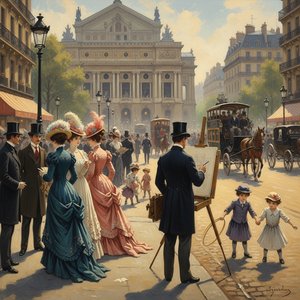
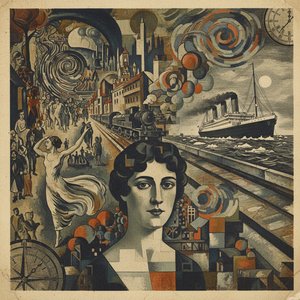
The years preceding the First World War, often romanticized as the Belle Époque – “the beautiful era” – were a paradox of optimism and underlying tension. Paris, at its heart, pulsed with an energy born from relative peace and unprecedented technological advancement. Expositions Universelles showcased marvels of engineering and design, while artistic circles buzzed with new ideas challenging centuries-old conventions. Yet beneath the glittering surface of grand boulevards and opulent cafes lay a growing sense of unease, a premonition of the seismic shifts that would soon shatter the established order. This was an age of colonial expansion, burgeoning industrialization, and a rapidly evolving social landscape – all factors that subtly, then dramatically, influenced the artistic expressions of the time. The Belle Époque wasn’t simply a period of beauty; it was a crucible forging the foundations for Modernism.
The flourishing arts scene benefited from this unique confluence of prosperity and progress. While academic painting still held sway in official salons, a new generation of artists began to question its rigid rules. The Impressionists had already paved the way by prioritizing subjective experience and capturing fleeting moments of light, but their focus on optical realism felt increasingly limiting to those seeking a deeper emotional resonance. This desire for something more profound, coupled with an increasing awareness of non-Western art forms, set the stage for radical experimentation.
Modernism's Dawn: Rejecting Tradition, Embracing Experimentation
Modernism was an early 20th-century movement in literature, visual arts, performing arts, and music that emphasized experimentation, abstraction, and subjective experience. Philosophy, politics, architecture, and social issues were all aspects of thi...
Modernism, as it came to be known, wasn’t a single style but rather a broad cultural movement characterized by a deliberate rejection of traditional values and forms. It was fueled by a growing alienation from prevailing morality, optimism, and convention – a yearning to redefine how human beings interacted with the world around them. Artists began to explore abstraction, subjective experience, and the very nature of representation itself. The influence of philosophers like Nietzsche, who questioned established truths, resonated deeply within artistic communities.
This rejection manifested in various ways across different disciplines. In literature, writers experimented with stream-of-consciousness narratives and fragmented structures. In music, composers abandoned traditional tonality. And in the visual arts, artists sought new means of expression that moved beyond mere imitation of reality. The emphasis shifted from depicting *what* was seen to conveying *how* it felt – a radical departure from centuries of artistic precedent. This period saw a questioning of the very definition of art and its role within society.
Henri Matisse and the Fauvist Revolution in Color
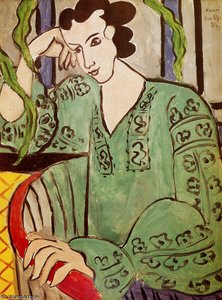
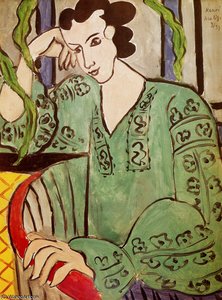 La Hongroise à la blouse verte Huile sur Toile Genève, Collection Jean Salomon
Explore Henri Matisse's "La Hongroise à la blouse verte," a pivotal Fauvist masterpiece radiating serenity and bold color. Discover the artist's revolutionary style & legacy at ArtsDot.
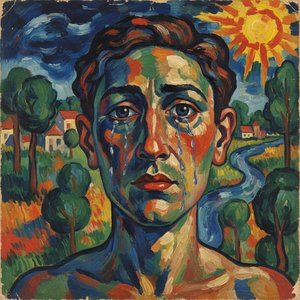
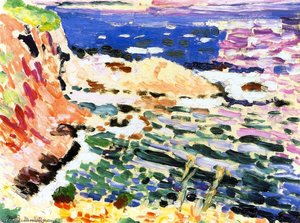
At the forefront of this revolution stood Henri Matisse, a figure whose bold experimentation would irrevocably alter the course of modern painting. Initially trained in academic traditions, Matisse gradually shed his conventional approach, embracing a radical use of color that shocked and captivated audiences. Along with artists like André Derain, Maurice de Vlaminck, and Raoul Dufy, he formed the core of the Fauvist movement – “les Fauves,” or “the wild beasts.” Their paintings were characterized by intense, non-naturalistic colors applied in seemingly arbitrary brushstrokes.
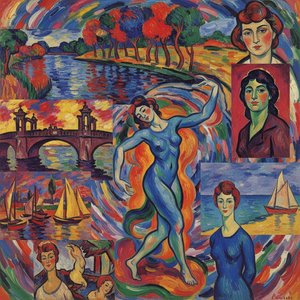
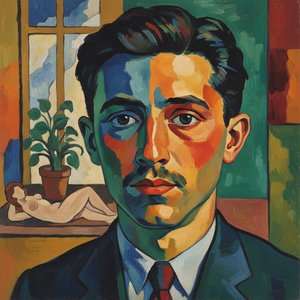
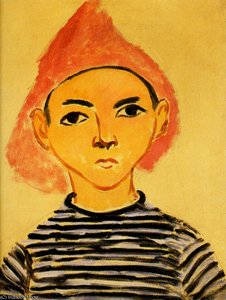
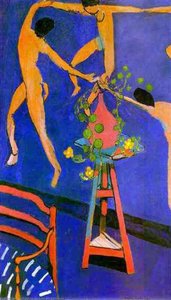
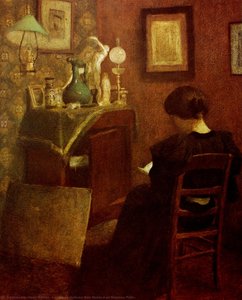
Works like “La Hongroise à la blouse verte” exemplify this audacious approach. The vibrant greens, reds, and yellows aren’t intended to accurately represent the subject but rather to evoke a specific emotional response. Similarly, “Portrait de Pierre Matisse” showcases the movement's disregard for realistic skin tones, opting instead for expressive hues that convey personality and inner life. Early works like "La Liseuse" show Matisse's transition from academic training towards his signature style, hinting at the bold color palettes to come. The Fauves weren’t simply interested in depicting objects; they were exploring the emotional power of pure color itself.
Beyond Impressionism: The Search for Emotional Resonance
The Fauvist movement, though relatively short-lived (roughly 1905-1908), had a profound impact on subsequent artistic developments. It represented a decisive break from the optical realism of Impressionism and paved the way for more abstract forms of expression. While Impressionists sought to capture fleeting moments of light and atmosphere, Fauvists aimed to convey inner emotions and subjective experiences through color and form. This shift in focus was deeply influenced by Post-Impressionist painters like Van Gogh and Gauguin, whose expressive use of color had already begun to challenge conventional norms.
The exploration of African sculpture also played a crucial role. Fauvist artists were captivated by the simplified forms and bold designs of these objects, recognizing in them a power and directness that was lacking in Western art. This fascination with “primitive” art forms contributed to their rejection of academic conventions and their embrace of more abstract modes of representation.
Art as a Mirror to Societal Anxieties and Aspirations
The artistic innovations of 1906 weren’t merely aesthetic choices; they were reflections of the broader societal anxieties and aspirations of the time. The Belle Époque, despite its outward appearance of prosperity and optimism, was also marked by political instability, social unrest, and a growing sense of alienation. Artists responded to these challenges by questioning established norms, challenging traditional values, and exploring new ways of representing the human condition.
The paintings of Matisse and his contemporaries weren’t simply beautiful objects; they were expressions of a changing world – a world grappling with rapid technological advancements, shifting social structures, and an uncertain future. They captured the energy, excitement, and underlying tensions of an era on the cusp of transformation.
The Legacy of 1906: Shaping the Artistic Landscape of the 20th Century
The artistic breakthroughs of 1906 laid the groundwork for many of the major movements that would define the 20th century. Fauvism, though brief, directly influenced Expressionism and Cubism, paving the way for even more radical experimentation in form and color. Matisse’s continued exploration of color and composition throughout his career had a lasting impact on generations of artists.
The spirit of innovation and rebellion that characterized this period continues to resonate today. The willingness to challenge conventions, embrace subjectivity, and explore new forms of expression remains central to contemporary art practice. At ArtsDot.com, we are dedicated to making these masterpieces accessible to all, allowing you to experience the power and beauty of these transformative works firsthand – a testament to the enduring legacy of 1906 and the artists who dared to redefine the boundaries of artistic expression. Explore our collection of Matisse paintings and other Fauvist masterpieces today and discover the echoes of a turning tide.