The Rococo Emergence: From Baroque Grandeur to Intimate Refinement
To understand the birth of the Rococo, one must first envision the heavy, sun-drenched shadows of the Baroque era. Under the reign of Louis XIV, the French court at Versailles was a theater of absolute power, where art served as a monumental instrument of statecraft. Every canvas was designed to overwhelm, every sculpture to intimidate, and every architectural line to assert the unshakeable authority of the Sun King. However, as the 18th century dawned and the influence of the monarch began to wane, a profound shift in the European psyche took hold. The rigid formality of the court gave way to a yearning for something far more personal, delicate, and profoundly human.
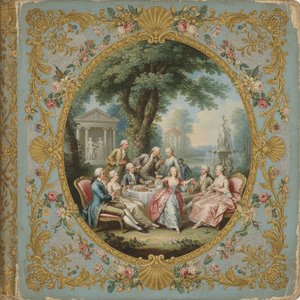
This was not a revolution born of political upheaval, but rather one of refinement and retreat. As the aristocracy moved away from the stifling ceremonies of Versailles toward the intimate hôtels—the elegant townhouses of Paris—their artistic tastes underwent a metamorphosis. The heavy drapes and somber, dramatic tones of the Baroque were discarded in favor of an aesthetic that celebrated the private sphere. This transition marked the rise of Rococo, a style that replaced the monumental with the miniature, and the heroic with the hedonistic. It was a move from the public spectacle of power to the private pleasure of the salon, where wit, conversation, and charm became the new currencies of social standing.
Aesthetic Foundations: Asymmetry, Pastel Palettes, and the Shell Motif
 Lucent View (Original Pastel for Print)
Explore Arthur Werger’s ‘Lucent View,’ a captivating 1986 pastel cityscape of Atlanta. Detailed urban nightscapes & luminous textures – perfect for art collectors.
The very name "Rococo" whispers of its origins, derived from the French word rocaille, referring to the shell-like motifs and pebble decorations used in the grottoes and garden ornaments of the era. This fascination with organic, irregular forms became the heartbeat of the movement. Where the previous century demanded symmetry and mathematical precision, Rococo embraced the beauty of the asymmetrical. The straight line was viewed as a constraint; instead, artists and decorators favored the S-curve, the scrolling vine, and the fluid motion of water and flora.
This visual lightness was further achieved through a revolutionary approach to color. The deep crimsons, royal blues, and heavy golds of the Baroque were replaced by a luminous palette of pastels. Imagine a world bathed in soft rose, mint green, sky blue, and creamy whites—colors that evoke the freshness of a spring morning or the delicate blush of a cheek. This light-drenched atmosphere was essential to the Rococo mission: to delight the senses. By utilizing light colors and airy compositions, artists created spaces and canvases that felt less like heavy monuments and more like immersive, dreamlike experiences, designed to transport the viewer into a realm of effortless grace.
Masters of Pleasure: The Painterly Worlds of Watteau, Boucher, and Fragonard
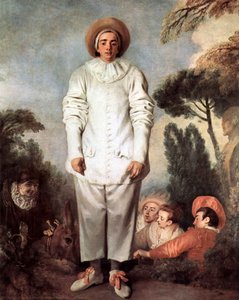
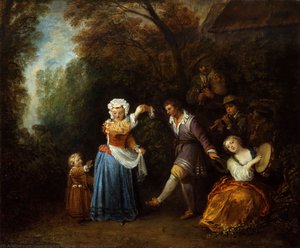
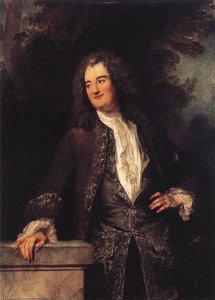
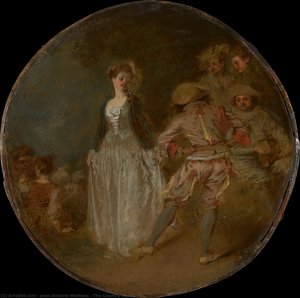
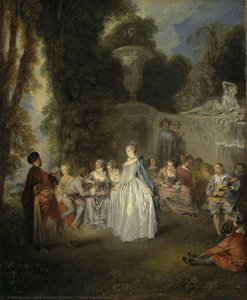
At the pinnacle of this movement stood a triumvirate of masters, each contributing a unique layer to the Rococo tapestry. Jean-Antoine Watteau, the progenitor of the style, introduced the fête galante—a genre of painting depicting refined outdoor celebrations. In works such as The Music Lesson, we see his mastery of intimacy. His brushwork is fluid and spontaneous, capturing a sense of movement that feels organic rather than staged. Watteau’s ability to blend melancholy with charm allowed him to depict the fleeting nature of pleasure, lending a poetic depth to even the most leisurely scenes.
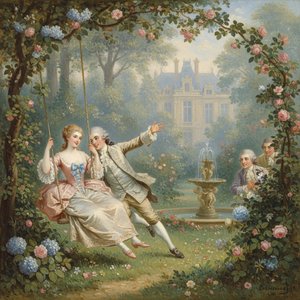
Following in his footsteps, François Boucher brought a more robust sensuality to the era. As a mentor to the next generation, Boucher’s influence is seen in the lush, decorative textures and the mythological themes that adorned the ceilings of palaces. His work epitomizes the Rococo's preoccupation with beauty for its own sake. Then came Jean-Honoré Fragonard, who brought the movement to its zenith. In masterpieces like Blindman’s Buff or the iconic The Swing, Fragonard captures the very essence of aristocratic play. His technique, characterized by expressive, painterly brushstrokes and a luminous use of light, creates a sense of intoxicating joy. Through his eyes, we witness a world where every garden party is a dance of chance and every landscape is a stage for romantic pursuit.
Themes of the Era: Aristocratic Leisure, Mythology, and Romantic Fêtes
The subject matter of Rococo art was intentionally escapist. It functioned as a visual document of the way of life and worldview of the 18th-century European elite, focusing on themes of love, courtship, and the pursuit of delight. The fête galante became the quintessential Rococo theme, portraying aristocrats in idealized pastoral settings, engaging in music, dance, and flirtatious games. These were not mere depictions of reality, but rather highly stylized fantasies where the anxieties of the real world—social change, political tension—were momentarily forgotten in favor of a choreographed elegance.
Beyond the social gatherings, mythology provided a rich vein of inspiration. However, unlike the epic and often violent mythological battles of the Baroque, Rococo mythology was soft and eroticized. Gods and goddesses were depicted not as terrifying forces of nature, but as beautiful participants in the era's romantic dramas. This preoccupation with the sensual extended to the very objects within the paintings; a fountain might represent abundance, while a strategically placed piece of silk or a blooming flower served as a visual shorthand for prosperity and vitality. Every element was designed to reinforce the overarching theme: that life, at its most refined, is a celebration of beauty and pleasure.
Rococo in Context: Architecture, Decorative Arts, and the Parisian Salon
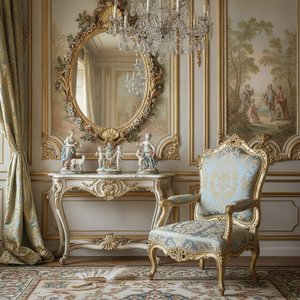
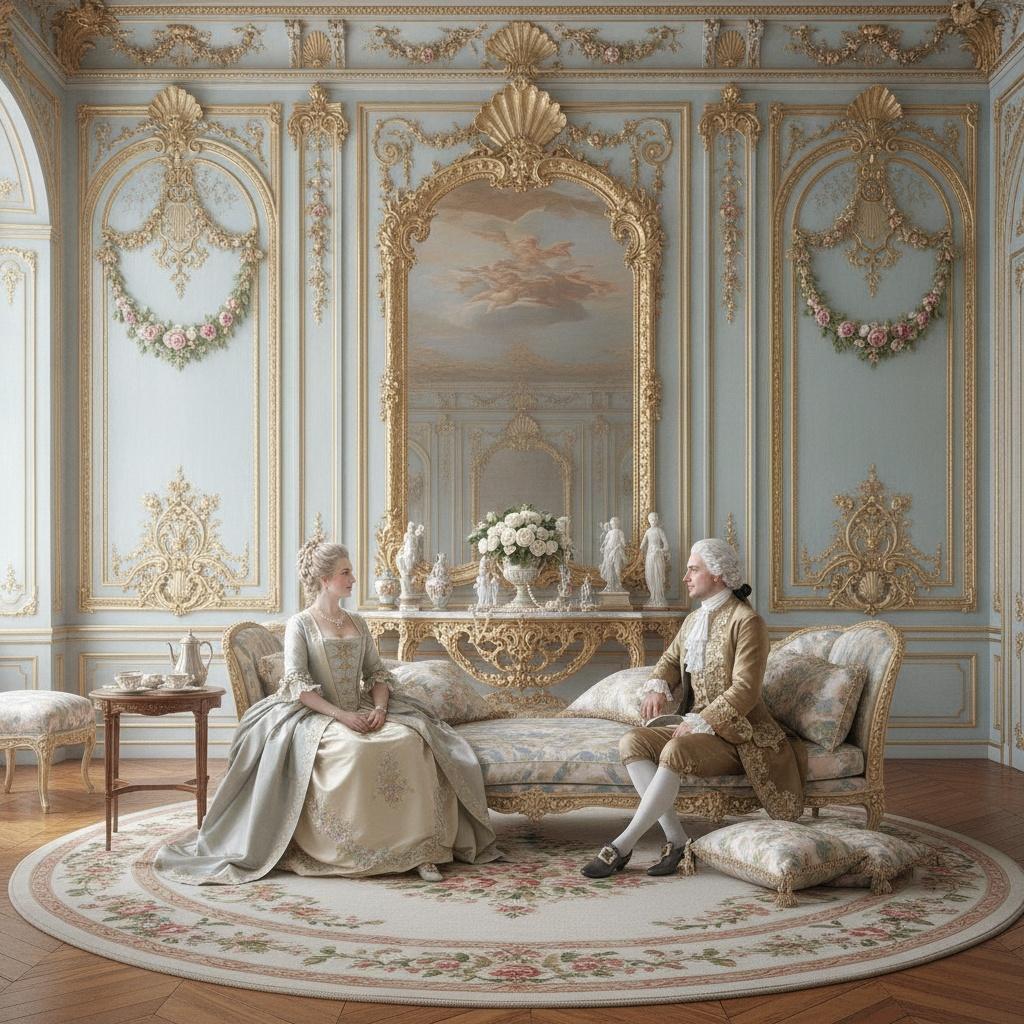
It is a mistake to view Rococo solely through the lens of painting; it was a totalizing aesthetic that permeated every facet of the domestic environment. The movement began in the interior design of the Parisian hôtels, where the boundaries between architecture and decoration became blurred. Walls were adorned with intricate stucco work, mirrors were used to expand the sense of light and space, and furniture took on the same sinuous, asymmetrical curves found in painting. This was an era of "total art," where a chair, a porcelain figurine, and a ceiling fresco all spoke the same visual language of grace and ornamentation.
The center of this cultural universe was the Parisian salon. These were much more than mere gathering places; they were intellectual and social hubs where the elite engaged in the art of conversation. In these intimate settings, the Rococo aesthetic found its perfect home. The soft lighting, the delicate textures of the upholstery, and the playful atmosphere provided the ideal backdrop for the exchange of wit and ideas. This synergy between the physical environment and the social ritual ensured that the Rococo style was not just a decorative choice, but a fundamental expression of the era's social fabric.
The Legacy of Rococo: From Eighteenth-Century Opulence to Neoclassical Reaction
As the mid-18th century progressed, the very qualities that made Rococo so beloved began to draw criticism. The rise of the Enlightenment brought a new emphasis on reason, morality, and civic duty. To the burgeoning bourgeois class and the proponents of Neoclassicism, the Rococo appeared increasingly superficial, frivolous, and even immoral. They sought a return to the "noble simplicity" of Greek and Roman antiquity, favoring straight lines, somber tones, and heroic themes over the pastel swirls and hedonistic escapades of the Rococo.
The French Revolution eventually brought an end to the era of aristocratic indulgence, casting much of the Rococo style into disrepute as a symbol of a decadent, dying regime. Yet, despite this period of intense criticism, the legacy of Rococo remains indelible. Its emphasis on light, color, and the expressive power of the brushstroke paved the way for later movements, including Romanticism and even Impressionism. Today, we look back at the Rococo not merely as a period of excess, but as a profound moment in art history when humanity dared to prioritize beauty, intimacy, and the pure, unadulterated joy of existence.
At ArtsDot.com, we believe that the splendor of the Rococo era should be accessible to every admirer of history and fine art. Our collection offers meticulously crafted, hand-painted oil reproductions of these timeless masterpieces. Each piece is created by academic artists on 100% cotton canvas, ensuring that the luminous textures and expressive brushstrokes of masters like Fragonard are preserved for your home. Whether you seek a large-scale centerpiece or an intimate study, our museum-quality reproductions allow you to bring the elegance of the 18th century into the modern age.