The Architect of Scripture: The Historical Legacy of Saint Jerome
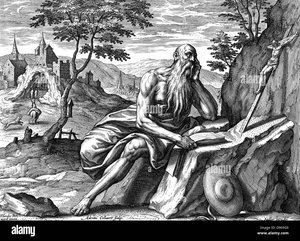 eusebius sophronius hieronymus
The Architect of Sacred Scripture In the vast annals of history, few figures loom as intellectually formidable or as spiritually profound as Eusebius Sophronius Hieronymus, known to the world as Saint Jerome. His life was a monumental journey, transi...
To traverse the annals of Christian history is to encounter figures whose intellectual gravity shaped the very foundations of Western civilization. Among these, few loom as large or as complexly as Eusebius Sophronius Hieronymus, known to the world as Saint Jerome. A man of profound dualities, Jerome occupied a unique space between the fading classical traditions of the Roman Empire and the burgeoning spiritual fervor of the early Middle Ages. He was not merely a priest or a theologian; he was a linguistic architect, a scholar whose monumental achievement—the creation of the Vulgate—provided a Latin translation of the Bible that would serve as the cornerstone of Western liturgy for over a millennium.
His life was a relentless pursuit of truth, characterized by an intense intellectualism paired with a rugged, often solitary, devotion. This journey took him from the sophisticated academic circles of his youth to the ascetic depths of the desert, where he sought divine communion through rigorous study and penance. It is this very tension—the scholar seeking God within the written word and the hermit seeking Him in the silence of the wilderness—that has made him one of the most enduring subjects for the great masters of European art. When we look upon his likeness in a museum or a private collection, we are not merely viewing a portrait; we are witnessing the intersection of human intellect and divine aspiration.
Decoding the Attributes: The Iconography of the Scholar and the Hermit
 Mastering Devotion: The Most Iconic Depictions of Saint Jerome in Art History
The Scholar and the Hermit: Understanding the Iconography of Saint Jerome To gaze upon a depiction of Saint Jerome is to witness a profound intersection of intellectual rigor and spiritual asceticism. As one of the most revered Doctors of the Church,...
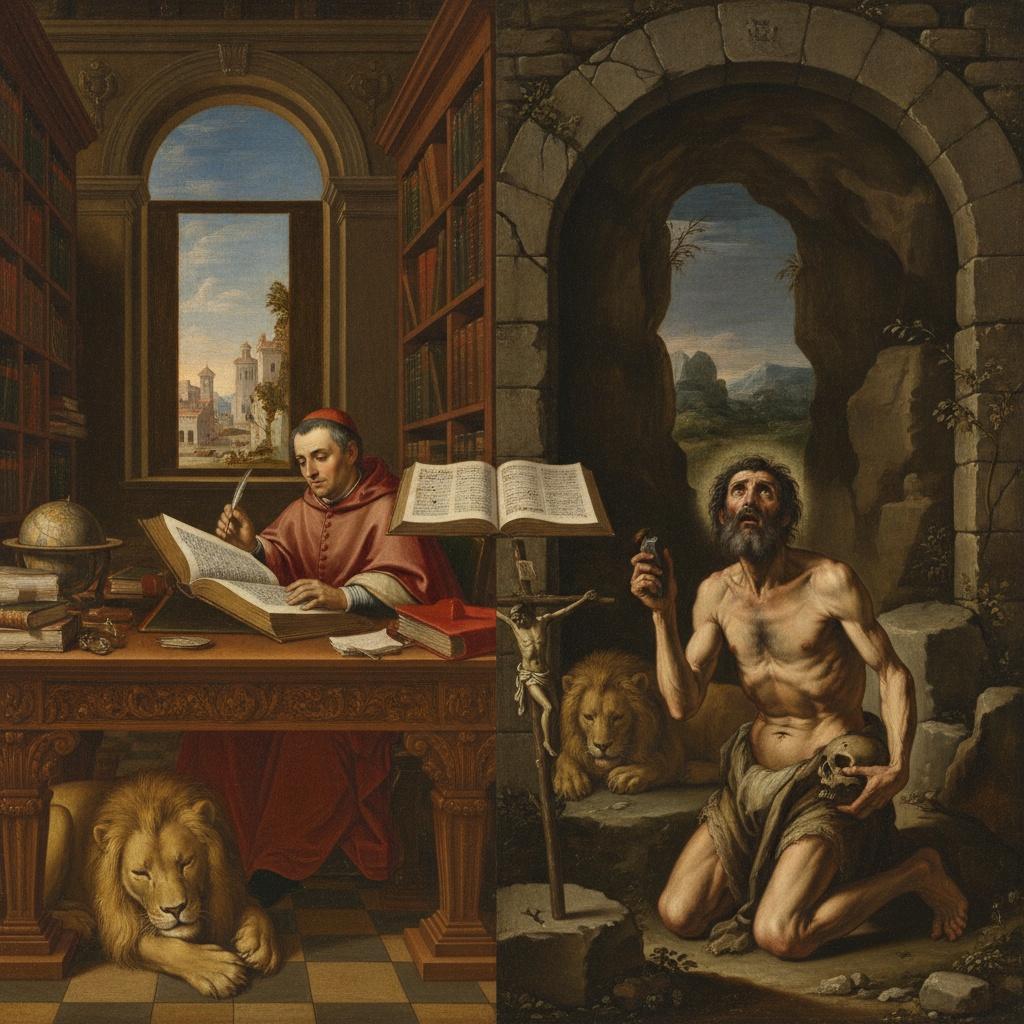
In the study of art history, iconography serves as our visual vocabulary, allowing us to decode the hidden narratives embedded within a composition. For Saint Jerome, this vocabulary is exceptionally rich, designed to communicate theological truths to both the learned scholar and the illiterate faithful. To gaze upon his depiction is to engage in a silent conversation with symbols that represent his life’s work and spiritual struggle. One of the most frequent companions in these paintings is the lion, a creature that embodies both the legendary strength of the saint and the capacity of faith to tame the wild, earthly impulses of the human soul.
Beyond the lion, artists utilize specific attributes to anchor Jerome in his historical reality. The presence of heavy, ink-stained volumes, parchment, and scholarly tools reminds the viewer of his role as the translator of the sacred text. Conversely, elements such as the skull—a classic memento mori—serve as a somber reminder of the fleeting nature of mortal existence, urging the viewer toward contemplation of eternity. Occasionally, one may even spot the red cardinal's hat, a symbol of ecclesiastical authority that contrasts sharply with his more ascetic portrayals. Through these carefully curated motifs, the artist transforms a historical figure into an eternal concept of wisdom and penance.
Renaissance Serenity: Intellectual Rigor in Early Netherlandish and Italian Art
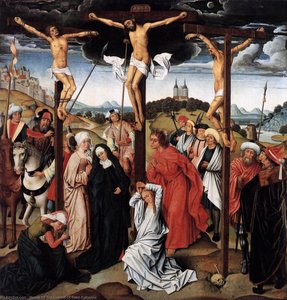 master of the legend of saint catherine
The Enigmatic Master of Saint Catherine The identity of the “Master of the Legend of Saint Catherine” remains one of the most enduring mysteries in Early Netherlandish painting, a puzzle that has captivated scholars for over a century. Known primaril...
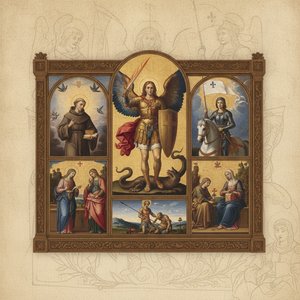
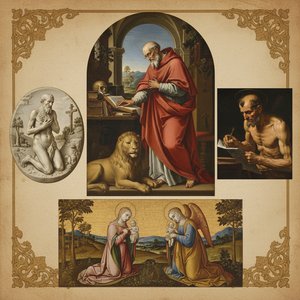
As the Renaissance dawned, the depiction of Saint Jerome underwent a profound transformation, moving toward a more structured and harmonious expression of devotion. In the works of the Early Netherlandish masters, such as the enigmatic Master of the Legend of Saint Catherine, we see a breathtaking fusion of Byzantine iconography and Northern European realism. These artists utilized techniques like grisaille—the use of monochrome pigments—to achieve subtle tonal gradations that heightened the emotional gravity of the saint's presence. In these panels, Jerome is often presented with a solemn grandeur, his scholarly focus rendered with an astonishing, microscopic detail that invites deep meditation.
In parallel, the Italian Renaissance sought to harmonize human emotion with divine order. The works of artists like Ansano di Pietro di Mencio offer us a window into a more tranquil form of devotion. Here, the hermit’s contemplation is captured with a palpable sense of stillness and rhythmic focus. There is no frantic struggle in these compositions; instead, there is a serene, structured beauty that reflects the humanist ideals of the era. This period of art history mastered the ability to present Jerome not as a figure of chaos, but as a pillar of intellectual and spiritual stability, embodying the very essence of Renaissance humanism.
Baroque Drama: Caravaggio and the Tenebrism of Spiritual Struggle
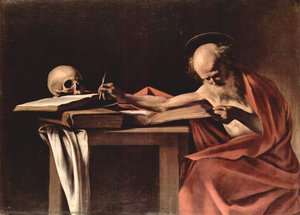
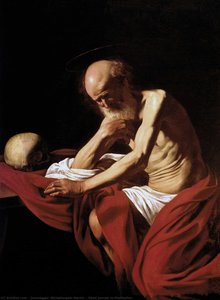 Saint Jerome in Meditation
A Masterpiece of Baroque Drama: Saint Jerome in Meditation Michelangelo Merisi da Caravaggio’s “Saint Jerome in Meditation” (1606) is a powerful and intimate portrayal of the saint, embodying the core tenets of the Baroque style – intense emotion, dr...
The transition into the Baroque era brought with it a radical shift in how the divine was visualized. No artist embodied this dramatic evolution more powerfully than Michelangelo Merisi da Caravaggio. In his 1606 masterpiece, Saint Jerome in Meditation, the saint is no longer found in a state of serene study, but in the throes of intense, visceral emotion. Caravaggio utilized tenebrism—a heightened form of chiaroscuro—to create a composition dominated by deep, impenetrable shadows from which the subject emerges bathed in a stark, unforckingly realistic light.
This use of extreme contrast is not merely an aesthetic choice; it is a theological statement. The light does not just illuminate Jerome’s weathered skin and tired hands; it intensifies the viewer's focus on his internal struggle with mortality and faith. Caravaggio eschewed the idealized beauty of the Renaissance, choosing instead to portray Jerome as an aging man, marked by the physical toll of his ascetic life. This unflinching realism, combined with the dramatic interplay of light and dark, transforms the painting into a profound meditation on human vulnerability, making the Baroque era perhaps the most emotionally resonant period for depicting the saint's spiritual journey.
From Devotional Icons to Modern Collections: Preserving Sacred Imagery
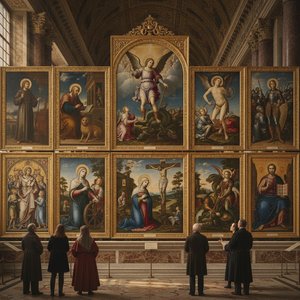 Divine Visions: Top 10 Masterpieces Depicting Iconic Saints
Introduction To step into a gallery dedicated to the divine is to embark on a journey through the very soul of human devotion. Throughout the centuries, the theme of saints has served as one of the most profound conduits for artistic expression, brid...
The legacy of Saint Jerome continues to resonate far beyond the walls of ancient cathedrals and museums. The themes he represents—the search for meaning, the tension between intellect and faith, and the contemplation of mortality—remain universally relevant. Today, the appreciation of these masterpieces has moved into the realm of private connoisseurship and global art appreciation. For the modern enthusiast, owning a piece of this history is about more than decoration; it is about preserving a connection to the profound emotional gravity of the past.
At ArtsDot.com, we honor this tradition by offering museum-quality, hand-painted oil reproductions that capture the very soul of these historical treasures. Our artists, holding degrees from prestigious Fine Arts academies, meticulously recreate the visible brushstrokes and deep tonal ranges found in originals like Caravaggio’s works. Whether you seek the dramatic chiaroscuro of the Baroque or the serene detail of the Renaissance, our bespoke process—from digital mockup to final varnish—ensures that each piece is a lasting testament to artistic mastery. We invite you to bring the profound dialogue between the earthly and the divine into your own space through our curated collection of canonical masterpieces.