Early Life & Florentine Influences: The Foundations of Perugino’s Style
 Wikipedia: Pietro Perugino
Pietro Perugino (US: PERR-ə-JEE-noh, -oo-; Italian: [ˈpjɛːtro peruˈdʒiːno]; born Pietro Vannucci or Pietro Vanucci; c. 1446/1452 – 1523), an Italian Renaissance painter of the Umbrian school, developed some of the qualities that found classic expre...
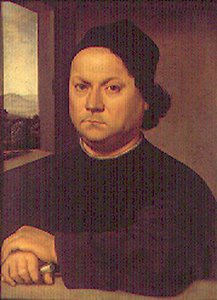
Pietro Vannucci, known to history as Perugino, emerged from the picturesque Umbrian countryside near Città della Pieve in the mid-15th century. While details surrounding his early upbringing remain somewhat elusive, it is clear that a nascent artistic talent bloomed within him, leading him toward Perugia and eventually, the vibrant heart of Florence. The precise timing of his Florentine sojourn continues to be debated amongst scholars, but its impact on his developing style is undeniable. Apprenticed in Andrea del Verrocchio’s workshop – a crucible of Renaissance innovation – Perugino found himself alongside luminaries like Leonardo da Vinci and Domenico Ghirlandaio. This environment instilled within him not only technical proficiency but also an appreciation for the burgeoning humanist ideals that were reshaping artistic expression.
Verrocchio's studio was renowned for its rigorous training, emphasizing anatomical accuracy, perspective, and a meticulous approach to detail. Perugino absorbed these lessons wholeheartedly, yet he didn’t simply replicate his master’s style. He began to cultivate a unique sensibility—a preference for clarity of composition, graceful figures, and a serene, almost ethereal quality in his depictions. The influence of Piero della Francesca is also keenly felt during this period; Perugino's early works demonstrate a growing mastery of perspective, creating spaces that feel both realistic and profoundly harmonious. This foundation would prove crucial as he embarked on larger-scale commissions, shaping the very essence of his artistic identity.
The Sistine Chapel Commissions: Establishing a Renaissance Reputation
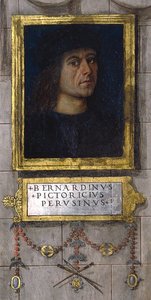 Pinturicchio
Discover Pinturicchio (1454-1513), a Renaissance master renowned for his exquisite frescoes, vibrant colors & detailed compositions. Explore works in the Sistine Chapel & Borgia Apartments! #RenaissanceArt
By approximately 1480, Perugino’s burgeoning reputation had reached Rome, securing him a coveted commission from Pope Sixtus IV to contribute to the decoration of the newly constructed Sistine Chapel. This was a pivotal moment in his career, placing him amongst the most sought-after artists of the era and providing an unparalleled platform to showcase his talents. Working alongside fellow masters like Botticelli, Pinturicchio, and Ghirlandaio, Perugino undertook the challenging task of depicting scenes from the life of Moses on the chapel walls.
His contributions – including *Moses and Zipporah* and *The Baptism of Christ* – immediately distinguished themselves. Perugino’s figures possessed a remarkable dignity and composure, their forms rendered with exquisite detail and imbued with a sense of spiritual gravitas. He demonstrated an exceptional ability to organize complex narratives within clearly defined spaces, creating compositions that were both visually compelling and intellectually satisfying. While the frescoes would later be partially obscured by Michelangelo's monumental work on the ceiling, Perugino’s initial impact was significant, solidifying his position as a leading figure of the High Renaissance. The organizational skills he displayed during this project – coordinating assistants and managing a large-scale undertaking – further enhanced his prestige.
Perugino's Umbrian Workshop: A Center for Artistic Innovation and Collaboration
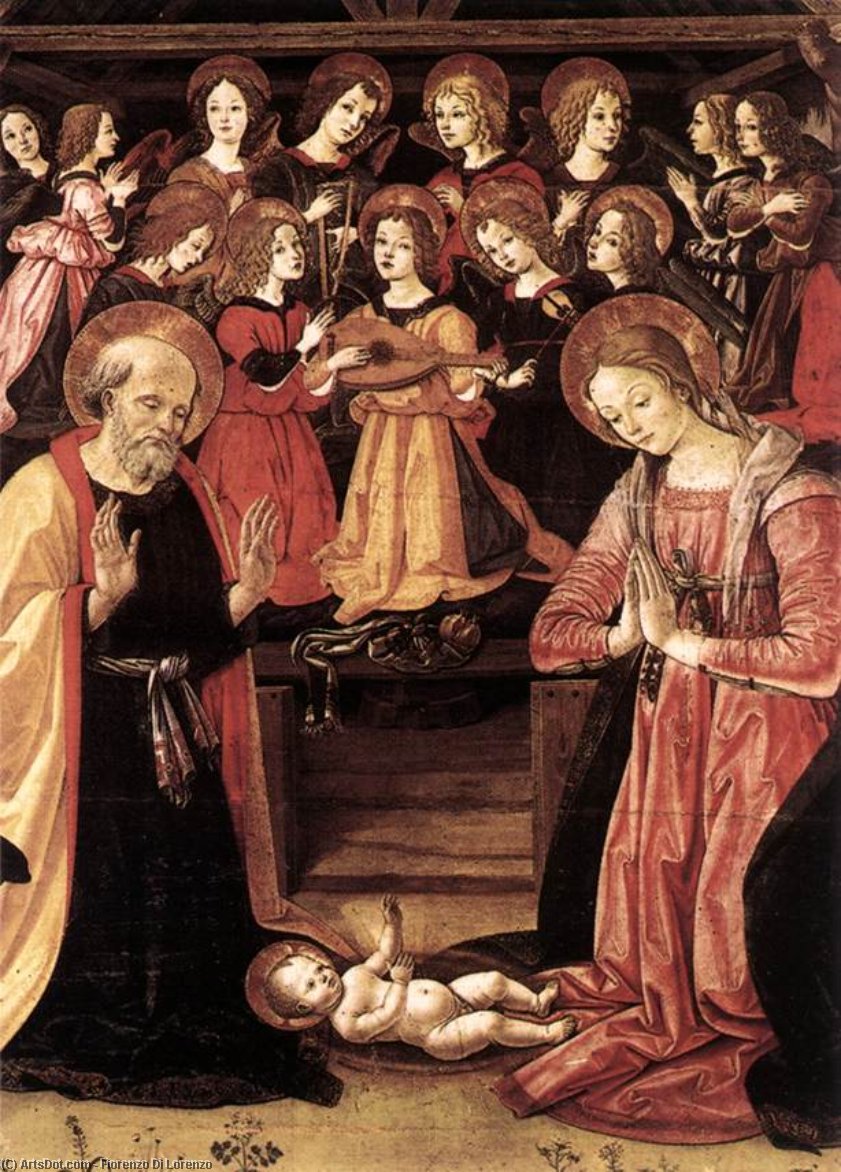 Fiorenzo di Lorenzo
Explore Fiorenzo di Lorenzo (1445-1522), a key Umbrian Renaissance painter known for his sense of space & expressive character. Discover Madonna paintings & influence on Perugino & Pinturicchio! #ItalianArt #Renaissance
Despite his successes in Florence and Rome, Perugino remained deeply connected to his native Umbria. He established thriving workshops in both Perugia and Florence, becoming a prolific producer of altarpieces, frescoes, and panel paintings. These workshops were not merely sites of production; they functioned as centers for artistic innovation and collaboration, fostering the development of a distinctive Umbrian style.
Perugino’s approach to workshop management was particularly noteworthy. He meticulously designed compositions, often creating detailed preparatory drawings (cartoons) that his assistants would then execute. This allowed him to maintain consistent quality while fulfilling numerous commissions simultaneously. However, he wasn't simply a detached overseer; Perugino actively engaged in the painting process himself, imparting his knowledge and aesthetic sensibilities to his pupils. It was within this environment that a young Raphael Sanzio received his early training, absorbing the principles of clarity, harmony, and grace that would define his own extraordinary career.
Masterpieces of Serenity: Exploring Key Works – ‘Baptism of Christ’ & ‘Don Biagio Milanesi’
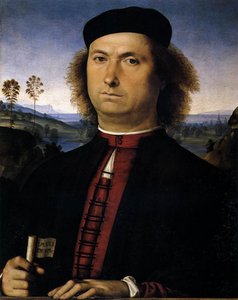
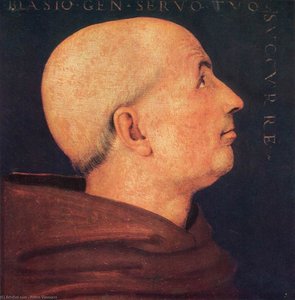
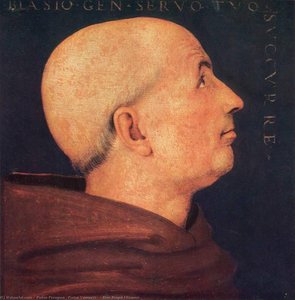 Don Biagio Milanesi
Admire Pietro Perugino’s ‘Don Biagio Milanesi’ (1499). This early Renaissance portrait showcases realism & earthy tones, a captivating study of piety & form.
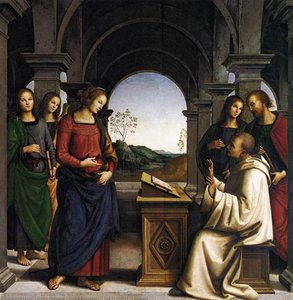
Perugino's oeuvre is characterized by a remarkable consistency in style and subject matter. Religious themes dominate, often featuring serene Madonnas, graceful saints, and meticulously rendered landscapes. Two works, however, stand out as particularly representative of his artistic achievements: the *Baptism of Christ* (1510) and *Don Biagio Milanesi* (1499). The *Baptism of Christ*, an altarpiece commissioned for St. Augustine’s church in Perugia, exemplifies Perugino's mastery of composition and symbolic detail. The scene is imbued with a sense of tranquility and reverence, the figures arranged in a harmonious balance that draws the viewer into the sacred moment.
In contrast, *Don Biagio Milanesi* offers a compelling glimpse into Perugino’s skill as a portraitist. This early Renaissance work showcases a remarkable degree of realism and psychological insight. The sitter's piety is conveyed through his thoughtful expression and carefully rendered features, while the earthy tones and subtle lighting create an atmosphere of quiet dignity. Both paintings demonstrate Perugino’s ability to imbue his subjects with a sense of humanity and spiritual depth.
Raphael’s Mentor: Perugino’s Enduring Influence on a Renaissance Giant
Perhaps no aspect of Perugino's legacy is more significant than his role as the mentor to Raphael Sanzio. The young Raphael spent several years in Perugino’s workshop, absorbing his master’s techniques and aesthetic principles. While Raphael would eventually surpass his teacher in terms of innovation and complexity, his early works bear a striking resemblance to Perugino's style.
Raphael adopted Perugino’s clarity of composition, graceful figures, and serene palette, refining them further and imbuing them with a greater sense of emotional depth. The influence is particularly evident in Raphael’s early Madonnas, which echo the delicate beauty and spiritual grace of Perugino's own depictions. While Michelangelo often criticized Perugino as “clumsy,” it is undeniable that his teachings provided the foundation upon which Raphael built his extraordinary career, shaping the course of Renaissance art for generations to come.
Rediscovery and Legacy: From Obscurity to Acclaimed Master
Despite his considerable success during his lifetime, Perugino’s reputation waned in the centuries following his death. Overshadowed by the brilliance of Raphael and Michelangelo, he was often relegated to a secondary position in art historical narratives. However, the 19th century witnessed a renewed appreciation for his work, fueled by the Pre-Raphaelite movement's fascination with early Renaissance painting.
Artists like John Ruskin championed Perugino’s serene beauty and technical mastery, recognizing him as a pivotal figure in the development of Italian art. The acquisition of *The Nativity* by the Victoria and Albert Museum in 1862 further solidified his reputation, bringing his work to a wider audience. Today, Pietro Perugino is celebrated as one of the leading painters of the Umbrian school, renowned for his harmonious compositions, graceful figures, and enduring influence on Renaissance art. His works continue to captivate viewers with their serene beauty and spiritual depth, offering a timeless testament to the power of artistic vision.
Explore the world of Pietro Perugino and other Renaissance masters at ArtsDot.com, where museum-quality reproductions bring these iconic artworks into your home.