Introduction: The Enduring Power of Satire – Reflecting Society Through Laughter
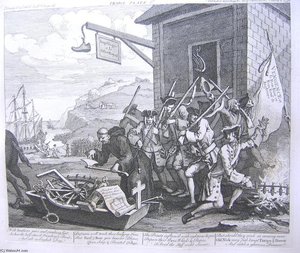
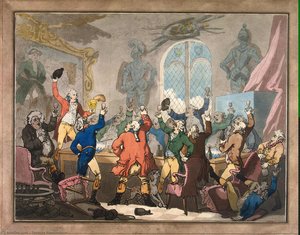
Satire, at its heart, is a mirror held up to society—often distorted, sometimes unflattering, but always revealing. It’s an art form born from observation, fueled by wit, and sharpened by critique. Throughout history, artists have wielded satire not merely as entertainment, but as a potent tool for social commentary, challenging norms, exposing hypocrisy, and prompting reflection. From the bustling streets of 18th-century London to the politically charged landscapes of the 20th century, the impulse to dissect and deride has consistently found expression in visual art, offering invaluable insights into the values, anxieties, and follies of each era. The power lies not just in *what* is being satirized, but *how*; the skillful deployment of caricature, symbolism, and narrative allows artists to bypass direct confrontation and engage audiences on a deeper, often more impactful level.
Hogarth's London: Pioneering Visual Social Commentary in 18th-Century Britain
 William Hogarth: Satire, Social Commentary & the Birth of Modern British Art
Explore the satirical world of William Hogarth, pioneering British painter & engraver. Discover his iconic works like *A Rake's Progress* and insightful social commentary on 18th-century London life.
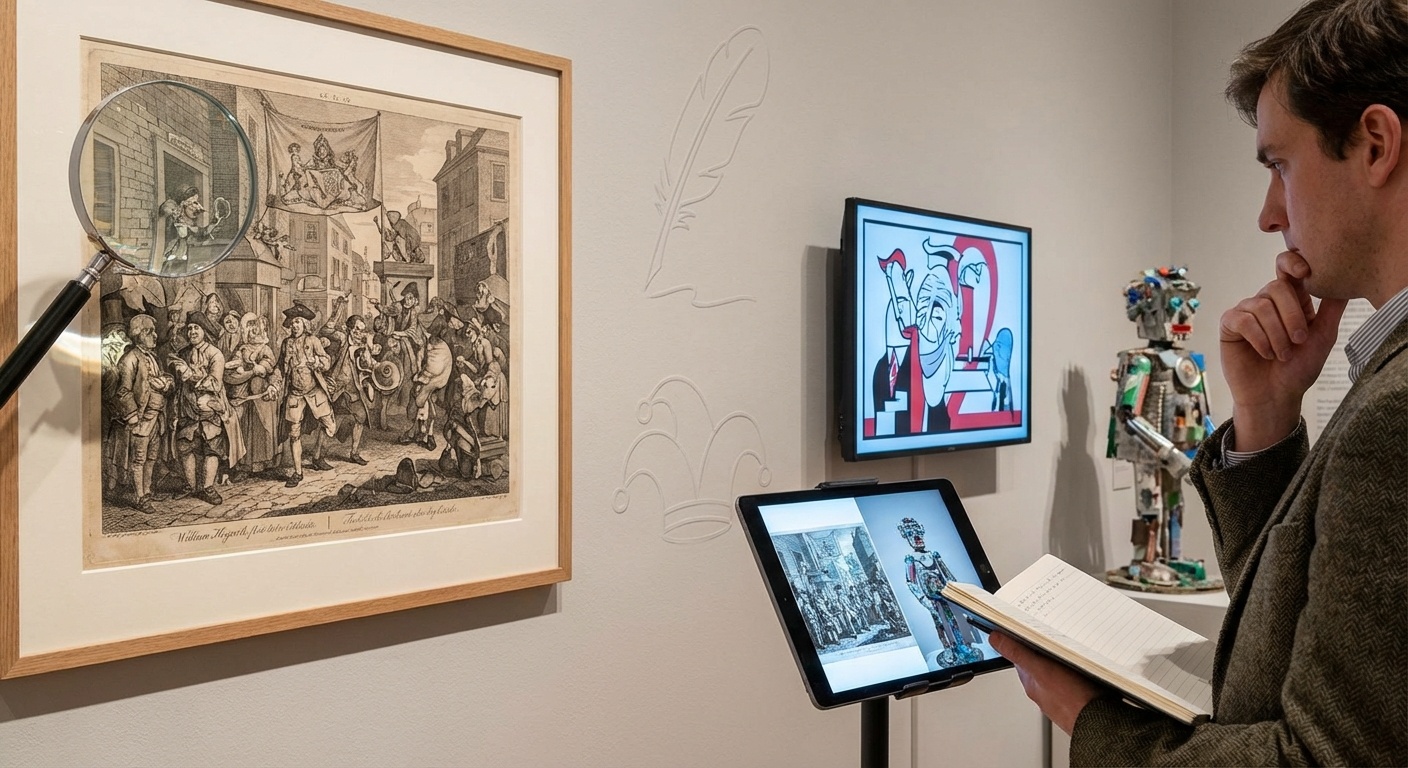
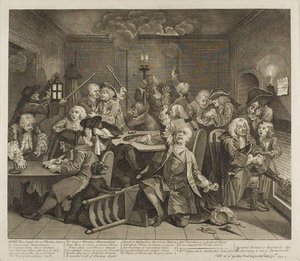
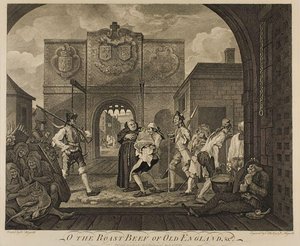
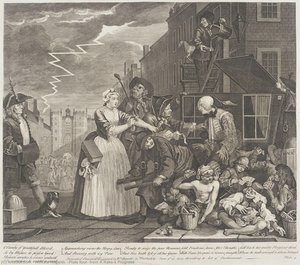
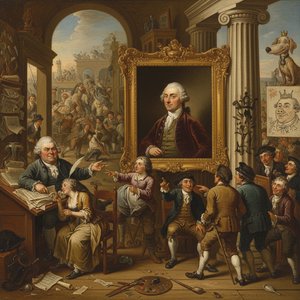
William Hogarth stands as a pivotal figure in the development of modern British art, largely due to his groundbreaking use of sequential imagery and pointed social critique. Unlike many of his contemporaries who catered to aristocratic patronage with flattering portraits, Hogarth turned his attention to the everyday lives – and often, the misdeeds – of Londoners. His series like A Harlot's Progress (1731) and A Rake’s Progress (1735) weren’t simply moralizing tales; they were meticulously detailed narratives that exposed the harsh realities of poverty, vice, and social climbing. Hogarth masterfully employed a technique akin to visual gossip, embedding symbolic clues within his compositions – a decaying building representing moral decline, specific objects denoting status or profession – inviting viewers to actively decipher the story unfolding before them. He wasn’t just showing life; he was dissecting it, offering a scathing commentary on the societal structures that perpetuated inequality and corruption. His work resonated deeply with a burgeoning middle class eager for art that reflected their own experiences and concerns.
Rowlandson and Gillray: Caricature as Political Weapon and Social Observation
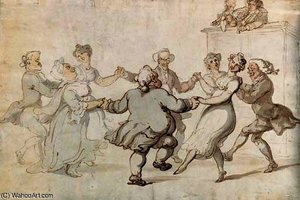 Figures dancing with musicians looking on
Discover 'Figures dancing...' by Thomas Rowlandson! A witty 18th-century satire painting of a lively social gathering. Explore this unique artwork's charm & history.
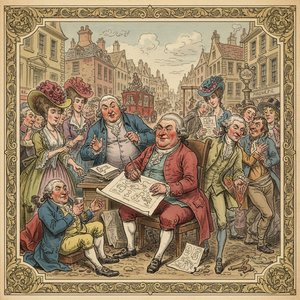
Following in Hogarth’s footsteps, Thomas Rowlandson and James Gillray elevated caricature to an unprecedented level of political and social influence. While Hogarth laid the groundwork for narrative visual commentary, Rowlandson and Gillray weaponized it. Their prints became synonymous with biting satire, targeting figures from the aristocracy to the common man with equal ferocity. Rowlandson’s work often focused on the excesses and absurdities of fashionable society, capturing the flamboyant styles and questionable morals of Georgian England with a keen eye for detail and a mischievous sense of humor. Gillray, however, was more overtly political, relentlessly attacking Napoleon, the monarchy, and perceived enemies of the state. The power of their caricatures lay in their ability to distill complex issues into instantly recognizable images – exaggerated features, unflattering poses, and symbolic props all contributing to a potent message. They weren’t merely drawing faces; they were constructing narratives that shaped public opinion and fueled political debate.
Beyond England: The Evolution of Satirical Art in the 19th & 20th Centuries – From Daumier to Grosz
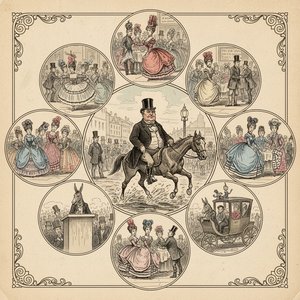
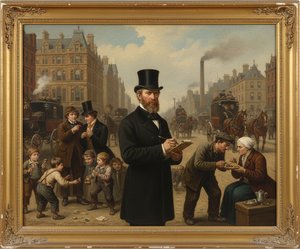
The spirit of satirical art wasn't confined to Britain. Throughout the 19th and 20th centuries, artists across Europe embraced the power of visual critique. Honoré Daumier in France used lithography to expose the injustices of the legal system and the hypocrisy of Parisian society. His series Les Parisiens offered a scathing portrayal of middle-class life, capturing its pretensions, anxieties, and moral failings with remarkable accuracy. As political tensions escalated in the early 20th century, satire took on an even more urgent tone. George Grosz, working in Weimar Germany, became renowned for his brutally honest depictions of post-war decadence and social decay. His paintings and drawings were a visceral response to the trauma of war and the corruption of the ruling class, often employing grotesque imagery and sharp lines to convey a sense of alienation and despair. Grosz’s work, like that of Daumier before him, wasn't simply about depicting reality; it was about exposing its ugliness and challenging viewers to confront uncomfortable truths.
Peggy Bacon and Pierre Sadek: Modern Masters of Provocative Critique
 margaret frances "peggy" bacon
Peggy Bacon (1895-1987) was a celebrated American artist known for her sharp, satirical caricatures & illustrations in publications like The New Yorker. Explore her graphic art, social commentary, and contributions to 20th-century American art.
The 20th century also saw the emergence of artists who pushed the boundaries of satire in new directions. Peggy Bacon, an American artist celebrated for her sharp caricatures published in The New Yorker, used her wit to dissect the pretensions and absurdities of American society. Her work often focused on the lives of women, challenging traditional gender roles and exposing the hypocrisy of social conventions. Simultaneously, Pierre Sadek, a Lebanese political cartoonist, fearlessly satirized the complexities of Middle Eastern politics. In a region where freedom of speech was often suppressed, Sadek’s cartoons became a powerful voice for dissent, challenging authoritarian regimes and advocating for social justice. His work wasn't just about making people laugh; it was about risking everything to speak truth to power. Both Bacon and Sadek demonstrate the enduring relevance of satire as a tool for social change, adapting its form to address contemporary issues and challenge established norms.
The Legacy of Satire: Contemporary Artists Continuing the Tradition of Social Commentary
Today, the tradition of satirical art continues to thrive, albeit in new and diverse forms. From street art that challenges political ideologies to digital illustrations that expose online hypocrisy, artists are constantly finding innovative ways to reflect and critique society. The core principles remain the same: keen observation, sharp wit, and a willingness to challenge authority. The power of satire lies in its ability to bypass direct confrontation and engage audiences on an emotional level, prompting reflection and sparking dialogue. As long as there is injustice, inequality, and absurdity in the world, artists will continue to wield the tools of satire – caricature, symbolism, and narrative – to hold a mirror up to society and remind us of our own follies. Explore these powerful works further at ArtsDot.com, where you can discover reproductions of masterpieces that continue to provoke thought and inspire change.