The Alchemy of Carbon: Understanding Graphite's Versatile Spectrum
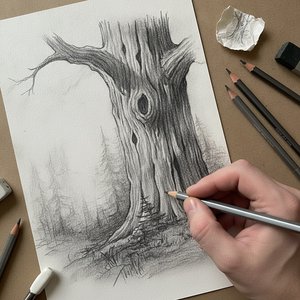 The Power of Graphite: Mastering Depth, Texture, and Detail in the Art of Pencil Drawing
The Alchemy of Carbon: Understanding Graphite's Versatility To hold a piece of graphite is to hold a fragment of the earth’s ancient history, a concentrated essence of carbon that possesses the unique ability to bridge the gap between a mere mark and...
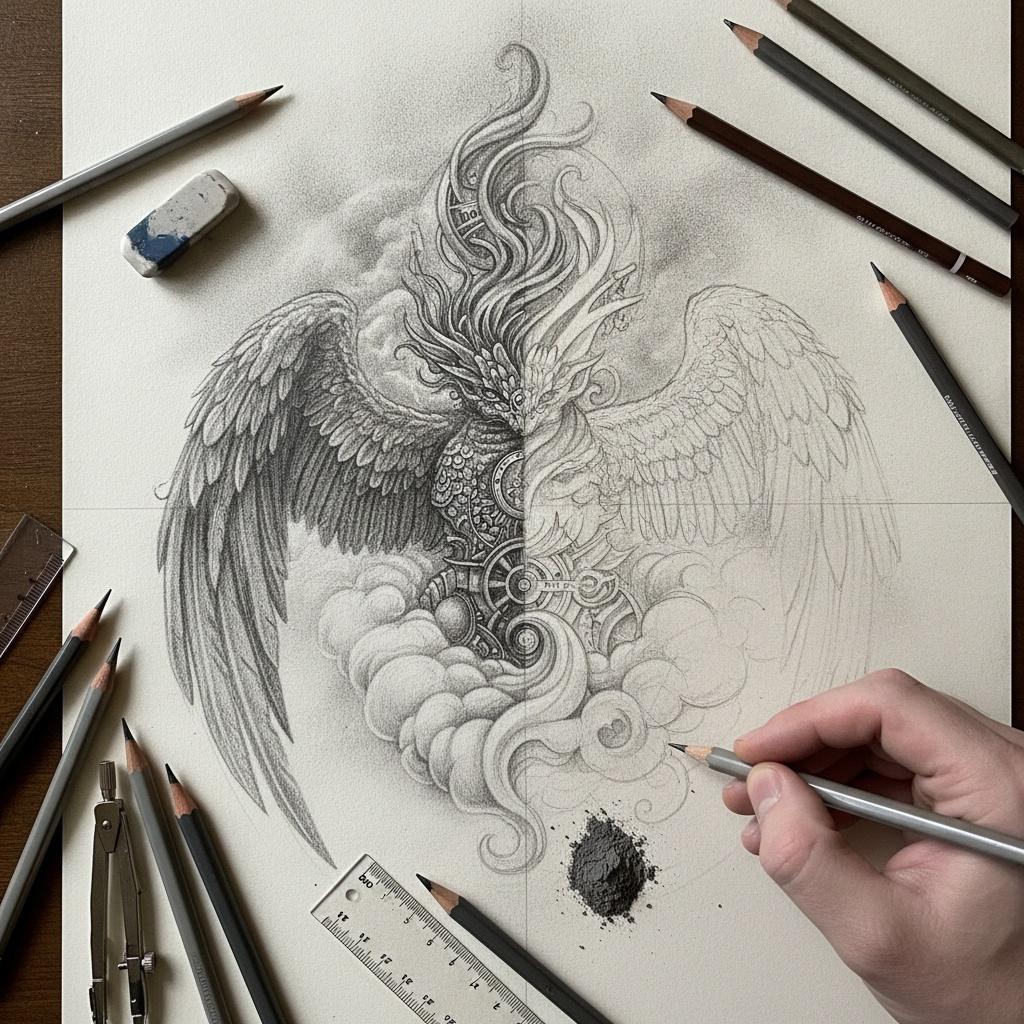
To hold a piece of graphite is to grasp a fragment of the earth’s ancient history, a concentrated essence of carbon that possesses the unique ability to bridge the gap between a mere mark and a profound statement. Unlike the heavy, dramatic presence of charcoal or the permanent authority of ink, graphite offers a subtle, silvery spectrum that invites the artist into a delicate dance of light and and shadow. This medium is not merely about drawing; it is an exercise in alchemy, where the pressure of a hand against paper transforms raw mineral into a window of perception.
The versatility of graphite lies in its remarkable range, from the ethereal lightness of a 9H pencil that whispers across the grain to the profound, velvety darkness of a 9B that anchors a composition with gravity. This fluidity allows for a seamless transition between the seen and the unseen, making it an indispensable tool for those seeking to capture the ephemeral qualities of atmosphere or the subtle gradations of skin, stone, and silk. It is a medium of infinite patience, rewarding the disciplined hand with a level of precision that few other materials can replicate.
Architectural Precision: Navigating Grades from 9H to 9B
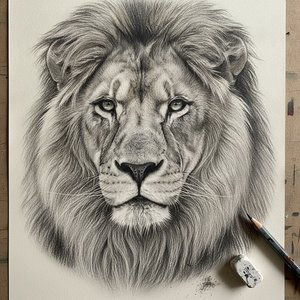 Mastering Graphite Pencil: The Ultimate Expert Guide to Achieving Depth, Texture, and Hyper-Realistic Detail
The Foundation of Precision: Selecting Your Graphite Grades and Essential Tools Every great masterpiece begins not with a stroke, but with a deliberate choice. For the aspiring artist, understanding the alchemy of graphite is the first step toward tr...
Every great masterpiece begins not with a stroke, but with a deliberate choice of instrument. For the discerning artist, understanding the grades of graphite is the first step toward true mastery. One must view pencils not as interchangeable sticks, but as specialized instruments of light and shadow. The hard grades, characterized by their high mineral content, offer the surgical precision required for fine architectural lines and initial structural mapping. These lighter marks provide the skeletal framework upon which a composition is built.
Conversely, the soft grades possess a buttery consistency that allows for sweeping, atmospheric transitions essential for rendering the softness of clouds or the depth of a shadow. As one moves through the spectrum toward the 9B, the graphite becomes increasingly rich and dark, providing the necessary weight to create contrast. To navigate this spectrum is to understand the balance between the hard, precise edge and the soft, smudged gradient, allowing for a controlled exploration of the entire tonal range.
Sculpting with Light: Techniques for Achieving Dimensional Depth
 Academic Realism's Finest: 10 Masterpieces for Art Lovers & Home Decor
Introduction To gaze upon these ten masterpieces is to step back into a world where skill reigned supreme, and art served as a mirror reflecting not just appearances, but the very soul of human experience. The Academic Realism movement, born from the...
The transition from a two-dimensional sketch to a three-dimensional illusion is a feat of light management. To master graphite is to become a conductor of value, moving beyond simple outlines to employ techniques such as hatching, cross-hatching, and smooth blending to suggest the curvature of form. The concept of depth in pencil drawing relies heavily on the orchestration of edges—knowing when to leave a line crisp and when to allow it to dissolve into the surrounding atmosphere.
By mastering value scales, an artist can create the illusion of volume, making a flat surface appear to recede or protrude. This process requires an intimate understanding of how light interacts with mass. Through the careful application of varying pressures and layers, one can achieve a translucent glaze or a dense, opaque shadow, effectively sculpting form out of nothingness. It is through this meticulous management of contrast that a drawing transcends mere representation to become a living, breathing entity.
The Tactile Surface: Mastering Texture and Materiality
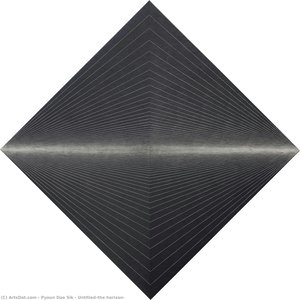 pyoun dae sik
Pyoun Dae Sik: Exploring Texture and Space Through Graphite Lines Pyoun Dae Sik (born , South Korea) is a contemporary Korean graphite artist whose distinctive style centers on meticulous line drawings that delve into the complexities of space and re...
Texture in graphite drawing is often born from the intimate interaction between the lead and the substrate. A true professional understands that selecting a paper with a subtle tooth—a microscopic landscape of graininess—is vital; without this anchor, the graphite lacks character and may result in flat, sliding marks. The interplay between the smooth, silvery sheen of compressed graphite and the textured grain of the paper allows for the creation of complex surfaces, from the ruggedness of weathered stone to the delicate smoothness of silk.
Artists like Pyoun Dae Sik demonstrate how graphite can be manipulated to create layered surfaces that invite contemplation about materiality. Through repetitive drawing actions, one can build up a physical presence on the page, using the medium to explore space and repetition. This focus on texture elevates the work beyond simple imagery, turning the paper into a tactile experience where the viewer can almost feel the weight and substance of the rendered objects.
The Artist's Toolkit: Beyond the Pencil Tip
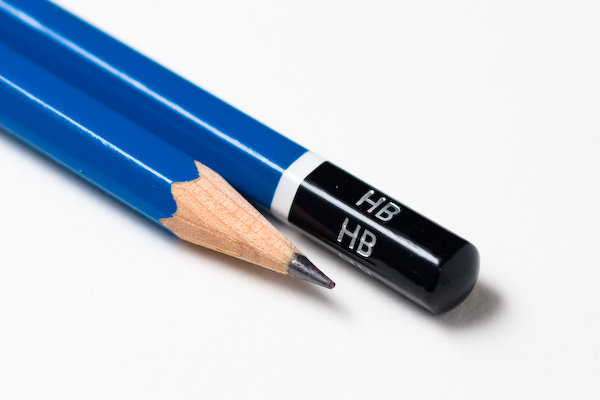 Pencil
A pencil ( ) is a writing or drawing implement with a solid pigment core in a protective casing that reduces the risk of core breakage and keeps it from marking the user's hand. Pencils create marks by physical abrasion, leaving a trail of solid core...
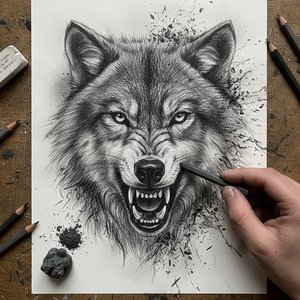
While the pencil is the primary protagonist, the success of a graphite work often depends on its supporting cast. A curated toolkit is essential for achieving hyper-realistic detail and nuanced textures. The integration of blending stumps, kneaded erasers, and chamois cloths allows the artist to manipulate the medium far beyond the tip of the pencil. The kneaded eraser, in particular, acts as a sculptural tool, capable of lifting pigment to reveal highlights without disturbing the underlying paper fibers.
Furthermore, the choice of materials extends to the very foundation of the work. The use of high-quality, acid-free papers ensures the longevity of the delicate graphite marks. By curating tools based on technical intent rather than mere convenience, an artist lays the groundwork for an artwork that possesses both structural integrity and a soulful, tactile quality. It is this dedication to the secondary tools that allows for the fine-tuning of highlights and the refinement of the most minute details.
Legacy of the Line: Graphite in the Canon of Fine Art
 The Nuances of Graphite: Exploring Emotional Depth & Technical Mastery in Pencil Drawing
A History Rooted in Earth: The Origins & Evolution of Graphite Wikipedia: Colored pencil A colored pencil (American English), coloured pencil (Commonwealth English), colour pencil (Indian English), map pencil, pencil crayon, or coloured/colouring lea...
The history of graphite is a tale of unassuming origins blossoming into profound artistic expression. From its early, practical uses to its rise as a sophisticated medium for fine art, graphite has always offered a liberating alternative to more demanding media like silverpoint. The invention of mixing powdered graphite with clay by Nicolas-Jacques Conté revolutionized production, democratizing access and allowing for the vast range of hardness we utilize today.
Throughout history, masters have utilized the subtle nuances of graphite to capture the human condition. From the meticulous observations found in the works of Karl Buergerniss to the contemporary, emotive explorations of artists like Oliver Le Brocq, the medium continues to evolve. Whether through the disciplined realism of the 19th-century academies or the modern exploration of space and texture, graphite remains a cornerstone of artistic achievement, offering an eternal playground for those who seek to master the delicate balance of light, shadow, and line.
At ArtsDot.com, we celebrate this enduring legacy of craftsmanship. As a global leader in fine art reproductions, we connect discerning collectors with the profound beauty of the Old Masters and contemporary legends alike. Whether you seek a hand-painted oil reproduction that captures the soul of a masterpiece or a custom commission that transforms your personal memories into museum-quality art, our commitment to authenticity and excellence remains unparalleled. Explore our vast collection and discover how we bring the timeless elegance of fine art into the modern home.