 Preview
 Send
Send Share
Share
 Details

 Download
 Similars
 X-Ray
X-Ray Diaporama
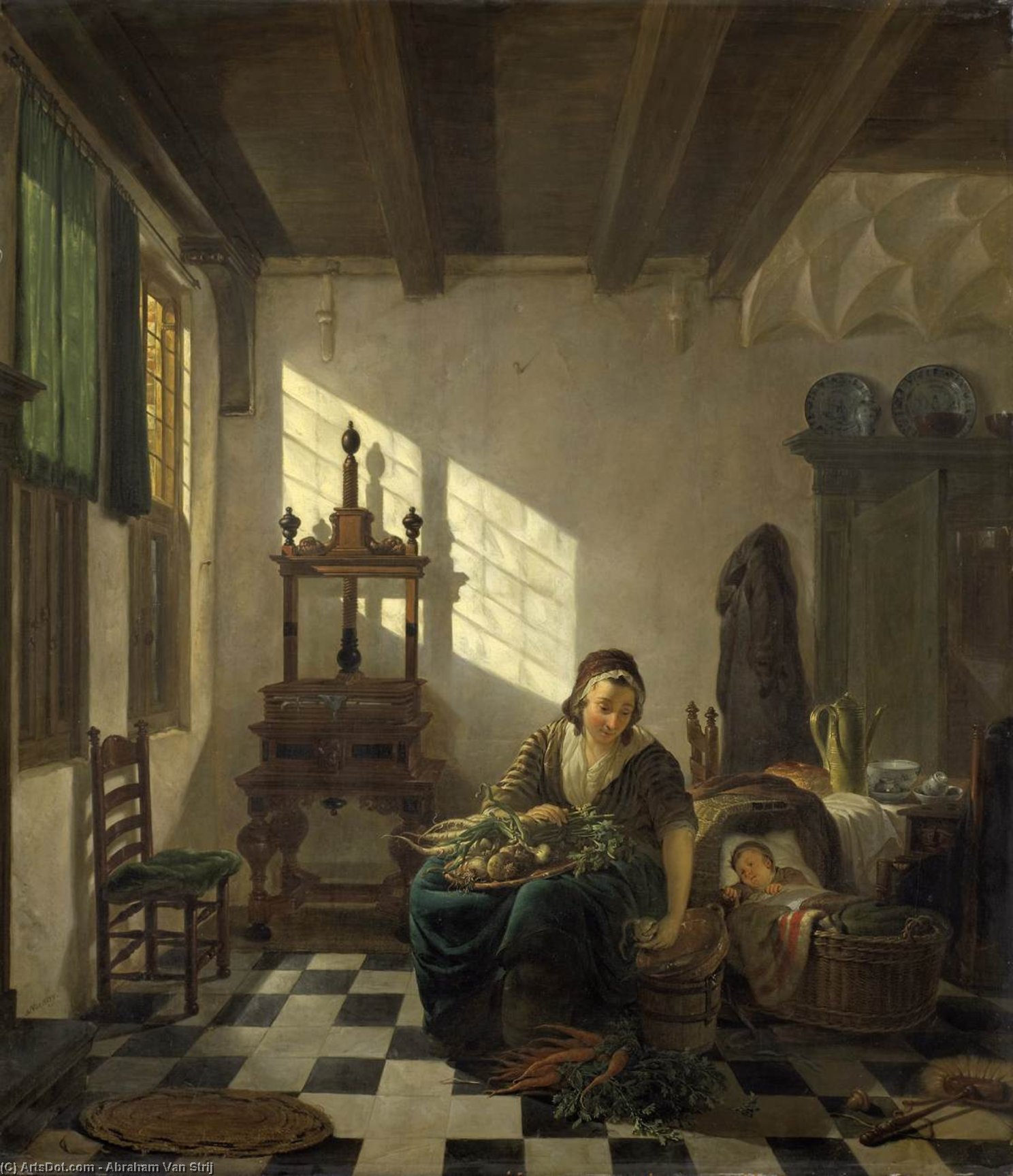
The Housewife
 Oil
Oil- WallArt
- Baroque Landscape Painter
 1800
1800- 19th Century
 57.0 x 49.0 cm
 Rijksmuseum
 Read More
Hand Made Oil Reproduction
Hand-painted oil on canvas in your size and frame, made to order by our artists. ( Buy Print Buy Image)




P118B $10

P118H $10

P118W $10

P438Z $10

P508JH $12

P508YH $12

P805H $10

P805Z $10

P919BZ $10

P919G $10

P919XJ $10

P959ZH $10

P968JZ $12

W106C $8

W218G $10

W218JH $8

W218Y $10

W307PJ $10

W316G $10

W316PJ $8

W316Y $10

W398PJ $8

W4111J $10

W500HY $15

W500JH $15

W692G $12

W849H $8

W940BG $15

W953PJ $8




Pick from our preset sizes that match the artwork's original proportions.

You may enter your own dimensions to fit a specific frame or space. If your selected size does not match the original image's proportions, we will either crop the artwork or extend the painting with additional hand-painted elements. A digital mockup will be sent for your approval before production begins.
Please note that the on-screen preview does not reflect the actual cropping or extension. Only the mockup will accurately show the final composition.
While custom sizes are available, we recommend selecting a dimension from the predefined list to preserve the original proportions.
After order, ArtsDot.com team will email client for instructions and provide a mockup preview
Worldwide Delivery () in 3/4 weeks instead of standard 5 weeks. (16 August). No compromise on quality.

Free Worldwide Express Shipping

High-Quality Linen Canvas

Full Shipping Insurance

Customs Tax Refund Guarantee

True Color Matching Guarantee

60-Day Return Policy (Defects Only)

100% Money-Back Guarantee

Bulk Discount Offer
 Glass option is only available in size under 110 CM

The Housewife
Reproduction Medium
Reproduction Size
-


Total Price
$ 263
Artwork Description
A Quiet Moment in Domesticity
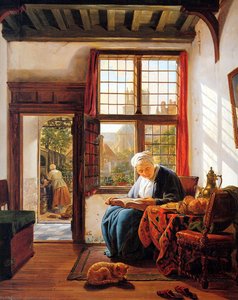
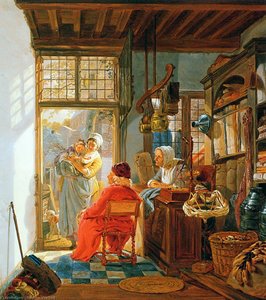
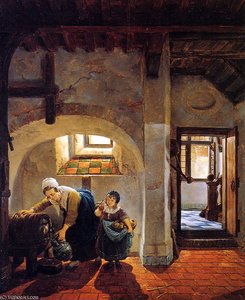
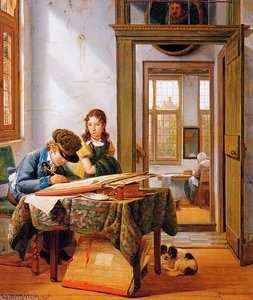
In the soft, amber glow of an era long passed, Abraham van Strij captures a scene of profound intimacy and stillness in his masterpiece, The Housewife. This evocative portrait transcends a mere depiction of a woman at home; it serves as a window into the soul of eighteenth-century Dutch domestic life. The subject sits ensconced within her private sanctuary, surrounded by the humble yet meaningful artifacts of her daily existence. As she rests or perhaps engages in a quiet moment of contemplation, the viewer is invited to share in the profound peace that permeates the room. There is a palpable sense of warmth radiating from the canvas, an atmosphere where the boundaries between the observer and the observed dissolve into a shared experience of tranquility.
The composition is a masterful study in balance and lived-in detail. Van Strij meticulously arranges the elements of the interior to guide the eye through a narrative of domestic abundance and order. From the sturdy presence of the chairs to the delicate placement of a vase near the center, every object feels intentional, contributing to a sense of settled permanence. The scattered array of bottles, bowls, and cups does not suggest clutter, but rather the rhythmic pulse of a life well-lived—the remnants of recent tasks and the preparation for future ones. This careful arrangement creates a rich, textured environment that speaks to the beauty found in the mundane, making it an ideal centerpiece for those looking to bring a sense of grounded elegance to a contemporary living space.
The Mastery of Light and Dutch Tradition
Rooted in the illustrious tradition of the Dordrecht school, Van Strij employs a technique that honors his lineage while showcasing his individual sensitivity to light. The painting utilizes a subtle interplay of shadows and highlights to breathe life into the textures of wood, ceramic, and fabric. This mastery of chiaroscuro lends a three-dimensional quality to the scene, allowing the viewer to almost feel the weight of the furniture and the coolness of the porcelain. His brushwork, though precise enough to capture the fine details of the household items, retains a soft, painterly quality that enhances the emotional warmth of the subject matter.
For the discerning collector or interior designer, The Housewife offers more than just visual beauty; it offers a historical connection to the Dutch Golden Age's enduring legacy of realism and domestic virtue. The painting functions as an anchor in any room, providing a sophisticated focal point that stimulates conversation and evokes nostalgia. Whether placed in a sunlit breakfast nook or a stately library, this reproduction brings with it the quiet dignity of the 1800s, transforming a modern interior into a curated gallery of historical emotion and timeless grace.
Related Artworks
Artist Biography
Abraham van Strij I (1753 – 1826): A Dordrecht Landscape Painter
Abraham van Strij was a prominent Dutch landscape painter born in Dordrecht, Netherlands, during the flourishing Baroque period of the eighteenth century. His artistic lineage traced back to Leendert van Strij, who instilled in him and his brother Jacob a passion for painting and draughtsmanship—a tradition that would continue through generations. Educated under the tutelage of Joris Ponse, Abraham’s formative years were spent honing his skills before joining his father's workshop, where he became deeply involved in the artistic community of Dordrecht.- Family Legacy: Van Strij descended from a family renowned for its artistic talent, shaping his early life and fostering an enduring connection to painting.
- Formal Training: Ponse’s guidance provided Abraham with invaluable foundational knowledge, preparing him for the challenges of mastering landscape artistry.
- Guild Membership & Leadership: As a member of Dordrecht’s St Luke Guild and later its director, Abraham actively participated in shaping artistic standards and promoting excellence within his region.
Notable Works & Artistic Style
Abraham van Strij's oeuvre is characterized by serene landscapes imbued with meticulous detail and atmospheric realism—a hallmark of Dutch Baroque painting. He skillfully captured the beauty of Dutch countryside vistas, particularly river scenes and winterscapes, demonstrating a profound understanding of light and color. His paintings often depict idyllic rural life, mirroring the humanist ideals prevalent during the Golden Age.- Recurring Themes: Landscapes featuring rivers, windmills, and pastoral scenes dominated his artistic output, reflecting an appreciation for the natural world.
- Technique: Employing oil paints on canvas with painstaking precision, Abraham achieved remarkable textural qualities and luminous effects—techniques that exemplify Baroque mastery.
- Influences: Rembrandt’s dramatic chiaroscuro and Cuyp's atmospheric realism served as crucial inspirations for his artistic vision.
Legacy & Historical Significance
Abraham van Strij’s contribution to Dutch art history is undeniable. He represents a pivotal figure in the Dordrecht landscape tradition, upholding the legacy of his father and establishing himself as a respected artist and educator. His paintings continue to resonate with viewers today, offering glimpses into a bygone era and celebrating the enduring beauty of the Dutch countryside. Furthermore, he played an important role in nurturing the artistic talent of future generations, ensuring that the St Luke Guild’s tradition would endure for decades to come.Further Exploration
To delve deeper into Abraham van Strij's artistic achievements and influence, consider visiting the Web Gallery of Art (
Abraham van Strij
1753 - 1826 , Netherlands
Quick Facts
- Artistic Movement Or Style: Neoclassical Dutch art
- Artists Or Movements Influenced By This Artist: ['Romanticism']
- Artists Who Influenced This Artist: ['Cornelis van Asselen']
- Date Of Birth: 1753
- Date Of Death: 1826
- Full Name: Abraham van Strij I
- Nationality: Dutch
- Notable Artworks:
- A Cherry Vendor at the Door
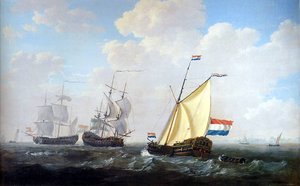
- Sailing of the Dordrecht Sun
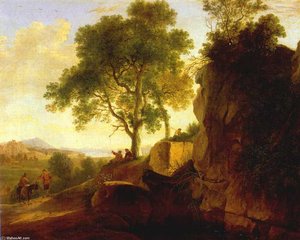
- Italian landscape with herdsmen couple
- Place Of Birth: Dordrecht, Netherlands
Related Articles
Van Gogh's Masterpieces: Explore 25 Iconic Paintings & Art for Your Home
Journey through Vincent van Gogh's 25 most iconic paintings! Explore 'Starry Night', 'Sunflowers,' and more—discover the stories, techniques & emotions behind these Post-Impressionist masterpieces. Find museum-quality art reproductions for your home at ArtsDot.com.
Cornelis van Poelenburch: Bridging Mannerism & the Dutch Baroque Landscape
Discover Cornelis van Poelenburch, a pivotal Dutch Baroque landscape painter bridging Mannerism & Italianate styles. Explore his life, key works, and lasting influence on 17th-century art with ArtsDot.

Dutch Baroque Masters: 10 Paintings That Shaped an Era | ArtsDot
Journey through the Golden Age with our guide to the Top 10 Dutch Baroque masterpieces! Explore iconic paintings by Rembrandt, Vermeer & Frans Hals. Find museum-quality art reproductions and elevate your home decor at ArtsDot.com.

Rembrandt's Masterpieces: Explore 25 Iconic Paintings & Prints | ArtsDot
Journey through Rembrandt van Rijn's 25 most iconic paintings & etchings. Explore Dutch Golden Age masterpieces, dramatic chiaroscuro, and timeless portraits. Find museum-quality art reproductions to elevate your home decor on ArtsDot.com.
Jan van Goyen: Master of Dutch Landscape & Atmospheric Perspective
Discover Jan van Goyen, the master of Dutch landscape painting. Explore his subtle technique, atmospheric realism & lasting influence on art history. Learn about this 17th-century pioneer at ArtsDot.