 Preview
 Send
Send Share
Share
 Details

 Download
 Similars
 X-Ray
X-Ray Diaporama
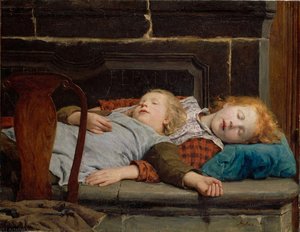
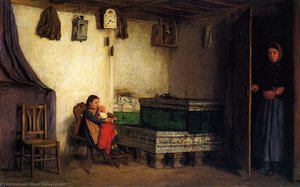
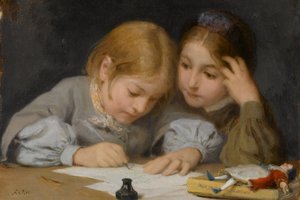
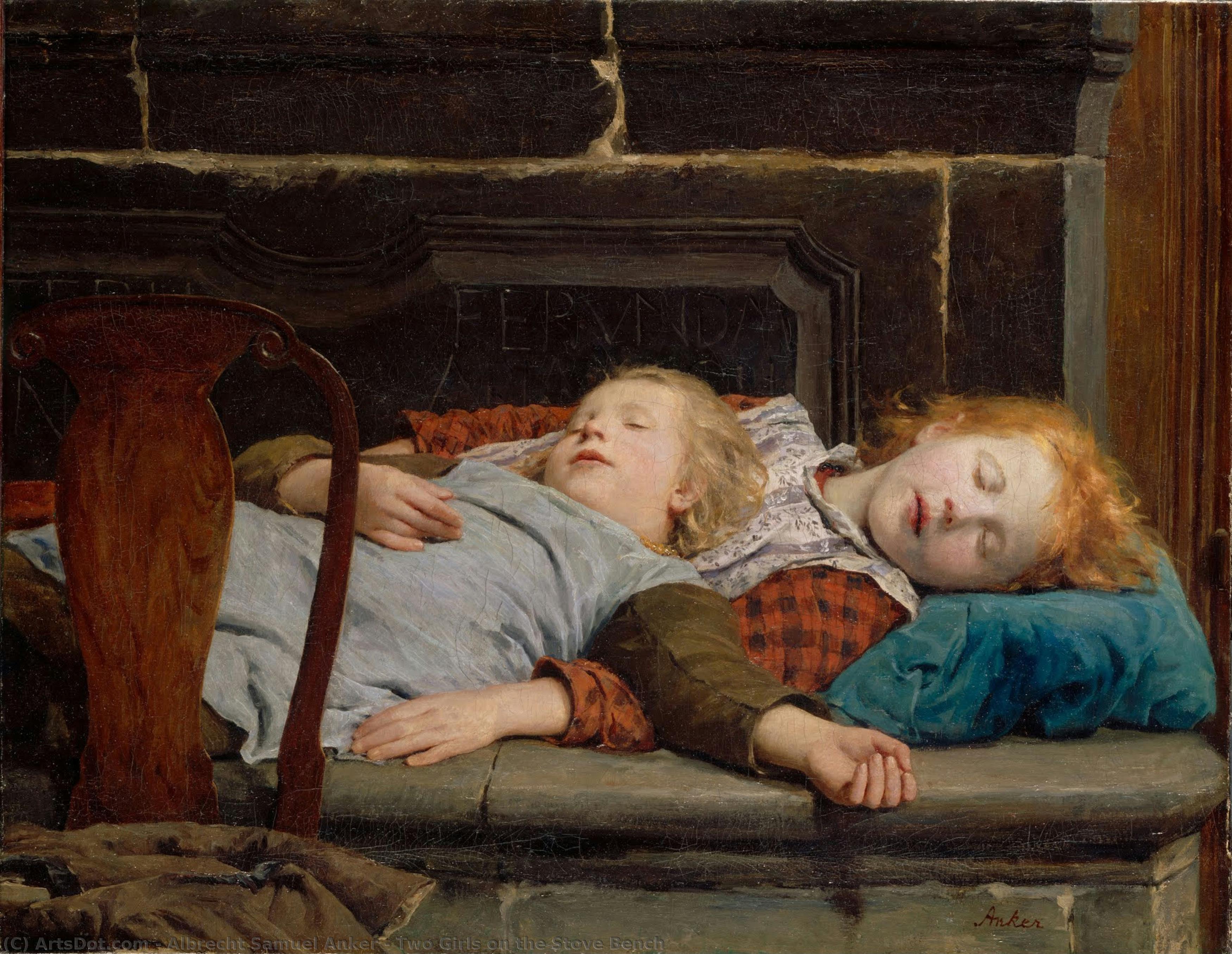
Two Girls on the Stove Bench


 Read More
Giclée / Art Print
Museum-quality giclée or canvas print with fast production and flexible finish options. ( Buy Hand Made Painting Buy Image)




P118B $10

P118H $10

P118W $10

P438Z $10

P508JH $12

P508YH $12

P805H $10

P805Z $10

P919BZ $10

P919G $10

P919XJ $10

P959ZH $10

P968JZ $12

W106C $8

W218G $10

W218JH $8

W218Y $10

W307PJ $10

W316G $10

W316PJ $8

W316Y $10

W398PJ $8

W4111J $10

W500HY $15

W500JH $15

W692G $12

W849H $8

W940BG $15

W953PJ $8




Pick from our preset sizes that match the artwork's original proportions.

You may enter your own dimensions to fit a specific frame or space. If your selected size does not match the original image's proportions, we will either crop the artwork or extend the image with a mirrored or solid-fill edge. A digital mockup will be sent for your approval before production begins.
Please note that the on-screen preview does not reflect the actual cropping or extension. Only the mockup will accurately show the final composition.
While custom sizes are available, we recommend selecting a dimension from the predefined list to preserve the original proportions.
Worldwide Delivery () in 2 weeks instead of standard 4/5 weeks. (21 August)

Free Worldwide Express Shipping

High-Quality Linen Canvas

Full Shipping Insurance

Customs Tax Refund Guarantee

True Color Matching Guarantee

60-Day Return Policy (Defects Only)

100% Money-Back Guarantee

Bulk Discount Offer
 Glass option is only available in size under 110 CM

Two Girls on the Stove Bench
Giclée / Art Print
Reproduction Size
-


Total Price
$ 63
Collectible Description
A Moment Frozen in Time: Albert Anker’s “Two Girls on the Stove Bench”
Albert Samuel Anker's "Two Girls on the Stove Bench," painted in 1895, isn’t merely a depiction of two young women; it’s a carefully constructed tableau brimming with quiet intimacy and a profound sense of rural Swiss life. Born in Ins, Switzerland, amidst a landscape steeped in tradition and a family deeply rooted in both civic duty and artistic sensibility – his father a respected veterinarian and member of the Bernese assembly – Anker dedicated his career to capturing the essence of his homeland. This particular painting, housed within the Kunsthaus Zürich’s collection, exemplifies his signature style: an almost unnervingly realistic portrayal of everyday scenes imbued with a gentle warmth and a subtle spiritual depth.
The scene unfolds in what appears to be a simple farmhouse interior. Two young girls, identified as the Räubi sisters – whose actual names were Anna and Marie – are nestled on a worn wooden bench beside a warm stove. Their posture suggests a drowsy contentment, lost in a shared dream or perhaps simply succumbing to the comforting heat of the hearth. The dark brown background, punctuated by the muted tones of the furniture and clothing, serves to dramatically highlight the girls’ pale skin and the soft glow emanating from the stove. Anker masterfully employs chiaroscuro – the dramatic contrast between light and shadow – a technique borrowed from Renaissance masters, to draw the viewer's eye directly to these figures, creating an immediate sense of connection.
The Painterly Language: Technique and Style
Anker’s technical skill is undeniable. He meticulously renders every detail, from the texture of the girls’ dresses to the worn wood of the bench. Yet, his realism isn't cold or clinical; it’s infused with a remarkable sensitivity to light and color. He utilizes short, broken brushstrokes – a hallmark of Impressionism – to create a sense of movement and atmosphere within the scene. The subtle variations in tone suggest the warmth radiating from the stove, while also hinting at the cool air outside. This delicate balance between observation and interpretation is what elevates Anker’s work beyond mere representation.
The painting's style firmly places it within the Realist movement, a reaction against the romanticism prevalent in earlier art. However, Anker transcends simple realism by imbuing his subjects with an underlying sense of spirituality. He avoids idealization or sentimentality, presenting the girls as they are – ordinary children enjoying a simple pleasure. His work reflects a deep respect for the dignity of labor and the beauty of everyday life, aligning with the values of the Swiss peasantry.
Symbolism and Context: A Portrait of Rural Switzerland
“Two Girls on the Stove Bench” is more than just a snapshot of childhood; it’s a poignant reflection of rural Swiss society in the late 19th century. Anker's family history, with its blend of civic engagement and artistic pursuits, undoubtedly informed his perspective. He wasn’t interested in depicting poverty or hardship – though he certainly recognized its existence – but rather in celebrating the simple joys and enduring values of a rural community. The stove itself is a potent symbol: it represents warmth, comfort, family, and the heart of the home.
Furthermore, the painting speaks to Anker’s broader artistic philosophy. He deliberately avoided overtly political or religious themes, believing that art should focus on capturing the beauty and dignity of human life. His paintings are often described as “moralistic,” not in a didactic sense, but rather because they subtly reinforce values such as honesty, kindness, and respect for one's fellow man – virtues deeply ingrained in Swiss culture.
A Timeless Appeal: Reproduction and Interior Design
“Two Girls on the Stove Bench” continues to resonate with viewers today due to its universal themes of childhood innocence, familial warmth, and the beauty of simple moments. Reproductions of this painting offer a wonderful opportunity to bring this evocative scene into any home or office space. Its calming colors and intimate composition create a sense of tranquility and nostalgia, making it an ideal choice for bedrooms, living rooms, or studies.
Consider framing the reproduction in a warm wood tone to further enhance its rustic charm. The painting’s subtle details – the texture of the bench, the glow of the stove – will be particularly striking when viewed up close. “Two Girls on the Stove Bench” is more than just a beautiful artwork; it's a window into another time and place—a testament to Albert Anker’s remarkable talent and his enduring love for Switzerland.
Related Artworks


Artist Biography
Early Life and Artistic Beginnings
Albert Samuel Anker, a name synonymous with idyllic Swiss scenes and heartwarming portrayals of rural life, was born on April 1st, 1831, in the small town of Ens, Switzerland. His father, Samuel Anker, was a respected veterinarian who also served within the political arena as a member of the Canton of Bern’s constituent assembly. This blend of scientific practicality and civic duty would subtly influence young Albert's own path. The family relocated to Neuchâtel in 1836, providing a new landscape for his developing sensibilities. It was here that Anker first demonstrated an aptitude for art, receiving initial guidance from Frédéric-Wilhelm Moritz, sparking a passion that would define his life’s work. He continued his formal training alongside Auguste Bachelin under the tutelage of Louis Wallinger from 1845 to 1848, laying a solid foundation in draftsmanship and observation. However, Anker's early ambitions weren’t solely artistic; he pursued theological studies at the Universities of Bern and Halle in Germany after completing his Matura in 1851. It was during these academic years, surrounded by rich art collections, that his dedication to painting solidified, ultimately gaining his father’s blessing in 1854 to pursue a career as an artist.Parisian Influences and the Development of a Distinct Style
The decision to dedicate himself to art led Anker to Paris, the epicenter of artistic innovation during the mid-19th century. He enrolled at the prestigious École nationale supérieure des Beaux-Arts, studying under Charles Gleyre. This period proved pivotal in his development, exposing him to contemporary French trends and solidifying his technical skills. While absorbing influences from the Realist movement—a reaction against Romanticism that emphasized depicting life as it truly was—Anker didn’t simply mimic its tenets. He forged a distinctive style characterized by meticulous detail, subtle emotional expression, and an unwavering focus on everyday scenes of Swiss rural existence. He wasn't interested in grand historical narratives or dramatic allegories; his canvas became a window into the quiet dignity of peasant life. Anker’s work reflects a deep appreciation for simplicity and authenticity, portraying children, farmers, and domestic interiors with remarkable realism and tenderness. The influence of Dutch Masters like Johannes Vermeer is palpable in his attention to light, composition, and the intimate portrayal of interior spaces—a quality that lends a timeless serenity to his paintings.Themes, Major Works, and Artistic Legacy
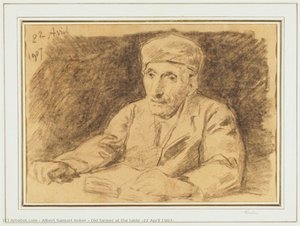
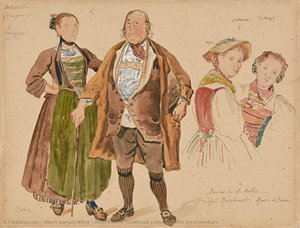
Albert Anker became celebrated for capturing the essence of 19th-century Swiss rural life, earning him the affectionate title of “the national painter” of Switzerland. His canvases are populated with scenes that resonate with a sense of nostalgia and genuine affection for his subjects. Among his most beloved works is "The Little Musician," a charming depiction of a young boy engrossed in playing the violin—a testament to Anker’s ability to capture youthful innocence and concentration. “Portrait of a Young Girl,” similarly, showcases his skill in portraying delicate features and conveying inner emotion. “A Farmer's Wife, Sewing” is a poignant study of domestic tranquility, revealing beauty in the mundane tasks of daily life. Beyond these iconic images, Anker’s dedication to documenting Swiss cultural heritage is evident in works like “Unterwalden (traditional costumes after Josef Reinhart),” a series of watercolor studies meticulously preserving traditional dress. His artistic output extended beyond paintings to include portraits, still lifes, and genre scenes that reflected the values and aesthetics of his time. Even his charcoal study "Old Farmer at the Table (22 April 1907)” demonstrates his mastery of line and form, conveying a wealth of character with minimal means. Recurring themes in Anker’s oeuvre—childhood, family life, rural traditions, and the beauty of the Swiss landscape—are interwoven to create a cohesive vision of a harmonious world.Recognition and Enduring Significance
Throughout his lifetime, Albert Samuel Anker enjoyed considerable recognition, exhibiting his work in numerous national and international exhibitions and earning critical acclaim. He was appointed a knight of the Légion d'honneur in 1878, solidifying his reputation within the European art world. His paintings played a crucial role in shaping the image of 19th-century Switzerland, offering both a romanticized yet realistic view of rural life that resonated deeply with audiences. Anker’s contribution to Swiss Realism was significant, influencing subsequent generations of artists who sought to depict their own national identities and cultural landscapes. He served on the Swiss Federal Art Commission from 1889-1893 and again from 1895-1898, further demonstrating his commitment to fostering artistic growth within his country. He received an honorary doctorate from the University of Bern in 1900. Though a stroke limited his ability to paint in later years, his legacy remained secure. Albert Samuel Anker passed away on July 16th, 1910, in Ins, Switzerland, leaving behind a body of work that continues to be admired for its technical skill, emotional depth, and enduring historical significance—a testament to the power of art to capture the spirit of a nation and the beauty of everyday life.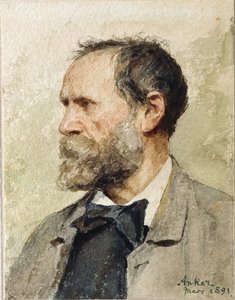
Albert Samuel Anker
1831 - 1910 , Switzerland
Quick Facts
- Artistic Movement Or Style: Realism
- Artists Or Movements Influenced By This Artist: ['Swiss Realism']
- Artists Who Influenced This Artist: ['Johannes Vermeer']
- Date Of Birth: April 1, 1831
- Date Of Death: July 16, 1910
- Full Name: Albert Samuel Anker
- Nationality: Swiss
- Notable Artworks:
- The Little Musician
- A Farmer's Wife, Sewing
- Portrait of a Young Girl
- Place Of Birth: Ens, Switzerland
Related Articles
Idyllic Visions: Exploring the Pastoral Tradition in Western Art – Themes, Techniques & Enduring Appeal
Explore the rich history of pastoral art from classical Arcadia to contemporary interpretations. Discover key artists, themes & collecting tips at ArtsDot.
Idyllic Visions: Exploring the Pastoral Scene in Art History – From Arcadia to Modern Interpretations
Explore the captivating history of pastoral art from classical Arcadia to modern masterpieces. Discover key artists like Millet & Cole at ArtsDot. Find serene landscape paintings for your home.

Idyllic Visions: Exploring Pastoral Scenes in Art History – From Arcadia to Modern Interpretations
Explore the captivating history of pastoral art, from classical Arcadia to 19th-century masterpieces. Discover key artists like Millet & Cole and find serene landscape paintings for your home at ArtsDot.
Scenes of Daily Life: A Comprehensive Exploration of Genre Painting Through History
Explore the rich history of genre painting! Discover Dutch Masters & European artists who captured everyday life with stunning realism. Learn about symbolism, techniques & lasting influence.
Echoes of Daily Life: Genre Painting & Societal Values Through the Ages
Explore the captivating world of genre painting! Discover Dutch Masters like Ostade & de Hooch, hidden symbolism, and social commentary in art history. Shop museum-quality reproductions at ArtsDot.