 Preview
 Send
Send Share
Share
 Details

 Download
 Similars
 X-Ray
X-Ray Diaporama
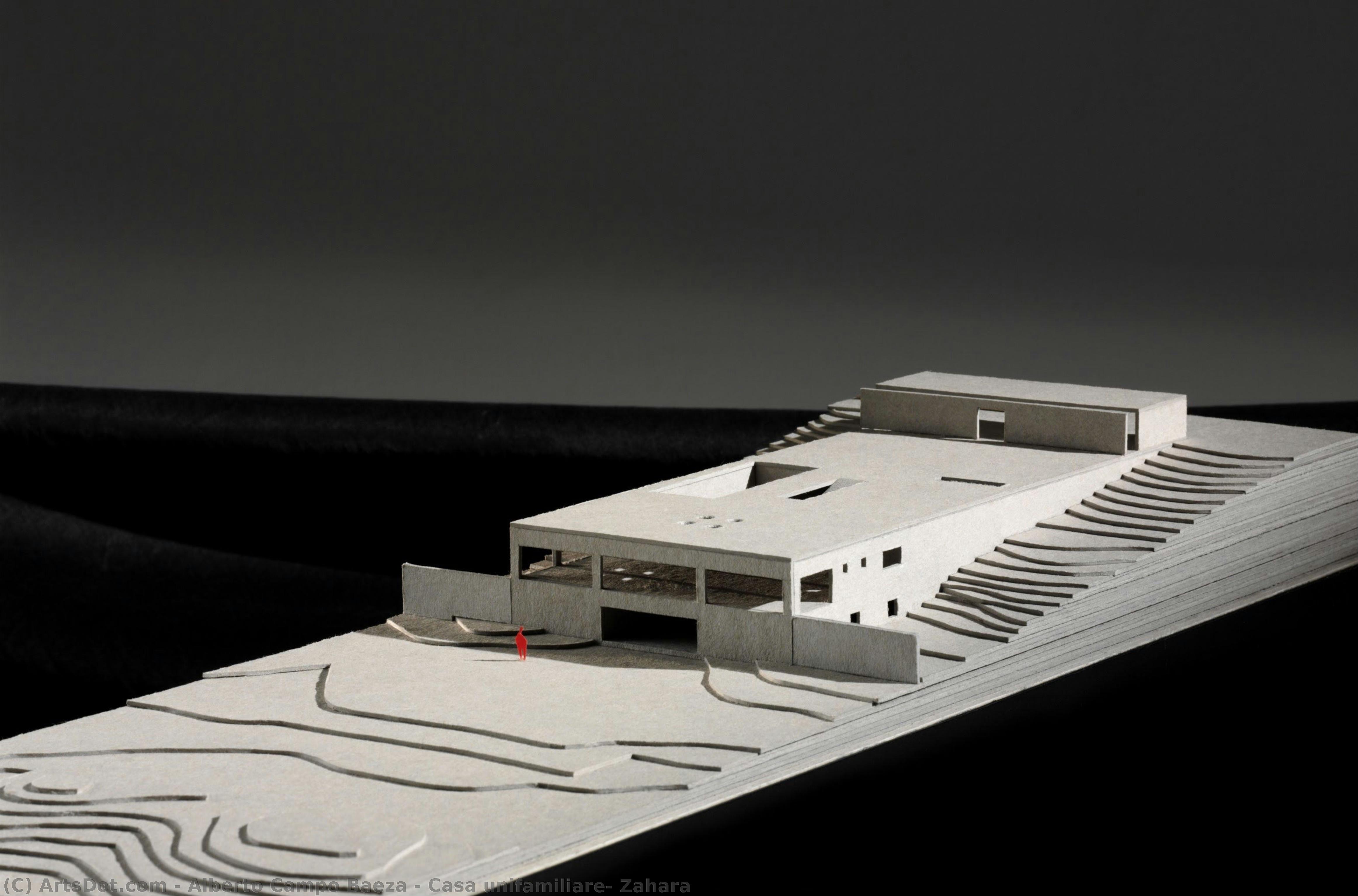
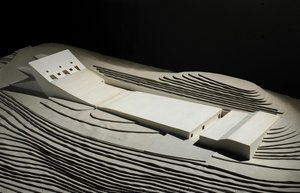
Casa unifamiliare, Zahara


 Read More
Hand Made Oil Reproduction
Hand-painted oil on canvas in your size and frame, made to order by our artists. ( Buy Print Buy Image)




P118B $10

P118H $10

P118W $10

P438Z $10

P508JH $12

P508YH $12

P805H $10

P805Z $10

P919BZ $10

P919G $10

P919XJ $10

P959ZH $10

P968JZ $12

W106C $8

W218G $10

W218JH $8

W218Y $10

W307PJ $10

W316G $10

W316PJ $8

W316Y $10

W398PJ $8

W4111J $10

W500HY $15

W500JH $15

W692G $12

W849H $8

W940BG $15

W953PJ $8




Pick from our preset sizes that match the artwork's original proportions.

You may enter your own dimensions to fit a specific frame or space. If your selected size does not match the original image's proportions, we will either crop the artwork or extend the painting with additional hand-painted elements. A digital mockup will be sent for your approval before production begins.
Please note that the on-screen preview does not reflect the actual cropping or extension. Only the mockup will accurately show the final composition.
While custom sizes are available, we recommend selecting a dimension from the predefined list to preserve the original proportions.
After order, ArtsDot.com team will email client for instructions and provide a mockup preview
Worldwide Delivery () in 3/4 weeks instead of standard 5 weeks. (23 August). No compromise on quality.

Free Worldwide Express Shipping

High-Quality Linen Canvas

Full Shipping Insurance

Customs Tax Refund Guarantee

True Color Matching Guarantee

60-Day Return Policy (Defects Only)

100% Money-Back Guarantee

Bulk Discount Offer
 Glass option is only available in size under 110 CM

Casa unifamiliare, Zahara
Reproduction Medium
Reproduction Size
-


Total Price
$ 263
Artwork Description
Related Artworks





Artist Biography
The Architect of Light: A Journey Through the World of Alberto Campo Baeza
Alberto Campo Baeza, born in Valladolid, Spain, in 1946, stands as a pivotal figure in contemporary Spanish architecture—a master sculptor of space and light. His work isn’t merely about constructing buildings; it's an exploration of essential forms, a distillation of architectural principles to their purest expression. From his early education at the Universidad Politécnica de Madrid, culminating in a PhD in 1982, Campo Baeza embarked on a path that would challenge conventional notions of design and establish him as a leading voice in minimalist architecture. His academic journey wasn’t confined by geographical boundaries; he shared his insights and philosophy through visiting professorships at esteemed institutions worldwide—ETH Zurich, Virginia Tech, Columbia University, Bauhaus University Weimar, IIT Chicago, and Kansas State University—each experience enriching his perspective and solidifying his unique approach.A Philosophy Rooted in Simplicity
At the heart of Campo Baeza’s architectural philosophy lies a deliberate rejection of ornamentation and an unwavering commitment to natural light. He believes that true beauty resides not in lavish embellishments, but in the elegant interplay of form, space, and illumination. This isn't simply an aesthetic preference; it’s a deeply held conviction that stripping away the superfluous allows for a more profound connection between the built environment and the human experience. His designs are often described as austere yet profoundly moving—spaces defined by their clarity, serenity, and timeless quality. He seeks to create buildings that resonate with a sense of quiet dignity, inviting contemplation and fostering a harmonious relationship with their surroundings. This pursuit of essentialism isn’t about deprivation; it's about focusing attention on what truly matters: the fundamental elements that shape our perception of space.Landmark Creations: A Testament to Minimalist Vision
Campo Baeza’s portfolio is a testament to his unwavering dedication to minimalist principles. Early works like the Houses Turégano and de Blas in Madrid demonstrated his commitment to simple forms and the transformative power of natural light, laying the foundation for his future explorations. Subsequent residential projects—Gaspar House, Asencio House, Guerrero House (Cádiz), Rufo House (Toledo), Moliner House (Zaragoza)—each became a unique study in spatial clarity and material honesty, adapted to diverse locations yet unified by a common aesthetic sensibility. His international breakthrough came with the Olnick Spanu House in Garrison, New York, proving the universal applicability of his style. Public projects like Centro BIT (Inca-Mallorca) showcased his ability to integrate minimalism into functional structures, while “Between Cathedrals” (Cádiz) stands as a significant public work that exemplifies his design philosophy on an urban scale. More recently, MA, the Museum of Memory of Andalucía (Granada), demonstrates his architectural vision applied to a culturally important project. Each building is not merely a structure but a carefully orchestrated experience—a dialogue between light, shadow, and form.Influences and Legacy: Shaping Modern Spanish Design
Campo Baeza’s work resonates with the broader movement of minimalism in architecture, aligning him with influential figures like David Chipperfield and John Pawson. However, his approach is distinctly his own—a nuanced interpretation of minimalist principles within the specific context of Spanish architectural traditions. He draws inspiration from a desire to return to fundamental design elements, advocating for buildings that are both functional and aesthetically pleasing through their inherent simplicity. His influence on contemporary architects in Spain is undeniable, inspiring a new generation to embrace clarity, restraint, and the expressive potential of natural light. Beyond his built works, Campo Baeza’s writings, compiled in “La idea Construida,” have become essential reading for aspiring architects, offering valuable insights into his design process and philosophical underpinnings. His numerous awards—including the First Prize for the Spanish Pavilion at the Venice Biennale (2000), the Arnold W. Brunner Memorial Prize of the American Academy of Arts and Letters (2013) and most recently The Daylight Award for Daylight in Architecture (2024)—are a testament to his enduring impact on the field.A Continuing Dialogue with Light and Space
Alberto Campo Baeza remains an active force in architecture, continuing to explore new materials, spatial configurations, and innovative solutions. His work is not static; it’s an ongoing dialogue with light, space, and the human condition—a testament to his belief that architecture has the power to elevate our lives and enrich our understanding of the world around us. He doesn't simply design buildings; he crafts experiences, creating spaces that inspire contemplation, foster connection, and celebrate the beauty of simplicity. His legacy is not just in the structures he’s created but in the enduring principles he champions—principles that will continue to shape the landscape of modern Spanish architecture for generations to come.
Alberto Campo Baeza
1946 - , Spain
Quick Facts
- Artistic Movement Or Style: Minimalism
- Artists Or Movements Influenced By This Artist:
- David Chipperfield
- John Pawson
- Date Of Birth: 1946
- Full Name: Alberto Campo Baeza
- Nationality: Spanish
- Notable Artworks:
- Casa unifamiliare, Zahara
- Houses Turégano & de Blas
- Gaspar House
- MA Museum of Memory
- Centro BIT
- Place Of Birth: Valladolid, Spain
Related Articles
Rafael de Penagos: A Study in Spanish Portraiture & Artistic Identity
Explore the life & art of Rafael de Penagos, a leading Spanish Art Deco illustrator. Discover his iconic 'Penagos Woman', commercial work, and lasting legacy. Learn about this pivotal figure in 20th-century Spanish art history.

The Golden Age Reforged: Dramatic Realism & Religious Zeal in Spanish Baroque Art
Explore the dramatic world of Spanish Baroque art! Discover masters like Zurbarán & the powerful influence of religious zeal on painting techniques – a guide for collectors and enthusiasts.
The Allure of the Pose: Representations of 'Model' Through Art History
Explore the fascinating history of the 'art model' through centuries of painting! Discover academic techniques, social contexts & the evolving role of models in art. ArtsDot offers custom reproductions and expert consultation.

Minimalist Masterpieces: 10 Artworks for Serene Home Decor | ArtsDot
Find serenity with 10 minimalist masterpieces! Explore Agnes Martin, Rothko & more. Discover the stories behind iconic abstract art, neutral palettes & calming designs. Museum-quality reproductions at ArtsDot.com – elevate your home decor today!
José Gutiérrez Solana: A Chronicle of Spanish Society Through Expressionist Vision
Explore the captivating world of José Gutiérrez Solana, a pivotal Spanish Expressionist painter. Discover his haunting depictions of early 20th-century Spain, influenced by Goya & El Greco. Learn about his key works and lasting legacy.