 Preview
 Send
Send Share
Share
 Details

 Download
 Similars
 X-Ray
X-Ray Diaporama
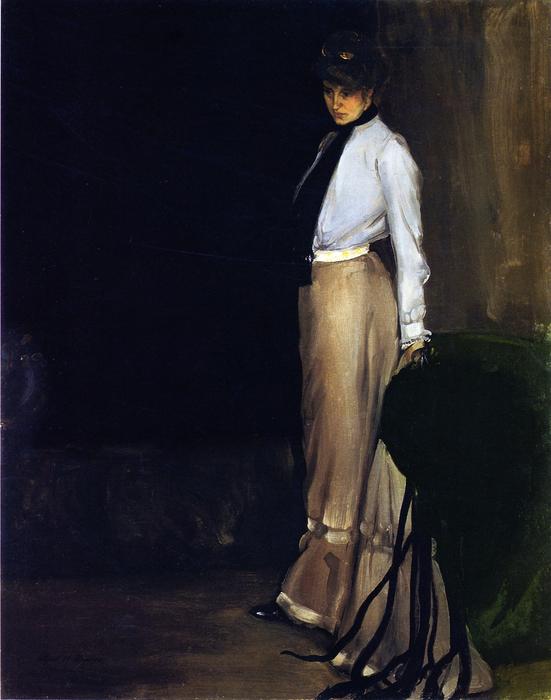
The Model (also known as Figure Study)


 Read More
Hand Made Oil Reproduction
Hand-painted oil on canvas in your size and frame, made to order by our artists. ( Buy Print Buy Image)




P118B $10

P118H $10

P118W $10

P438Z $10

P508JH $12

P508YH $12

P805H $10

P805Z $10

P919BZ $10

P919G $10

P919XJ $10

P959ZH $10

P968JZ $12

W106C $8

W218G $10

W218JH $8

W218Y $10

W307PJ $10

W316G $10

W316PJ $8

W316Y $10

W398PJ $8

W4111J $10

W500HY $15

W500JH $15

W692G $12

W849H $8

W940BG $15

W953PJ $8




Pick from our preset sizes that match the artwork's original proportions.

You may enter your own dimensions to fit a specific frame or space. If your selected size does not match the original image's proportions, we will either crop the artwork or extend the painting with additional hand-painted elements. A digital mockup will be sent for your approval before production begins.
Please note that the on-screen preview does not reflect the actual cropping or extension. Only the mockup will accurately show the final composition.
While custom sizes are available, we recommend selecting a dimension from the predefined list to preserve the original proportions.
After order, ArtsDot.com team will email client for instructions and provide a mockup preview
Worldwide Delivery () in 3/4 weeks instead of standard 5 weeks. (17 August). No compromise on quality.

Free Worldwide Express Shipping

High-Quality Linen Canvas

Full Shipping Insurance

Customs Tax Refund Guarantee

True Color Matching Guarantee

60-Day Return Policy (Defects Only)

100% Money-Back Guarantee

Bulk Discount Offer
 Glass option is only available in size under 110 CM

The Model (also known as Figure Study)
Reproduction Medium
Reproduction Size
-


Total Price
$ 263
Artwork Description
A Portrait of a Moment – The Model by Alfred Henry Maurer
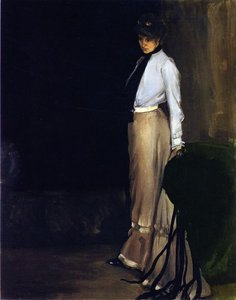
Alfred Henry Maurer’s “The Model,” painted in 1902, isn't merely a depiction of a woman; it’s a carefully constructed tableau that encapsulates the burgeoning anxieties and aspirations of early 20th-century American modernism. This oil on canvas, now residing within the Hirshhorn Museum’s collection, immediately draws the viewer in with its quiet intensity – a deliberate departure from the grand narratives of history painting and a bold step toward capturing the fleeting moments of everyday life. The painting presents a full-length portrait of a woman standing confidently with her hands on her hips, positioned slightly off-center against a backdrop that suggests an urban interior or perhaps even a dimly lit street corner. It’s a scene both familiar and subtly unsettling, inviting contemplation rather than immediate judgment.
Maurer's choice to render the background in such muted tones – browns, creams, blacks, and subtle greens – is crucial to the painting’s effect. It serves not as a detailed setting but as an atmospheric void, amplifying the figure’s presence and directing our attention entirely onto her. The composition itself utilizes a vertical format, emphasizing the woman's height and commanding stance. A strong diagonal line created by her pose draws the eye across the canvas, injecting a dynamic energy into what could otherwise be a static portrait. This deliberate arrangement speaks to a desire to capture not just likeness but also character – a sense of self-assuredness and perhaps even a hint of guarded vulnerability.
The Fauvist Echoes and American Roots
“The Model” is deeply rooted in the artistic currents of its time, particularly the influence of European modernism. The muted color palette, reminiscent of the work of Paul Gauguin and Vincent van Gogh (Fauvism), creates a sense of emotional resonance rather than strict realism. However, Maurer skillfully infuses this European sensibility with distinctly American characteristics. The painting’s focus on an individual within a contemporary setting—a woman in fashionable attire—reflects a growing interest in depicting the lives of ordinary people and capturing the spirit of the modern urban experience. It's a shift away from traditional subjects and towards a more relatable, psychologically-driven approach to portraiture.
Maurer’s technique is equally noteworthy. The visible brushstrokes, characteristic of an impasto style, lend texture and depth to the canvas. The edges of the figure are deliberately soft and blurred, contributing to a sense of fluidity and movement. This loose handling of paint—a departure from the sharp lines and meticulous detail favored by earlier portraitists—underscores the painting’s modern aesthetic. The use of oil on canvas allows for rich, vibrant colors that subtly shift with the changing light, adding another layer of complexity to the composition.
Symbolism and a Portrait of an Era
Beyond its formal qualities, “The Model” is laden with symbolic meaning. The woman’s confident posture—hands on her hips, gaze direct—suggests independence and self-assurance, yet there's also a subtle air of melancholy in her expression. Some art historians interpret the painting as a commentary on the changing roles of women in society during this period of rapid social and economic change. The dark background could be seen as representing the uncertainties and anxieties of the modern world, while the woman’s presence embodies a quiet resilience.
Furthermore, “The Model” offers a poignant glimpse into the life of Alfred Henry Maurer himself. A man struggling with his father's disapproval and battling against the constraints of artistic convention, Maurer poured his personal struggles into this work. The painting is not simply a portrait; it’s an intimate self-portrait—a reflection on identity, ambition, and the challenges of navigating the complexities of modern life. It stands as a testament to the artist's unique vision and enduring legacy within American art history.
Related Artworks



Artist Biography
Alfred Henry Maurer: A Life in Modern Art
Early Life and Training
- Born: April 21, 1868, New York City, United States of America.
- Maurer’s early life was marked by a familial tension regarding art. His father disapproved of modern artistic expression, ironically fueling Alfred's passion.
- At the age of sixteen, he left school to work in his father’s lithographic firm, gaining practical experience but yearning for more creative pursuits.
- Self-Portrait from his early Parisian period reflects a youthful optimism and burgeoning artistic confidence.
Parisian Influences and Artistic Breakthrough
- In 1897, Maurer embarked on a pivotal journey to Paris, where he spent four years immersed in the vibrant art scene.
- He joined a community of American and French artists, absorbing new ideas and experimenting with different styles.
- An Arrangement, completed around 1901, proved to be a turning point. It garnered first prize at the prestigious Carnegie International Exhibition, establishing Maurer as a rising talent.
Shifting Styles and Challenges
- Following his initial success, Maurer’s artistic direction evolved significantly. Influenced by figures like Gertrude and Leo Stein, he began to explore Cubist and Fauvist aesthetics.
- This stylistic shift proved controversial. While embracing the avant-garde, Maurer faced a decline in international recognition and commercial viability.
- He struggled with paternal disapproval throughout his life, adding to the pressures of navigating a changing art world.
Key Achievements and Recognition
- Maurer participated in landmark exhibitions that defined the American Modernist movement:
- 1913 Armory Show: A pivotal moment showcasing radical new art to an American audience.
- “The Forum Exhibition of Modern American Painters” (1916): Further solidifying his place within the modernist landscape.
- 1919: Elected Director of the Society of Independent Artists, demonstrating his commitment to artistic freedom and innovation.
Later Life and Legacy
- Despite his contributions, Maurer faced continued financial hardship and critical challenges.
- Sadly, he died by suicide on August 4, 1932, at the age of 64 – a tragic end to a turbulent life.
- However, Maurer’s legacy has endured. His work is now featured in numerous exhibitions and collections, including those at the Museum of Art New Orleans.
- His paintings serve as important examples of early American Modernism, bridging European avant-garde movements with a uniquely American sensibility.
Historical Significance
- Alfred Henry Maurer represents the struggles and triumphs of artists who dared to challenge convention.
- His willingness to experiment with new styles, despite facing criticism and financial difficulties, paved the way for future generations of American Modernists.
- Maurer’s work continues to inspire, reminding us of the importance of artistic freedom and the enduring power of innovation.
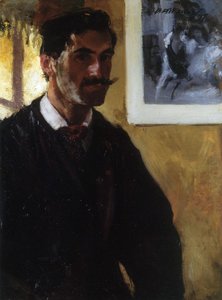
alfred henry maurer
1868 - 1932 , United States of America
Quick Facts
- Birth Date: April 21, 1868
- Birth Place: New York City, United States of America
- Death Date: August 4, 1932
- Influenced By:
- Gertrude Stein
- Leo Stein
- Movement:
- Modernism
- Fauvism
- Cubism
- Name: Alfred Henry Maurer
- Nationality: American
- Notable Works:
- An Arrangement
- Woman in a Garden
- Rockaway Beach
Related Articles

Sir Alfred Munnings' Masterpieces: 25 Paintings That Define Equine Art | ArtsDot
Explore 25 iconic Sir Alfred Munnings paintings! Discover the beauty of British Impressionism, equine art & rural England. Find museum-quality reproductions and elevate your home decor with ArtsDot. Explore the full collection online.
Alfred Henry Maurer: Reassessing the Pioneer of American Modernist Abstraction
Explore the groundbreaking work of Alfred Henry Maurer, a pivotal figure in American Modernism. Discover his Fauvist & Cubist paintings and understand his lasting influence on abstract art. Expert analysis for collectors.

Alfred Jacob Miller: Chronicling the American West Through Artistic Observation & Narrative
Explore the captivating art of Alfred Jacob Miller, chronicler of the American West. Discover his iconic paintings, techniques & lasting legacy – a valuable addition to any serious collection. Learn more at ArtsDot.

Grant Wood & American Regionalism: Identity, Myth & the Rural Landscape
Explore the world of Grant Wood & American Regionalism with ArtsDot. Discover the symbolism behind 'American Gothic', recurring themes, and the movement's lasting impact on art history. High-quality reproductions available.
American Realism's Defining Works: 10 Masterpieces for Your Home
Explore 10 defining American Realism masterpieces – Hopper, Homer & more. Discover the stories behind these iconic paintings and bring timeless art to your home with ArtsDot's museum-quality reproductions. Explore the full collection online.