 Preview
 Send
Send Share
Share
 Details

 Download
 Similars
 X-Ray
X-Ray Diaporama
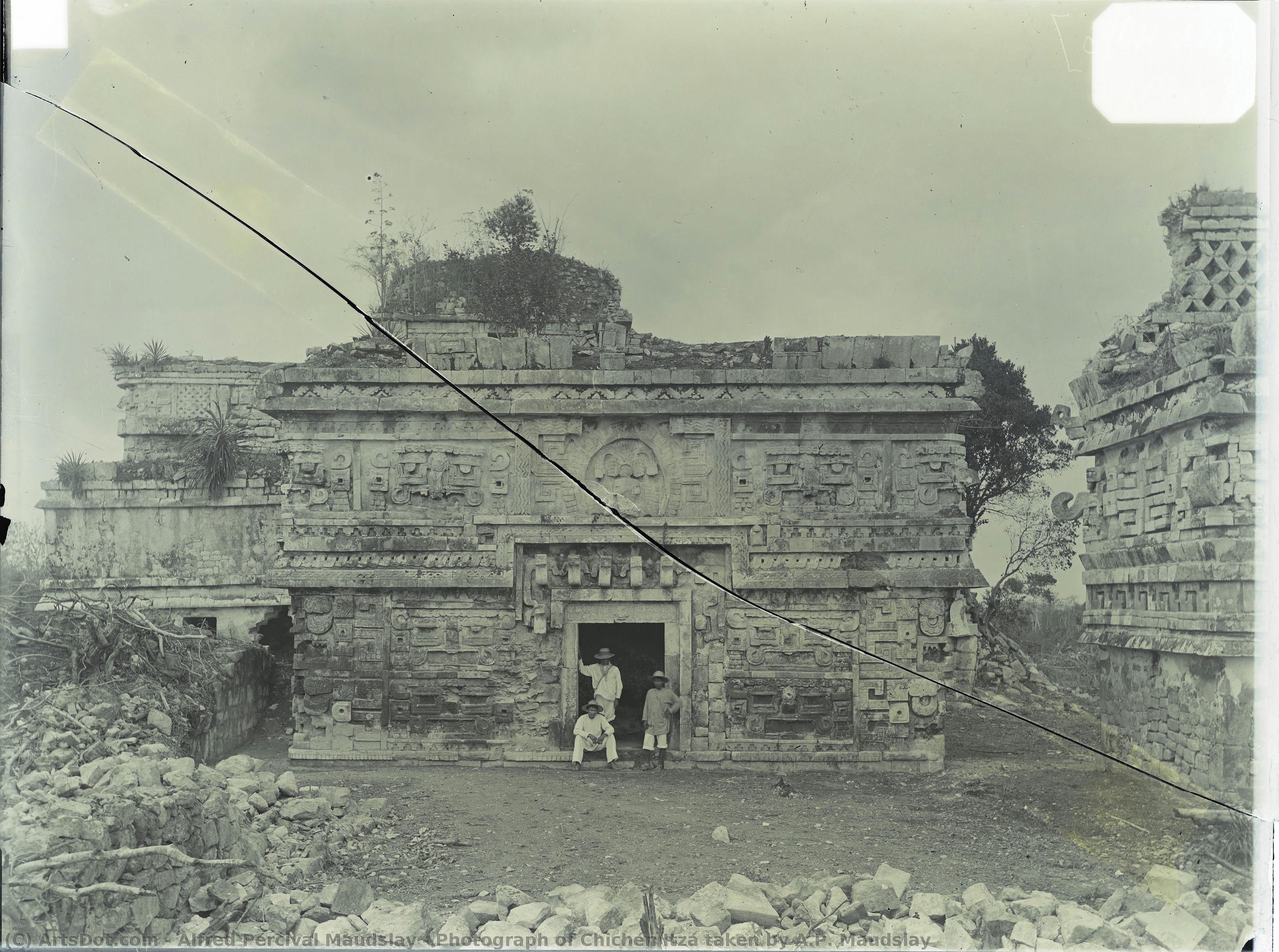
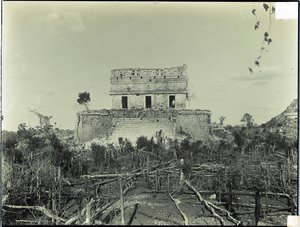
Photograph of Chichén Itzá taken by A.P. Maudslay
 Acrylic
- WallArt
- Documentary Photography
 1894
1894 16.0 x 21.0 cm
 British Museum
 Read More
Hand Made Oil Reproduction
Hand-painted oil on canvas in your size and frame, made to order by our artists. ( Buy Print Buy Image)




P118B $10

P118H $10

P118W $10

P438Z $10

P508JH $12

P508YH $12

P805H $10

P805Z $10

P919BZ $10

P919G $10

P919XJ $10

P959ZH $10

P968JZ $12

W106C $8

W218G $10

W218JH $8

W218Y $10

W307PJ $10

W316G $10

W316PJ $8

W316Y $10

W398PJ $8

W4111J $10

W500HY $15

W500JH $15

W692G $12

W849H $8

W940BG $15

W953PJ $8




Pick from our preset sizes that match the artwork's original proportions.

You may enter your own dimensions to fit a specific frame or space. If your selected size does not match the original image's proportions, we will either crop the artwork or extend the painting with additional hand-painted elements. A digital mockup will be sent for your approval before production begins.
Please note that the on-screen preview does not reflect the actual cropping or extension. Only the mockup will accurately show the final composition.
While custom sizes are available, we recommend selecting a dimension from the predefined list to preserve the original proportions.
After order, ArtsDot.com team will email client for instructions and provide a mockup preview
Worldwide Delivery () in 3/4 weeks instead of standard 5 weeks. (4 September). No compromise on quality.

Free Worldwide Express Shipping

High-Quality Linen Canvas

Full Shipping Insurance

Customs Tax Refund Guarantee

True Color Matching Guarantee

60-Day Return Policy (Defects Only)

100% Money-Back Guarantee

Bulk Discount Offer
 Glass option is only available in size under 110 CM

Photograph of Chichén Itzá taken by A.P. Maudslay
Reproduction Medium
Reproduction Size
-


Total Price
$ 363
A Window Into Ancient Majesty: Photograph of Chichén Itzá by A.P. Maudslay
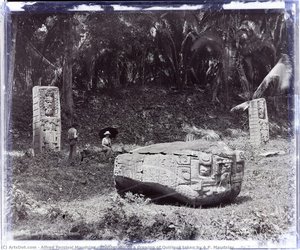
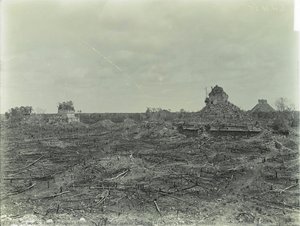
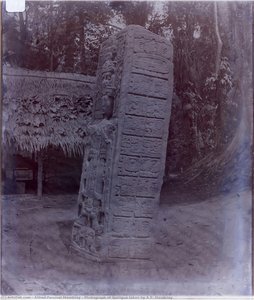
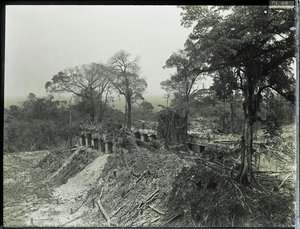
Captured in 1894 during the burgeoning era of archaeological exploration, Alfred Percival Maudslay’s photograph of Chichén Itzá offers more than just a visual record; it's a poignant glimpse into a world on the cusp of transformation. This remarkable image transcends mere documentation, becoming a testament to early colonial encounters with one of Mesoamerica’s most awe-inspiring ruins. The composition immediately draws the eye to a substantial stone structure – likely part of the Great Ball Court – its weathered surface hinting at centuries of exposure and silent witness to the rise and fall of the Mayan civilization. Scattered around this monumental edifice are figures, presumably early tourists or explorers, adding a crucial element of scale and human interaction to the scene, suggesting an initial fascination with the ancient site.
A Chronicle of Discovery: Context and Technique
Maudslay’s photograph is deeply rooted in the late 19th-century spirit of exploration. He wasn't simply documenting; he was actively involved in shaping our understanding of Chichén Itzá, pioneering archaeological methods and meticulously recording its details. The image itself speaks to the limitations – and advancements – of the era’s photographic technology. Utilizing dry plate photography, a relatively new process at the time, Maudslay skillfully captured the light and texture of the stone, relying on careful composition and exposure to convey depth and detail. The muted tones—a palette of grays, browns, and whites—are characteristic of this technique, lending an air of authenticity and historical weight to the scene. The photograph’s dimensions – 16 x 21 cm – further emphasize its intimate scale, inviting a close examination of its intricate details.
Decoding Symbolism: Stone, Figures, and the Passage of Time
Beyond its technical merits, the photograph is rich in symbolic meaning. The imposing stone structure itself represents the enduring legacy of the Mayan civilization – a testament to their architectural prowess and sophisticated understanding of mathematics and astronomy. The figures in the foreground are not merely observers; they embody humanity’s innate desire to explore, understand, and connect with the past. Their presence highlights the initial wonder and perhaps even a touch of intrusion as Western eyes first encountered this extraordinary site. The weathered stone, worn by time and elements, serves as a powerful metaphor for the passage of time, reminding us of the impermanence of human endeavors against the backdrop of geological history.
A Legacy Preserved: Maudslay’s Contribution and Reproduction
Alfred Percival Maudslay's work extended far beyond this single photograph. He was a prolific archaeologist, ethnographer, and translator, most notably for his comprehensive translation of Bernal Díaz del Castillo’s The Journey to the Holy Land. His meticulous documentation of Chichén Itzá, culminating in the monumental five-volume Biologia Centrali-Americana: Archaeology, remains a cornerstone of Mayan studies. Today, reproductions of this photograph offer an accessible way to appreciate Maudslay’s pioneering work and connect with the rich history of Chichén Itzá. When acquiring a reproduction, one can contemplate not only the beauty of the image but also the profound impact it had on shaping our understanding of this remarkable ancient civilization.
Artist: Alfred Percival Maudslay (1850-1931) Birth Year: 1850 Birth City: London Birth Country: United Kingdom
Additional Research Links:
Related Artworks
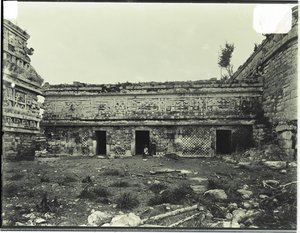
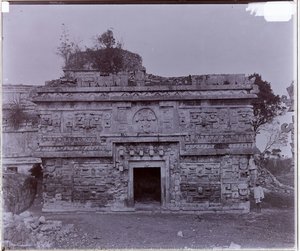
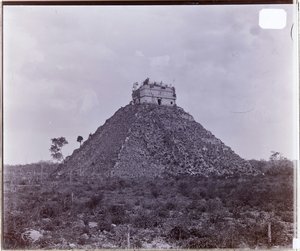
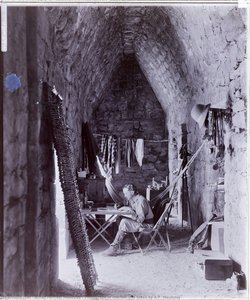
Artist Biography
**early life and education**
alfred percival maudslay, a british colonial administrator and archaeologist, was born on 18 march 1850 in london into a wealthy family. he studied natural sciences at trinity hall, cambridge, obtaining a ba in 1872.**career and travels**
maudslay's early plans for a medical career were deferred as he travelled with his brother, touring central america, mexico, and parts of the united states. this journey sparked an interest in archaeology, which would later define his legacy. after returning home, maudslay again postponed medical school to travel to iceland in 1873. his chronic bronchitis led him to seek a warmer climate, leading to a series of positions in jamaica, trinidad, and eventually, the south pacific.**archaeological contributions**
maudslay's time in the british pacific colonies laid the groundwork for his future archaeological pursuits. he became interested in collecting ethnographic materials, which would eventually contribute to the formation of the university museum of archaeology and ethnology at cambridge. his friend, ornithologist osbert salvin, encouraged maudslay to explore the maya ruins of quiriguá and copán.**notable achievements**
* maudslay was the first to describe the site of yaxchilán. * he explored chichén in the 1880s, taking extensive photographs. * published the first long-form description of chichen itza in his book, biologia centrali-americana. * made a complete translation with annotations of bernal díaz del castillo's historia, which remains the standard english edition.**artistic legacy**
maudslay's photographs and writings have been preserved, offering a unique glimpse into the world of 19th-century archaeology. his work can be found in various museums, including the british museum (london, united kingdom), which houses several of his photographs.- photograph of chichén itzá taken by a.p. maudslay (16 x 21 cm, british museum, photograph)
- photograph of chichén itzá taken by a.p. maudsly (25 x 30 cm, british museum, photograph)
- photograph of copán taken by a.p. maudslay (31 x 25 cm, british museum, photograph)
**conclusion**
alfred percival maudslay's legacy is a testament to the power of curiosity and exploration. from his early days as a colonial administrator to his later years as an archaeologist, maudslay's work continues to inspire and educate.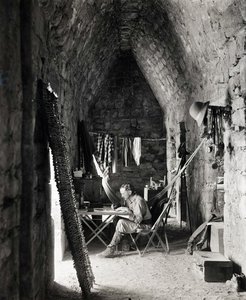
alfred percival maudslay
1850 - 1931 , United Kingdom
Quick Facts
- Artistic Movement Or Style: Archaeology/Photography
- Date Of Birth: 1850
- Date Of Death: 1931
- Full Name: Alfred Percival Maudslay
- Nationality: British
- Notable Artworks: ['Photograph of Chichén Itzá']
- Place Of Birth: London, United Kingdom
Related Articles
Hubert Robert: Picturing Ruins, Preserving Memory – A Study of Romantic Antiquarianism & Artistic Innovation
Explore the captivating world of Hubert Robert, master of Romantic landscape painting & 'capriccio' ruins. Discover his historical context, artistic innovations, and collecting insights with ArtsDot.
Documentary Photography's Defining Moments: 10 Masterpieces for Your Home |
Explore 10 defining documentary photography masterpieces – from Dorothea Lange to Robert Capa. Discover powerful stories, iconic images & timeless art for your home. Museum-quality prints at .
Resurrecting Memories: Artistic Reconstruction of Low-Resolution Photographs into High-Fidelity Oil Paintings
Transform cherished low-resolution photos into stunning, high-fidelity oil paintings. Expert restoration & museum-quality reproductions by skilled artists. Preserve your memories with lasting beauty.
Aaron Siskind: Deconstructing Reality – A Photographic Exploration of Texture, Form & the Abstract Landscape
Explore the transformative journey of Aaron Siskind, from social realism to pioneering abstract photography. Discover his iconic series & lasting influence on modern art. A guide for collectors.
Giovanni Battista Piranesi: Visionary of Ruins & Architect of Imagination
Explore the life & work of Giovanni Battista Piranesi, master etcher of Roman views & creator of the haunting 'Carceri d'Invenzione'. Discover his architectural vision and lasting influence on art history.