 Preview
 Send
Send Share
Share
 Details

 Download
 Similars
 X-Ray
X-Ray Diaporama
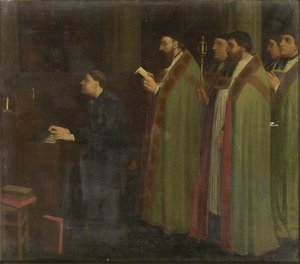
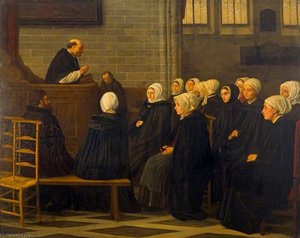
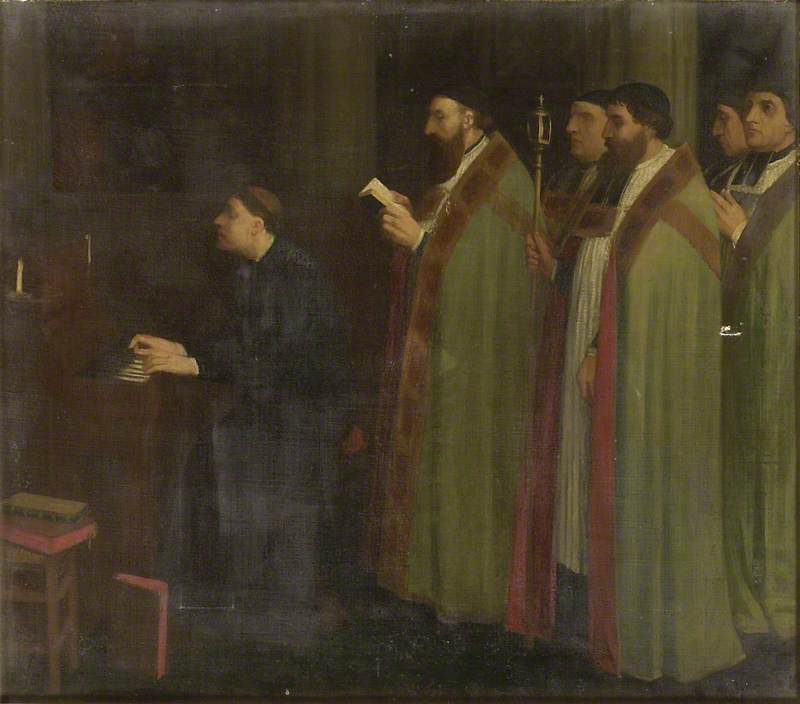
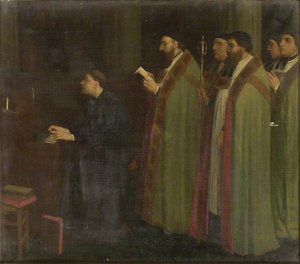
Interior with an Organist and a Procession
 Oil
Oil- WallArt
- Realist Tradition
 1865
1865- 19th Century
 51.0 x 59.0 cm
 The Ashmolean Museum of Art And Archaeology
 Read More
Hand Made Oil Reproduction
Hand-painted oil on canvas in your size and frame, made to order by our artists. ( Buy Print Buy Image)




P118B $10

P118H $10

P118W $10

P438Z $10

P508JH $12

P508YH $12

P805H $10

P805Z $10

P919BZ $10

P919G $10

P919XJ $10

P959ZH $10

P968JZ $12

W106C $8

W218G $10

W218JH $8

W218Y $10

W307PJ $10

W316G $10

W316PJ $8

W316Y $10

W398PJ $8

W4111J $10

W500HY $15

W500JH $15

W692G $12

W849H $8

W940BG $15

W953PJ $8




Pick from our preset sizes that match the artwork's original proportions.

You may enter your own dimensions to fit a specific frame or space. If your selected size does not match the original image's proportions, we will either crop the artwork or extend the painting with additional hand-painted elements. A digital mockup will be sent for your approval before production begins.
Please note that the on-screen preview does not reflect the actual cropping or extension. Only the mockup will accurately show the final composition.
While custom sizes are available, we recommend selecting a dimension from the predefined list to preserve the original proportions.
After order, ArtsDot.com team will email client for instructions and provide a mockup preview
Worldwide Delivery () in 3/4 weeks instead of standard 5 weeks. (16 August). No compromise on quality.

Free Worldwide Express Shipping

High-Quality Linen Canvas

Full Shipping Insurance

Customs Tax Refund Guarantee

True Color Matching Guarantee

60-Day Return Policy (Defects Only)

100% Money-Back Guarantee

Bulk Discount Offer
 Glass option is only available in size under 110 CM

Interior with an Organist and a Procession
Reproduction Medium
Reproduction Size
-


Total Price
$ 263
Artwork Description
A Moment Frozen in Devotion
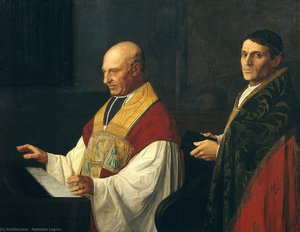
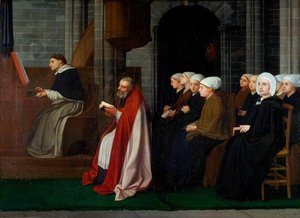
In the quiet, resonant atmosphere of Alphonse Legros’s 1865 masterpiece, "Interior with an Organist and a Procession," the viewer is transported into a sacred space where time seems to decelerate. The painting captures a profound moment of communal spirituality, centered around the rhythmic breath of an organist lost in his performance. A group of men, draped in the solemnity of religious garb, gather in a loose, organic formation that draws the eye toward the heart of the composition. There is a palpable sense of shared purpose; some figures lean forward with rapt attention, while others hold hymnals close to their chests, their very postures suggesting a deep, internal dialogue with the music and the divine. The scene is not merely a depiction of a ceremony, but an invitation to witness the weight of tradition and the intimacy of faith.
Legros, a master of capturing the intersection between human emotion and atmospheric setting, utilizes a palette that evokes the earthy, grounded reality of 19th-century religious life. The technique is characterized by a delicate balance of light and shadow, where the soft glow illuminating the organist’s hands contrasts with the more muted, somber tones of the surrounding congregation. This interplay of light creates a sense of depth, pulling the observer into the architectural enclosure of the scene. A subtle, almost enigmatic detail—the presence of an umbrella near the upper periphery—serves as a poignant reminder of the world outside this sacred interior, grounding the spiritual event in a specific, tangible moment of human existence.
The Artistry of Atmosphere and Legacy
Beyond its immediate subject matter, the painting serves as a testament to Legros’s ability to weave narrative complexity into a single frame. The composition is masterfully structured to guide the gaze through the layers of the procession, from the foreground figures to the distant, shadowed participants. This creates a sense of movement, as if the music itself is flowing through the room, connecting each individual in a singular, harmonious experience. For the discerning collector or interior designer, this piece offers more than just visual beauty; it provides a focal point of contemplative energy. The somber yet rich tones make it an exquisite addition to a curated space, particularly one that seeks to evoke feelings of heritage, tranquility, and intellectual depth.
Owning a high-quality reproduction of this work allows for the infusion of historical grandeur into a modern setting. Whether placed in a quiet study, a formal dining room, or a sophisticated gallery wall, "Interior with an Organist and a Procession" acts as a window into the mid-19th century, bringing with it the soulful artistry of Alphonse Legros. It is a piece that rewards repeated viewing, revealing new nuances in the textures of the garments, the expressions of the men, and the evocative shadows that define this timeless moment of devotion.
Related Artworks
Artist Biography
A Life Bridging Nations: The Artistic Journey of Alphonse Legros
Alphonse Legros, born in Dijon, France, in 1837, was an artist whose life and work embodied a fascinating intersection of artistic movements and national identities. His path wasn’t one of immediate acclaim but rather a gradual unfolding of talent nurtured by dedicated study and a willingness to embrace evolving aesthetic ideals. From humble beginnings as the son of an accountant in Véronnes, young Alphonse found early inspiration in the rural landscapes surrounding his family, scenes that would later permeate much of his artistic output. His initial training began at the Dijon art school, apprenticed to a house decorator, a grounding experience that instilled a practical understanding of materials and form. This was followed by a period as a journeyman wall-painter in Lyon, honing his skills while contributing to larger decorative projects. These formative years weren’t merely about technical proficiency; they were about absorbing the world around him – the textures of rural life, the play of light on stone, the dignity of everyday labor—elements that would become hallmarks of his mature style.From Realism to Etching Revival: Artistic Development and Influences
Legros’s arrival in Paris in 1851 marked a turning point. He immersed himself in the vibrant artistic milieu, studying with Charles-Antoine Cambon, a scene painter, and attending the prestigious drawing school of Lecoq de Boisbaudran, where he encountered fellow artists like Auguste Rodin and Jules Dalou. This period saw his first forays into the Salon system, gaining recognition for portraits that caught the eye of influential figures like Champfleury, who championed the Realist movement led by Gustave Courbet. Legros’s early work, such as *L'Angelus* (1859), demonstrated a commitment to depicting scenes from everyday life with honesty and emotional depth. However, it was his exploration of etching that truly set him apart. He essentially taught himself this technique, captivated by its potential for capturing subtle nuances of tone and texture. This dedication would eventually lead him to become a pivotal figure in the British etching revival. In 1863, encouraged by James McNeill Whistler, Legros relocated to England, a decision that profoundly shaped his career. He quickly established himself as an influential teacher, first at the South Kensington School of Art and later as Slade Professor at University College London, nurturing generations of artists in the art of etching.A Master of Multiple Mediums: Painting, Sculpture, and Medals
While Legros is often celebrated for his etchings, to define him solely by this medium would be a disservice to his multifaceted talent. He was equally adept as a painter and sculptor, and also created notable medals. His paintings frequently depicted scenes of religious devotion—interior church views with kneeling figures, capturing the quiet intensity of faith—and portraits that revealed a keen psychological insight into his subjects. These works are characterized by a restrained palette, meticulous detail, and a sense of solemnity. He wasn’t interested in grand narratives or flamboyant displays; instead, he focused on the intimate moments of human experience. His sculptural work, though less prolific than his paintings and etchings, demonstrated a similar commitment to realism and emotional depth. Furthermore, Legros's skill extended to the art of medal-making, producing pieces that were admired for their craftsmanship and artistic merit. He approached each medium with a dedication to technical mastery and a desire to convey profound meaning.Legacy and Historical Significance
Alphonse Legros died in Watford in 1911, leaving behind a rich legacy as both an artist and educator. His influence on the British art scene was considerable, particularly through his teaching at the Slade School of Art, where he instilled a rigorous approach to drawing and etching in countless students. He championed traditional artistic values—the importance of draftsmanship, careful observation, and technical skill—while also embracing new ideas and techniques. Legros’s work stands as a testament to the power of quiet contemplation and the enduring appeal of Realist aesthetics. His paintings and etchings can be found in prominent museums such as the Ashmolean Museum in Oxford and the Tate Gallery in London, ensuring that his artistic vision continues to inspire and captivate audiences today. He represents a bridge between French and British art traditions, embodying a commitment to both technical excellence and emotional honesty—qualities that continue to resonate with viewers and artists alike. His dedication to fostering artistic talent cemented his place as a pivotal figure in the development of modern British art.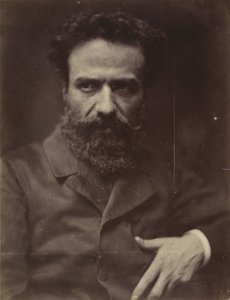
Alphonse Legros
1837 - 1911 , France
Quick Facts
- Artistic Movement Or Style: Realism
- Artists Or Movements Influenced By This Artist: ['Slade School artists']
- Artists Who Influenced This Artist:
- Gustave Courbet
- Charles-Antoine Cambon
- Date Of Birth: May 8, 1837
- Date Of Death: December 8, 1911
- Full Name: Alphonse Legros
- Nationality: French-British
- Notable Artworks:
- L'Angelus
- Interior with kneeling figures
- Rehearsing the service
- Cupid and Psyche
- The Tinker
- Place Of Birth: Dijon, France
Related Articles
Harmonizing History & Hue: A Guide to Matching Art Styles with Interior Architecture for Balanced Décor
Elevate your interior design with our expert guide to harmonizing art styles & architecture. Discover timeless pieces, color palettes, & custom artwork solutions for balanced, luxury spaces. Expert advice included!
Harmonizing Contrasts: Integrating Abstract Art into Classic Interiors for Timeless Modernity
Elevate your classic home with abstract art! Discover expert tips for seamlessly blending modern pieces into timeless interiors. Find the perfect artwork & design advice at ArtsDot.
Beyond Ephemeral Trends: Cultivating Enduring Interior Aesthetics Through Renaissance Reverie, Impressionist Light, and Pop Art Vibrancy
Discover enduring interior aesthetics inspired by Renaissance artistry, Impressionist light & Pop Art vibrancy. Expert guidance for creating timeless, luxury homes. Explore art curation & design principles.
The Resonance of Place: Contextual Art Design for Harmonious Interior Spaces
Discover how expert art curation transforms interiors into harmonious spaces. Elevate your home with personalized selections & the guidance of a dedicated art concierge at ArtsDot.com.
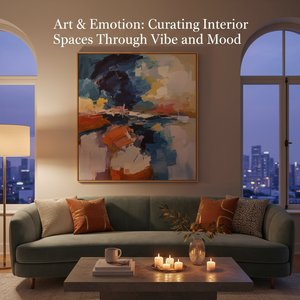
Art & Emotion: Curating Interior Spaces Through Vibe and Mood
Discover how to curate interior spaces that nurture your wellbeing. Explore the psychology of color, experiential design & art's emotional impact. offers bespoke solutions for a home that truly resonates with you.